Manila’s High-Stakes Summit: ASEAN’s 11 Nations Navigate Trump, China and an Energy Crisis
 ΧΡΟΝΟΣ ΑΝΑΓΝΩΣΗΣ 6 '
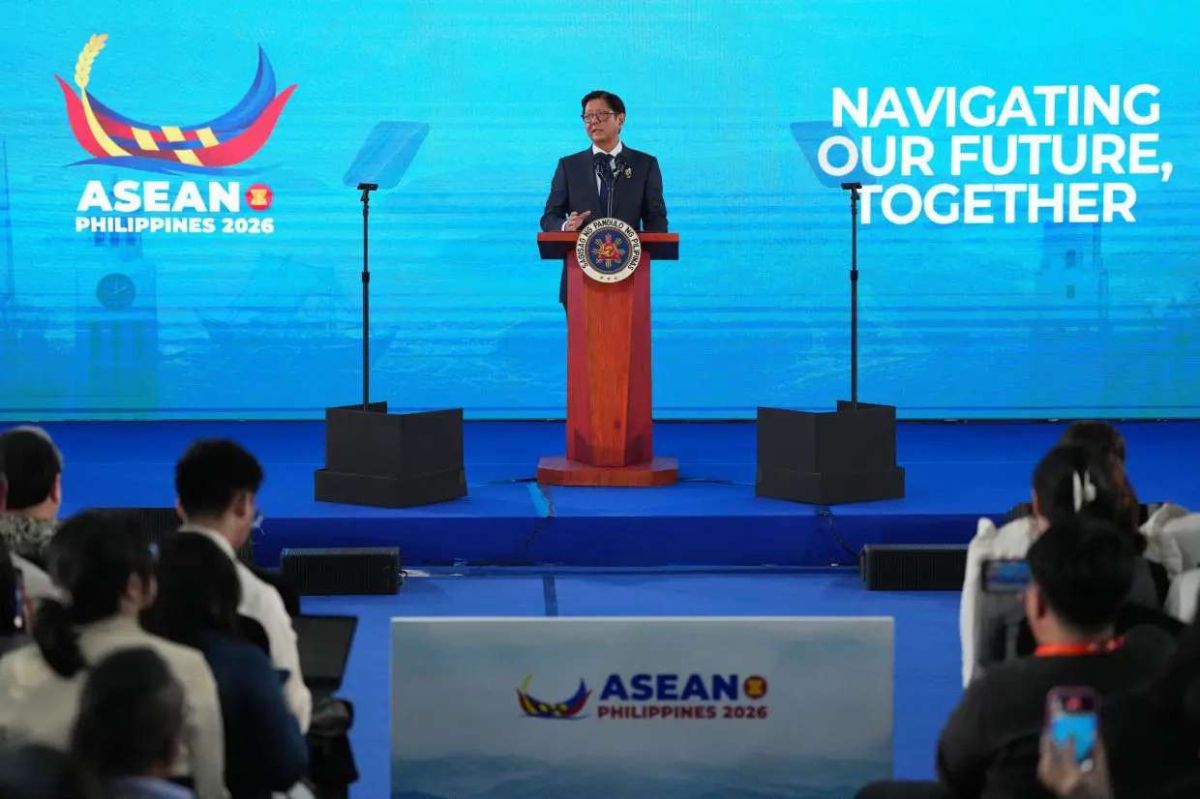
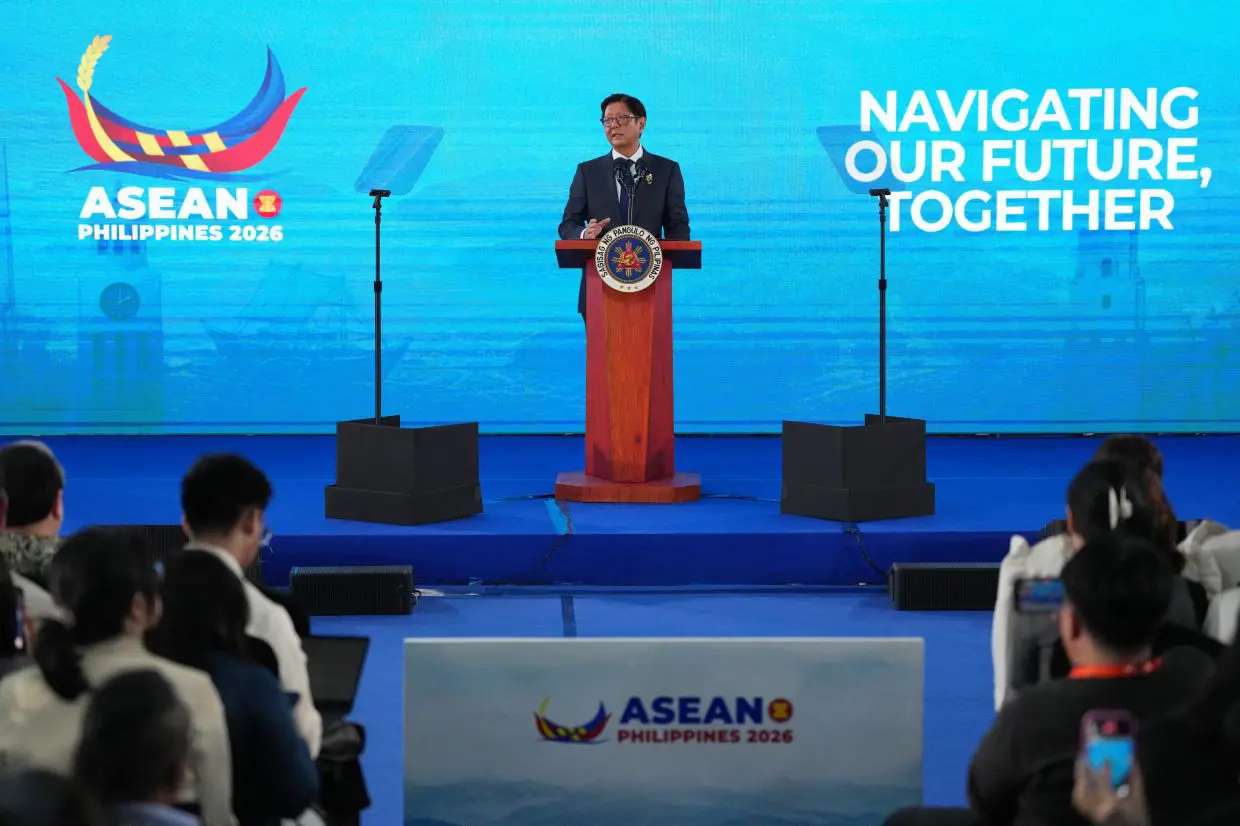
Πηγή Φωτογραφίας: Φωτογραφία αρχείου από την 48η σύνοδο της ASEAN στο Σεμπού, τον Μάιο του 2026 — όχι από τη σημερινή σύνοδο στη Μανίλα. Πηγή: The Star.



Reshaping our region faster than any one country can respond to alone.” Philippine President Ferdinand Marcos Jr. used those words to describe global challenges as the ASEAN summit opened in Manila on Sunday, November 15.
The Association of Southeast Asian Nations’ eleven members are confronting energy pressures from the Iran war, intensifying US–China competition and unresolved conflicts closer to home.
Their challenge is to preserve their ability to shape regional affairs without being forced into a choice between Washington and Beijing.
Trump’s Manila Stop Before China
Donald Trump is expected in Manila on Tuesday, November 17, for the ASEAN–US Special Summit. His visit also includes a bilateral meeting with Marcos.
According to Reuters, preparations are underway for a meeting of Quad leaders — the United States, India, Japan and Australia — their first summit since 2024.
Critical minerals, the security of commercial shipping routes and energy supplies are expected to feature in the discussions.
The Quad is widely regarded as a counterweight to China’s growing influence, although its members maintain that their cooperation is not directed against any particular country.
Trump’s visit precedes his trip to Shenzhen for APEC and planned contacts with the Chinese and Russian leaderships. Manila provides a separate opportunity to consult America’s regional partners.
The Philippines and Australia Strengthen Defence Ties
On the summit’s opening day, the Philippines and Australia signed a new defence cooperation arrangement, strengthening their relationship amid tensions in the South China Sea.
The agreement updates their existing framework and covers information-sharing, training, strategic dialogue, maritime awareness and military interoperability.
Australian Prime Minister Anthony Albanese said:
“This new Defence Cooperation Arrangement will deepen practical cooperation between our defence forces and create new opportunities to work together in support of regional security.”
The initiative illustrates a wider trend: alongside ASEAN’s multilateral diplomacy, regional governments are developing smaller partnerships to address their security needs.
What Is ASEAN, and Why Does It Matter?
ASEAN was established on August 8, 1967, when Indonesia, Malaysia, the Philippines, Singapore and Thailand signed the Bangkok Declaration.
Its founders sought to strengthen economic and political cooperation and reduce the risk of conflict in a region affected by instability and Cold War rivalries.
Brunei, Vietnam, Laos, Myanmar and Cambodia subsequently joined. Timor-Leste became the eleventh member in October 2025.
The organisation operates through consultation, consensus and respect for national sovereignty. It does not possess supranational authority comparable to that of European Union institutions.
This allows countries with different political systems and priorities to cooperate. It can also make collective decisions difficult when serious disagreements arise.
A $4.3 Trillion Economic Centre
ASEAN’s economic weight helps explain why major powers are competing for closer relationships with its members.
Based on 2025 figures, the bloc represents:
- Approximately 693.2 million people, or around 8.4% of the global population.
- Combined economic output of approximately $4.3 trillion.
- Goods trade of approximately $4.4 trillion.
If treated as a single economy, ASEAN would rank among the world’s five largest.
Economic integration nevertheless remains incomplete. Regulatory differences, non-tariff barriers and substantial development gaps limit progress towards a genuinely integrated market.
The Regional Comprehensive Economic Partnership, or RCEP, is an important instrument connecting participating ASEAN economies with China, Japan, South Korea, Australia and New Zealand.
Energy and AI Move Up the Agenda
The Iran war has made energy security an urgent concern. Supply uncertainty and higher fuel prices are placing pressure on economies dependent on imported energy.
Leaders must consider how to reduce exposure to external shocks and improve regional coordination.
The Philippines, this year’s ASEAN chair, has also prioritised artificial intelligence, including investment, digital development and cooperation to spread its economic benefits across the region.
Transboundary air pollution is another concern following Indonesian wildfires that affected neighbouring countries.
Myanmar, Thailand–Cambodia and the South China Sea
Security disputes present some of the summit’s toughest challenges.
In Myanmar, ASEAN’s five-point consensus has failed to end the violence or deliver a meaningful political settlement.
Along the Thailand–Cambodia border, a ceasefire has not resolved the underlying dispute, leaving continued diplomatic engagement necessary.
In the South China Sea, four ASEAN members maintain territorial claims, while negotiations with China over a code of conduct continue.
Members’ differing relationships with Beijing complicate efforts to establish a common position. The consensus requirement that helps hold ASEAN together also limits the speed and strength of its responses.
The $240 Billion Financial Safety Net
Financial cooperation has produced more concrete mechanisms.
The 1997–1998 Asian financial crisis encouraged closer coordination with China, Japan and South Korea and led to the establishment of the Chiang Mai Initiative in 2000.
Its current multilateral framework has a financing capacity of $240 billion.
On November 11, 2026, an amended agreement entered into force introducing a rapid financing facility for urgent needs arising from external shocks, including natural disasters and pandemics.
This is an additional instrument within the existing framework, rather than a separate new $240 billion fund.
What Is Really at Stake in Manila?
ASEAN centrality means that Southeast Asian governments seek to remain at the centre of decisions affecting their region.
They have substantial economic relationships with China, while several maintain important security partnerships with the United States. They want to preserve both.
The Manila summit will test where collective action is possible: energy, technology and economic resilience offer practical opportunities. Sovereignty disputes, armed conflicts and major-power competition will expose the difficulties of maintaining a common position.
Source: pagenews.gr
Διαβάστε όλες τις τελευταίες Ειδήσεις από την Ελλάδα και τον Κόσμο