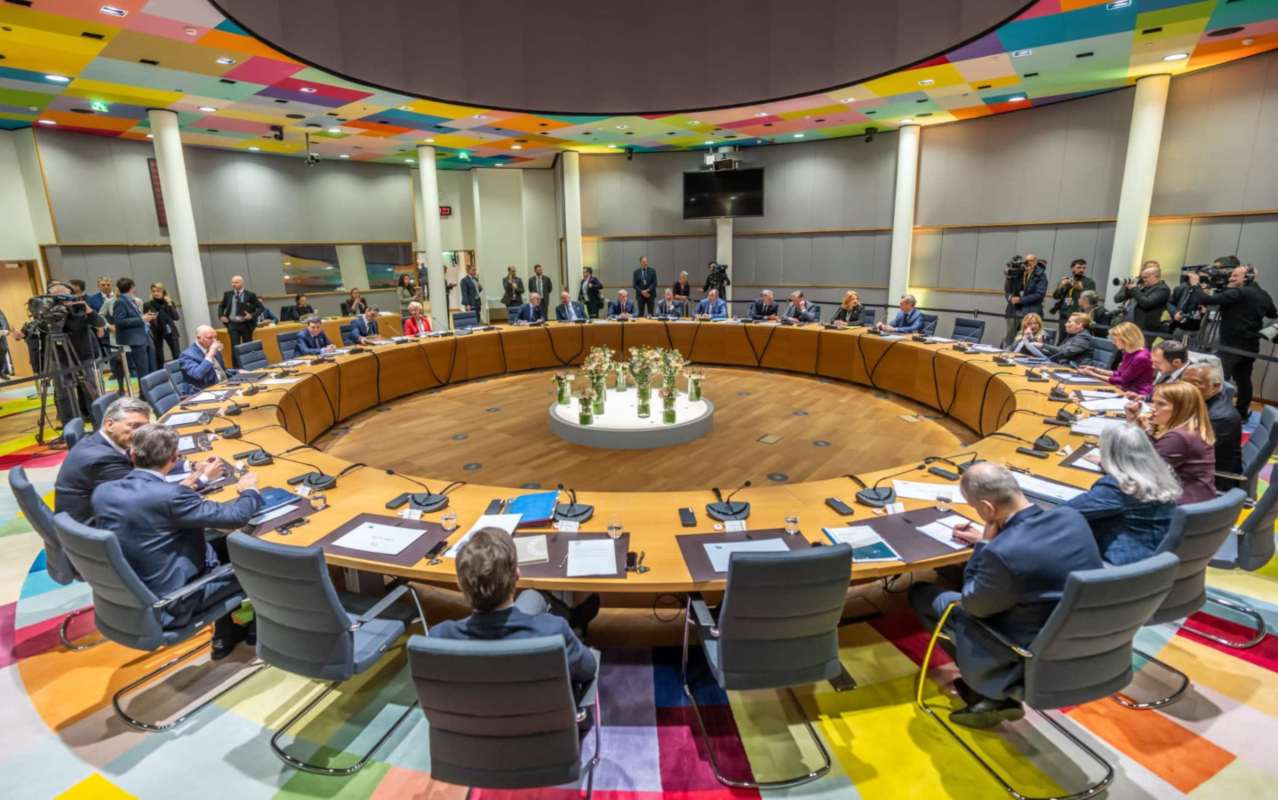
The European Union is entering one of its most difficult budget negotiations in years, as Ireland, which currently holds the rotating presidency of the Council of the EU, has presented a proposal to substantially reduce the bloc’s next seven-year financial framework.
According to Politico, the revised proposal would cut €159 billion from the European Commission’s original budget plans in an attempt to secure a political compromise among the 27 member states.
The Irish presidency’s official presentation puts the reduction at €141 billion in constant 2025 prices, equivalent to approximately 8% of the Commission’s initial proposal.
The difference between the two figures reflects the calculation basis used. It does not alter the central political reality: the Commission’s ambitions are being significantly scaled back before EU leaders have reached a final agreement.
Under the revised proposal, the EU’s long-term budget for 2028–2034 would total approximately €1.62 trillion, compared with roughly €1.76 trillion in the Commission’s original plan, expressed in constant 2025 prices.
For Greece, the negotiations carry considerable political and economic significance.
The outcome will help determine the European funding available for agriculture, regional development, infrastructure, investment, the energy transition and economic modernisation throughout the next seven years.
Ireland Proposes an 8% Cut to Break the Deadlock
Dublin’s proposal is an attempt to reconcile two fundamentally different visions of European financing.
On one side are the EU’s net contributors, which pay more into the common budget than they receive and are demanding tighter spending limits.
On the other are countries determined to preserve funding for agriculture, regional development and infrastructure.
Ireland is seeking a compromise between these positions.
Irish Minister for European Affairs Thomas Byrne presented the revised plan as an effort to adjust spending while maintaining the EU’s main priorities.
According to the presidency’s official presentation, the proposal reduces the Commission’s initial financial ambitions without returning spending to the levels of the current budget period.
Indeed, despite the proposed reductions, the new budget would remain substantially larger than the framework covering 2021–2027.
That is one of Ireland’s central arguments to governments concerned that the proposed cuts would undermine the EU’s capacity to act.


Germany Demands Even Deeper Cuts
Germany remains one of the strongest opponents of the Commission’s original spending proposal.
Berlin, alongside other fiscally conservative governments, has called for reductions amounting to hundreds of billions of euros.
Austria, Denmark, Finland and the Netherlands are among the countries associated with this more restrictive approach.
Their central argument is that European spending must reflect the financial pressures facing national governments.
These countries are already confronting growing demands for defence spending, energy security and economic investment.
At the same time, they are reluctant to accept substantial increases in their contributions to the EU budget.
Ireland’s revised proposal appears insufficient to satisfy all their demands.
Swedish Minister for EU Affairs Jessica Rosencrantz has indicated that the proposed spending level remains too high.
Her position illustrates why the €141 billion reduction has not yet secured agreement.
The Battle Over the Common Agricultural Policy
The Common Agricultural Policy is one of the most sensitive issues in the negotiations.
For many member states, including Greece, agricultural subsidies remain essential instruments for supporting rural incomes and investment in the primary sector.
The Irish presidency has sought to offer relative protection to the EU’s traditional spending priorities.
According to the figures presented, combined funding for agriculture and regional development would amount to approximately €914 billion, compared with €946 billion in the Commission’s proposal.
That represents a reduction of around €32 billion.
In percentage terms, the cut is slightly above 3%.
Despite the reduction from the initial proposal, overall funding for these policies would remain higher than during the current seven-year budget period.
However, higher aggregate European spending does not automatically mean that every country or category of beneficiary will receive more money.
Final allocations will depend on the funding rules, national envelopes and decisions still to be negotiated.
Greece Faces a Difficult Choice Between Traditional Funding and New Priorities
For Athens, the debate over the next EU budget is directly connected to national economic priorities.
Greece has traditionally placed considerable importance on preserving Common Agricultural Policy and cohesion funding.
Agricultural payments support farmers’ incomes and finance investment in the primary sector.
Cohesion resources, meanwhile, help fund regional infrastructure, business investment and development projects.
The challenge for the Greek government is to ensure that the shift towards new European priorities does not weaken traditional sources of funding.
Strengthening European defence, technology and competitiveness creates additional financial needs.
Financing these ambitions, however, may require resources to be redistributed.
Greece must therefore seek a balance between protecting agricultural and regional funding and securing access to new European financial instruments.
The proposed €159 billion reduction is not a cut to Greece’s national allocation. It concerns the revision of the overall EU budget proposal.
No final country-specific loss for Greece has been established.
European Regions Fear Losing Financial Autonomy
Cohesion policy is another major area of disagreement.
Its purpose is to reduce economic and development disparities between European regions.
For countries with substantial regional inequalities, including Greece, these resources are especially important.
The debate concerns more than the total amount of funding.
It also concerns who controls the money.
The Commission’s original proposal triggered criticism because it envisaged significant structural changes, including the integration of various funding programmes into broader national and regional plans.
Regional authorities and European organisations have warned that such changes could reduce the direct role of regional governments.
Ireland’s proposal preserves national allocations as revised under the previous Cypriot presidency.
However, the final institutional structure of cohesion policy remains under negotiation.
EU External Action Faces a €33 Billion Cut
Some of the deepest proportional reductions concern the EU’s external action budget.
According to the figures presented, funding for foreign policy and international development assistance would fall from approximately €190 billion to €157 billion.
That amounts to a reduction of roughly €33 billion, or 17%.
The proposed cut raises questions about the EU’s ability to finance its international ambitions.
Europe is seeking to strengthen its geopolitical influence, support neighbouring countries and respond to crises in strategically important regions.
Yet the revised proposal would significantly reduce the resources initially earmarked for those objectives.
Supporters of the cuts argue that tighter fiscal discipline is necessary.
Critics warn that Europe risks weakening its international influence at a time of intensifying global competition.
Competitiveness and Defence Also Face Major Reductions
Significant cuts are also proposed for competitiveness, innovation and defence programmes.
The Commission originally proposed approximately €522 billion for this category.
Ireland’s revised plan reduces the amount to €456 billion.
That represents a cut of approximately €66 billion, or 13%.
The decision highlights a central contradiction in European policymaking.
The EU has repeatedly acknowledged the need to strengthen its competitiveness against the United States and China.
Growing defence requirements have also intensified calls for greater common European financing.
Nevertheless, the revised budget reduces the resources initially proposed for these priorities.
At the same time, the €456 billion allocation would remain substantially higher than comparable funding in the current budget period.
The disagreement therefore concerns how quickly, and by how much, the EU should increase spending on its emerging strategic priorities.
Five New EU Revenue Sources Could Raise €55 Billion Annually
Ireland’s proposal does not focus exclusively on spending reductions.
It also seeks to strengthen the EU budget through new sources of revenue.
According to the plan, the proposed mechanisms could generate approximately €55 billion per year.
The revised framework retains five proposed revenue sources.
These include mechanisms linked to the EU Emissions Trading System, the Carbon Border Adjustment Mechanism, non-recycled electronic waste, tobacco products and large companies.
Introducing new EU revenue streams remains one of the most politically difficult elements of the negotiations.
Some governments argue that additional own resources could reduce the need to increase national contributions.
Others are concerned about the potential economic burden on businesses and consumers.
The proposed mechanisms would also need to pass the relevant European and national approval procedures.
The €55 billion figure is a projected annual revenue target, not an already approved tax burden.
Common EU Borrowing Remains a Divisive Issue
Financing the next European budget is also connected to the debate over additional common EU borrowing.
Countries supporting greater European spending argue that joint borrowing could finance strategic investment without placing the entire burden on national budgets.
Fiscally conservative governments remain more cautious about expanding common debt.
The experience of the EU Recovery and Resilience Facility provides an important precedent.
However, the repayment of existing European borrowing obligations will create additional financial requirements in the coming years.
The next Multiannual Financial Framework must therefore cover both ongoing European policies and commitments already undertaken.
This further limits the room for compromise.
Why Brussels Wants a Deal Before 2027
Ireland is seeking to conclude the budget negotiations by the end of 2026.
The reason is largely political.
Major national elections are expected in several important European countries in 2027.
France, Italy and Poland are particularly significant in the EU’s political calculations.
Governments fear that national electoral campaigns could make the negotiations even more difficult.
Decisions on the EU budget require politically sensitive compromises.
Each government must explain to domestic voters why it has accepted particular financial contributions or limitations on funding programmes.
As elections approach, such commitments can become harder to defend.
Ireland is therefore attempting to use the remainder of 2026 to secure an overall agreement.
October 15–16 Summit Becomes a Critical Political Test
The revised proposal will be a central issue at the European Council summit in Brussels on October 15–16.
EU leaders are expected to discuss the overall size of the budget, its main priorities and the areas where further compromises are required.
The summit will not necessarily produce a final agreement.
It will, however, provide an important indication of the political balance among member states.
The central question is whether governments demanding deeper cuts will accept Ireland’s proposal as a basis for negotiation.
Countries defending traditional European policies will also assess whether the proposed protections for agriculture and cohesion are sufficient.
For Greece, the summit offers an opportunity to emphasise the particular needs of regional development, agricultural production and infrastructure.
Greece’s Strategy: Cohesion, Agriculture and Access to New EU Funds
Negotiating the next EU budget is not simply a matter of protecting existing allocations.
It is also about Greece’s ability to benefit from the Union’s emerging priorities.
Greater investment in competitiveness could create funding opportunities for Greek industry, technology companies and small and medium-sized enterprises.
New defence programmes could support the domestic defence industry and advanced technology businesses.
Energy security investment could also benefit strategic infrastructure, interconnections and electricity and gas transmission projects.
At the same time, Greece has a strong interest in maintaining adequate funding for agriculture and regional development.
The challenge is twofold.
First, the country must defend its traditional European funding streams.
Second, it must secure access to new instruments capable of supporting productive investment and technological modernisation.
A definitive assessment of the revised budget’s impact on Greece will depend on detailed national allocations and programme eligibility rules.
Europe’s Budget Paradox: Bigger Ambitions, Tighter Spending
The negotiations expose a fundamental contradiction in the EU’s current strategy.
European governments broadly agree that the continent needs greater investment in defence, technology and economic resilience.
Yet many of those same governments are seeking to restrict common spending.
The contradiction is particularly striking amid geopolitical uncertainty, high energy costs and growing competition from the United States and China.
Supporters of a larger EU budget argue that Europe needs sufficient shared financial resources to meet these challenges.
Governments demanding cuts counter that new priorities must be accompanied by clearer spending choices and fiscal discipline.
Ireland’s proposal attempts to reconcile those competing positions.
Initial reactions, however, suggest that agreement remains difficult.
The Real Political Battle Is Only Beginning
Ireland’s proposal to reduce the EU’s next seven-year budget represents a significant attempt to narrow the divide between competing fiscal approaches.
The relative protection offered to the Common Agricultural Policy and cohesion funding is important for countries that rely heavily on these programmes.
The proposed reductions in external action, competitiveness and defence, however, raise new questions about Europe’s ability to finance its strategic ambitions.
Germany and its allies continue to demand stricter spending limits.
Other governments insist that the European Union needs more resources to respond to economic and geopolitical challenges.
For Greece, the stakes are particularly concrete.
The next seven years will determine a substantial part of the European financing available for agricultural production, regional development, infrastructure and investment.
The October 15–16 European Council summit will provide the first major political test of Ireland’s revised proposal. But the final agreement will depend on whether the 27 member states can agree not only on how much Europe should spend, but also on what kind of Europe they want to finance.
Source: pagenews.gr