The European Union is building an international coalition against tolls and fees imposed on ships passing through straits used for international navigation, as instability in the Gulf and the Red Sea puts maritime transport under mounting pressure.
Backed by around 60 countries, the “No Fees, No Tolls” initiative sends a diplomatic message against attempts to turn critical maritime passages into sources of revenue or instruments of political leverage.
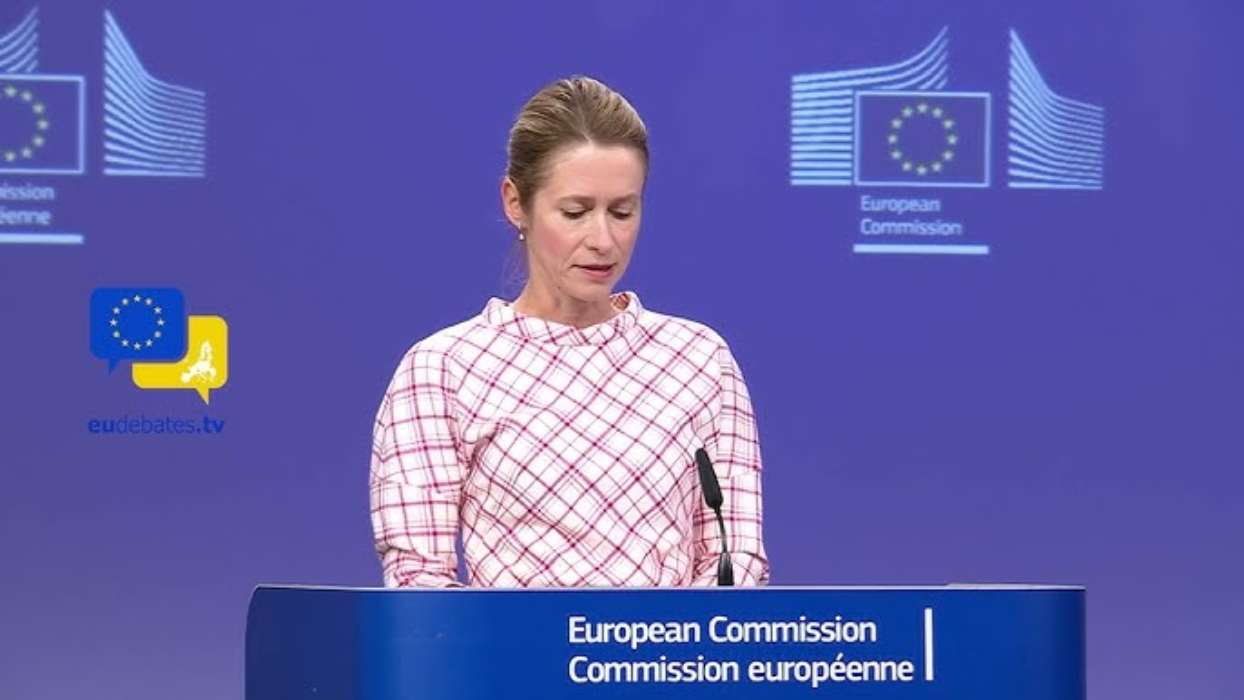
Alongside that initiative, EU foreign policy chief Kaja Kallas is pressing member states to strengthen Europe’s naval presence. Protecting commercial vessels, she argues, requires more available warships and sustained national contributions.


“Open to everyone, not whoever can pay”
Kallas presented the international commitment as a defence of access to essential shipping routes.
“Today, 60 countries pledged to oppose tolls or fees on international shipping routes by joining our ‘No Fees, No Tolls’ global pledge,” she said.
Announced on Monday, October 12, the declaration supports freedom of navigation under international law and opposes unilateral charges or restrictions on passage through international straits.
“This is a clear diplomatic message to all those who seek to hijack waterways for their own gain,” Kallas said, inviting additional countries to join.
She summed up the initiative’s central principle:
“International waters, the arteries of our economy, must remain open to everyone, not whoever can pay.”


Hormuz at the centre of shipping concerns
The initiative carries particular significance amid disruption around the Strait of Hormuz, alongside security threats in the Red Sea and the Bab el-Mandeb Strait.
For shipping companies, reliable access to these passages affects voyage planning, cargo deliveries and transport costs.
Additional charges or restrictions can deepen uncertainty. Security threats can also cause delays, increase insurance costs and encourage operators to choose longer routes, with potential consequences for supply chains and the prices of goods and energy.
The declaration establishes a diplomatic commitment. Safe and uninterrupted passage remains the operational challenge.

Aspides faces a shortage of ships
At the October 12 Foreign Affairs Council, EU ministers discussed tensions in the Gulf and the Red Sea, alongside the need to strengthen European maritime security operations.
Kallas welcomed additional ships offered by member states but made clear that the available force remained insufficient.
“First on ASPIDES, we need at least 10 ships, and we are not there,” she said.
That figure describes the mission’s requirements. It does not mean that 10 vessels have already been secured or deployed. Discussions within national governments must still translate into operational contributions.
“If we want to be a credible security provider in the region, then we need to have a credible mission, and for this we need more ships,” Kallas stressed.
She also noted that stronger naval support had been requested by Saudi Arabia’s foreign minister.
Diplomacy and naval protection advance together
The international pledge against transit charges and the reinforcement of EUNAVFOR ASPIDES address complementary aspects of maritime security.
The pledge seeks broader diplomatic support for freedom of navigation. Reinforcing Aspides concerns the protection of commercial vessels, with Kallas placing particular emphasis on escort operations in the Red Sea. Her remarks did not announce a new naval operation in the Strait of Hormuz.


For shipping operators, the practical test will be the availability of vessels, continuity of protection and prevention of further disruption.
“Keeping the Red Sea open is in Europe’s strategic interest,” Kallas said.
Member states now face the task of providing the naval resources needed to support that commitment.
Source: pagenews.gr