Merz Defies Political Pressure: “We Are the Firewall” Against the AfD — And Germany’s Future Is at Stake
 ΧΡΟΝΟΣ ΑΝΑΓΝΩΣΗΣ 19 '
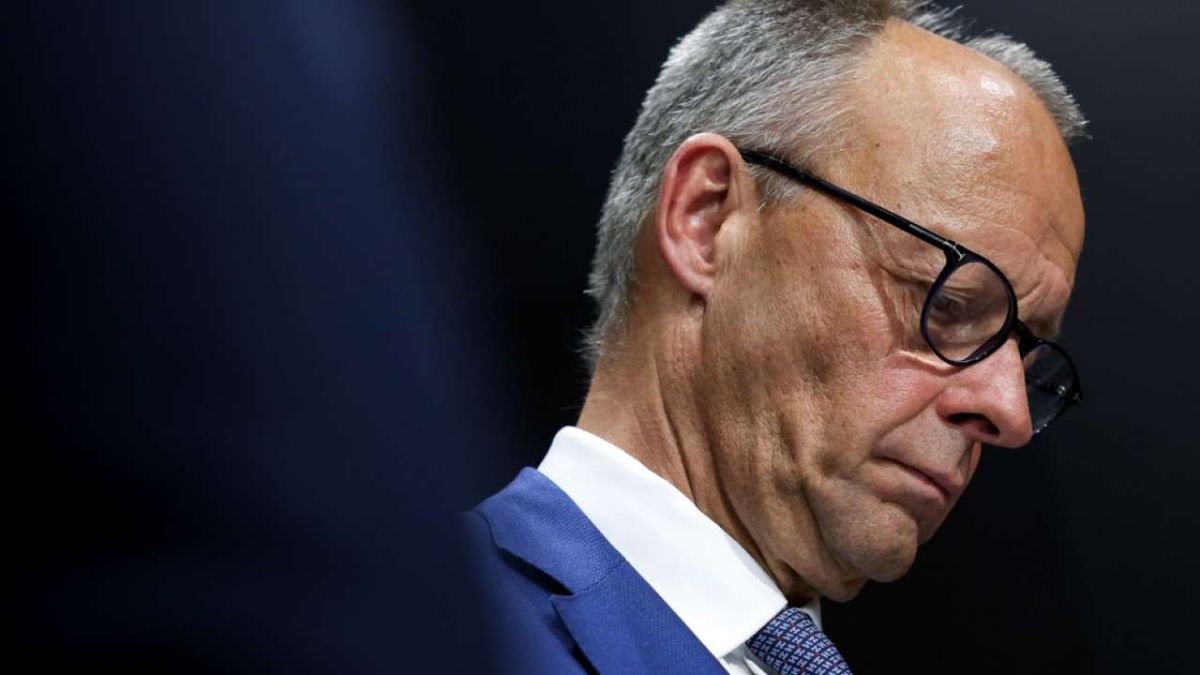
Πηγή Φωτογραφίας: AP Photo//Merz Defies Political Pressure: “We Are the Firewall” Against the AfD — And Germany’s Future Is at Stake


Merz Refuses to Back Down as Germany Faces a Political Storm
German Chancellor Friedrich Merz has delivered a defiant message amid mounting political pressure, economic uncertainty and the growing electoral strength of the far-right Alternative for Germany (AfD).
In an extensive interview with the Financial Times, published on October 15, 2026, the 70-year-old chancellor made clear that he has no intention of resigning, despite disappointing election results for his Christian Democratic Union (CDU) and increasing tensions within Germany’s governing coalition.
His message is one of political determination at a moment when Europe’s largest economy is struggling to regain momentum.
Germany faces a combination of industrial weakness, job losses, high energy costs and structural challenges that have intensified public dissatisfaction.
Meanwhile, the AfD has emerged as a formidable political force, polling close to 30% nationally and challenging the established parties across eastern Germany.
Merz is seeking to position himself as both a guarantor of democratic stability and a reformer prepared to confront Germany’s economic difficulties.
But his interview goes far beyond domestic politics.
It offers a broader picture of how Berlin intends to respond to an increasingly unpredictable United States, an assertive China, mounting European debt and the continuing war in Ukraine.
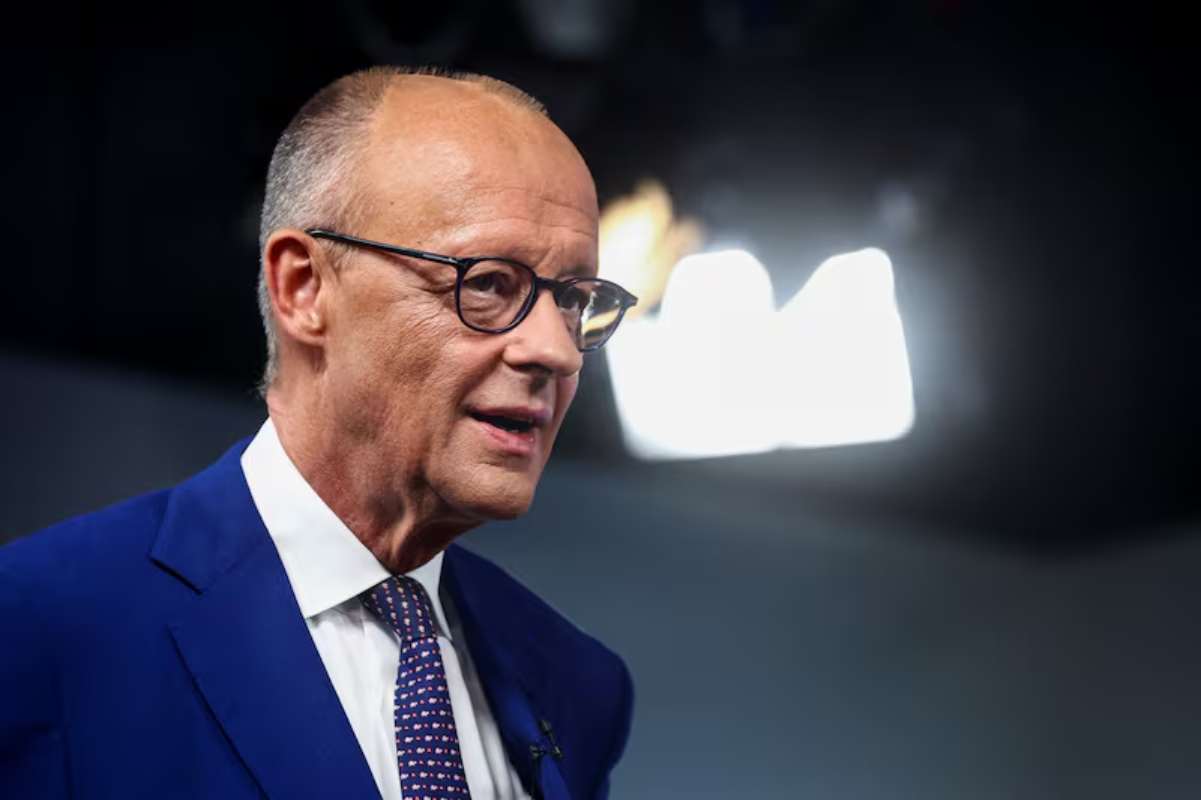
The AfD Approaches 30% — And Germany’s Political Firewall Faces Its Toughest Test
The growing strength of the AfD represents one of the most serious political challenges confronting the chancellor.
Recent regional elections have highlighted the party’s increasing influence, particularly in eastern Germany.
The CDU has suffered setbacks, while the AfD has consolidated its position among voters dissatisfied with the economy, migration policies and the political establishment.
Merz acknowledges that the party’s support may not yet have reached its peak.
Nevertheless, he categorically rejects the possibility of forming a governing alliance with it.
“We are the firewall,” he declared, emphasizing the CDU’s commitment to preventing cooperation with the AfD.
The phrase refers to Germany’s long-standing political principle of excluding the far right from governing coalitions.
For Merz, the distinction is not merely tactical.
He argues that the differences between the CDU and the AfD extend to fundamental questions about Germany’s place in Europe and the world.
The AfD’s positions on European integration, NATO and support for Ukraine are incompatible with the Christian Democrats’ strategic commitments.
The chancellor insists that cooperation would undermine the principles underpinning Germany’s postwar political order.
A Controversial Vote in Saxony-Anhalt Raises Questions
The political firewall has come under renewed scrutiny following developments in Saxony-Anhalt.
During a vote to select the president of the regional parliament, an AfD candidate received more votes than the party and its allies could account for.
The result raised questions about whether lawmakers from other political groups had broken ranks.
Because the vote was secret, the identities and motivations of those responsible cannot be established.
Nevertheless, the episode intensified debate about the durability of the political isolation surrounding the AfD.
Merz remains determined to preserve the CDU’s position.
He argues that maintaining a clear distinction between mainstream conservative politics and the AfD is essential to Germany’s democratic institutions.
The challenge, however, is increasingly complicated by the party’s growing electoral strength.
Germany’s Industrial Crisis: The Economy Behind the Political Discontent
Germany’s economic difficulties are central to the political pressure facing Merz.
The country’s manufacturing sector has struggled with high energy prices, weak growth and intensifying international competition.
The automotive industry, chemical producers and engineering companies are particularly exposed.
Germany’s traditional industrial model, built around exports, advanced manufacturing and relatively affordable energy, is undergoing a difficult transition.
The loss of industrial jobs has intensified public anxiety.
At the same time, businesses face rising costs associated with digital transformation, decarbonization and changing global trade patterns.
Merz recognizes that many Germans are frustrated by the absence of a convincing economic recovery.
His government is therefore seeking to accelerate investment and restore confidence in the country’s long-term prospects.
A major investment conference, Invest in Germany, scheduled to begin in Berlin on Monday, is intended to demonstrate the country’s attractiveness to international capital.
Merz argues that foreign investors often appear more optimistic about Germany’s potential than German voters themselves.
The government hopes that investment in infrastructure, technology and industrial modernization will support employment and productivity.
The Pension Battle: Merz Looks to Sweden for Inspiration
One of the chancellor’s most ambitious domestic objectives is reforming Germany’s pension system.
Merz is examining a funded pension model inspired by Sweden, designed to complement the existing pay-as-you-go system.
Under Germany’s traditional arrangement, contributions from current workers help finance payments to retirees.
An aging population and changing demographics are putting increasing pressure on that structure.
A funded component could allow retirement savings to be invested over time, potentially creating an additional source of retirement income.
However, such reforms require complex legislation and careful management of the transition.
The proposal has already generated disagreements within the governing coalition, particularly between the CDU and its Social Democratic partners.
The Social Democratic Party (SPD) places particular emphasis on protecting existing pension entitlements and maintaining social guarantees.
Merz argues that postponing reform would place an even greater burden on younger generations.
For the chancellor, pension reform is not simply a fiscal exercise.
It is a test of whether Germany can modernize its welfare state without undermining social stability.
Germany’s Debt Brake: A Historic Shift in Fiscal Policy
Since taking office in May 2025, Merz has pursued significant changes to Germany’s fiscal framework.
The relaxation of the constitutional debt brake has enabled a substantial increase in spending on infrastructure and defense.
This represents a major departure from the fiscal restraint that characterized German economic policy for decades.
Berlin has concluded that deteriorating infrastructure, industrial competitiveness concerns and growing security requirements demand greater public investment.
However, Merz is attempting to balance these priorities with Germany’s traditional commitment to fiscal credibility.
The government must finance military modernization, infrastructure improvements and economic restructuring while managing growing social expenditure.
The result is a difficult political balancing act.
Greater investment may strengthen Germany’s productive capacity over time, but higher borrowing also creates longer-term fiscal obligations.
Merz is therefore seeking to distinguish strategic investment from an unrestricted expansion of public spending.
A Warning for the Eurozone: Europe’s Debt Is Too High
The German chancellor also delivers a clear warning about public debt across the eurozone.
He believes European governments must remain committed to fiscal discipline and respect the European Union’s budgetary rules.
His concerns reflect the possibility that rising borrowing costs could destabilize highly indebted economies.
When investors become concerned about a government’s ability to manage its finances, they may demand higher yields on its bonds.
That increases debt-servicing costs and can create additional pressure on public budgets.
Merz’s position is particularly significant because Germany remains one of the most influential voices in European fiscal negotiations.
Despite relaxing domestic borrowing restrictions for selected investments, Berlin is not advocating a general abandonment of European fiscal rules.
For countries such as Greece and Italy, the debate matters directly.
European fiscal policy influences the broader financial environment, borrowing conditions and the room available for public investment.
The challenge for the eurozone is to support economic growth and defense investment while preserving confidence in public finances.
The European Central Bank: Questions Surround Christine Lagarde’s Succession
Merz also addresses the future leadership of the European Central Bank.
He emphasizes that the ECB must remain independent and capable of conducting monetary policy without political interference.
His comments come amid speculation that ECB President Christine Lagarde could leave her position before her term formally expires in October 2027.
An early departure could bring forward the selection of her successor.
Such a decision would have significant implications for European political negotiations, particularly ahead of France’s presidential election.
Merz did not announce any agreement on a successor.
He indicated, however, that European governments would be prepared to address the situation if a vacancy arose.
The leadership of the ECB matters greatly to financial markets because it influences expectations about interest rates, inflation management and monetary stability.
Any uncertainty surrounding the transition could attract considerable attention from investors.
Merz and Macron Prepare a Tougher European Trade Strategy
One of the interview’s most important international messages concerns European trade policy.
Merz is working with French President Emmanuel Macron on a more assertive strategy to protect European economic interests.
The two leaders want the EU to respond more effectively to economic coercion and unfair trade practices.
Their approach includes strengthening mechanisms that could restrict access to the European single market when foreign governments exert targeted pressure on European industries or supply chains.
This represents a notable shift in Germany’s traditional approach.
Berlin has historically been one of the strongest advocates of international trade and open markets.
However, increasing geopolitical tensions and the vulnerability of industrial supply chains have encouraged a reassessment.
Merz believes Europe must retain its commitment to trade while developing stronger instruments to defend its strategic interests.
The proposed approach reflects growing concerns about both Chinese industrial competition and US trade pressure.
China’s €1 Billion-a-Day Trade Surplus Raises Alarm in Berlin
China occupies a central position in the chancellor’s trade agenda.
Merz points to the scale of Beijing’s trade surplus with the European Union, estimated at approximately €1 billion per day.
The figure illustrates the imbalance in bilateral trade flows.
European manufacturers are facing intense competition from Chinese companies in sectors including electric vehicles, batteries and industrial equipment.
At the same time, restrictions on exports of certain rare earth materials and magnets have highlighted Europe’s dependence on critical Chinese supply chains.
These materials are essential for a wide range of industrial applications, from electric motors to advanced manufacturing and defense equipment.
Merz recognizes the importance of diplomatic engagement with Beijing.
However, he argues that Europe needs more effective tools to respond when access to strategic materials becomes a source of geopolitical pressure.
The European Commission’s trade negotiations with China remain an important part of that strategy.
For Germany, the issue is especially sensitive.
Its industrial economy depends heavily on exports, but many German manufacturers also rely on Chinese components and raw materials.
A more confrontational trade policy could therefore create both opportunities and risks.
Europe’s Message to Trump: Economic Pressure Must Have Consequences
Merz’s call for stronger European trade defenses also reflects uncertainty about US policy.
President Donald Trump’s approach to tariffs and international economic negotiations has generated concern among European governments.
Berlin wants the EU to be capable of responding quickly and collectively when its economic interests are threatened.
This does not necessarily mean abandoning cooperation with Washington.
Instead, the German government is seeking to reduce Europe’s vulnerability to sudden changes in American trade policy.
The broader objective is greater European strategic autonomy.
Merz believes the EU should be able to protect its industries and supply chains while maintaining strong international partnerships.
The debate is likely to influence future European decisions on industrial policy, investment and trade regulation.
Ukraine: Merz Warns Against Abandoning Kyiv
Support for Ukraine remains a central pillar of Merz’s foreign policy.
The German chancellor argues that abandoning Kyiv would have profound consequences for Europe’s security.
He views the war not simply as a conflict between Russia and Ukraine, but as a challenge to the wider European security order.
Germany has therefore continued to support Ukrainian defense capabilities and financial assistance.
Merz believes Ukraine can maintain effective resistance if its allies make the necessary political and military decisions.
His position contrasts with political forces calling for a reduction or termination of support.
The issue is becoming increasingly urgent as Kyiv faces substantial financial requirements for 2027.
European governments must determine how to maintain military assistance and budgetary support while addressing their own fiscal pressures.
Germany’s role will be crucial because of its economic weight and influence within the EU.
Russian Diesel: Merz Challenges Trump’s Deal With Putin
The interview also highlights growing differences between Berlin and Washington over energy policy.
Trump’s administration has moved to facilitate purchases of Russian diesel as part of efforts to ease high fuel prices in the United States.
The decision has triggered criticism in Ukraine and across parts of Europe.
Ukrainian President Volodymyr Zelenskyy argues that renewed energy purchases could provide additional revenue to Russia while the war continues.
Merz questions whether the American strategy is an appropriate response to the energy crisis.
He acknowledges that the United States faces substantial pressure from high fuel prices, particularly amid disruption caused by the war involving Iran.
However, he remains skeptical that increasing purchases of Russian diesel offers a sustainable solution.
The disagreement reflects different priorities.
Washington is seeking relief for domestic energy consumers.
Berlin and other European governments remain focused on maintaining economic pressure on Moscow.
The issue illustrates how energy security, inflation and the war in Ukraine have become increasingly intertwined.
Managing Trump: Germany’s Difficult Relationship With Washington
Merz describes relations with the Trump administration as requiring continuous diplomatic attention.
Germany wants the United States to remain committed to NATO, European security and support for Ukraine.
However, changes in Washington’s priorities have created uncertainty.
Berlin is attempting to preserve transatlantic cooperation while strengthening Europe’s ability to act independently.
This dual strategy has become a defining feature of Merz’s foreign policy.
On one hand, Germany recognizes the United States as an indispensable security partner.
On the other, the government believes Europe must reduce excessive dependence on American decisions.
That applies to defense capabilities, energy security, technology and international trade.
The challenge is to build greater European resilience without weakening the alliances on which the continent’s security continues to depend.
France’s Political Future: What Happens if Marine Le Pen Comes to Power?
Merz also addresses the possibility of major political change in France.
The prospect of a different political direction in Paris raises questions about the future of Franco-German cooperation.
Asked how he would respond to a potential presidency involving Marine Le Pen, the chancellor indicated that he would seek to maintain workable relations.
His response reflects the practical importance of cooperation between Europe’s two largest economies.
Germany and France have played a central role in shaping European integration for decades.
Their coordination remains important for fiscal policy, industrial strategy, defense and institutional reform.
Political disagreements between Berlin and Paris could complicate the EU’s ability to reach major decisions.
Merz’s position suggests that he would prioritize institutional cooperation even in the event of significant political differences.
That does not imply agreement with Le Pen’s political platform.
It reflects the importance of maintaining relations between two countries whose economies and strategic interests remain deeply interconnected.
Brussels Bureaucracy Comes Under Fire
Despite his strong commitment to European integration, Merz is critical of excessive EU regulation.
He argues that administrative burdens and complex rules can undermine competitiveness and discourage investment.
Germany wants faster decision-making and simpler procedures for businesses operating within the single market.
The chancellor believes Europe must become more efficient internally while adopting a stronger position externally.
The objective is to reduce unnecessary regulatory costs without undermining essential protections.
This debate is particularly important for small and medium-sized enterprises, which often face disproportionate compliance costs.
Simplification could make it easier for businesses to invest, innovate and expand across European borders.
However, the challenge will be balancing competitiveness with environmental, consumer and labor protections.
What Germany’s Political Crisis Means for Greece
Developments in Germany have direct implications for the Greek economy.
Germany is a major market for Greek exports and an important source of tourism demand.
Its economic performance also influences investment sentiment and broader eurozone growth.
A prolonged slowdown in German manufacturing and consumer spending could affect economic activity across Europe.
At the same time, Berlin’s decisions on fiscal rules, industrial policy and defense spending will help shape the environment in which Greek businesses operate.
Greater European investment in infrastructure, technology and defense could create opportunities for Greek companies participating in cross-border supply chains.
However, Merz’s emphasis on fiscal discipline suggests that Germany will continue to advocate caution over public borrowing.
For Athens, the challenge will be to support European investment and economic resilience while maintaining sound public finances.
Germany’s evolving relationship with China and the United States could also affect Greek trade, shipping and investment flows.
Merz’s Central Challenge: Reform Germany Without Losing Political Stability
The German chancellor faces an unusually demanding political agenda.
He must revive economic growth, modernize the welfare state and manage disagreements within his coalition.
At the same time, he is seeking to contain the AfD’s growing electoral influence without compromising the CDU’s commitment to non-cooperation.
Internationally, Merz wants a stronger European Union capable of defending its economic interests and maintaining support for Ukraine.
He also seeks to preserve transatlantic relations while preparing Europe for a less predictable American partner.
These challenges are closely connected.
Economic weakness can increase political dissatisfaction, while geopolitical instability makes industrial recovery more difficult.
Merz believes structural reform, investment and European cooperation provide the foundation for Germany’s future.
Whether his government can deliver tangible results will determine the credibility of that strategy.
The Message to Berlin, Brussels and Washington
The Financial Times interview presents a chancellor determined to regain the political initiative.
Merz rules out resignation, defends the firewall against the AfD and insists that Germany must undertake difficult economic and social reforms.
He warns about excessive eurozone debt, supports a stronger European trade policy and maintains his commitment to Ukraine.
His criticism of Trump’s Russian diesel initiative also demonstrates that Berlin is prepared to question American decisions when they conflict with European strategic priorities.
Merz’s central message is that Germany must remain a pillar of European stability, even while confronting its own economic and political difficulties.
The months ahead will test whether that ambition can be translated into economic recovery, political confidence and a stronger European response to global uncertainty.
Source: pagenews.gr
Διαβάστε όλες τις τελευταίες Ειδήσεις από την Ελλάδα και τον Κόσμο