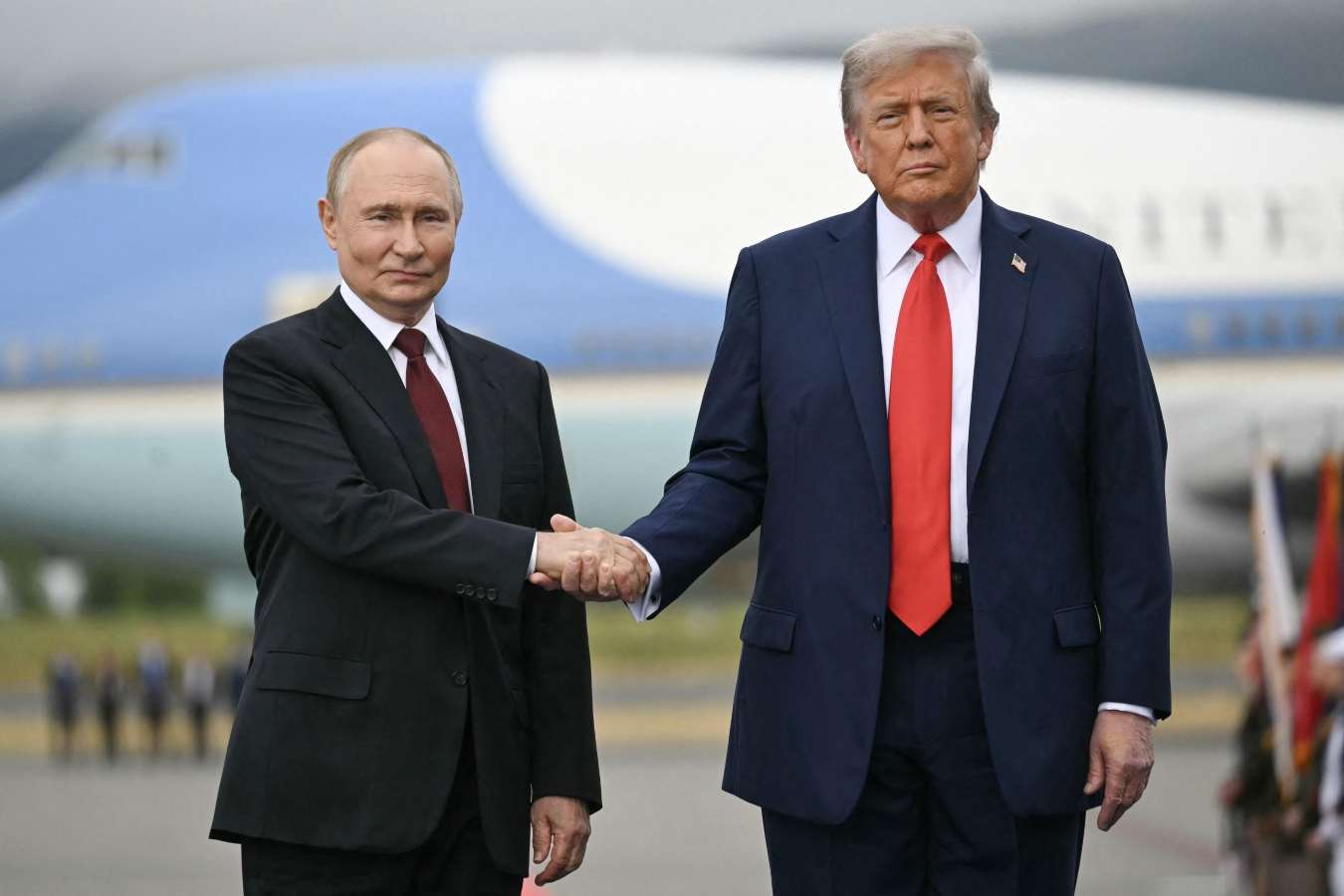
The agreement between US President Donald Trump and Russian President Vladimir Putin to release Russian diesel onto international markets represents more than an attempt to ease the global energy crisis. It highlights a fundamental divergence between Washington and Brussels over the use of economic sanctions, the future of the war in Ukraine, and the political consequences of soaring fuel prices.
The United States is increasingly treating sanctions as a flexible instrument for managing energy supply, while the European Union continues to regard restrictions on Russian energy revenues as an essential component of its strategy toward Moscow.
The decision announced on October 9, followed by a US Treasury authorization permitting certain transactions involving Russian-origin diesel until April 7, 2027, marks a significant adjustment in Washington’s approach.
What was originally designed as an instrument of economic pressure is now being selectively relaxed to address domestic energy concerns.
The central question is whether Western sanctions can remain effective when the United States and Europe increasingly pursue different economic and strategic priorities.
Washington Opens the Door to Russian Diesel
On October 9, the US Treasury Department’s Office of Foreign Assets Control (OFAC) issued General License 135, authorizing specified transactions involving the sale, delivery, unloading and importation of Russian-origin diesel.
The authorization remains valid until April 7, 2027, creating a roughly six-month window for permitted commercial activity.
The decision has important implications for international commodity traders, shipping companies, financial institutions and insurers involved in the global petroleum market.
Energy sanctions extend far beyond the physical movement of fuel. They also affect financing, insurance, shipping arrangements, payment systems and access to international markets.
A general license can therefore facilitate multiple stages of the energy supply chain.
The measure does not constitute a complete removal of US sanctions against Russia. Instead, it introduces a targeted exemption with potentially significant commercial consequences.
Nevertheless, its political importance is considerable.
Washington is demonstrating that sanctions can be adjusted when domestic economic pressures become sufficiently intense.


The Russian Supply Plan: 300,000 Tonnes Immediately, More to Follow
According to Trump’s announcement, Russia agreed to release more than 300,000 tonnes of diesel immediately, followed by an additional 500,000 tonnes in November and approximately one million tonnes afterward.
These figures represent announced supply commitments rather than independently verified deliveries.
Their actual impact will depend on Russian refining capacity, available shipping routes, commercial contracts and the ability of international buyers to absorb the additional volumes.
Russia’s refining sector has faced repeated disruptions caused by Ukrainian drone attacks on energy infrastructure.
These strikes have affected refinery operations and complicated Moscow’s ability to maintain consistent exports of refined petroleum products.
This creates a strategic contradiction.
Washington is seeking additional Russian fuel supplies at precisely the moment when the war itself is constraining Russia’s refining and export capacity.
Whether Moscow can deliver the announced volumes remains an important question for energy markets.


US Midterm Elections Turn Diesel Prices Into a Political Priority
The timing of the agreement is closely linked to the political pressures facing the Trump administration.
The November 3 midterm elections are approaching amid growing public concern over inflation, energy prices and the cost of living.
Diesel prices have become particularly important because of their direct influence on transportation, agriculture, manufacturing and supply chains.
On October 9, the average US diesel price stood at approximately $6.27 per gallon, compared with around $3.67 a year earlier.
Unlike gasoline, diesel plays an especially important role in the movement of goods throughout the economy.
Higher diesel prices increase trucking expenses, agricultural production costs and the price of delivering food and consumer products.
These additional expenses can eventually reach households through higher retail prices.
For the White House, increasing international diesel availability offers a possible way to reduce economic pressure ahead of the elections.
However, energy analysts have questioned whether the agreement will produce the desired results.
Redirecting Russian diesel toward the United States does not necessarily increase total global supply.
If Russian shipments are simply diverted from existing customers, the impact on international prices could remain limited.


Brussels Rejects Washington’s Change of Course
The European Union has responded to the agreement by reaffirming its commitment to sanctions against Russia.
European foreign ministers have argued that Moscow’s energy revenues must remain constrained as part of the broader effort to pressure the Kremlin over its war in Ukraine.
EU foreign policy chief Kaja Kallas emphasized the importance of maintaining economic pressure on Russia, despite Washington’s decision.
She reiterated that the United States remains Europe’s principal ally while making clear that European governments intend to continue their sanctions strategy.
Ireland’s Foreign Minister Helen McEntee described the agreement as concerning.
Swedish Foreign Minister Maria Malmer Stenergard also expressed opposition to relaxing restrictions on Russian energy exports.
Lithuanian Foreign Minister Kęstutis Budrys questioned whether the arrangement would meaningfully reduce petroleum prices and warned about its implications for transatlantic unity.
These reactions demonstrate that the disagreement extends beyond the technical details of energy trade.
It reflects different assessments of how economic pressure should be used to influence Russia’s behavior.
Ukraine Fears New Energy Revenues Could Support Russia’s War
For Kyiv, the agreement raises immediate strategic concerns.
Ukrainian officials have consistently argued that Russia’s energy revenues contribute to its ability to finance military operations.
Any measure that expands Moscow’s access to international energy markets therefore raises questions about the effectiveness of Western economic restrictions.
President Volodymyr Zelensky criticized the diesel arrangement, expressing concern that easing restrictions could weaken pressure on Russia.
The disagreement intensified when Trump announced what he described as an energy ceasefire between Russia and Ukraine.
Kyiv subsequently indicated that it had not received the details of such an agreement, while Moscow did not provide clear confirmation of the arrangement as described by Washington.
The episode highlights a broader difficulty in US–Ukraine relations.
American decisions about energy sanctions can directly affect the economic environment surrounding the war, even when Ukraine is not involved in the negotiations.
From Economic Coercion to Energy Supply Management
The agreement illustrates two competing approaches to energy sanctions.
The first treats sanctions primarily as instruments of economic coercion intended to restrict a country’s financial and commercial capabilities.
The second regards sanctions as policy tools that can be adjusted to address broader economic objectives, including inflation and energy security.
These approaches are not necessarily incompatible.
Governments frequently introduce exemptions to sanctions regimes when they consider certain transactions essential for humanitarian, economic or security reasons.
However, sanctions are generally more effective when participating countries coordinate their policies and maintain consistent expectations.
When Washington authorizes selected Russian energy transactions while Brussels continues seeking to reduce Moscow’s revenues, that coordination becomes more complicated.
The resulting uncertainty can affect traders, financial institutions and governments attempting to assess the future direction of Western economic policy.
The Iran War Adds Another Layer to the Energy Crisis
The US decision also reflects broader instability in international energy markets.
The war involving Iran and disruptions to oil flows from the Persian Gulf have increased pressure on global energy supplies.
At the same time, Ukrainian attacks on Russian refineries have affected the availability of refined petroleum products.
These developments have contributed to a difficult environment for diesel markets.
Europe faces the consequences while continuing its efforts to reduce dependence on Russian energy.
The challenge for European governments is particularly complex.
They must balance support for Ukraine and the maintenance of sanctions against the need to protect households, industry and transportation networks from persistently high energy prices.
For energy-intensive industries, the cost of fuel and electricity directly influences competitiveness.
For governments, prolonged energy inflation creates additional pressure for subsidies, tax relief and targeted financial assistance.
The disagreement with Washington therefore emerges at a moment when Europe’s own energy policy is facing significant economic constraints.
Greece Faces the Economic Consequences of the Energy Shock
For Greece, the transatlantic disagreement has important implications for energy security and economic policy.
Although Greece has substantially reduced its direct dependence on Russian energy products, domestic fuel prices remain closely connected to international petroleum markets.
Changes in global diesel supply can affect transportation costs, agricultural production, logistics and industrial activity.
Any sustained decline in international fuel prices could provide relief to businesses and households.
Conversely, prolonged market disruption would maintain pressure on production costs and consumer prices.
Greek refineries also operate within a highly interconnected regional and international market.
Changes in trade flows, refining margins and petroleum product availability can influence the broader commercial environment in which they operate.
Athens must simultaneously remain aligned with the European Union’s sanctions framework.
This places Greece within the wider European debate over how to reconcile energy security, economic competitiveness and geopolitical commitments.
The Greek and Italian proposals for greater fiscal flexibility and targeted support measures are particularly relevant in this context.
As European leaders examine possible responses to the energy crisis, the question of how much fiscal space should be available to national governments is becoming increasingly important.
Can Russian Diesel Actually Lower Global Prices?
One of the central uncertainties surrounding the Trump–Putin agreement concerns its economic effectiveness.
Allowing additional Russian diesel into selected markets could improve regional availability.
However, it does not automatically guarantee a substantial reduction in global prices.
If Russian shipments are redirected from other buyers rather than representing additional production, the overall global supply balance may change very little.
Russia could benefit from improved commercial access without a corresponding reduction in costs for American consumers.
The agreement could also alter established trading relationships and shipping routes, creating new opportunities for commodity traders while leaving the underlying supply constraints largely unresolved.
These concerns have generated criticism within the United States as well.
A bipartisan group of six US senators called for the administration to reconsider the decision, arguing that easing restrictions on Russian petroleum products could undermine efforts to limit Moscow’s energy revenues.
The debate demonstrates that the disagreement is not exclusively between Washington and Brussels.
It also reflects competing views within the United States about the relationship between domestic energy affordability and foreign-policy objectives.
The Transatlantic Alliance Faces a New Economic Test
The diesel agreement offers a revealing example of how domestic economic pressures can reshape international strategic decisions.
For the Trump administration, reducing fuel prices has become an important economic and political objective.
For European governments, maintaining restrictions on Russian energy revenues remains part of their broader strategy for supporting Ukraine and constraining Moscow’s war financing.
These priorities are not automatically irreconcilable.
However, they create tensions when decisions taken by one partner weaken the economic measures favored by another.
The broader issue is whether the United States and Europe can preserve a coordinated sanctions framework while pursuing increasingly different approaches to energy security.
For Russia, differences between Western governments may create additional commercial opportunities and complicate efforts to maintain consistent economic pressure.
For Ukraine, the uncertainty raises concerns about the durability of Western support.
For international energy markets, the agreement introduces another variable into an already volatile environment.
The most consequential question is not simply how much Russian diesel will reach global markets, but who will determine when sanctions remain instruments of strategic pressure and when they become adjustable mechanisms for managing fuel prices.
The answer will influence global energy trade, Russia’s financial resources, Europe’s economic resilience and the future coherence of Western policy toward the war in Ukraine.
Source: pagenews.gr