Donald Trump has made an unusual admission about one of the defining policies of his presidency, acknowledging that his administration may have gone too far in its crackdown on undocumented immigrants.
Following the Republicans’ defeat in the November midterm elections, the US president suggested that his aggressive deportation policies may have alienated voters and indicated a willingness to negotiate with Democrats over a potential amnesty agreement.
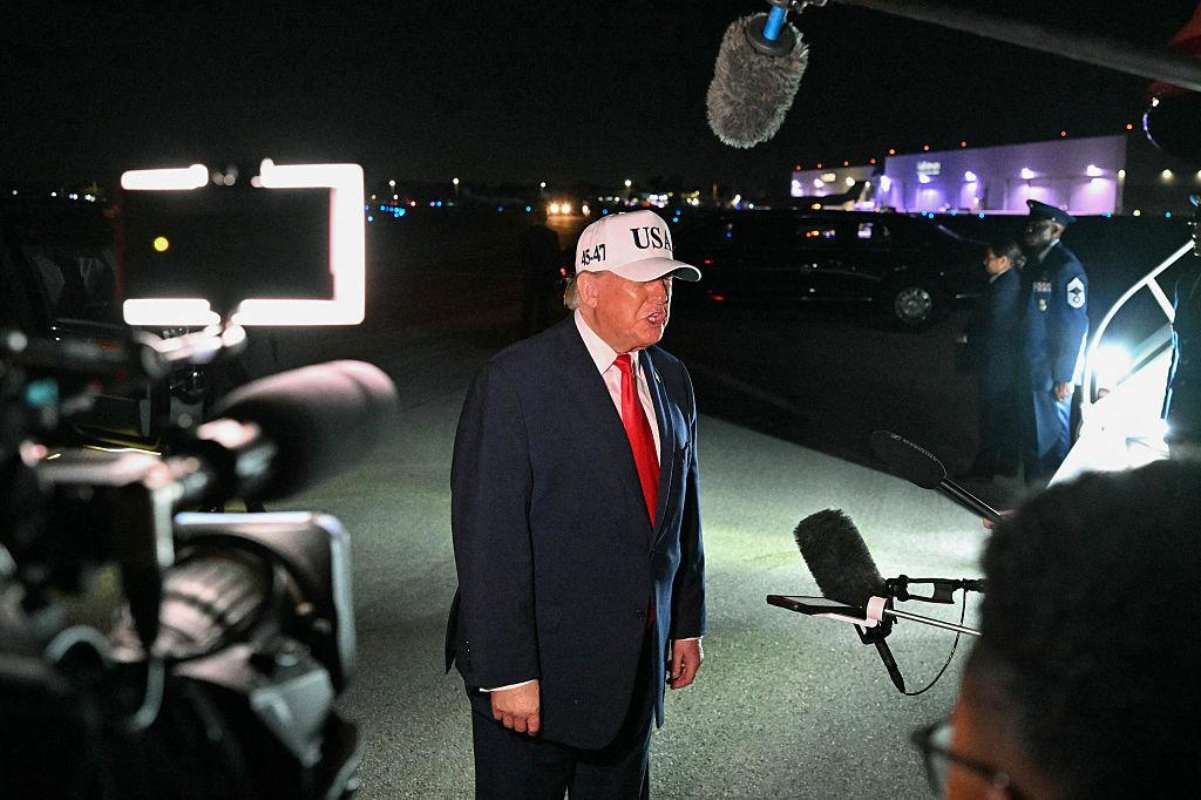
Speaking in an interview with CBS’s 60 Minutes, broadcast on Sunday, November 8, Trump acknowledged that his administration’s approach may have been excessively harsh.
“I think maybe we were too tough,” he said.
The remarks represent a significant change in tone for a president whose political identity has been closely associated with border enforcement, mass deportations and a hardline approach to illegal immigration.
However, Trump stopped short of announcing a formal policy reversal, leaving open questions about the scope and feasibility of any future immigration agreement.


From Mass Deportations to a Potential Immigration Deal
Trump drew a distinction between undocumented immigrants involved in serious criminal activity and those who have lived and worked in the United States for many years.
He argued that dangerous criminals should continue to face deportation while suggesting that long-established workers could be treated differently.
“Get the murderers out, get the dangerous people out, get the drug dealers out. But for the people that are here, in some cases for 10 or 15 years, let’s work out a deal for them,” Trump said.
The president specifically referred to workers employed in hotels, restaurants, cleaning services and landscaping.
Many of these individuals, he suggested, have become integrated into the American economy, holding jobs and contributing to local communities despite lacking legal immigration status.
His comments raise the possibility of a negotiated pathway allowing certain undocumented immigrants to remain in the country.
Yet no detailed legislative proposal has been presented, and the administration has not specified eligibility requirements, enforcement mechanisms or a timetable.
Midterm Defeat Forces a Political Reassessment
Trump’s comments follow the November 2026 midterm elections, in which Republicans lost control of both chambers of Congress.
The results have intensified debate within the Republican Party over whether the administration’s immigration enforcement strategy contributed to its electoral setbacks.
According to exit polling cited by CBS, 58% of respondents believed the administration had gone too far in implementing its immigration policies.
The findings suggest that although border security remains an important political issue, the scale and methods of federal immigration enforcement have generated substantial public concern.
Particularly significant has been the political reaction among Hispanic voters, including communities in southern Texas where Trump had previously made electoral gains.
The president’s 2024 campaign benefited from increased support among segments of the Hispanic electorate, making any subsequent erosion of that coalition politically consequential.
The administration now faces the challenge of maintaining its commitment to border enforcement while addressing concerns about the treatment of long-established immigrant communities.


The Stephen Miller Contradiction
The prospect of a softer immigration approach comes with an apparent contradiction at the heart of Trump’s administration.
Shortly after the interview was recorded, Trump announced that Stephen Miller would become White House chief of staff, replacing Susie Wiles.
Miller has been one of the most influential architects of Trump’s restrictive immigration agenda.
A longtime advocate of aggressive enforcement, expanded deportations and tighter immigration controls, he has played a central role in shaping the administration’s policies.
His elevation to one of Washington’s most powerful positions has therefore raised questions about the practical implications of Trump’s latest remarks.
Senate Democratic leader Chuck Schumer highlighted the tension between the president’s suggestion of moderation and his decision to promote one of the administration’s most prominent immigration hardliners.
For Democrats, the central question is whether Trump’s statements signal a genuine willingness to negotiate or simply reflect an effort to respond to the midterm election results.
ICE Operations and Growing Public Opposition
Immigration enforcement has been among the most controversial elements of Trump’s second term.
Large-scale operations conducted by Immigration and Customs Enforcement (ICE) have resulted in widespread arrests and deportations.
Criticism has intensified over the targeting of undocumented individuals without serious criminal records, particularly those with established employment and family ties in the United States.
The political debate has also been shaped by incidents involving federal enforcement operations, including the deaths of two American citizens in Minneapolis.
Democrats have indicated that oversight of ICE and the Department of Homeland Security will become a priority when the newly elected Congress takes office in January 2027.
Any bipartisan immigration agreement would therefore have to address not only the legal status of undocumented workers but also the operational conduct and accountability of federal immigration agencies.
Iran War Also Weighed on Republican Prospects
Immigration was not the only issue Trump addressed during the CBS interview.
The president also acknowledged that the war with Iran and its economic consequences had affected the political environment ahead of the midterm elections.
He did not dispute Vice-President JD Vance’s assessment that the conflict had contributed to Republican losses.
Trump nevertheless defended his decision to pursue military action against Iran, maintaining that preventing Tehran from obtaining nuclear weapons remained a central national security objective.
The president also argued that his administration had failed to communicate what he regarded as its economic achievements effectively.
The remarks reveal the political pressures facing the White House as it confronts a Congress controlled by Democrats and growing scrutiny of its domestic and foreign policy decisions.
A Democratic Congress Changes the Political Equation
With Democrats set to control both the House of Representatives and the Senate in January 2027, Trump will face a substantially different legislative environment.
Major domestic initiatives will increasingly require negotiations with opposition lawmakers.
Immigration could emerge as one of the first significant tests of whether bipartisan cooperation is possible.
A potential agreement covering undocumented workers with long-standing ties to the United States would represent a notable development in an area that has divided Washington for decades.
However, substantial disagreements remain over border security, enforcement priorities, eligibility for legal status and the possibility of eventual citizenship.
Trump has also signalled openness to discussions on artificial intelligence safety, provided that any regulatory framework does not undermine American competitiveness against China.
Whether these openings translate into legislation will depend on the administration’s willingness to negotiate and the conditions established by congressional Democrats.
‘I Hate Certain of My Enemies, and I Always Will’
Despite his more conciliatory language on immigration, Trump offered little indication of a broader change in his approach to political opponents.
During the final part of the interview, he was asked whether he could forgive adversaries including former House Speaker Nancy Pelosi and former FBI director James Comey.
His response was unequivocal.
“The answer is no. I want to be honest, no,” Trump said.
Pressed on whether he could find the capacity for forgiveness, even in the context of divine judgment, the president maintained his position.
“I probably can’t do it, no, because I hate certain of my enemies, and I always will.”
Asked how he wanted his presidency to be remembered, Trump returned to the political message that has defined his movement.
“That I made America great again.”
Source: pagenews.gr