Mitsotakis Sends Clear Message to Turkey: “We Did Not Ask Ankara for Permission” on Greece–Cyprus Cable
 ΧΡΟΝΟΣ ΑΝΑΓΝΩΣΗΣ 13 '
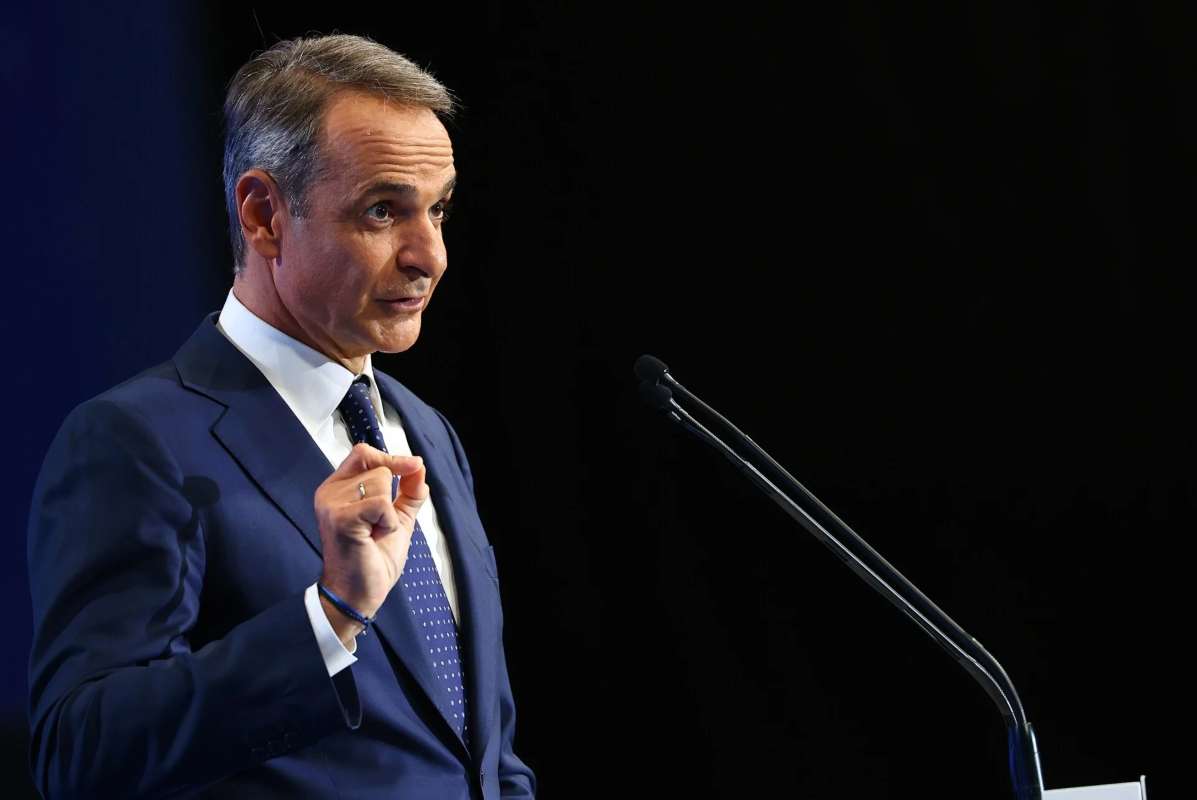
Πηγή Φωτογραφίας: eurokinissi//Mitsotakis Sends Clear Message to Turkey: “We Did Not Ask Ankara for Permission” on Greece–Cyprus Cable



“What matters is the reality: who granted permission and from whom permission was requested.”
With that unequivocal statement, Greek Prime Minister Kyriakos Mitsotakis sought to put an end to speculation that Athens had made concessions to Ankara over the Great Sea Interconnector (GSI), the strategic electricity link between Greece and Cyprus.
Speaking to journalist Antonis Sroiter at the Greece Talks conference organised by Proto Thema, Mitsotakis addressed the controversy surrounding a French diplomatic notification to Turkey, the possibility of renewed tensions in the Eastern Mediterranean and the political confrontation unfolding in Athens.
His message was twofold: Greece has not recognised any Turkish authority over the project’s licensing process, and the government remains confident that the planned maritime operations can proceed without a confrontation.
“I believe this will be a voyage that will be completed without disruption,” the prime minister said.
At the same time, he made clear that Greece was prepared for any eventuality, warning Ankara against actions that could destabilise Greek-Turkish relations.
A European Energy Project, Not Just a Bilateral Initiative
Mitsotakis emphasised that the Great Sea Interconnector should not be viewed simply as an infrastructure project involving Greece and Cyprus.
“This is not a purely Greek-Cypriot project. It is a European project with a strong French presence,” he said.
The distinction is central to Athens’ diplomatic strategy.
The planned submarine electricity cable is designed to connect Cyprus to the European electricity network through Greece, helping reduce the island’s energy isolation and strengthening the European Union’s energy infrastructure in the Eastern Mediterranean.
The project’s European dimension also means that any attempt to obstruct its development could affect wider European commercial and strategic interests.
France’s involvement, particularly through companies participating in the project’s implementation, adds another layer of diplomatic significance.
For Athens, the participation of European partners reinforces the argument that the interconnector is an infrastructure investment rather than an instrument for challenging any country’s legitimate rights.
The French Diplomatic Note: “No Legal Precedent”
The most controversial issue surrounding the project concerns a diplomatic notification reportedly sent by France to Turkey.
Critics in Greece have questioned whether the communication could be interpreted as an indirect request for Turkish consent to maritime activities in disputed areas.
Mitsotakis firmly rejected that interpretation.
“It would be a mistake to confuse a general notification about this project, which may be sent to third countries such as Turkey and Egypt, with the authorisation procedure itself, which, I repeat once again, falls exclusively within the competence of the Greek and Cypriot authorities,” he stated.
The prime minister stressed that the French communication had not changed Greece’s legal position.
“The information provided by the French side to Turkey does not, in any way, create a legal precedent. Nor can it under any circumstances be interpreted as a request for authorisation.”
He added:
“Consequently, my answer is clear: the Greek government has no problem with this notification.”
His remarks sought to draw a definitive distinction between diplomatic communication intended to facilitate maritime operations and the formal granting of permission.
The full text of the French notification was not included in the publicly reported remarks, leaving its precise wording outside the scope of independent assessment.
Nevertheless, the Greek government’s position is that no Turkish consent was sought or obtained.
“What Turkey Says Publicly Is Not What Matters”
Mitsotakis also challenged the significance of Ankara’s public statements about the interconnector.
Turkey has repeatedly asserted maritime claims in the Eastern Mediterranean that conflict with Greek and Cypriot positions.
The Greek prime minister argued that the decisive factor was not Turkey’s rhetoric but the actual licensing process.
“What Turkey says publicly is not so important. What matters is the reality: who granted permission and from whom permission was requested,” he said.
He continued:
“Permission was requested from the Greek and Cypriot authorities, not from Turkey or any other coastal state.”
This distinction forms the foundation of Athens’ response to concerns that the French communication could strengthen Turkey’s claims.
The government maintains that diplomatic notification does not confer regulatory authority and that the project’s implementation must not establish a precedent requiring Turkish approval for future operations.
Mitsotakis Targets the Opposition Over the Cable Dispute
The prime minister also directed sharp criticism at opposition parties, accusing some political forces of approaching the dispute in a manner that risks undermining Greece’s national interests.
“I sometimes have the impression that there are quite a few people in our country, including some opposition parties, who either want this project not to happen or want a crisis in which Greece will ultimately be defeated,” Mitsotakis said.
He immediately added:
“Neither will happen.”
The comments reflect the increasingly confrontational domestic political debate surrounding the GSI.
Opposition parties have demanded greater transparency over the French diplomatic communication and questioned whether the government has adequately protected Greece’s position.
Mitsotakis, however, argued that national strategic interests should command a minimum level of political consensus.
He also noted that opposition parties receive briefings from the foreign minister during closed parliamentary sessions.
The government is seeking to frame the interconnector as a matter of national and European strategic importance rather than another arena for partisan confrontation.
Athens Prepared for Any Escalation
Despite expressing confidence that the planned operations will proceed peacefully, Mitsotakis insisted that Greece remains prepared for potential Turkish action.
“Greece is ready at any moment for all eventualities. I do not believe there will be an escalation of tensions over this issue, but I want to remind everyone that we have handled difficult situations in the past. Remember the summer of 2020,” he said.
The reference to 2020 was significant.
That year, Greece and Turkey experienced one of their most serious periods of tension in the Eastern Mediterranean, involving competing maritime claims, naval deployments and diplomatic intervention.
Mitsotakis linked Greece’s readiness to the government’s investment in defence capabilities.
He argued that stronger armed forces provide the country with the capacity to protect its sovereignty and respond effectively to potential challenges.
The message was intended to combine reassurance with deterrence: Athens does not expect a confrontation, but it is not approaching the situation without contingency plans.
Warning Over Turkey’s “Blue Homeland” Doctrine
Mitsotakis delivered an especially pointed warning when asked about the possibility of Turkey adopting legislation related to its controversial “Blue Homeland” doctrine.
The doctrine encompasses expansive Turkish maritime claims in the Aegean and Eastern Mediterranean, many of which are disputed by Greece and Cyprus.
“Geography does not change. Greece is ready to deal with any such eventuality,” the prime minister said.
He warned that any move to formalise those claims through legislation would create unnecessary tensions.
“It would be a mistake for Turkey to proceed with such a move. It would be an unnecessary escalation that would not create any fait accompli, but would certainly place a significant burden on Greek-Turkish relations.”
Mitsotakis went further, making clear that Athens would not remain passive.
“If something like that happened, there would be a strong response. I hope it will not happen.”
His comments underscore the delicate balance in Greek-Turkish relations.
While both governments have sought to maintain channels of communication, their fundamental disagreements over maritime jurisdiction and sovereign rights remain unresolved.
Why the Great Sea Interconnector Matters
Beyond the diplomatic confrontation, the Great Sea Interconnector carries substantial strategic importance for the European Union.
Cyprus has long faced the challenges associated with operating an isolated electricity system.
A successful connection to the European grid could strengthen energy security, facilitate the integration of renewable energy sources and provide additional options for balancing electricity supply and demand.
For Greece, the project would reinforce its role as an energy hub linking southeastern Europe with the Eastern Mediterranean.
The interconnector also represents a test of the European Union’s ability to implement major cross-border infrastructure projects in a geopolitically sensitive environment.
Yet its success depends on more than political support.
Technical implementation, financing, regulatory coordination and the ability to carry out maritime operations without disruption will ultimately determine whether the project delivers its promised benefits.
The distinction between beginning surveys and completing the electricity link remains crucial.
US Relations After the Midterm Elections
The prime minister also addressed the political landscape in Washington following the US midterm elections.
Mitsotakis emphasised that Greek-American relations rest on strategic foundations extending beyond individual administrations.
“Support for Greek positions in the United States has always been bipartisan. I have addressed the US Congress at the invitation of both parties,” he said.
He welcomed the election of Greek-American representatives to Congress, highlighting the significance of representation in the Senate.
Discussing developments concerning the US ambassadorial post in Athens, Mitsotakis stressed that Greece does not determine Washington’s diplomatic appointments.
“We do not choose who will come as ambassador. We will work with whomever the American president selects,” he said.
He argued that bilateral cooperation remains strong and that relations between the two countries extend beyond individual officeholders.
The comments reinforced Athens’ broader position that its strategic relationship with Washington is institutional rather than dependent on a particular political administration.
“We Created the Greek FBI”: Mitsotakis Defends His Anti-Corruption Record
Turning to domestic affairs, Mitsotakis defended his government’s record on organised crime, corruption and tax evasion.
He argued that Greece had finally begun confronting forms of illegality that had persisted for years.
“We are talking about a country that has finally decided to seriously address the phenomena of lawlessness you described,” he said.
The prime minister highlighted the creation of the specialised police directorate widely referred to as the “Greek FBI”, presenting it as an example of the government’s determination to strengthen law enforcement.
“We created the FBI. This government has decided, for the first time, to put things in order,” he argued.
Mitsotakis acknowledged that fraudulent practices and the use of front persons had existed long before his government took office.
“Front men existed before 2019. But for the first time, there is a serious effort to identify all these centres of illegality,” he said.
His argument was that the exposure of criminal networks should be seen as evidence of stronger enforcement, rather than automatically interpreted as proof of government complicity.
€9 Billion in Additional Revenue and the Role of Artificial Intelligence
Mitsotakis also defended the government’s tax enforcement measures, acknowledging that several reforms had carried political costs.
He referred to changes affecting self-employed professionals and the expansion of electronic invoicing, which have formed part of the government’s strategy to reduce tax evasion.
“The decision to fight tax evasion came at a political cost,” he said.
According to the prime minister, these measures are expected to generate approximately €9 billion in additional public revenue over a four-year period.
The figure was presented as a government estimate rather than a sum already fully collected.
Mitsotakis argued that stronger tax compliance creates additional fiscal capacity for social spending and measures supporting households.
He also identified artificial intelligence as an increasingly important tool for public administration and enforcement.
“Artificial intelligence can work miracles,” he remarked.
The broader government strategy combines digital transactions, improved data analysis and stronger inspection mechanisms to identify suspicious activity more effectively.
The Strategic Test Ahead for Greece and Europe
Mitsotakis’ intervention brought together three central themes: Greece’s determination to defend its maritime position, the European significance of the electricity interconnector and the government’s confidence that the project can advance without a major confrontation.
The prime minister sought to reassure domestic audiences that France’s diplomatic notification did not amount to a concession to Turkey, while simultaneously warning Ankara against further escalation.
The next decisive test will not be rhetorical.
It will come when the planned maritime operations move forward, particularly in areas where Turkey has raised objections.
For Athens, successful progress without recognising Turkish licensing authority would support the government’s stated position.
For Ankara, the question is whether its objections remain diplomatic or translate into operational interference.
Mitsotakis closed the debate over Greece’s preparedness with a reminder of the country’s experience in handling previous crises:
“Greece is ready at any moment for all eventualities. I do not believe there will be an escalation of tensions over this issue, but I want to remind everyone that we have handled difficult situations in the past. Remember the summer of 2020.”
Source: pagenews.gr
Διαβάστε όλες τις τελευταίες Ειδήσεις από την Ελλάδα και τον Κόσμο