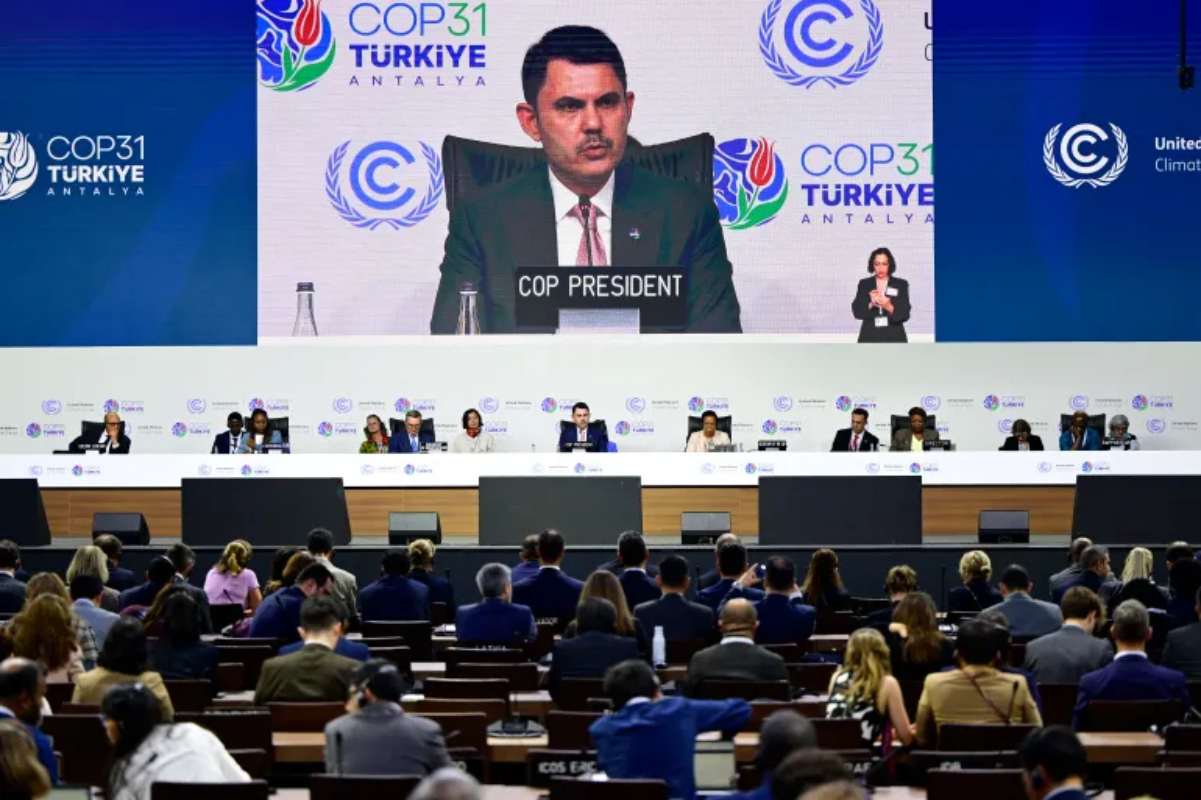
“It’s either going to be a good deal or it’s going to be no deal.” European Climate Commissioner Wopke Hoekstradelivered that warning on Saturday as COP31 negotiations continued beyond their scheduled conclusion.
Delegations from nearly 200 countries were seeking a compromise in Antalya, Turkey, with fossil fuels and climate adaptation finance remaining the principal obstacles.
Fossil fuel references removed
A draft agreement published on Thursday removed earlier references to ending fossil fuel use.
According to Reuters, observers attributed the change to objections from Saudi Arabia and other major oil and gas producers.
Environmental organisations accused the conference of lacking ambition, warning that it risked becoming the worst COP. Their criticism increased pressure on Turkey’s presidency and Australia, which holds a leading negotiating role.


The dispute over $120bn
The draft also dropped a proposed $120bn financing target to help developing countries adapt to climate change.
Its removal left another substantial issue unresolved alongside commitments to reduce emissions.
COP31 President Murat Kurum held discussions with representatives from the EU, Australia and Saudi Arabia in an effort to break the deadlock.


Overtime increases the pressure
Running beyond the deadline does not automatically mean negotiations will fail. But prolonged delays leave delegations less time to examine revised compromises and increase pressure to accept an outcome.
The European warning puts the choice directly: will the conference deliver an agreement with meaningful commitments, or will the priority become securing any deal that allows the summit to close?
For countries demanding funding and clearer action on fossil fuels, the final text will determine whether overtime produces progress or merely postpones the confrontation.
Source: pagenews.gr