GSI Cable and Turkey’s Maritime Claims: Greece’s Response, Egypt’s Role and the 12-Mile Question
 ΧΡΟΝΟΣ ΑΝΑΓΝΩΣΗΣ 5 '

Πηγή Φωτογραφίας: eurokinissi/GSI Cable and Turkey’s Maritime Claims: Greece’s Response, Egypt’s Role and the 12-Mile Question



Greece is pointing to ongoing survey operations for the Great Sea Interconnector as evidence that Turkish maritime claims are not preventing the project from advancing.
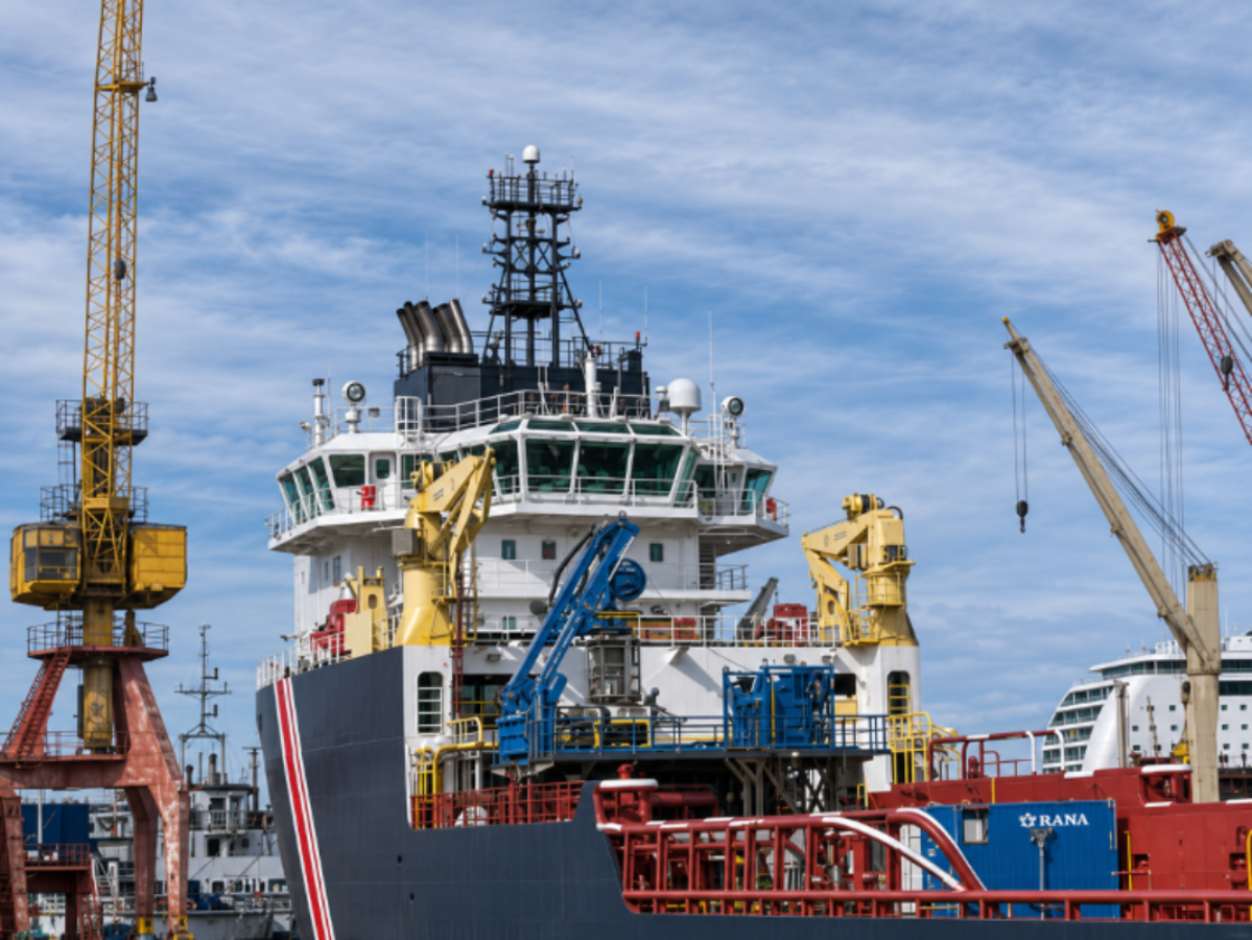
Addressing Parliament on November 20, Foreign Minister George Gerapetritis said the French research vessel was operating under Greek authorization and a Greek NAVTEX in waters covered by the claims set out in the Turkey–Libya maritime memorandum.
Athens rejects those claims. The minister presented the vessel’s activity as a practical response to criticism that the government’s handling of the project had created adverse precedents.
The dispute now involves several connected issues: the electricity cable, France’s communication with Ankara, cooperation with Egypt and a reported Turkish legislative initiative associated with the “Blue Homeland” doctrine.
Greek authorization and the NAVTEX
The confirmed administrative step came on November 6.
According to the Greek Foreign Ministry, the competent authorities completed the authorization process for survey and cable-laying operations following an application by Nexans, acting on behalf of the GSI project company. A NAVTEX was subsequently issued at the research vessel’s request.
Authorization and a navigational notice are distinct instruments. The NAVTEX communicates information relevant to operations and navigational safety; it does not itself delimit maritime boundaries.
Gerapetritis cited the vessel’s location and operating arrangements to counter allegations that Greece had accepted restrictions on exercising its rights.
France’s diplomatic note remains contested
The Greek government maintains that France’s diplomatic communication with Turkey was informational rather than a request for permission.
Gerapetritis rejects suggestions that it transferred Greek sovereign rights or changed the authorization framework for the operations.
Opposition MP Alexandros Kazamias, of Course of Freedom, challenged that position in Parliament, asking why the note’s contents had not been made public and arguing that an adverse precedent could be created.
The disagreement therefore concerns both the government’s interpretation and the precise wording of the communication.
Operations do not amount to legal annulment
Athens seeks to prevent Turkish claims from becoming a practical obstacle to the surveys.
Continuing operations consequently carry diplomatic significance. They do not, however, constitute a judicial annulment of the Turkey–Libya memorandum or a final settlement of maritime delimitation disputes.
Descriptions of the memorandum being “cancelled in practice” express a political assessment of whether Ankara can enforce its claims. The concrete point advanced by Greece is that the operations are proceeding under Greek authorization.
Egypt strengthens the regional dimension
Egypt’s diplomatic intervention at the United Nations adds a separate regional element.
According to reporting on the communication, Cairo rejects the Turkey–Libya memorandum and subsequent Ankara–Tripoli energy cooperation agreements. Its position underlines that the competing maritime claims affect more than Greek–Turkish relations.
Greece and Egypt have also agreed to continue consultations on extending the geographical scope of their 2020 exclusive economic zone delimitation agreement.
The continuation of talks has been confirmed. A new delimitation agreement has not been announced.
Athens awaits Turkey’s proposed legislation
Reports of a Turkish bill linked to the “Blue Homeland” doctrine introduce another unresolved issue.
The reporting supplied indicates that the final provisions and submission timetable remain unclear. Athens is awaiting the text before assessing individual measures.
Greece’s central position is that domestic legislation cannot unilaterally settle maritime boundary disputes with other states. Incorporating a national doctrine into legislation does not establish other countries’ acceptance of the resulting claims.
The 12-nautical-mile option remains open
The possibility of extending Greek territorial waters south and west of Crete has returned to the discussion.
Reporting links that option to potential Turkish moves. It does not establish that Greece has adopted an expansion measure or announced a binding implementation timetable.
Prime Minister Kyriakos Mitsotakis has reiterated that international law provides the right to extend territorial waters up to 12 nautical miles.
A further distinction matters: territorial waters, an exclusive economic zone and the continental shelf are different maritime zones. Extending the territorial sea does not automatically delimit an EEZ.
The UN Convention on the Law of the Sea provides for territorial waters up to 12 nautical miles and sets delimitation rules where states have opposite or adjacent coasts.
The cable’s European significance
The interconnector also has a distinct European energy role.
According to its official project description, GSI would connect Crete and Cyprus, ending Cyprus’s isolation from the European electricity network. It is an EU Project of Common Interest, supported by approximately €657 million in Connecting Europe Facility grant funding.
That strengthens the case for coordination among Athens, Nicosia and European institutions. It does not automatically resolve maritime disputes, but it gives the project wider European significance.
The next concrete developments will depend on the continuation of operations, maritime consultations with Egypt and formal decisions by Greece and Turkey. Those developments will determine which of the options currently under discussion become policy.
Source: pagenews.gr
Διαβάστε όλες τις τελευταίες Ειδήσεις από την Ελλάδα και τον Κόσμο