


Christmas on the Blockades: Greek Farmers Lift Toll Barriers and Turn the Pressure on Athens
 ΧΡΟΝΟΣ ΑΝΑΓΝΩΣΗΣ 4 '
Πηγή Φωτογραφίας: eurokinissi//Christmas on the Blockades: Greek Farmers Lift Toll Barriers and Turn the Pressure on Athens



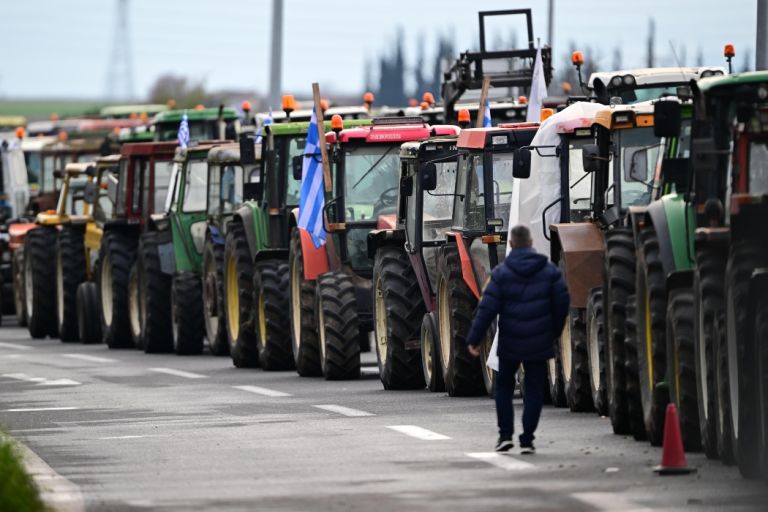
Greek farmers say they will spend Christmas on the highways—but not against the public. By lifting toll barriers and allowing free passage for holiday travelers, protesters are sharpening a strategy that preserves social support while intensifying pressure on Prime Minister Kyriakos Mitsotakis’ government, which insists that key demands are fiscally or legally out of reach.
From Thessaly to Central Macedonia and along key border crossings, tractors remain lined up at strategic junctions. Yet the message this weekend is calibrated: no gridlock for families, students or holidaymakers. Instead, farmers plan symbolic actions at toll stations—raising barriers to let cars pass for free—while maintaining blockades elsewhere.
The move undercuts the government’s core argument that the protests amount to “unnecessary disruption.” Opinion polls suggest the tactic is working: public sympathy remains intact, complicating efforts by Athens to frame the standoff as a law-and-order issue.
A government on the defensive
After initially downplaying the protests, the government shifted to a tougher tone. A non-paper circulated by the Ministry of Rural Development itemizes responses to 27 farmer demands, claiming most have been addressed or are under review. Seven, however, are labeled non-negotiable—including guaranteed minimum prices, a doubling of farm pensions, and halting the transfer of the payments agency OPEKEPE to the independent tax authority.
Officials argue these requests clash with EU rules, the Common Agricultural Policy, or Greece’s fiscal constraints. Farmers counter that “survival demands” are being deferred to Brussels or the future, while immediate pressures—energy costs, debt burdens and disease outbreaks—remain.
The rhetoric has hardened. Senior ministers have warned that prolonged blockades will yield “nothing for anyone,” remarks that protesters say only deepen mistrust. An accident involving a police van parked across a national road—collided with by a private ambulance—further inflamed tensions, reinforcing claims that authorities, not farmers, are creating hazards.

Strategy over spectacle
Unlike past showdowns, this wave emphasizes controlled escalation. Local assemblies decide actions autonomously, coordinating short, targeted closures and border restrictions on freight traffic—while exempting perishable goods. At major crossings with Bulgaria and Turkey, trucks face intermittent stoppages; passenger vehicles largely pass unimpeded.
The approach reflects a political calculation: extend the protest’s shelf life without eroding public backing. “We don’t close roads; we open a path to survival,” protest leaders repeat—a slogan now central to the movement’s messaging.
What’s really at stake
Behind the lists and non-papers lies a broader test of governance. Can Athens manage a prolonged rural revolt without appearing either inflexible or weak? And can farmers sustain unity and public goodwill as the calendar turns?
For now, Christmas on the blockades suggests the latter is possible. By lifting toll barriers while refusing talks without firm commitments, farmers have shifted the burden back to the capital—where fiscal arithmetic and EU constraints must meet a political reality that won’t disperse for the holidays.
Source: pagenews.gr
Διαβάστε όλες τις τελευταίες Ειδήσεις από την Ελλάδα και τον Κόσμο





Το σχόλιο σας