


Dendias: 2026 Finds Greece Mid-Effort in Major Defense Overhaul and Strategic National Agenda
 ΧΡΟΝΟΣ ΑΝΑΓΝΩΣΗΣ 5 '
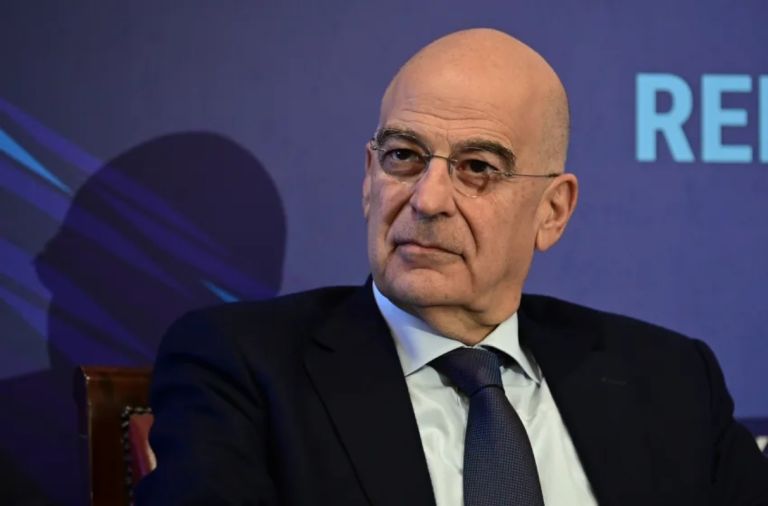
Πηγή Φωτογραφίας: eurokinissi//Dendias: 2026 Finds Greece Mid-Effort in Major Defense Overhaul and Strategic National Agenda



“2026 will find us in the middle of a great effort.” This is how Greek Defense Minister Nikos Dendias framed the outlook for the coming year as he addressed the Armed Forces in his New Year’s message — signifying not just a routine greeting, but a strategic political statement about Greece’s role in an increasingly unstable world.
A Strategic Midpoint, Not a Finish Line
According to Dendias, Greece isn’t merely marking time — it is actively shaping its future. At the heart of this vision is the so-called “Agenda 2030”, a comprehensive reform blueprint for the Armed Forces that seeks to modernize structures, integrate innovation, and strengthen the domestic defense industry. Central to the plan is investment in human capital: from personnel career paths to enhanced training and quality-of-life provisions for servicemembers and their families.
This isn’t cosmetic change; it is a political and institutional shift. By emphasizing the military’s role as a pillar of stability — not only against external threats but also within society — Dendias is projecting Greece’s defense posture as a core element of national resilience and strategic autonomy.

Beyond Warfighting: A Broader Social Mission
In Dendias’s message, the Armed Forces are presented not merely as warriors but as active partners of Greek society. Alongside defense priorities, he highlights initiatives such as new housing for personnel, healthcare expansions, childcare facilities, and support for veterans and people with disabilities. These go beyond operational readiness and into social policy terrain, implicitly connecting national security with social cohesion and welfare.
This messaging resonates in a broader political landscape: domestic expectations for social support are rising even as strategic risks mount abroad. By tying military reform to family support and quality of life, the government seeks to position its defense agenda as socially relevant, not merely doctrinal.
Geopolitics at the Core
Dendias repeatedly underlined the geopolitical context in which these reforms take place: shifting balances, emerging threats, and a volatile Eastern Mediterranean landscape. With neighboring tensions, great-power competition, and uncertain regional alliances, Greece’s strategic environment is anything but static. The modernization push is thus as much diplomatic signaling as it is defense planning — a demonstration that Athens intends to be a reliable actor both within NATO and in its immediate neighborhood.
In this context, the emphasis on strengthening the domestic defense industry can be read as an attempt to reduce strategic dependence, foster technological autonomy, and create economic spillovers that bolster Greece’s position in European defense ecosystems.
Political Subtext: Unity and Continuity
This message comes at a time when Greek politics is navigating internal pressures: questions about national strategy, debates within the ruling party, and broader electoral dynamics. By anchoring the national narrative around a “great effort”, Dendias frames 2026 as a year of continuity rather than disruption, steering attention away from political instability and toward a long-term, cross-cutting national program.
It implicitly challenges critics who may frame defense investments as controversial, reminding public audiences that security policy is deeply interconnected with economic stability and social well-being.
What 2026 Will Test
As Greece moves through 2026, the success of the “Agenda 2030” — and the broader political project it represents — will be tested on multiple fronts:
• Operational capability vs. geopolitical risk — Can the reforms translate into a more credible deterrent and stronger strategic posture? • Social buy-in vs. political polarization — Will broader society embrace the defense agenda as a unifying project or see it as a point of contention? • Resource allocation vs. economic priorities — How will investments in defense balance with other pressing demands such as healthcare, infrastructure, and energy?
The minister’s framing suggests that the government sees 2026 not as a finish line, but as the midpoint of a transformative effort — one that intertwines military readiness, national identity, and political stability.
Greece enters 2026 committed to a robust defense modernization plan at a time of rising regional uncertainty. Dendias’s message is political, strategic, and social — a call for unity and forward motion amid shifting geopolitical currents. Success will depend not only on policy implementation but also on public confidence and international engagement.
Source: pagenews.gr
Διαβάστε όλες τις τελευταίες Ειδήσεις από την Ελλάδα και τον Κόσμο






Το σχόλιο σας