


Private Label Products: The New Shopping Trend Amid Rising Prices and the Strength of ‘Made in Greece’
 ΧΡΟΝΟΣ ΑΝΑΓΝΩΣΗΣ 4 '
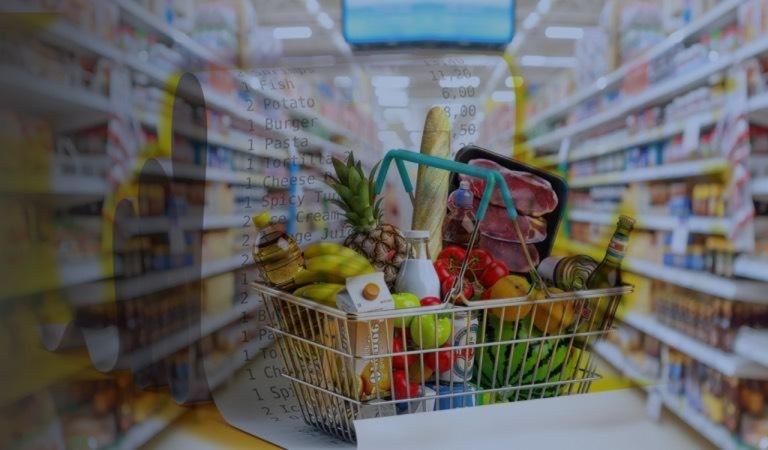
Πηγή Φωτογραφίας: freepik//Private Label Products: The New Shopping Trend Amid Rising Prices and the Strength of 'Made in Greece'



The Greek Market Rewrites the Rules of Shopping: Private Label and ‘Made in Greece’ as Survival Strategies
The Greek supermarket market is undergoing a transformation as inflation pushes consumer prices to new heights, forcing shoppers to adopt new strategies. A recent study by the Athens University of Economics and Business (AUEB) reveals record highs for private label (PL) products, with nearly 4 out of 10 consumers turning to them, marking a profound shift in consumer behavior.
The impressive rise in private label sales, which has increased for the third consecutive year, underscores a deep change in the Greek consumer mindset: the “cheap solution” is now the dominant choice. According to AUEB research, 58% of consumers report being satisfied with private label products, while only 6% express dissatisfaction. While low price remains the main driving factor (74% of consumers believe they are cheaper than branded items), the quality and recognition of private labels seem to have matured in the minds of Greek shoppers. 55% consider PL products equivalent to branded ones, and 17% think they are superior.
The Shift Towards Greek Products: Political and Survival Strategy
While price inflation hits hard, the preference for Greek-made products remains strong and continues to grow. AUEB’s study reveals that 76% of consumers prefer Greek products when available on supermarket shelves, reinforcing the “Made in Greece” movement as both a significant social and economic phenomenon. Remarkably, 94% believe that by purchasing Greek products, they support domestic production, and 88% feel they contribute to reducing unemployment. This movement has evolved into a behavior of solidarity and self-preservation, with clear positive implications for development and employment within the Greek economy.
The power of “Made in Greece” is not just emotional—it has become a conscious choice for quality, safety, and supporting the local economy. 65% of consumers believe Greek products are safer and of better quality than imported ones.
Income Pressure and the Strategy of Cutting Consumption
However, economic data remains bleak. The average monthly expenditure for Greek households on groceries is estimated at 332 euros, with 75% spending less than 400 euros per month. Households have now adopted strict cost-cutting measures: 45% reduce meat consumption, 52% avoid soft drinks, and 24% cut back on bread and baked goods. Even more startling, four out of ten households are reducing heating and electricity consumption, highlighting the pressure on family budgets.
In response to inflation, the strategy for grocery shopping now includes planned purchases. 91% of consumers go to the supermarket with a pre-determined shopping list, while only 39% have decided on specific brands beforehand. The shelves and in-store pricing policies are now the battleground for suppliers and chains, with chains adjusting and enhancing their private label ranges to compete with branded products.
The Political Response and the Need for Structural Reforms
The political and business spheres are called to address the reality of rising prices. Professor Georgios Baltas emphasizes that relying on piecemeal measures like the “household basket” is ineffective, and structural solutions are required to reduce energy costs, boost agricultural and industrial production, and implement real checks on multinational corporations driving prices up. Corporate social responsibility, according to Baltas, is judged by how companies handle real, everyday social problems—with inflation at the top of the agenda.
For retail chains, adapting to the shift in consumer behavior is essential. Those who ignore the rise of private labels and the preference for Greek-made products risk being left behind in a market that has fundamentally changed.
The Greek market, influenced by economic pressure, no longer follows old shopping habits. Private label products and Greek-made goods are emerging as strategic choices for survival and solidarity, as consumers seek the best possible value for money without compromising on quality. Both the political sector and businesses must adapt to these new demands, as the game in the market has changed drastically.
Source: pagenews.gr
Διαβάστε όλες τις τελευταίες Ειδήσεις από την Ελλάδα και τον Κόσμο








Το σχόλιο σας