


Art Goes Academic or Political Stagecraft? Greece’s Reform Reshapes Creative Education
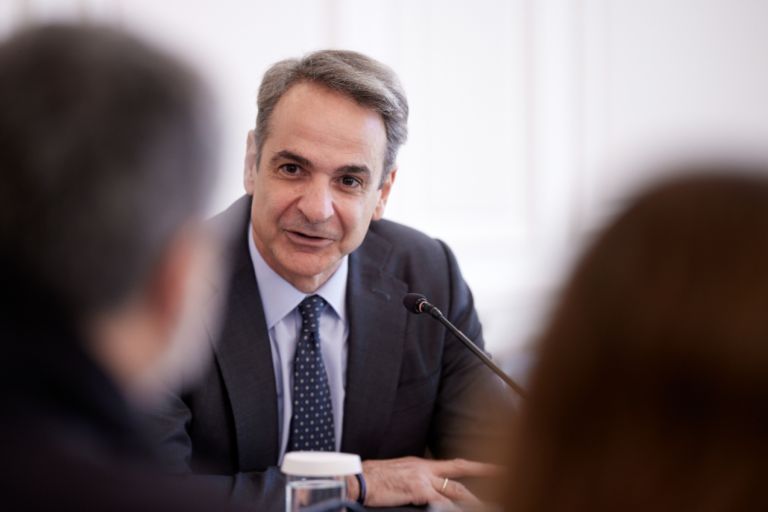
Πηγή Φωτογραφίας: Greek Prime Minister Office--Papamitsos//Art Goes Academic or Political Stagecraft? Greece’s Reform Reshapes Creative Education



A landmark reform with political weight
In a move carrying both symbolic and structural significance, Prime Minister Kyriakos Mitsotakis announced the creation of Greece’s first public Higher School of Performing Arts under the Ministry of Education, Religious Affairs and Sports.
The institution is expected to begin operating in the 2027–2028 academic year, marking a historic shift by formally integrating performing arts into the university system.
Mitsotakis’ key statements
The Prime Minister emphasized the transformative nature of the initiative:
“Performing arts will, for the first time, acquire a serious academic foundation, with structured studies, research opportunities, and clear prospects for development.”
He added:“We are responding in practice to a decades-long demand and providing young people with a clear professional pathway.”
Highlighting the political dimension, he noted:“We are drawing a clear line with the past and resolving long-standing institutional gaps.”
What changes in artistic education
The new Higher School of Performing Arts will:
- offer full academic pathways (undergraduate, postgraduate, doctoral)
- formally incorporate arts into higher education
- establish clear professional rights for graduates
A new public sector category, “Artistic Education”, will also be introduced, addressing long-standing issues of degree recognition.
The institutions behind the project
The school will be built upon five historic cultural institutions:
- National Theatre of Greece
- Greek National Opera
- State School of Dance
- National Theatre of Northern Greece
- State Conservatory of Thessaloniki
This structure aims to bridge academic learning with professional artistic practice.
Government and industry reactions
Education Minister Sofia Zacharaki described the initiative as:
“A historic reform for artistic education in Greece.”
Culture Minister Lina Mendoni stressed:
“What existed in a ‘grey zone’ now gains full institutional recognition and rights.”
From the artistic community, composer Giorgos Koumendakis noted:
“This initiative elevates the status of performing arts and safeguards the future of contemporary culture.”
The political dimension
Beyond education, the reform carries clear political implications:
- It resolves a long-standing institutional gap
- It responds to years of pressure from the artistic sector
- It reinforces the government’s reform-oriented agenda
At the same time, it opens a new field of accountability: Success will depend on implementation—not legislation.
Arts, society, and youth
Mitsotakis also linked the reform to broader social challenges:
“The answer to the problems facing young people lies in sports and the arts.”
This positions artistic education as a tool for:
- mental well-being
- social cohesion
- countering digital addiction
Challenges ahead
Despite broad support, key questions remain:
- How will the institution be staffed?
- Will funding be sufficient?
- How smoothly will existing schools be integrated?
The transition period leading up to 2027 will be critical.
The establishment of the Higher School of Performing Arts is one of the most significant reforms in Greece’s cultural and educational landscape.
It represents:
- long-overdue institutional recognition for artists
- a strategic investment in youth and culture
- a test of policy execution for the government
Whether it becomes a true turning point or remains a reform on paper will ultimately depend on its real-world implementation.
Διαβάστε όλες τις τελευταίες Ειδήσεις από την Ελλάδα και τον Κόσμο






Το σχόλιο σας