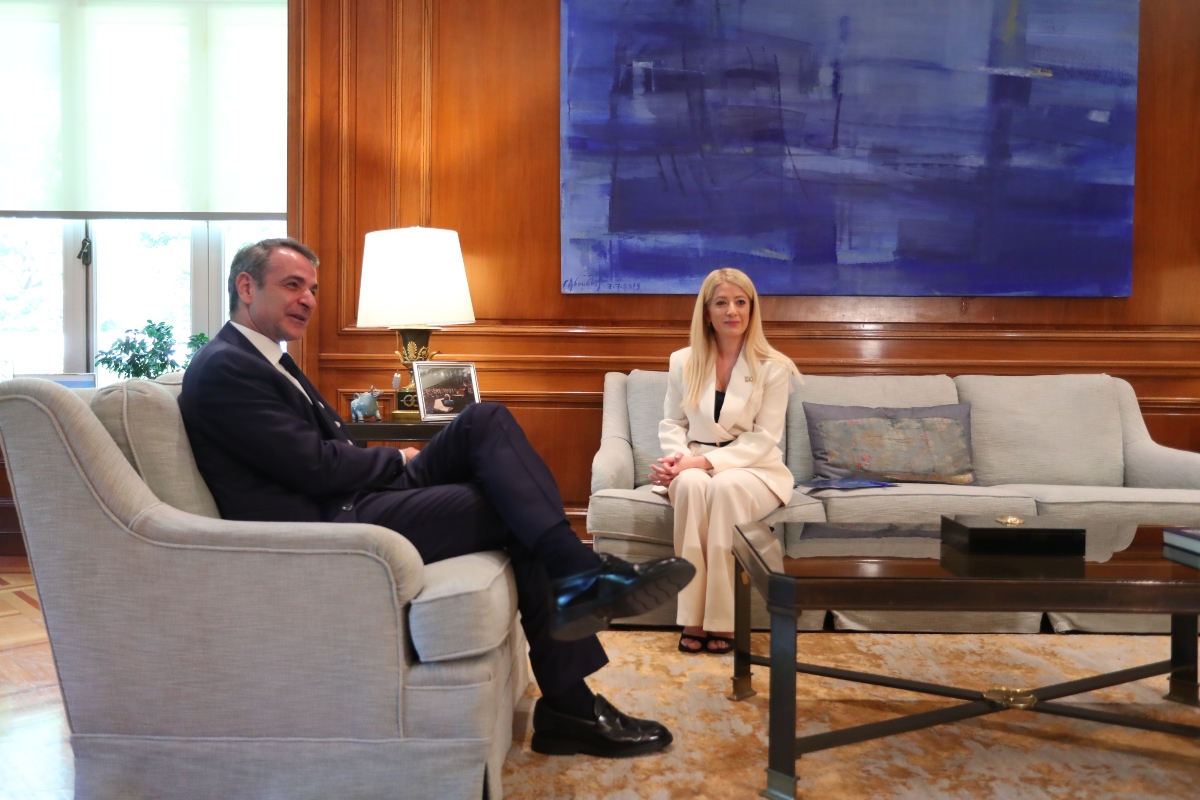
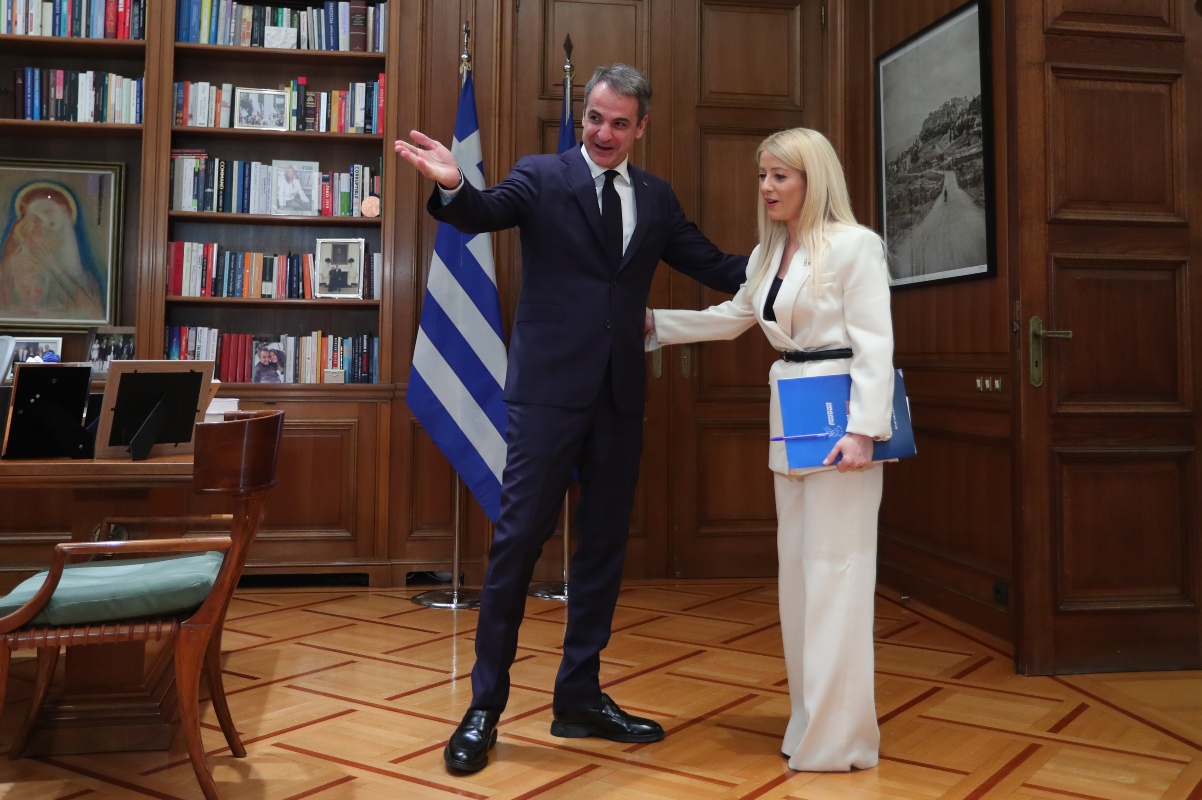
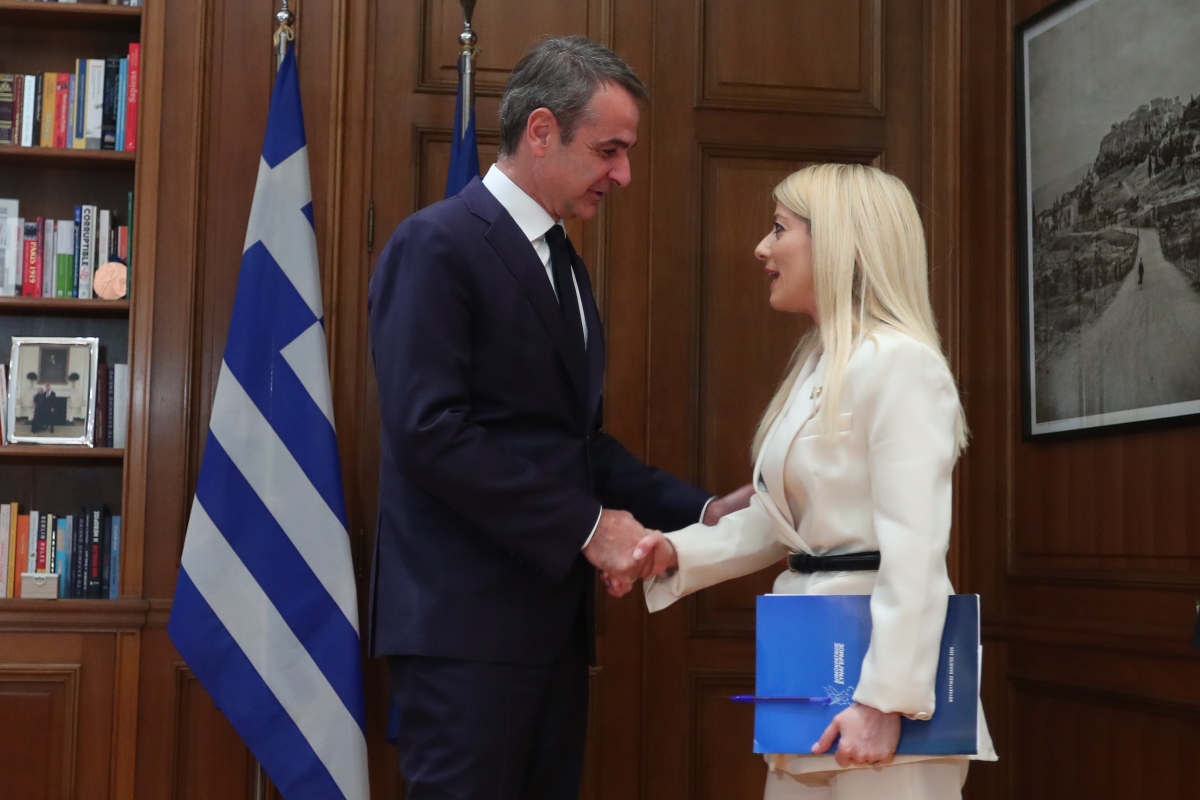
In a meeting with clear geopolitical significance, the Prime Minister of Greece Kyriakos Mitsotakis hosted the Speaker of the Cypriot House of Representatives and leader of the Democratic Rally party Annita Demetriou at the Maximos Mansion in Athens.
The talks highlighted a deepening strategic alignment between Greece and Cyprus at a time of heightened regional tension in the Eastern Mediterranean.
“Europe can defend sovereignty more effectively”
Kyriakos Mitsotakis stressed that Greece’s initiative to stand firmly by Cyprus during what he described as a “critical moment” helped trigger broader European engagement on issues of sovereignty.
His message carried a clear geopolitical signal:
- Greece is positioning itself as a security actor within the EU
- European institutions are increasingly involved in sovereignty-related disputes
- collective EU responses to regional pressure are becoming more assertive
The reference to challenges to Cypriot sovereignty underscores ongoing tensions in the Eastern Mediterranean, where energy exploration, maritime boundaries, and regional security remain contested issues.

Cyprus as a pillar of regional stability
Annita Demetriou emphasized that Greece and Cyprus function as joint pillars of stability in an increasingly volatile region.
She highlighted:
- the strengthened role of Greece in international affairs
- the importance of strategic continuity
- the need for political stability ahead of upcoming elections in Cyprus
Her remarks reinforced the perception of a closely coordinated Greek-Cypriot foreign policy stance.
A reinforced Greece–Cyprus strategic axis
The meeting confirms the consolidation of a stronger bilateral axis with implications across several domains:
- Energy security in the Eastern Mediterranean
- EU diplomacy and institutional coordination
- regional deterrence posture
- crisis management in maritime disputes
Greece and Cyprus are increasingly presenting themselves as a unified geopolitical bloc within the European framework.
European dimension: from national initiative to EU response
A key takeaway from the meeting was the suggestion that Greece’s initiative has acted as a catalyst for wider EU mobilisation.
This reflects a broader trend:
- Greece seeking a more influential role in EU security policy
- Cyprus remaining central to Eastern Mediterranean geopolitics
- the EU gradually expanding its involvement in sovereignty-related disputes affecting member states
The implication is a shift toward a more politically responsive European security architecture.

Political messaging: stability, continuity, and responsibility
Both leaders emphasised:
- strategic continuity
- institutional stability
- rejection of political populism in foreign policy
- reliance on coordinated diplomatic action
This framing positions the Greece–Cyprus relationship as a predictable and stabilising force in regional geopolitics.
The meeting between Kyriakos Mitsotakis and Annita Demetriou reflects more than diplomatic symbolism.
It signals:
- a deepening geopolitical alliance in the Eastern Mediterranean
- increased Greek influence within EU strategic discussions
- and a coordinated approach to sovereignty and regional security challenges
In a turbulent regional environment, Greece and Cyprus are increasingly acting as a joint strategic anchor within the European geopolitical system.