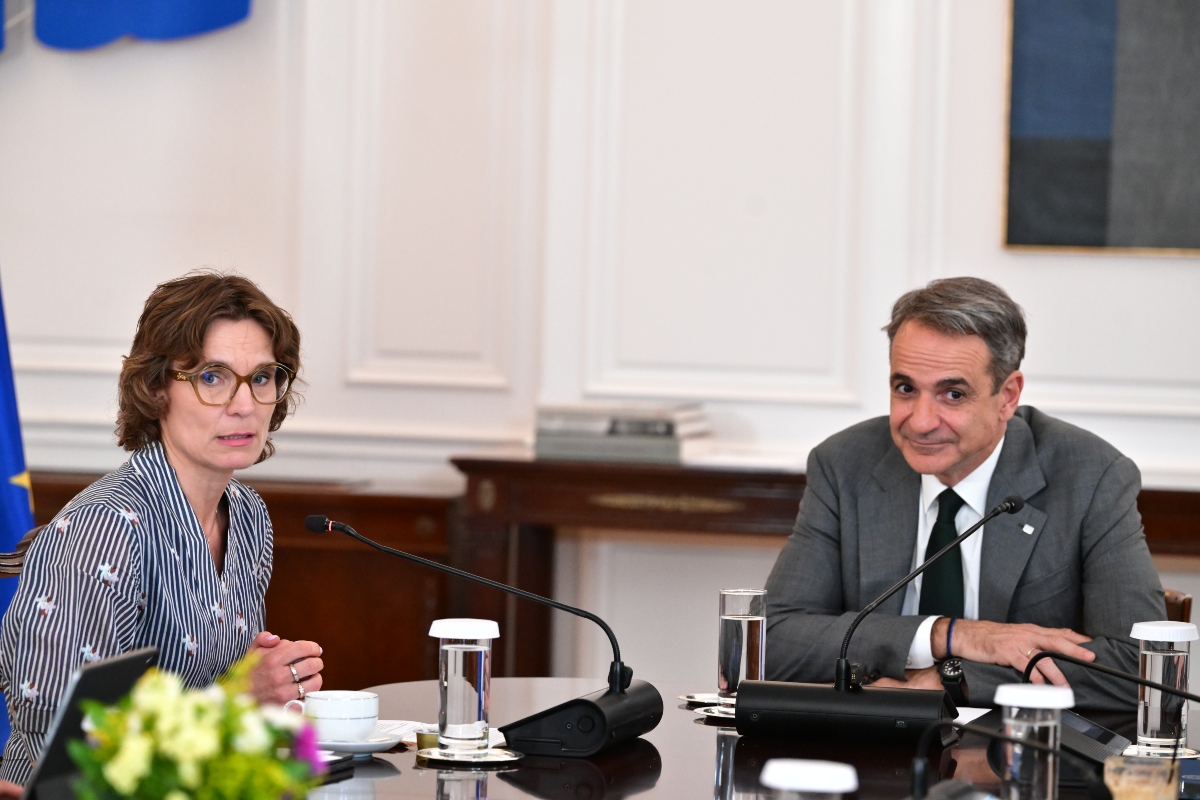
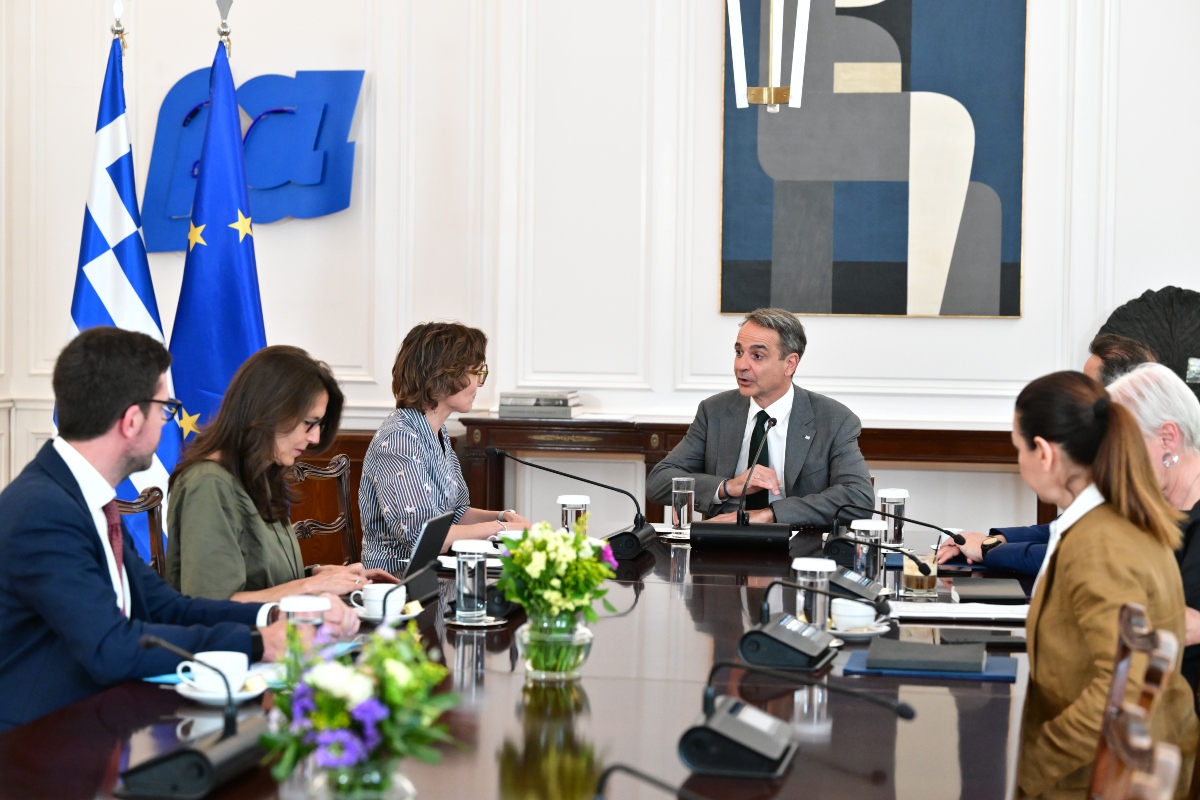
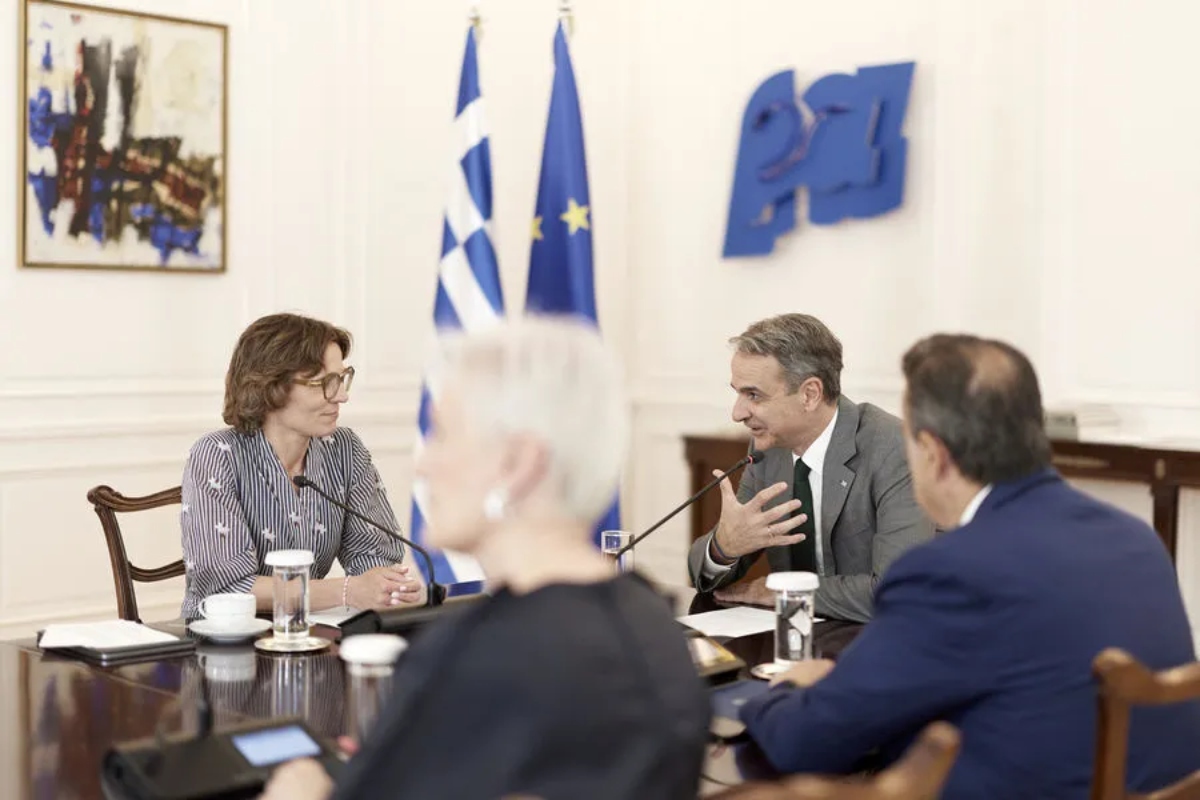
Greek Prime Minister Kyriakos Mitsotakis used his meeting with European Commissioner for Environment, Water Resilience and Competitive Circular Economy Jessika Roswall to send a clear message to Brussels: Europe must dramatically increase funding for wildfire prevention, forest protection and climate resilience before the costs spiral further out of control.
The discussions at the Maximos Mansion focused heavily on:
- wildfire preparedness,
- water management,
- environmental resilience,
- marine biodiversity,
- and the future of EU civil protection mechanisms.
The timing is highly sensitive, with Southern Europe bracing for another difficult wildfire season amid intensifying climate pressures.
Athens’ growing concern: what comes after the Recovery Fund?
One of the clearest signals from Mitsotakis was Athens’ growing concern over how major environmental and forest-protection projects will continue once EU Recovery and Resilience Facility funding expires.
“The challenge we now face is securing the appropriate financing as the Recovery and Resilience Facility comes to an end,” the Greek prime minister said.

Government officials acknowledge that:
- climate adaptation projects require massive long-term investment,
- wildfire prevention systems are costly to maintain,
- and drought and heat pressures across the Mediterranean are accelerating rapidly.
According to sources familiar with the discussions, Greece wants the next EU budget cycle to include:
- permanent forest-protection funding mechanisms,
- stronger wildfire-prevention programs,
- and expanded European civil protection resources.
€600 million invested in forest protection
Mitsotakis defended Greece’s wildfire prevention strategy, stressing that more than €600 million has been invested over the past four years in forest management and protection measures.
“For the first time, we are implementing proper forest-management practices,” he stated.
The Greek government increasingly frames its climate strategy around:
- prevention,
- predictive technologies,
- drone monitoring systems,
- early-warning mechanisms,
- and stronger integration with the EU’s RescEU framework.
The prime minister described RescEU as “a model of European solidarity” and called for additional resources to strengthen the mechanism.
Behind the scenes, however, officials remain deeply concerned that another severe wildfire summer could generate major political and economic pressure.
Water security becoming a strategic issue
A major part of the meeting also focused on water management — an issue increasingly treated as a national and European security challenge.
Mitsotakis acknowledged that:“Eighty-five percent of our water resources are directed toward irrigation, and there is still significant waste.”
Athens is now preparing:
- new water infrastructure projects,
- digital monitoring systems,
- irrigation-network modernization,
- and additional EU-backed water resilience investments.
European officials increasingly view water scarcity as one of the defining strategic risks facing Southern Europe over the coming decades.
Marine parks and the geopolitical dimension
The Greek prime minister also highlighted Greece’s marine protection strategy, particularly regarding planned marine parks in the Ionian Sea and the Southern Cyclades.
“We are at the forefront when it comes to protecting highly sensitive ecosystems,” Mitsotakis said.
Government officials see environmental policy as increasingly interconnected with:
- energy security,
- maritime strategy,
- and regional geopolitical stability.
The marine parks initiative has already attracted broader regional attention because of its implications for maritime governance in the Eastern Mediterranean.
Roswall: “Investing in nature is not a cost”
For her part, Commissioner Jessika Roswall strongly defended the EU’s evolving environmental strategy.
“Investing in nature is not a cost — it is an investment in security, health and competitiveness,” she said.
The Swedish commissioner stressed that:
- climate change is already hitting Southern Europe particularly hard,
- environmental policy can no longer be separated from economic policy,
- and Europe will need significantly larger investments in resilience and adaptation.
The broader debate now unfolding inside the EU is increasingly centered on a critical question:
Who will ultimately pay for Europe’s climate adaptation transition?