UN Cyprus Plan Sparks Debate: New Federal Model Reportedly Moves Closer to Turkish Position
 ΧΡΟΝΟΣ ΑΝΑΓΝΩΣΗΣ 6 '
Πηγή Φωτογραφίας: AP Photo//UN Cyprus Plan Sparks Debate: New Federal Model Reportedly Moves Closer to Turkish Position



After more than five decades of diplomatic deadlock, the Cyprus issue may be entering a new phase. According to an exclusive report by the British newspaper The Independent, the United Nations is examining a fresh settlement framework that seeks to bridge the long-standing divide between the internationally supported bizonal, bicommunal federation and the Turkish-backed vision of two separate states.
Although no formal UN proposal has been presented to either side, the reported concepts suggest a significant shift in the philosophy of the negotiations, favoring a much looser federal arrangement with greater autonomy for both communities.
The report has generated considerable political attention in Cyprus, Greece and diplomatic circles, with critics arguing that several elements appear to move closer to long-standing Turkish demands.
A New Formula Based on “Constructive Ambiguity”
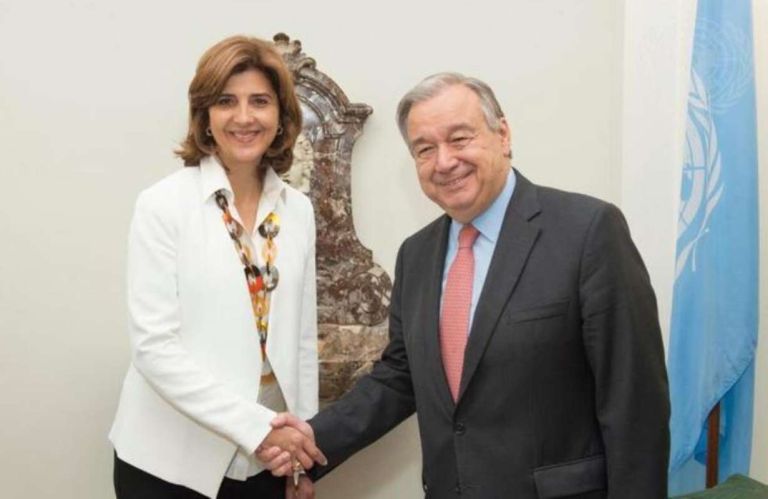
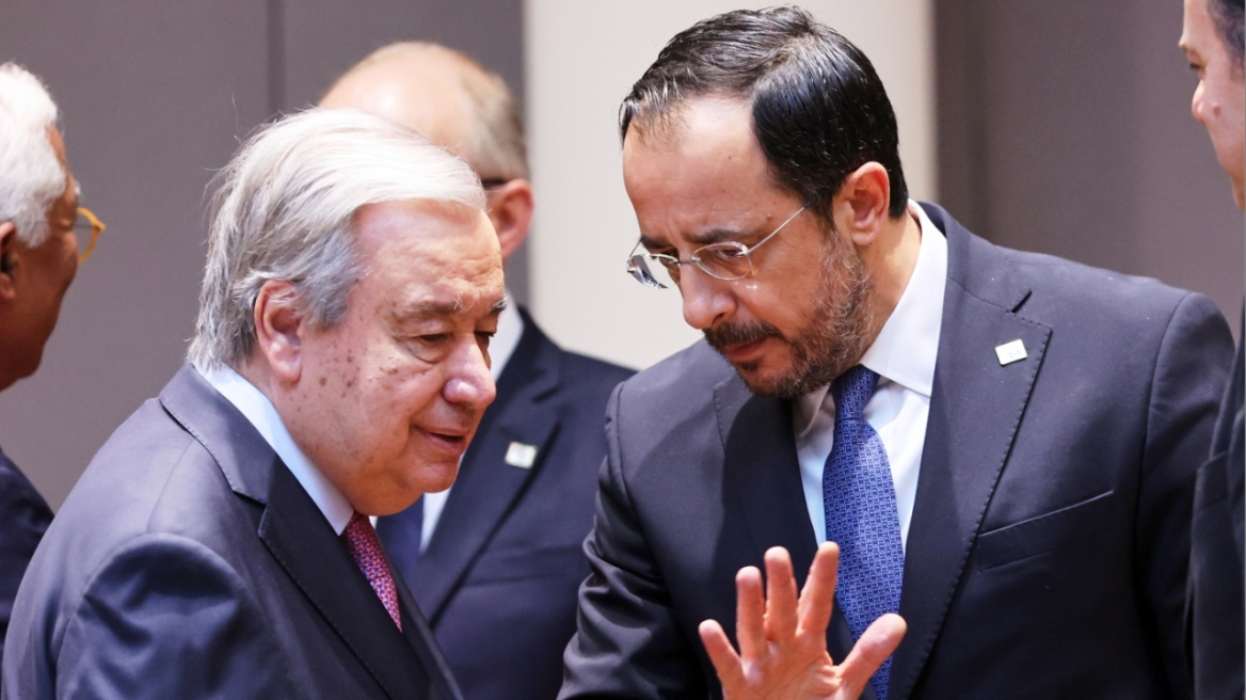
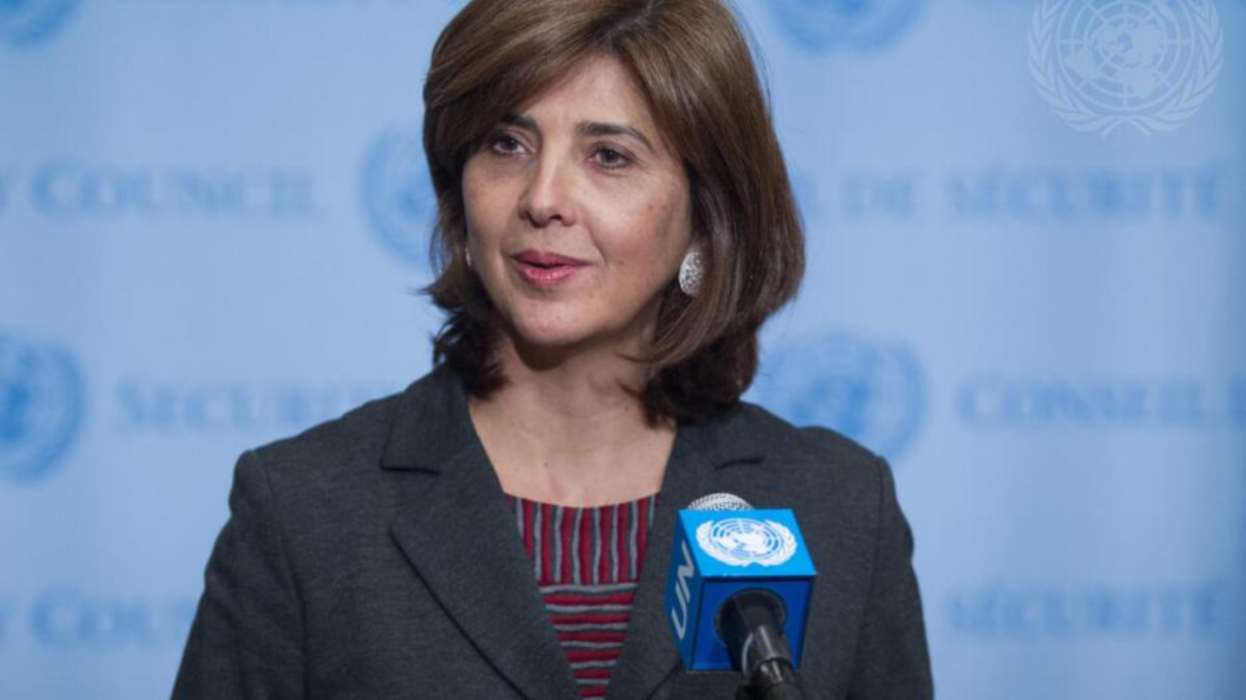
According to The Independent, UN Secretary-General António Guterres’ Personal Envoy, María Ángela Holguín, is exploring a diplomatic formula built around the principle of “constructive ambiguity.”
The idea would allow:
- Greek Cypriots to describe the arrangement as a federation,
- Turkish Cypriots to view it as a confederation,
without requiring both sides to formally agree on the same constitutional definition.
Such diplomatic ambiguity has been used in previous international negotiations where agreement on terminology proved politically impossible.
What the Reported Framework Includes
According to the report, the proposed structure would establish:
- two politically equal constituent states,
- extensive self-government for each constituent entity,
- a central government with only limited responsibilities,
- shared authority mainly over foreign affairs, defense, citizenship, EU affairs and macroeconomic coordination.
The proposed institutional architecture would reportedly include:
- a rotating presidency,
- a small joint Council of Ministers,
- a joint legislative body instead of a fully empowered federal parliament.
One of the most sensitive provisions would reportedly require at least one affirmative vote from a Turkish Cypriot minister for major executive decisions, a mechanism designed to guarantee political equality while likely remaining controversial among Greek Cypriots.
Varosha Returns to the Negotiating Table
The reported framework also includes territorial adjustments.
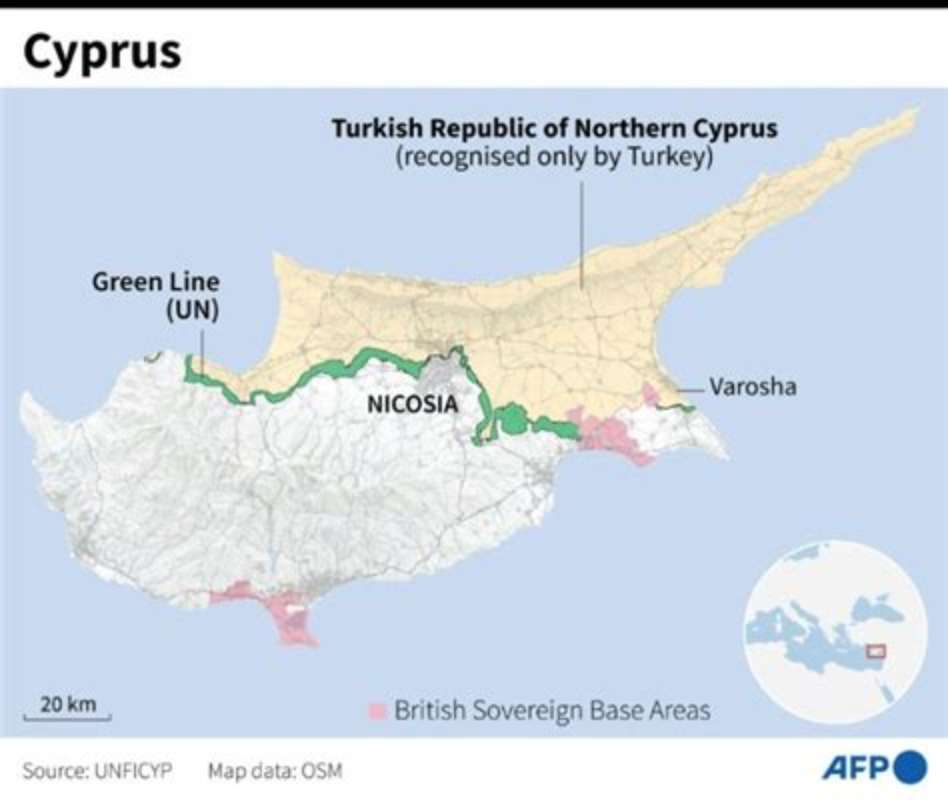
As part of a broader settlement, the Turkish Cypriot side would reportedly return several areas, including the abandoned seaside district of Varosha (Maras), one of the most symbolic unresolved issues since 1974.
The return of Varosha would reportedly begin during a transitional implementation period lasting between two and three years.
Replacing the 1960 Security Guarantees
Perhaps the most significant geopolitical element concerns Cyprus’ future security framework.
According to the report, the existing 1960 Treaty of Guarantee, involving Greece, Turkey and the United Kingdom, could eventually be replaced by a NATO-based security mechanism, potentially including a limited multinational military presence.
This remains one of the most politically sensitive aspects of any future settlement.
The Republic of Cyprus has consistently called for the withdrawal of Turkish troops stationed in northern Cyprus, while the Turkish Cypriot leadership continues to argue that their presence remains essential for security.
The “Three Ds”
The proposal reportedly envisions the gradual implementation of long-standing Turkish Cypriot demands:
- Direct Trade
- Direct Flights
- Direct International Contacts
These measures would reportedly be accompanied by reciprocal confidence-building steps, including easier access to Turkish ports and reduced restrictions on economic interaction.
Linked to EU–Turkey Relations
The report also suggests that progress on Cyprus could become part of a broader geopolitical package involving:
- modernization of the EU–Turkey Customs Union,
- renewed EU–Turkey political dialogue,
- cooperation on Eastern Mediterranean energy resources,
- expanded regional energy projects.
Such linkage would significantly increase the strategic importance of a Cyprus settlement for both Brussels and Ankara.
Different Reactions from the Two Sides
The Republic of Cyprus has reacted cautiously.
Deputy High Commissioner Spyros Miltiadis stressed that no official UN proposal has been submitted, emphasizing that the reported ideas appear to be preliminary concepts rather than a negotiated settlement.
On the Turkish Cypriot side, leader Tufan Erhürman expressed support for the UN’s diplomatic efforts, reiterating that any future agreement must guarantee political equality, security and international engagement for Turkish Cypriots.
The Broader Geopolitical Context
The timing of the reported initiative is significant.
Cyprus has become increasingly important to Western security planning following the wars in Gaza, Lebanon and the broader Israel-Iran confrontation.
Britain’s sovereign military bases on the island have taken on renewed strategic value, particularly after Iranian attacks targeting Western military infrastructure in the region and the deployment of Royal Navy assets to the Eastern Mediterranean.
For London, Washington and NATO, Cyprus has evolved into one of the region’s most critical logistical and military hubs.
No Official UN Proposal — Yet
Despite the political debate generated by the report, it is important to underline that the United Nations has not formally presented any comprehensive settlement plan to the parties.
At this stage, the reported framework appears to consist of diplomatic ideas under discussion rather than an agreed negotiating document.
Nevertheless, the publication has reignited debate over whether a more flexible constitutional model could eventually break decades of stalemate—or whether it risks moving too far toward Turkish demands at the expense of the internationally recognized framework for resolving the Cyprus issue.
Source: pagenews.gr
Διαβάστε όλες τις τελευταίες Ειδήσεις από την Ελλάδα και τον Κόσμο