98% reduction in waiting lists for non-urgent (“elective”) surgeries exceeding four months, surpassing the Recovery Fund’s target of 90%.
26,845 free evening surgeries were performed, while 66,570 vouchers were issued, allowing patients to choose either public or private providers free of charge.
522,000 surgical procedures were carried out across Greece’s National Health System (ESY) in 2025—the highest annual surgical output in recent years—with the average waiting time falling to approximately five weeks.
The free evening surgery programme officially concludes on 30 June with the expiration of funding from the European Union’s Recovery and Resilience Facility (RRF). According to the Ministry of Health, the programme is ending not because it failed, but because it successfully achieved the objectives set when the funding was approved.


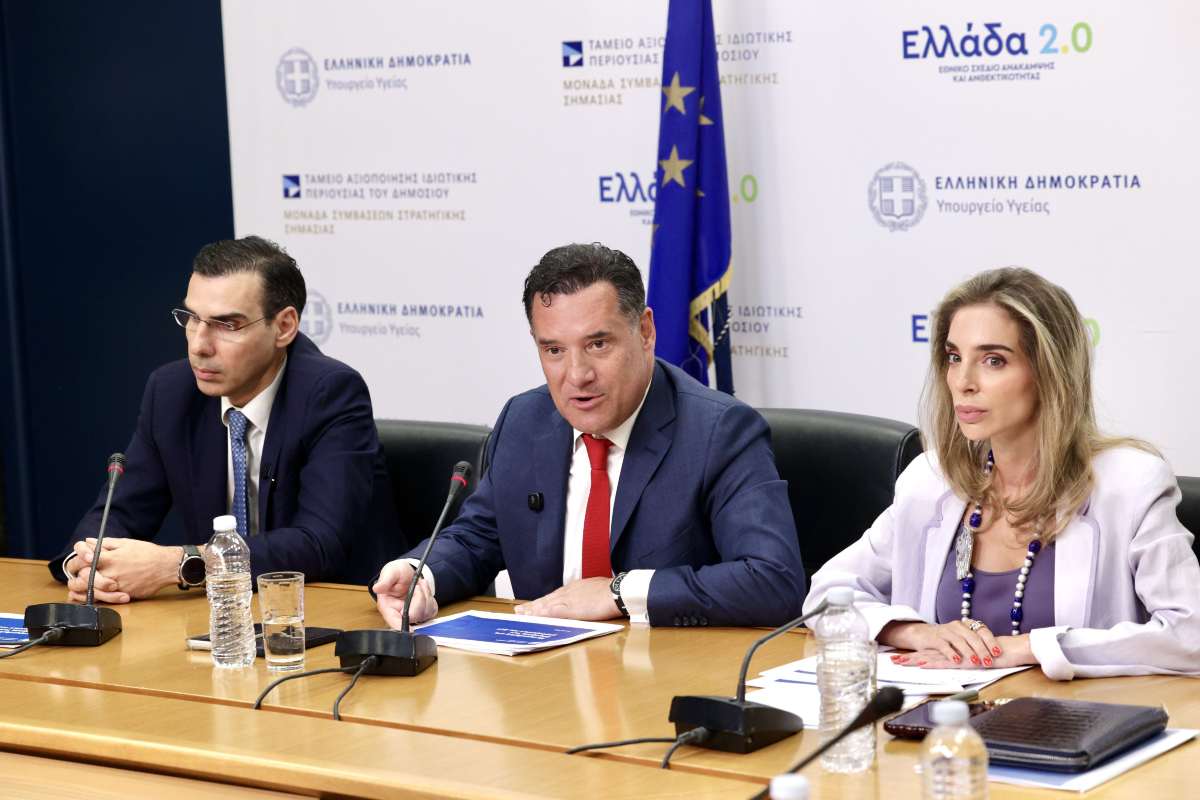
Speaking during a press conference reviewing the programme’s results, Health Minister Adonis Georgiadis rejected criticism suggesting the initiative had fallen short.


“The programme is not ending because it failed, as some falsely claimed. It is ending because the Recovery Fund financing has reached its conclusion. The objective was to reduce elective surgery waiting lists exceeding four months by 90%. We achieved a 98% reduction, met the agreed milestone, secured the funding and, most importantly, ended the suffering of thousands of patients,” Georgiadis said.
Throughout the presentation, the minister described the reform as “a triumph for Greece’s National Health System (ESY),” arguing that the country had met the programme’s central performance indicator: dramatically reducing excessive waiting times for elective surgeries.
From 90,000 Long-Waiting Patients to Around 7,000
According to Georgiadis, when he assumed office there were approximately 90,000 patients waiting more than four months for elective surgery.
Today, Ministry of Health data indicate that this number has fallen to roughly 7,000 cases, representing a 98% reduction, well above the 90% benchmark established by the Recovery Fund.
“Today, practically no patient waiting for elective surgery is still on a list dating back to 2025. All remaining waiting cases now fall within 2026. When we launched this initiative, there were still patients waiting since 2017,” the minister noted, attributing much of the previous backlog to the suspension of elective procedures during the COVID-19 pandemic.

Why Four Months Became the Key Benchmark
A significant part of the minister’s presentation focused on explaining why four months became the programme’s principal performance indicator.
According to Georgiadis, the benchmark was not selected arbitrarily but reflects internationally recognised clinical guidance for elective surgery waiting times.
“For elective procedures, waiting up to four months is not considered excessive. It is regarded as a reasonable timeframe under international clinical guidelines. That is precisely why the Recovery Fund used waiting lists exceeding four months as the programme’s performance target,” he explained.


More Than 26,800 Free Operations
Overall, the programme delivered 26,845 free evening surgeries.
Although this fell short of the initial projection of approximately 50,000 procedures, the minister argued that the outcome reflected improved access rather than limited demand.
A total of 66,570 vouchers were issued, allowing eligible patients to undergo surgery free of charge either within the public health system or at participating private hospitals.
“We did not ultimately perform the 50,000 surgeries initially projected, but we completed 26,845. More importantly, over 66,000 citizens received vouchers. Many simply chose not to use them because, in the meantime, they had already resolved their medical issue through other means,” Georgiadis said.
According to figures presented by the Ministry, approximately 78% of the evening procedures were performed within public hospitals, while the remaining 22% took place in contracted private clinics.

Record Surgical Activity Across the NHS
Beyond the evening surgery initiative itself, the Ministry argues that the overall productivity of Greece’s National Health System has reached record levels.
In 2025, approximately 522,000 surgical procedures were performed—the highest annual total recorded in recent years.
Average waiting time from registration on the National Digital Surgery List to the operation has now fallen to around five weeks.
Waiting times for cataract surgery average approximately six weeks, while hip replacement surgery—traditionally among the longest waiting procedures—now averages around 11 months, which the Ministry argues compares favourably with waiting times in several OECD healthcare systems.
€41 Million Invested Through the Recovery Fund
The programme received approximately €41 million in public funding through the EU Recovery and Resilience Facility.
According to Georgiadis, the overwhelming majority of the funding remained within the public healthcare system.
“Most of the €41 million went directly into the National Health System—to doctors, nurses and healthcare staff who carried out these evening operations. Around 20,000 surgeries took place within public hospitals, while roughly 6,000 were performed in the private sector through the voucher scheme, representing approximately €5 million,” he stated.
What Comes Next
With the Recovery Fund programme now completed, the Ministry says the management of surgical waiting lists will continue through the National Digital Surgery Waiting List, which is now operational across Greece’s public hospitals.
According to the Ministry, the objective is to ensure permanent transparency in scheduling, continuous monitoring of waiting times and to prevent the return of the long delays that once characterised the system.
Concluding the press conference, Georgiadis insisted that the programme had fulfilled precisely the mission for which it had been created.
“The milestone was achieved. The programme succeeded. Patients received the treatment they needed. Most importantly, we are leaving behind a fundamentally different system for managing surgical waiting lists—one built on transparency, proper planning and dramatically shorter waiting times,” he concluded.