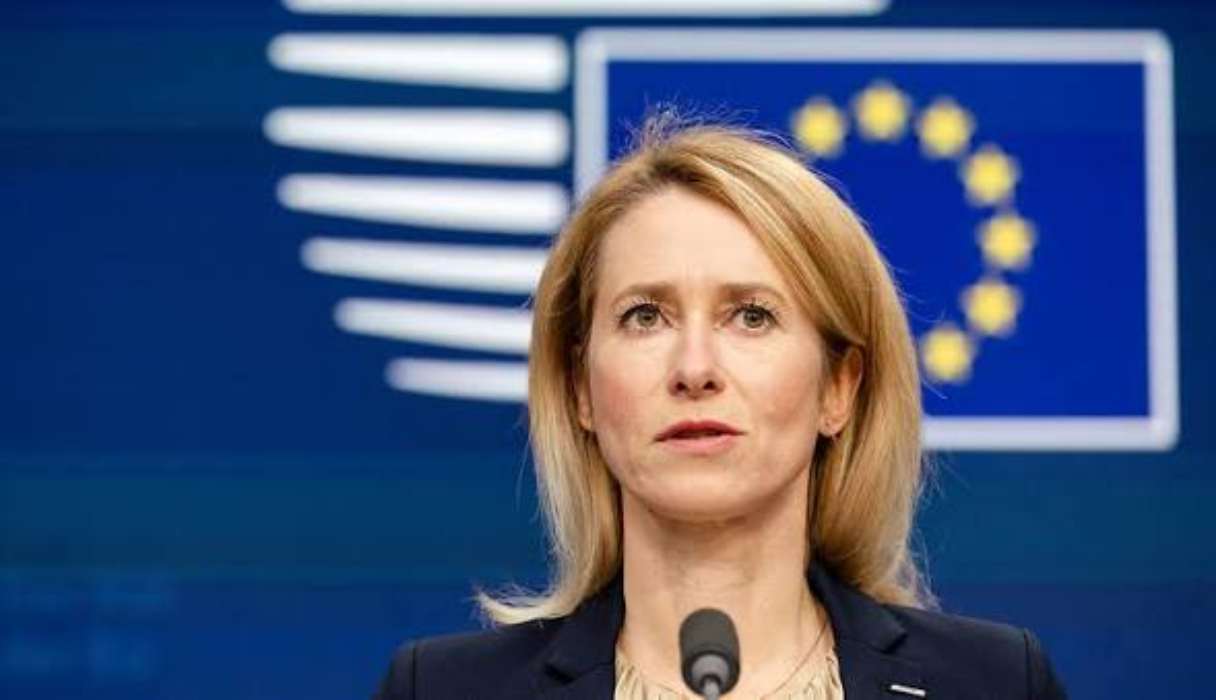
The European Union is preparing to intensify economic pressure on Moscow, with EU foreign policy chief Kaja Kallas signaling an exceptionally ambitious expansion of sanctions against Russia.
Kallas told German newspaper Die Welt that she intends to propose this autumn what she described as the most ambitious sanctions list since Russia launched its full-scale invasion of Ukraine.
And the scale could be substantial.
If approved by all 27 EU member states, the measures would increase the total number of Russian entities under sanctions by roughly one-third.
“For this autumn, I propose the most ambitious sanctions list since the beginning of the war,” Kallas told Die Welt, adding that adoption would immediately increase the total number of sanctioned Russian entities by a third.
From 21 packages to a new sanctions offensive
The EU has already built an extensive sanctions architecture against Russia since the February 2022 invasion.
Brussels has adopted 21 sanctions packages, targeting individuals, companies, banks, energy operations, military suppliers and the networks used to circumvent Western restrictions.
Nearly 3,000 individuals and entities are currently subject to EU restrictive measures connected to actions undermining or threatening Ukraine’s territorial integrity, sovereignty and independence.
If Kallas succeeds in expanding that universe by another third, the next round could become one of the largest extensions of the European sanctions regime since the war began.
Kallas: Russia has lost more than €1 trillion
Kallas argues that Western economic pressure has already imposed an enormous cost on Russia and, by extension, on the Kremlin’s ability to finance its war machine.
According to the EU’s foreign policy chief, European sanctions have deprived Russia’s war effort of more than €1 trillion since the invasion began.
The figure should be treated as an EU estimate rather than an independently established measurement of the total damage suffered by the Russian economy.
Nevertheless, Brussels believes the sanctions are progressively constraining Moscow’s access to capital, technology and critical components.
Putin’s war machine in the crosshairs
The European strategy has evolved considerably since 2022.
Sanctions no longer focus primarily on senior Russian officials and oligarchs.
Brussels is increasingly attempting to disrupt entire supply chains that enable Moscow to continue producing weapons and financing the war.
That means targeting banks, industrial companies, technology suppliers, drone manufacturers and businesses that provide components capable of both civilian and military use.
The objective is no longer simply to punish Russia.
It is to make the continuation of the war progressively more expensive and technologically difficult.


Europe goes after Russia’s shadow oil fleet
Energy has become one of the most important fronts.
Russia has built a vast ecosystem of tankers, trading companies, intermediaries and corporate structures that allow its crude to continue reaching international markets despite Western restrictions.
The EU is increasingly trying to close those channels.
Ships linked to Russia’s shadow fleet have been denied access to European ports and services, while companies supporting the network have also faced restrictions.
The reason is simple: energy remains one of Moscow’s most important sources of foreign currency.
Reducing those revenues means attacking the financial lifeline of the Russian state.
Sanctions are moving beyond Russia’s borders
Perhaps the most significant change is geographical.
Brussels is no longer focusing exclusively on Russian companies.
Businesses in third countries accused of helping Moscow circumvent European restrictions are increasingly being targeted as well.
Chinese, Turkish, Indian, Central Asian and Middle Eastern entities have appeared in recent EU measures targeting exports of dual-use goods and sensitive technologies.
The message from Brussels is increasingly clear:
Companies do not necessarily need to be Russian to find themselves caught in Europe’s sanctions net.
If they are judged to be helping Moscow bypass restrictions, they too could become targets.
The biggest obstacle for Kallas
There is, however, one major political problem.
EU sanctions require agreement among all 27 member states.
Kallas can propose an unprecedented expansion of the blacklist, but the real test will be whether she can preserve European unity after more than four years of war.
Every new sanctions package is becoming politically and technically harder.
Brussels must identify targets capable of imposing meaningful economic costs on Russia while avoiding disproportionate damage to European companies and consumers.
It must also prevent sanctions circumvention without triggering serious diplomatic confrontations with major third countries.
Autumn pressure on Putin
Kallas nevertheless appears determined to raise the stakes.
A one-third expansion of sanctioned Russian entities would signal that Brussels believes its economic arsenal is far from exhausted.
The EU wants to close more loopholes, strike deeper into Russia’s military-industrial complex and raise the cost for companies outside Russia that continue helping Moscow.


The question is therefore no longer whether Europe wants to tighten the economic noose around the Kremlin.
The question is how far all 27 governments are prepared to go.
And, ultimately, whether an even larger sanctions offensive can generate enough economic pressure to change Vladimir Putin’s calculations on Ukraine.
Source: pagenews.gr