Erdoğan Draws a “Red Line” on GSI: “No Cable Without Our Consent” – Turkey Deploys Oruç Reis
 ΧΡΟΝΟΣ ΑΝΑΓΝΩΣΗΣ 8 '
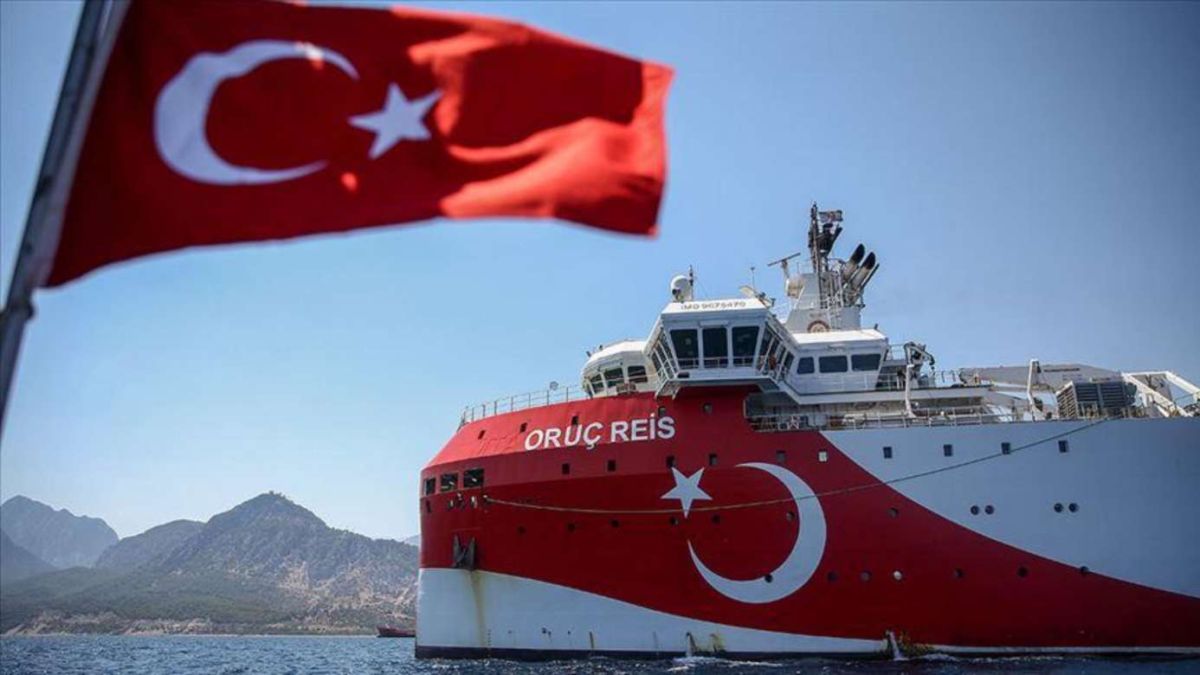
Πηγή Φωτογραφίας: AP Photo//Erdoğan Draws a “Red Line” on GSI: “No Cable Without Our Consent” – Turkey Deploys Oruç Reis



The period of relatively low tensions in the Eastern Mediterranean is facing another test.
Within hours, Ankara sent two separate but politically connected signals. First, it formally reiterated its position that work connected to the Great Sea Interconnector (GSI) cannot take place in areas Turkey considers part of its continental shelf without prior coordination with Ankara. Second, Turkey activated the Oruç Reis for an extended research mission between its southern coast and northern Cyprus.
This does not yet amount to a new Greek-Turkish crisis.
It does, however, create a more difficult operational environment just as Athens prepares for the resumption of marine surveys for the Greece-Cyprus electricity interconnection.
And that is where the real geopolitical stakes lie.
Ankara Makes Its Position Explicit: “We Will Not Allow It”
The first signal came directly from the Turkish Ministry of National Defence and concerned the GSI.
Ankara reiterated its claim that some of the planned activities concern what it regards as the “Turkish continental shelf” and argued that the installation of cables or pipelines, as well as scientific research, must be coordinated in advance with Turkey.
Its wording was unequivocal: Turkey said it would not allow any “unauthorised activity” on what it regards as its continental shelf.
That is Turkey’s legal and political position, not an agreed Greek-Turkish maritime delimitation.
Greece and Turkey have not delimited the continental shelf and exclusive economic zones between them in the relevant areas, while Ankara’s broader maritime position also intersects with its controversial maritime agreement with Libya.
That distinction is crucial.
The dispute is no longer simply about where a research vessel may sail.
It is increasingly about who has the authority to demand or grant permission.
Athens Is Moving in the Opposite Direction
Greece has adopted a fundamentally different approach.
Following French infrastructure investor Meridiam’s entry as majority shareholder in the GSI project company, an agreement involving IPTO, GSI and cable manufacturer Nexans was signed in the presence of Prime Minister Kyriakos Mitsotakis to advance the seabed surveys required for the project.
Mitsotakis has described the interconnector as strategically important not only for Greece and Cyprus but also for Europe.
There is another significant development.
Athens and Paris have reportedly been working on the wording of the notification that would precede the resumption of surveys.
The distinction is politically critical: notification of coastal states about work in non-delimited waters, rather than a Greek request for Turkish permission.
That brings the underlying disagreement into sharp focus:
Athens: notification. Ankara: prior coordination and consent.
Those positions become extremely difficult to reconcile if survey vessels enter waters where Greek and Turkish maritime claims overlap.
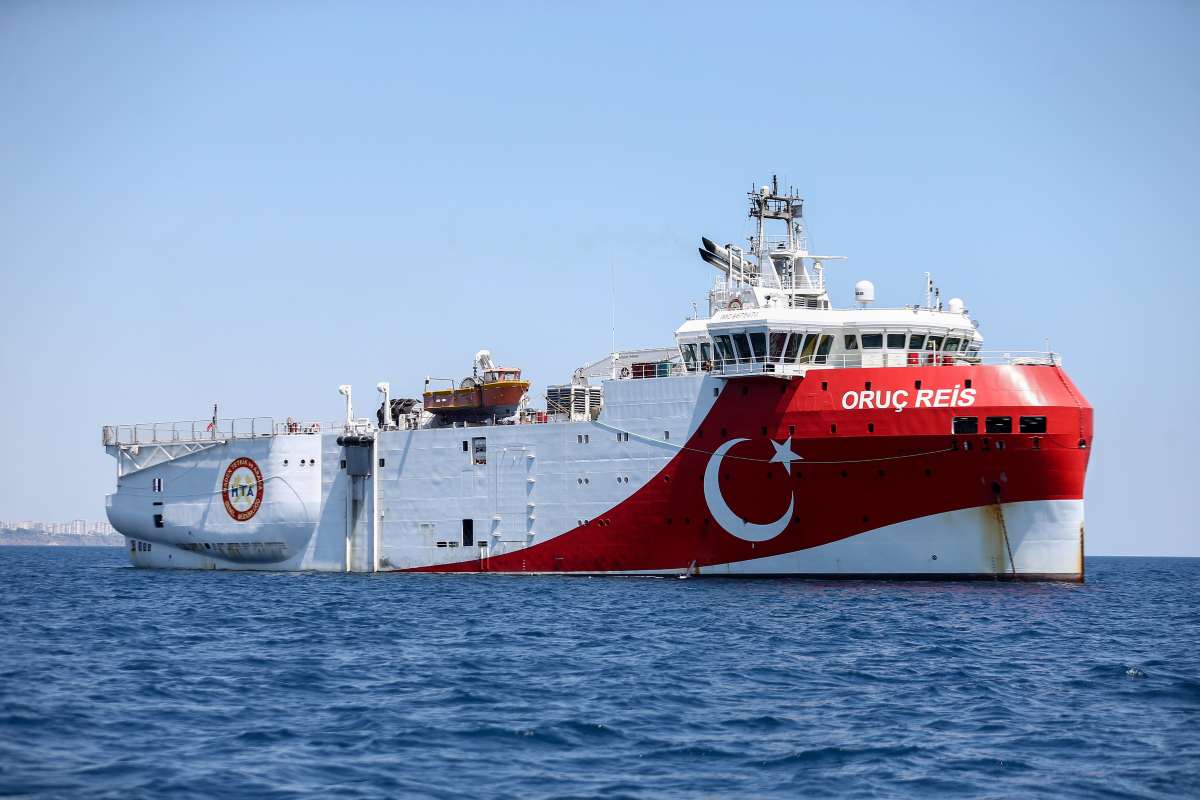
At the Same Time, Oruç Reis Is Back at Sea
The second Turkish move is operational.
Turkey issued NAVTEX 0953/26 through its Antalya station for Oruç Reis operations from October 1 to October 25.
The research vessel is expected to operate alongside Denar Pathfinder, Denar Echo and Kirici.
The coordinates create a maritime corridor extending from the Anamur area on Turkey’s southern coast towards the northern coast of Cyprus and waters off Kyrenia.
One important distinction must be made here.
This NAVTEX was not issued for an operation against the GSI.
The mission is linked to preparatory work for the planned Anamur-Teknecik subsea natural gas pipeline, designed to connect Turkey with northern Cyprus.
The planned pipeline is approximately 101 kilometres long, around 97 kilometres of which would run underwater.
Why Oruç Reis Still Matters Politically
The geopolitical significance of the NAVTEX lies primarily in where and when it is happening.
Turkey is advancing its own energy infrastructure connecting northern Cyprus more closely with the Turkish mainland at the same time that Greece, Cyprus and European investors are attempting to restart the GSI.
The Oruç Reis mission therefore cannot accurately be described as Turkey “sending the ship against the GSI.”
What it does show is that Ankara is increasing its own maritime and energy activity around Cyprus while simultaneously warning that it may oppose GSI-related operations conducted without its consent in waters it claims.
That combination raises the political temperature.
The GSI Now Has a Stronger French Dimension
There is another major difference compared with previous phases of the dispute.
The GSI is no longer solely an IPTO-led project.
In August, Meridiam entered the project as majority shareholder, while France’s Nexans remains the critical industrial player responsible for the cable.
That changes the political equation, although it does not eliminate the risk of confrontation.
Any renewed dispute over marine surveys would no longer concern only Athens and Ankara.
It would directly affect French commercial interests, Cyprus and a project that Greece presents as strategically important for the European Union.
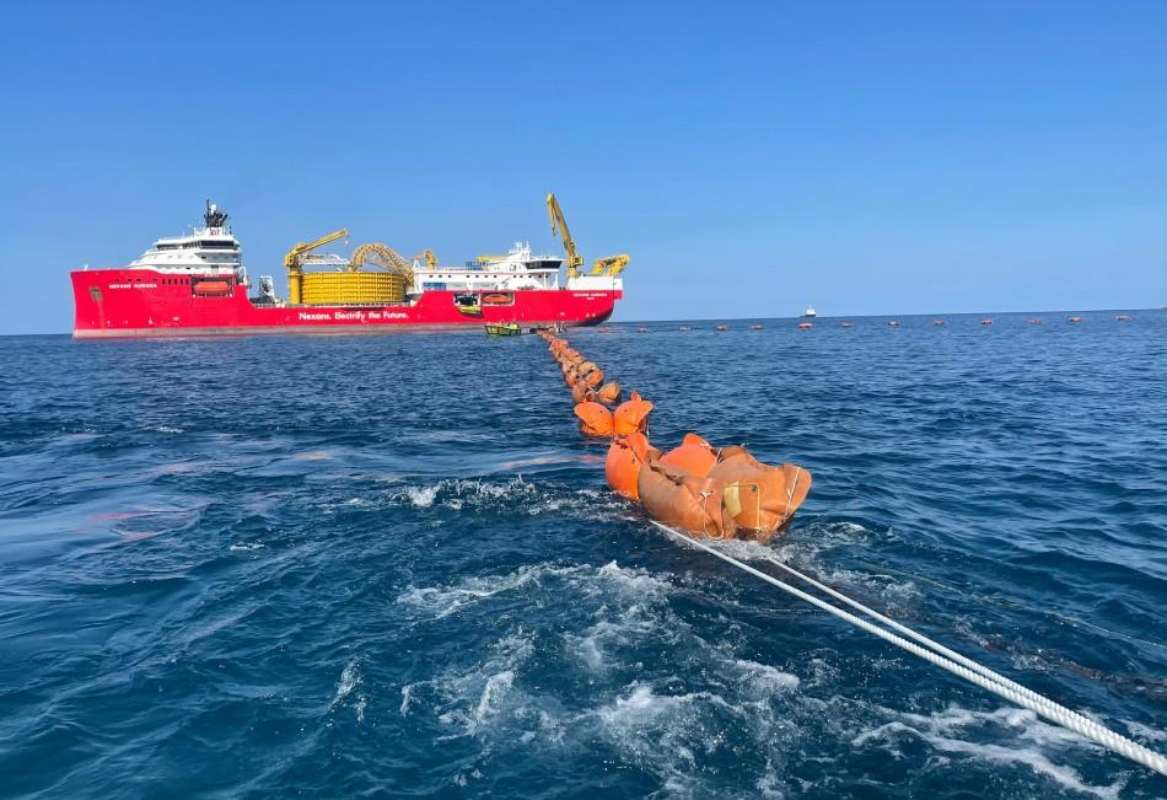
The French Factor
This may be the most consequential element of Athens’ new strategy.
Meridiam’s involvement means Greece would no longer be confronting Turkish objections entirely on its own commercial and political ground.
France now has a greater economic interest in the project’s completion.
Cyprus would gain a physical electricity connection to the European grid.
And the GSI itself acquires a stronger European dimension.
This does not mean that Paris has committed itself to a military response if Turkey attempts to obstruct the project. No such public commitment exists.
But it does broaden the number of European interests directly tied to the interconnector.
The Cyprus-Israel-Turkey Triangle
There is another strategic layer.
The wider concept behind the Great Sea Interconnector extends beyond the Greece-Cyprus link. Its longer-term architecture envisages an electricity connection towards Israel.
If fully developed, the corridor would connect the Eastern Mediterranean with Europe’s electricity market.
For Turkey, this sits within an already complex regional equation involving Cyprus, maritime jurisdiction, Ankara’s deteriorated relationship with Israel and its ambition to remain central to Eastern Mediterranean energy corridors.
There is no evidence that every Turkish action concerning the GSI is driven by all of these factors simultaneously.
But geographically and strategically, the different files increasingly overlap.
Ankara Also Reopens the Cyprus Front
Turkey’s Defence Ministry did not restrict its latest intervention to the cable.
It also criticised Greece and the Republic of Cyprus over the military parade marking the 66th anniversary of Cypriot independence, describing their actions as “provocative” and arguing that they undermine confidence and regional stability.
That matters because it widens the political frame.
GSI – maritime claims – Cyprus – military presence – energy infrastructure are once again appearing simultaneously in Ankara’s public messaging.
The Real Test Comes When the GSI Survey Vessel Sails
For now, the confrontation remains at the level of preparations, diplomatic statements and maritime notices.
The decisive moment will come when the date, survey vessel and precise coordinates for the resumption of GSI seabed work are announced.
Only then will it become clear whether Ankara intends to limit its response to diplomatic objections and competing NAVTEX notices or whether it will attempt to obstruct the operation at sea.
That will also test Athens’ new strategy:
a French majority investor, a project framed as European, notification rather than a request for Turkish permission, and a restart of operations without recognition of Ankara’s maritime claims.
This is why geopolitical risk around the GSI is increasing.
Not because Greece and Turkey are already in a new crisis, but because Athens and Ankara are now openly advancing two incompatible procedures for the project’s next operational step.
Greece treats the issue as one of notification.
Turkey insists on prior coordination and consent in areas it claims.
Once the first GSI survey vessel approaches the contested zone, that legal and political disagreement will no longer be theoretical.
Source: pagenews.gr
Διαβάστε όλες τις τελευταίες Ειδήσεις από την Ελλάδα και τον Κόσμο