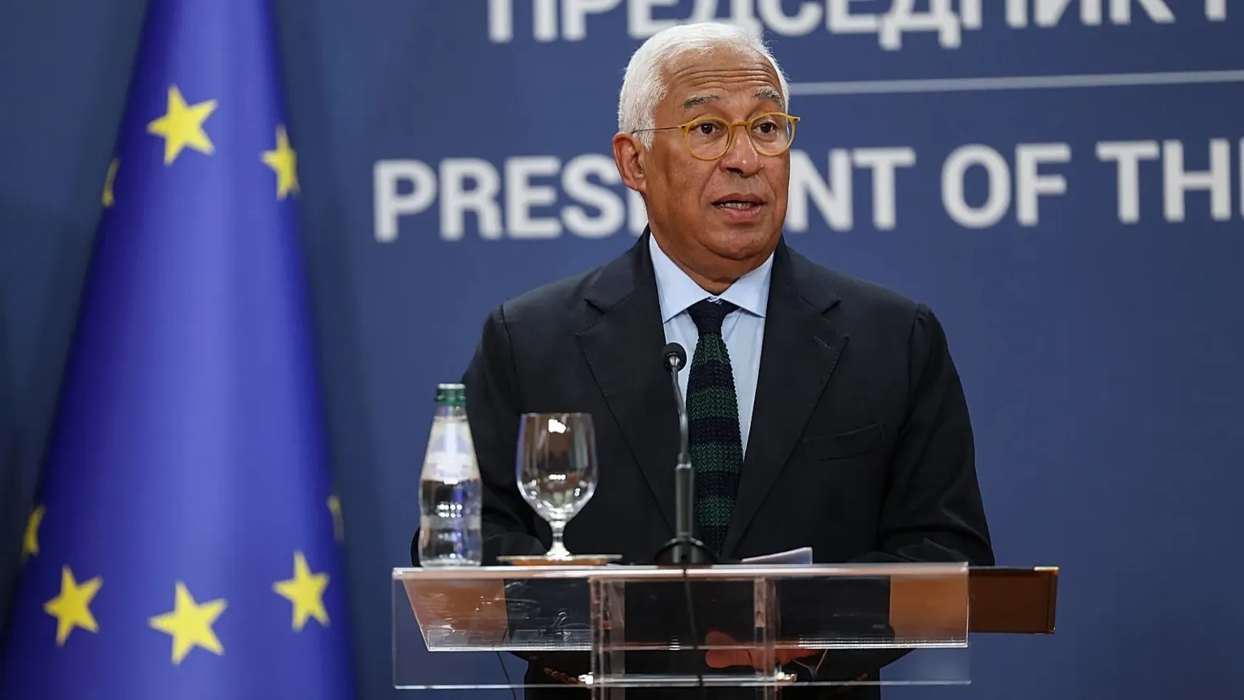
European Council President António Costa has embarked on a diplomatic tour of EU capitals as Europe enters one of its most consequential budget battles in years.
At stake is a long-term European budget approaching €2 trillion — and a fundamental question about what kind of European Union member states are prepared to finance.
Between August 25 and September 17, Costa is conducting what Brussels has dubbed a “Tour des Capitales”, meeting EU leaders in their own countries ahead of the decisive autumn negotiations.
The battle is about far more than numbers.
Who pays for the next Europe?
Europe wants to spend more on defence.
It wants to remain committed to Ukraine.
It needs greater investment in competitiveness, technology and industrial capacity.
At the same time, member states want to protect agricultural funding, cohesion spending and national priorities.
All of those demands are competing for space within the same budget.
Germany has raised objections to the overall size of the proposed package, while countries including Italy and Spain have resisted deep reductions in traditional EU spending programmes.
That leaves Brussels facing an increasingly familiar problem.
Europe has accumulated more strategic ambitions, but member states have yet to agree on how to pay for them.
Costa wants a deal by December
Following talks with Slovak Prime Minister Robert Fico in Bratislava, Costa made clear that the autumn negotiations would be decisive.
“A budget is not only about figures. It is the ultimate political choice about our future and about the Europe we want to build together,” Costa said.
He also set an explicit political deadline.
“One thing is certain: we need to reach an agreement before the end of the year.”
The timetable is ambitious given the competing national interests involved.


The battle over new EU revenues
The negotiations are also reviving the politically sensitive question of EU “own resources”.
With national governments reluctant to increase their direct contributions substantially, Brussels needs alternative sources of revenue if it is to finance a much larger range of common priorities.
Costa has argued that a balanced package of new European revenues will be necessary to secure an agreement.
But new EU-level revenue streams inevitably create political battles over taxation, national sovereignty and burden-sharing.
€2 trillion and a fight over Europe’s future
The coming budget battle is ultimately a fight over Europe’s strategic model.
The EU wants stronger defence capabilities, greater industrial autonomy, continued support for Ukraine and the capacity to compete technologically with the United States and China.
At the same time, governments are under domestic pressure to protect farmers, regions and national spending priorities.
Everyone wants Europe to do more.
The disagreement begins when the bill arrives.
That is why the negotiations over nearly €2 trillion could become one of the clearest tests yet of whether Europe’s growing geopolitical ambitions are matched by its willingness to finance them.
Source: pagenews.gr