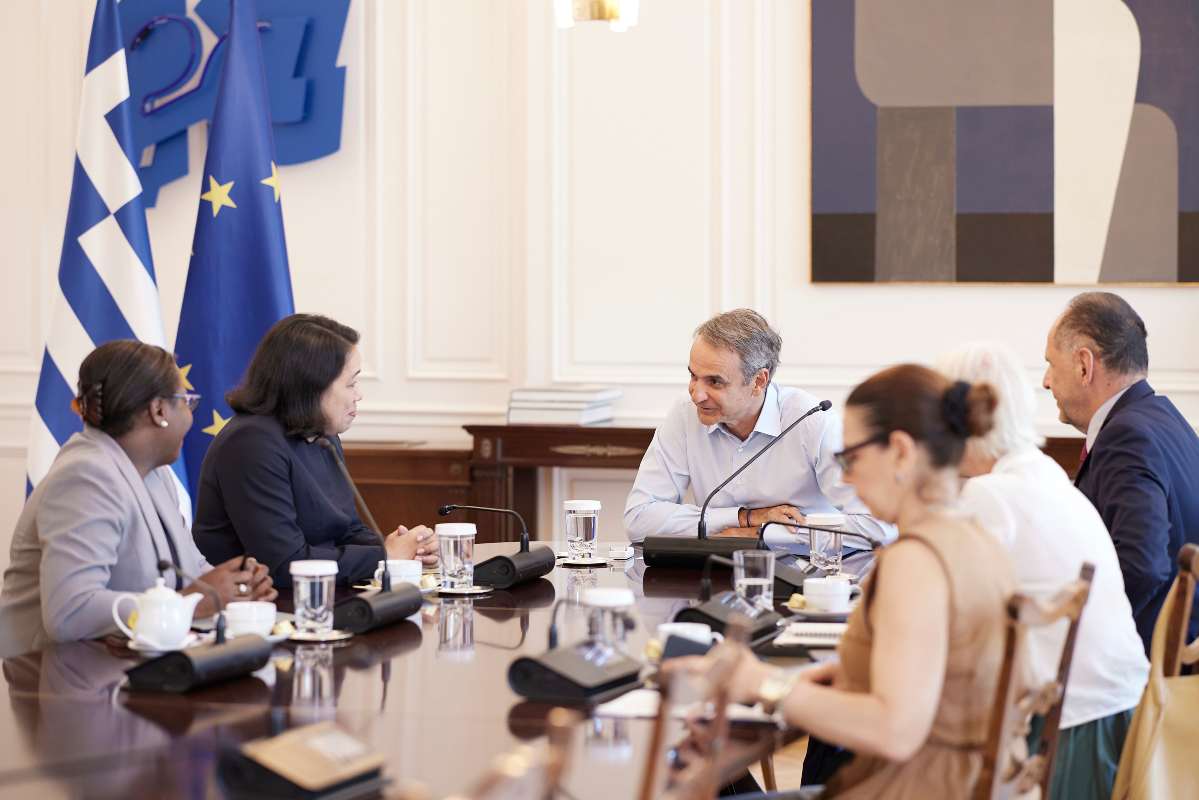
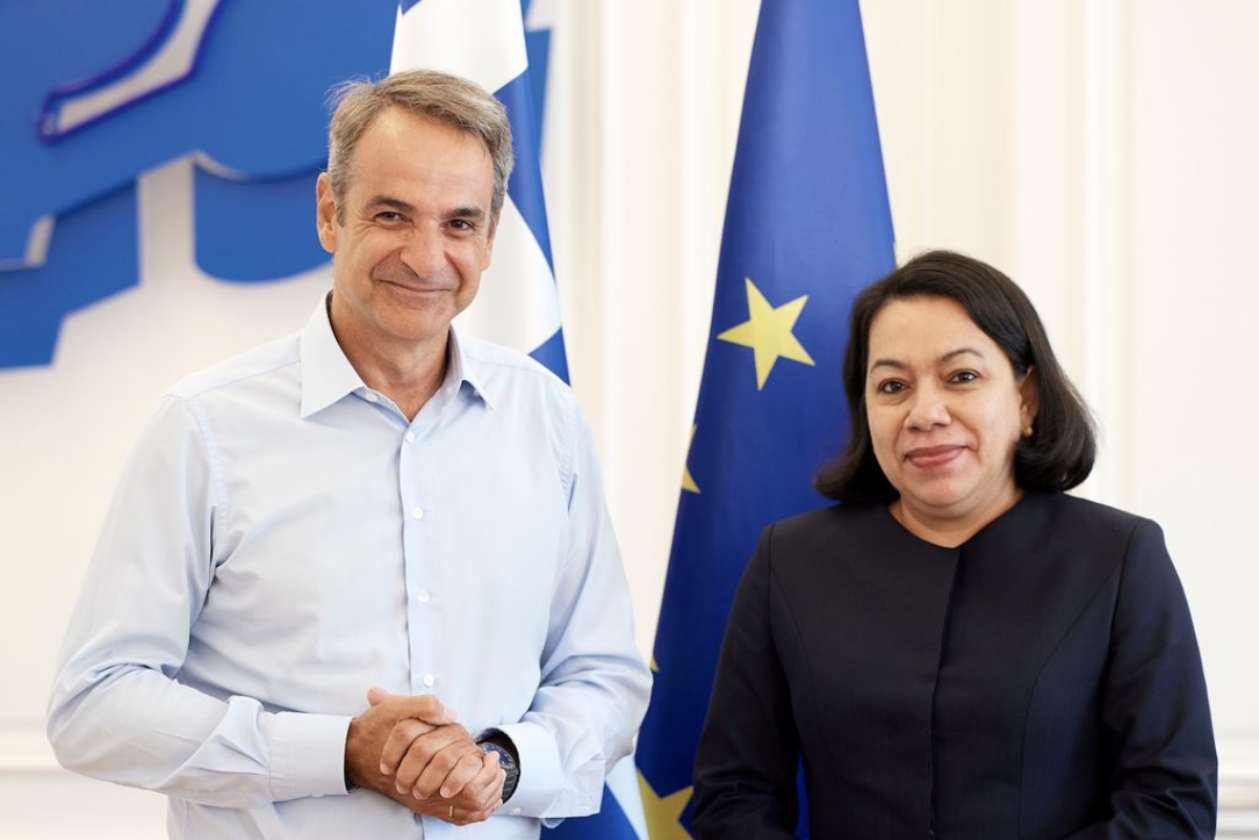
Greek Prime Minister Kyriakos Mitsotakis met with Carolyn Rodrigues-Birkett, a candidate for the position of Secretary-General of the United Nations, for talks focusing on her vision for the organization and Greece’s role in supporting the multilateral international system.
The meeting comes as diplomatic maneuvering gathers pace ahead of the process to select the UN’s next leadership, at a time when the organization is facing mounting pressure from wars, geopolitical rivalry and growing challenges to the rules-based international order.
Rodrigues-Birkett presents her priorities
During the meeting, Rodrigues-Birkett briefed Mitsotakis on her program and the priorities she intends to pursue should she become the next UN Secretary-General.
The discussion offered the Greek prime minister an opportunity to hear directly from the candidate about her approach to the major challenges confronting the United Nations.
The next Secretary-General will inherit an exceptionally demanding international environment, marked by armed conflicts, intensifying competition among major powers and questions over the ability of multilateral institutions to respond effectively to global crises.
Mitsotakis stresses Greece’s role at the United Nations
Mitsotakis, for his part, highlighted Greece’s role within the United Nations and reaffirmed Athens’ strong support for international multilateralism.
The Greek government has consistently emphasized respect for international law, the UN Charter and the peaceful settlement of disputes as fundamental principles governing relations between states.
For Athens, those principles carry particular strategic significance.
From security and stability in the Eastern Mediterranean to broader questions of sovereignty and international legality, Greece views strong international institutions as an essential pillar of the global order.
The diplomatic race for the UN’s next leadership
The selection of the next UN Secretary-General is expected to become an increasingly important diplomatic contest.
It is not simply a question of choosing the person who will lead the organization. The process inevitably reflects broader geopolitical balances, particularly the positions of the permanent members of the UN Security Council.
Candidates are therefore expected to intensify their contacts with governments and present their political priorities as the selection process develops.
Rodrigues-Birkett’s meeting with Mitsotakis forms part of that wider diplomatic outreach.

Athens invests in multilateral diplomacy
The meeting also carries a broader message about Greece’s foreign policy.
Athens has sought to strengthen its international diplomatic footprint by combining strategic alliances with active participation in multilateral institutions.
Mitsotakis’ message was therefore clear: Greece supports a strong and effective United Nations and sees cooperation among states as an indispensable instrument for addressing global security and political challenges.
Why the meeting matters for Greece
The race for the next UN Secretary-General comes at a particularly sensitive moment for the international system.
For Greece, having an active voice in these discussions matters beyond the question of who ultimately secures the position.
Athens has a strategic interest in preserving an international system in which the UN Charter, international law and multilateral diplomacy remain meaningful constraints on state behavior.
The Mitsotakis–Rodrigues-Birkett meeting fits into that broader strategy: maintaining a visible presence in international diplomatic processes, defending multilateralism and ensuring Greece has a voice in shaping the debate over the United Nations’ next chapter.
Source: pagenews.gr