Greece Hits Back at Turkey Over Thrace: “Hypocritical to Lecture Us on Religious Freedom”
 ΧΡΟΝΟΣ ΑΝΑΓΝΩΣΗΣ 13 '
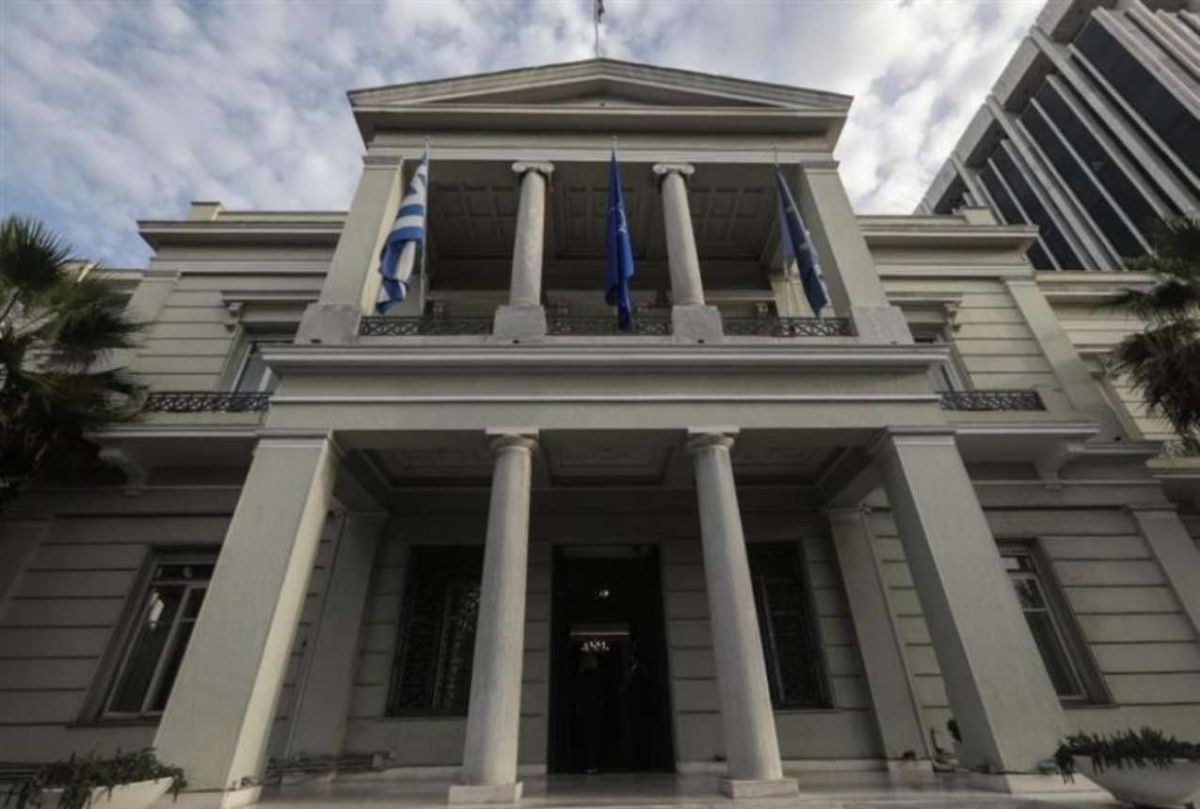
Πηγή Φωτογραφίας: eurokinissi//Greece Hits Back at Turkey Over Thrace: “Hypocritical to Lecture Us on Religious Freedom”



Athens Draws a Firm Line as Diplomatic Tensions Rise Over Western Thrace
A renewed diplomatic confrontation between Greece and Turkey has brought the sensitive issue of the Muslim minority in Western Thrace back to the forefront of bilateral relations, with Athens delivering a strongly worded response to Ankara’s criticism of the Greek framework governing the appointment of muftis.
The Greek Ministry of Foreign Affairs has rejected Turkish accusations concerning religious freedom and minority representation, insisting that the legal status of the Muslim minority is clearly established under the 1923 Treaty of Lausanne.
At the center of the dispute is a fundamental disagreement over how the minority is officially defined, how religious authorities should be selected and whether Turkey’s interventions amount to interference in Greece’s domestic affairs.
The latest exchange comes amid broader efforts by Athens and Ankara to manage longstanding disagreements through diplomatic dialogue, highlighting how minority-related issues remain a particularly sensitive dimension of Greek-Turkish relations.
For Greece, the issue extends beyond religious administration. It involves the interpretation of an international treaty, the constitutional rights of Greek citizens and the principle that minority protections must not become instruments of external political pressure.
Greek Foreign Ministry: “Its Character Cannot Be Questioned or Redefined at Will”
The Greek government’s response places the Treaty of Lausanne at the heart of its argument.
Under the treaty, the minority in Western Thrace is officially recognized as a religious minority.
Athens maintains that this legal classification cannot be unilaterally altered through political declarations or diplomatic pressure.
“Its character cannot be questioned or redefined at will,” the Greek Ministry of Foreign Affairs stated.
The ministry emphasized that members of the Muslim minority are Greek citizens and an integral part of Greek society.
The Greek position distinguishes between the minority’s official legal designation and the right of individuals to identify themselves according to their own ethnic, cultural or religious background.
This distinction is central to Athens’ approach.
Greece maintains that the Treaty of Lausanne establishes the minority’s legal framework, while individual members retain their fundamental rights, including freedom of expression, religious practice and personal identity.
The dispute therefore concerns not only terminology but also the broader interpretation of minority protection under international law.

Turkey Challenges Greece Over the Appointment of Muftis
The latest diplomatic exchange followed a statement issued by the Turkish Ministry of Foreign Affairs on October 24, 2026.
Ankara criticized Greece’s procedures for selecting muftis in Western Thrace, arguing that they disregard the preferences of sections of the Muslim community.
Turkey maintains that the religious leadership of the minority should reflect the community’s own choices rather than a process involving the Greek state.
In its statement, the Turkish Foreign Ministry argued:
“Greece continues to disregard the fundamental rights and freedoms of the Turkish minority in Western Thrace, which are guaranteed by the Treaty of Lausanne and international agreements.”
Ankara also accused Greece of refusing to recognize religious leaders whom Turkey considers to have been elected by members of the minority.
“By refusing to recognize the muftis elected by the Turkish minority in Western Thrace, Greece disregards the will and religious freedom of the minority,” the Turkish statement said.
These are the Turkish government’s allegations, which Athens disputes.
The disagreement reflects two different approaches to religious administration and minority representation.
Turkey emphasizes the principle of community choice, while Greece points to the existing legal framework and the public responsibilities assigned to muftis under Greek law.
Athens Fires Back: “It Is Hypocritical for Turkey to Lecture Greece on Religious Freedom”
The strongest language in the Greek response concerns Turkey’s own system of religious administration.
Athens argues that Ankara’s criticism lacks consistency because muftis in Turkey are themselves appointed through state institutions.
The Greek Ministry of Foreign Affairs stated:
“It is, at the very least, hypocritical for Turkey to lecture Greece on religious freedom and respect for human rights, especially when muftis in Turkey itself are appointed by the state.”
The statement represents the central diplomatic counterargument advanced by Athens.
Greece maintains that criticism of its selection procedures should be considered alongside the institutional arrangements operating in Turkey.
The ministry also emphasized that credible advocacy for religious freedom requires consistency between public statements and actual government practices.
From Athens’ perspective, the issue is not whether religious freedom deserves protection — a principle the Greek government says it fully supports — but whether Turkey applies the same standards to its own religious institutions.
The exchange underscores how disputes over minority rights can become part of a broader diplomatic confrontation over institutional legitimacy and international obligations.
Law 4964/2022: How Greece Regulates the Selection of Muftis
A central element of the Greek response is Law 4964/2022, which reformed the institutional framework governing the mufti offices in Western Thrace.
According to the Greek Ministry of Foreign Affairs, the legislation introduced a structured selection process involving members of the Muslim minority itself.
The framework provides for participation by minority representatives, including women, in the evaluation and recommendation of candidates.
Athens argues that the system was designed to promote transparency, participation and the effective administration of religious institutions.
The Greek government also points to the particular legal responsibilities assigned to muftis under Greek law.
These responsibilities have historically extended beyond religious functions into certain matters involving personal status and family law, although the legal framework governing such matters has undergone substantial reform.
This combination of religious and public responsibilities forms part of Greece’s justification for maintaining a regulated appointment procedure.
Turkey, however, argues that state involvement in the selection process undermines religious autonomy.
The difference between these positions remains at the heart of the dispute.
The Treaty of Lausanne: A Century-Old Agreement at the Center of a Modern Dispute
The Treaty of Lausanne, signed in 1923, remains one of the foundational legal instruments governing aspects of Greek-Turkish relations.
Its provisions concerning minority protection continue to shape diplomatic debates more than a century after its adoption.
Athens emphasizes that the treaty refers to the Muslim minority in Greece and does not establish a requirement that muftis be elected by the minority.
Turkey interprets the relevant minority protections more broadly, arguing that religious autonomy requires recognition of leaders chosen by members of the community.
The disagreement illustrates how the same international treaty can become the subject of competing legal and political interpretations.
For Greece, the treaty establishes a clear framework that protects minority rights without granting another state authority over Greek domestic institutions.
For Turkey, the issue of religious leadership is presented as part of the minority’s collective rights and freedoms.
Both governments invoke international law, but they differ over its implications for the appointment and recognition of muftis.
Religious Freedom and National Sovereignty: Greece Rejects External Interference
The Greek Foreign Ministry has also emphasized that religious freedom cannot be used to justify interference in the internal affairs of a sovereign state.
Athens maintains that the freedom to practice one’s religion is a fundamental right protected by the Greek Constitution, European legal standards and international human rights instruments.
At the same time, the ministry argues that religious freedom must not be invoked selectively or used as a pretext for political intervention.
The Greek government insists that the protection of the Muslim minority is the responsibility of the Greek state, exercised in accordance with its international obligations.
Its position is that minority rights must be safeguarded through the rule of law, equal citizenship and institutional protections rather than through external political pressure.
This distinction is particularly important in Western Thrace, where questions of religious identity, ethnic self-identification and bilateral diplomacy have historically intersected.
Athens stresses that Muslim citizens of Greece enjoy the same constitutional protections as other citizens, including freedom of religion and participation in public life.
Western Thrace: A Persistent Flashpoint in Greek-Turkish Relations
The dispute over the appointment of muftis is not new.
It has repeatedly generated diplomatic exchanges between Athens and Ankara, including earlier statements in April 2026.
The recurrence of the issue demonstrates that minority-related disagreements remain unresolved despite efforts to maintain channels of communication between the two governments.
Western Thrace occupies a sensitive place in Greek-Turkish relations because of its historical, cultural and religious diversity.
The Muslim minority includes communities with different linguistic, ethnic and cultural backgrounds.
The Greek state’s official recognition of the minority as religious does not eliminate the individual right of its members to identify with particular ethnic or cultural traditions.
This distinction is relevant to the broader debate over minority rights.
While governments may disagree over legal terminology and institutional arrangements, the rights and interests of the people directly affected remain central.
For both countries, the challenge is to manage the disagreement without allowing diplomatic tensions to undermine social cohesion or the everyday rights of minority citizens.
The European Dimension: Minority Rights and the Rule of Law
Greece’s position as a member of the European Union and the Council of Europe places its minority policies within a wider framework of European human rights obligations.
Freedom of religion, freedom of association, equality before the law and protection against discrimination are fundamental principles under European legal instruments.
Athens maintains that its policies in Western Thrace are consistent with these obligations.
At the same time, European human rights institutions have previously examined cases concerning the religious and collective expression of members of the minority.
These legal developments demonstrate that minority protection is subject to ongoing judicial and institutional scrutiny.
The existence of disagreements between Greece and Turkey does not remove either state’s obligation to respect applicable human rights standards.
Nor does the official legal classification of a minority negate the individual rights of its members to express their identity.
The European dimension therefore adds another layer to the dispute, connecting bilateral diplomacy with broader standards of religious freedom and legal protection.
Why the Dispute Matters for Regional Geopolitics
The latest confrontation over Western Thrace comes against the background of wider Greek-Turkish disagreements concerning the Aegean, the Eastern Mediterranean and regional security.
Although Athens and Ankara have maintained diplomatic channels, several longstanding issues remain unresolved.
Minority-related disputes introduce an additional dimension because they combine international law, domestic governance, historical agreements and questions of national identity.
For Greece, the central concern is to preserve the distinction between protecting the rights of minority citizens and accepting external political claims concerning domestic institutions.
Turkey, meanwhile, continues to present the selection of muftis as an issue of religious autonomy and minority representation.
These competing positions make the dispute difficult to resolve through political statements alone.
Any durable improvement would require sustained dialogue, respect for international legal obligations and attention to the views and rights of the communities concerned.
The broader geopolitical significance lies in the potential for an otherwise specific institutional disagreement to affect the climate of bilateral relations.
Athens’ Message: International Law, Equal Citizenship and Institutional Independence
The Greek Ministry of Foreign Affairs concludes its response by reaffirming that Greece, as a European state governed by the rule of law, protects the rights of all its citizens on the basis of equality and respect for international law.
Athens maintains that the Treaty of Lausanne establishes the official legal status of the Muslim minority and that the framework introduced in 2022 provides a lawful process for the selection of muftis.
The ministry rejects Turkey’s criticism and emphasizes that religious freedom must be defended consistently.
The Greek government’s position is that minority protection constitutes a fundamental responsibility of the Greek state, while the minority’s legal status cannot be altered through diplomatic pressure.
The latest exchange confirms that Western Thrace remains a sensitive issue in Greek-Turkish relations, even as both governments seek to maintain dialogue on broader regional questions.
The central challenge is to prevent competing interpretations of minority rights from becoming a source of further confrontation while ensuring that the rights of the people directly affected remain fully protected.
For Athens and Ankara, the dispute is ultimately about more than the appointment of religious officials.
It concerns the relationship between sovereignty and minority protection, the interpretation of a century-old international treaty and the ability of neighboring states to manage historical disagreements within a modern European framework.
Source: pagenews.gr
Διαβάστε όλες τις τελευταίες Ειδήσεις από την Ελλάδα και τον Κόσμο