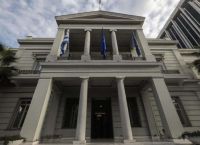
Mitsotakis Hails Historic Sinai Monastery Agreement: A Powerful Message of Greek and Orthodox Unity
 ΧΡΟΝΟΣ ΑΝΑΓΝΩΣΗΣ 9 '
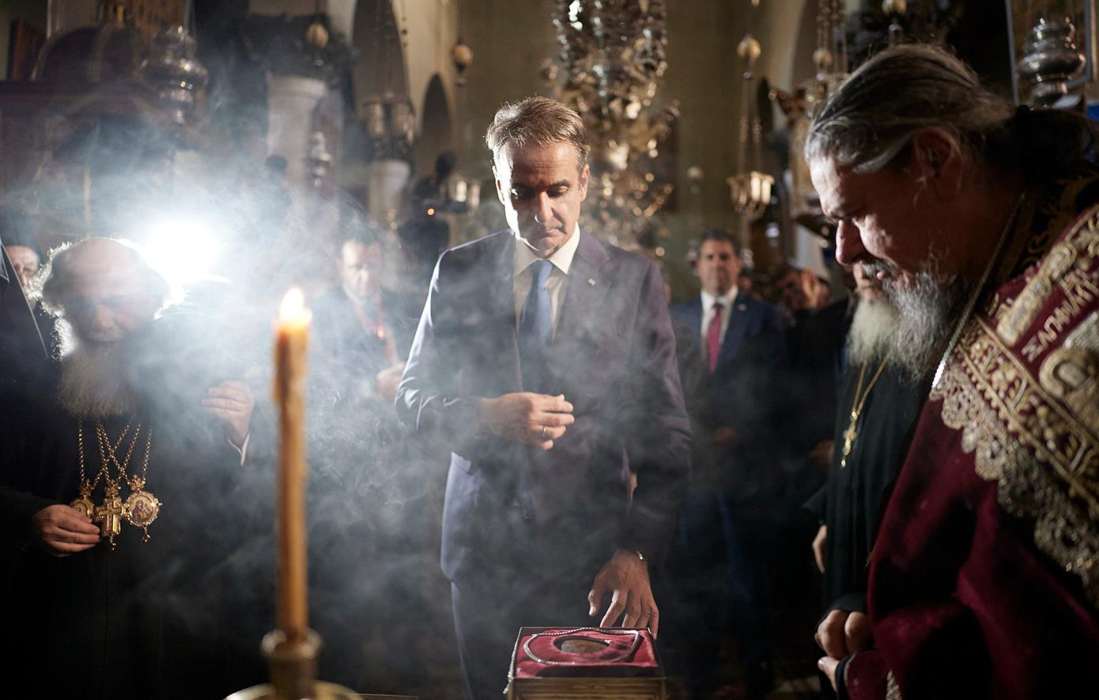
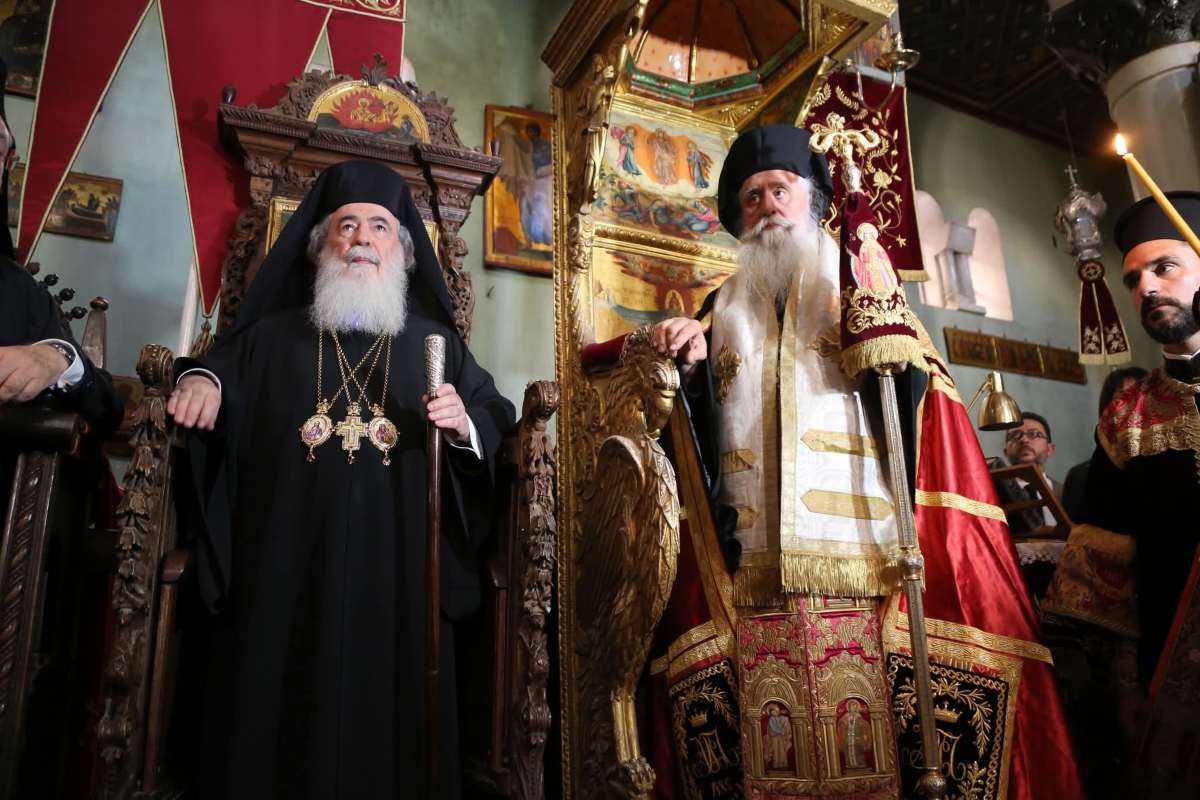
Πηγή Φωτογραφίας: eurokinissi//Mitsotakis Hails Historic Sinai Monastery Agreement: A Powerful Message of Greek and Orthodox Unity



A significant development for Greek diplomacy, Orthodox Christianity and the preservation of religious heritage has emerged following the agreement between Saint Catherine’s Monastery at Mount Sinai and Egypt, with Greek Prime Minister Kyriakos Mitsotakis emphasizing its historic importance.
The Prime Minister held a telephone conversation with His Eminence Archbishop Symeon of Sinai, Pharan and Raitho, congratulating him and expressing support for the decisions taken by the Holy Monastery.
According to an official briefing from the Greek Prime Minister’s Office, Mitsotakis conveyed his support on behalf of all Greeks, highlighting the united position adopted by major Orthodox ecclesiastical institutions.
The agreement with Egypt is described by the Greek government as a historic turning point that consolidates the monastery’s legal status and safeguards its continued existence and Greek Orthodox character.
Beyond its immediate religious significance, the development carries broader diplomatic implications for relations between Greece and Egypt and for the preservation of one of Christianity’s most important historic institutions.
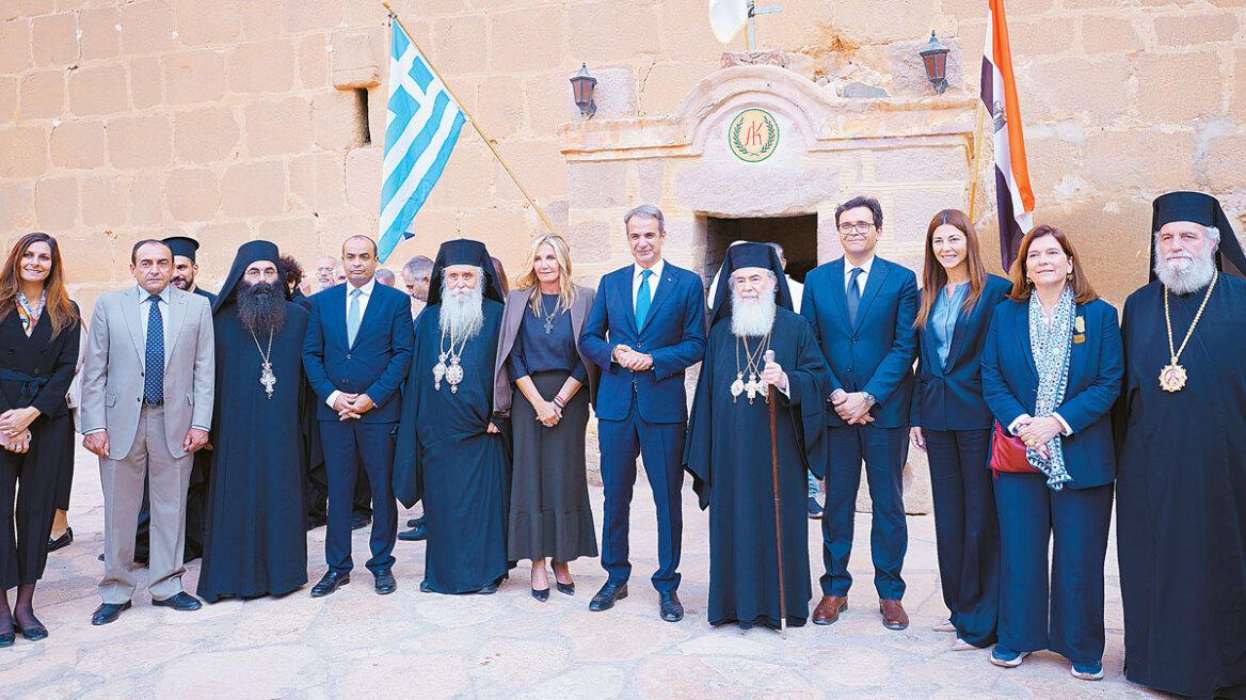
Mitsotakis: A Powerful Message of Unity for Hellenism and Orthodoxy
During the conversation, Mitsotakis placed particular emphasis on the common position adopted by the Orthodox Churches regarding Saint Catherine’s Monastery.
According to the government briefing, the Prime Minister stressed that the united stance of the Ecumenical Patriarchate, the Patriarchate of Alexandria, the Patriarchate of Jerusalem, the Church of Cyprus and the Church of Greece constitutes “a powerful and clear message of unity for Hellenism worldwide, as well as for Eastern Orthodoxy.”
This coordinated position is particularly significant because it demonstrates the collective commitment of Orthodox institutions to safeguarding the monastery’s historical and religious continuity.
Mitsotakis also underlined that the development “confirms what Hellenism can achieve when it stands united and works methodically.”
The Prime Minister’s remarks reflect the importance Athens attaches to cooperation between the Greek state and Orthodox ecclesiastical authorities on matters involving religious heritage and historical institutions.
The agreement is therefore presented not only as a bilateral arrangement between the monastery and Egypt, but also as an example of coordinated action involving the wider Orthodox world.
A Historic Agreement Safeguarding the Monastery’s Future
At the center of the telephone conversation was the agreement reached between Saint Catherine’s Monastery and the Egyptian authorities.
The Greek government characterizes the arrangement as a “historic turning point”, emphasizing its importance for the monastery’s institutional and legal security.
According to the official briefing, the agreement “consolidates the legal position of the Holy Monastery and safeguards its existence and Greek Orthodox character in perpetuity.”
This formulation highlights the significance attributed by Athens to ensuring the monastery’s long-term continuity.
Saint Catherine’s Monastery is among the oldest continuously functioning Christian monastic institutions in the world.
Its history is inseparably linked to Orthodox Christianity, Greek monastic tradition and the preservation of Byzantine religious and cultural heritage.
Protecting its legal standing and religious identity is therefore an issue extending beyond the immediate concerns of a single monastic community.
It involves the preservation of an institution with exceptional historical, spiritual and international cultural significance.
The Strategic Importance of Greek–Egyptian Cooperation
The agreement also underscores the importance of relations between Greece and Egypt.
The two countries maintain close cooperation across several strategic areas, while the protection of Saint Catherine’s Monastery represents an issue of particular historical and religious sensitivity.
During their telephone conversation, Mitsotakis and Archbishop Symeon made special reference to the personal interest shown by Egyptian President Abdel Fattah el-Sisi.
The acknowledgment highlights the significance attached to the Egyptian leadership’s involvement in addressing the monastery’s future.
The Prime Minister and the Archbishop also referred to the affection and respect that the Egyptian people have traditionally shown toward the monastery.
This recognition reflects the monastery’s distinctive position within Egypt’s religious and cultural landscape.
The agreement consequently carries a broader diplomatic message: cooperation between Athens and Cairo can contribute to safeguarding institutions whose importance extends far beyond national borders.
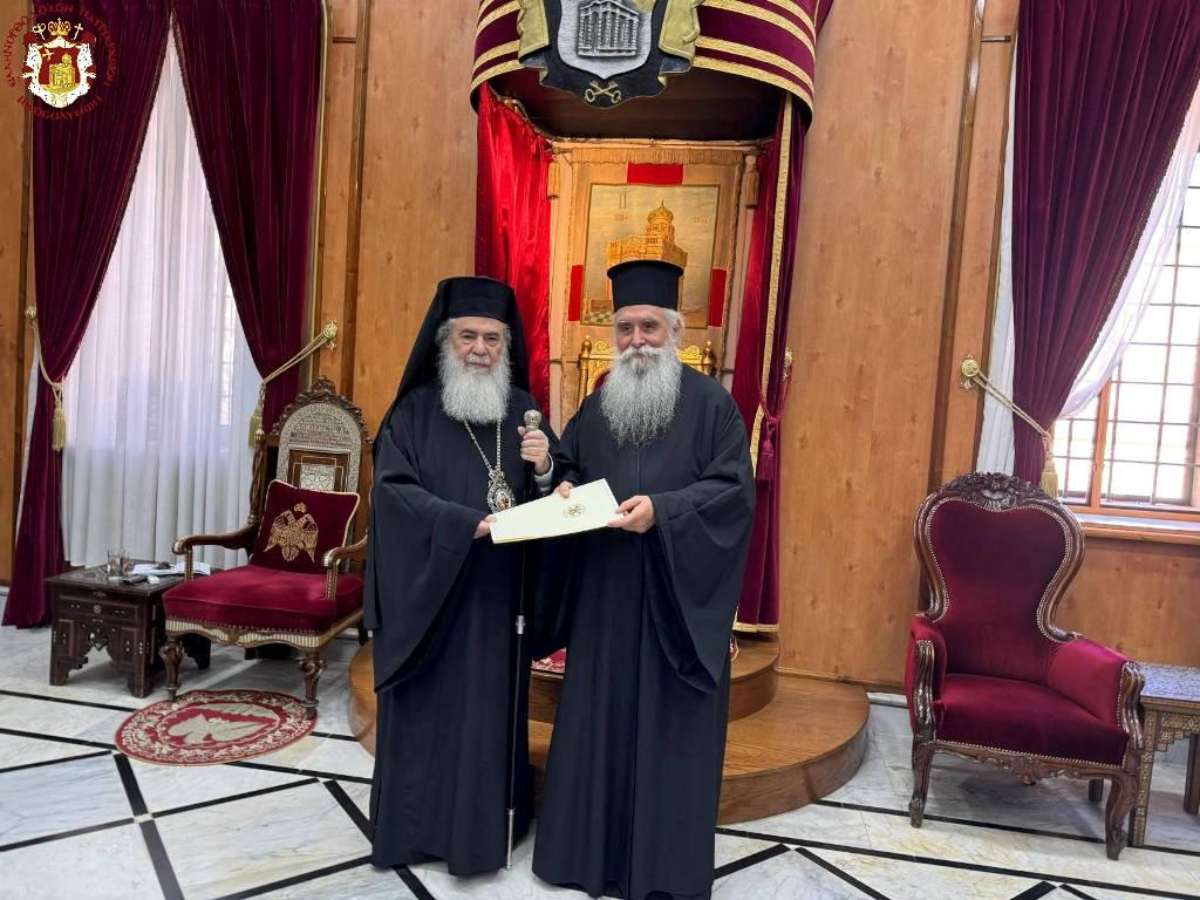
Saint Catherine’s Monastery: A Monument of Global Significance
Located at the foot of Mount Sinai, Saint Catherine’s Monastery is one of the most important religious and historical landmarks in the Christian world.
Its origins date to the sixth century, during the reign of Byzantine Emperor Justinian I.
Over the centuries, the monastery has preserved an extraordinary collection of religious manuscripts, icons and historical artifacts.
Its significance extends beyond Orthodox Christianity because of its connection to the broader religious history of the Sinai Peninsula.
The monastery forms part of the UNESCO World Heritage-listed Saint Catherine Area, recognizing its exceptional universal value.
Its uninterrupted religious tradition and remarkable cultural collections make it an institution of international importance.
For Greece, the monastery also represents a profound historical connection between the Greek Orthodox tradition and the wider Eastern Mediterranean.
The preservation of its identity is therefore regarded as an issue of enduring national, religious and cultural interest.
The Political and Diplomatic Message from Athens
Mitsotakis’ intervention demonstrates the importance the Greek government attaches to protecting the monastery and maintaining close coordination with Orthodox religious authorities.
The united position of the Patriarchates and Churches is presented as an example of effective cooperation on an issue of common historical importance.
At the same time, the recognition of President el-Sisi’s involvement reinforces the diplomatic dimension of the agreement.
The arrangement consequently has two interconnected objectives.
The first concerns the legal and institutional security of Saint Catherine’s Monastery.
The second involves strengthening the conditions necessary to preserve its religious character and historical continuity.
From Athens’ perspective, these objectives are closely linked to the broader relationship between Greece and Egypt.
The agreement also illustrates how diplomacy and ecclesiastical cooperation can contribute to the protection of cultural and religious heritage.
A Wider Message for the Orthodox World
The participation of major Orthodox institutions in developing a common position adds an important dimension to the agreement.
The Ecumenical Patriarchate and the other Churches involved represent institutions with distinct historical responsibilities and ecclesiastical jurisdictions.
Their coordinated stance underscores the shared importance of preserving Saint Catherine’s Monastery.
For Mitsotakis, this unity demonstrates the value of cooperation when addressing challenges affecting the wider Greek Orthodox tradition.
The development also highlights the monastery’s position as a spiritual institution whose significance transcends geographical and political boundaries.
The preservation of its Greek Orthodox identity is thus presented as a common concern for the broader Orthodox world.
A Diplomatic Achievement With Long-Term Implications
The telephone conversation between Mitsotakis and Archbishop Symeon places the agreement with Egypt within a wider historical and diplomatic context.
The Greek government considers the arrangement an important step toward ensuring the monastery’s future.
Athens has emphasized the legal protection of the institution, the preservation of its Greek Orthodox identity and the importance of continued cooperation with Egypt.
The agreement is also presented as evidence of what coordinated action between the Greek state and Orthodox ecclesiastical authorities can achieve.
For Prime Minister Kyriakos Mitsotakis, the agreement on Saint Catherine’s Monastery represents a historic development combining religious continuity, diplomatic cooperation and the unity of Hellenism and Orthodoxy.
Its practical long-term impact will depend on the implementation of the agreement and the specific legal protections established for the monastery.
Nevertheless, the message from Athens is clear: safeguarding Saint Catherine’s Monastery is regarded as a priority of enduring historical and cultural significance.
The preservation of the monastery’s Greek Orthodox character, together with the continued cooperation between Greece and Egypt, stands at the heart of a development that the Greek government describes as a historic breakthrough.
Source: Official briefing from the Office of the Prime Minister of Greece regarding the telephone conversation between Prime Minister Kyriakos Mitsotakis and Archbishop Symeon of Sinai, Pharan and Raitho.
Διαβάστε όλες τις τελευταίες Ειδήσεις από την Ελλάδα και τον Κόσμο