The secret trip lasted only a matter of hours.
But the message CIA Director John Ratcliffe carried to Moscow went to the heart of Vladimir Putin’s calculation about the war in Ukraine:
Do not mistake the strain imposed on the United States by its prolonged war with Iran for an inability to respond to further Russian escalation.
So far, there is little indication that the warning has altered the Kremlin’s strategy.
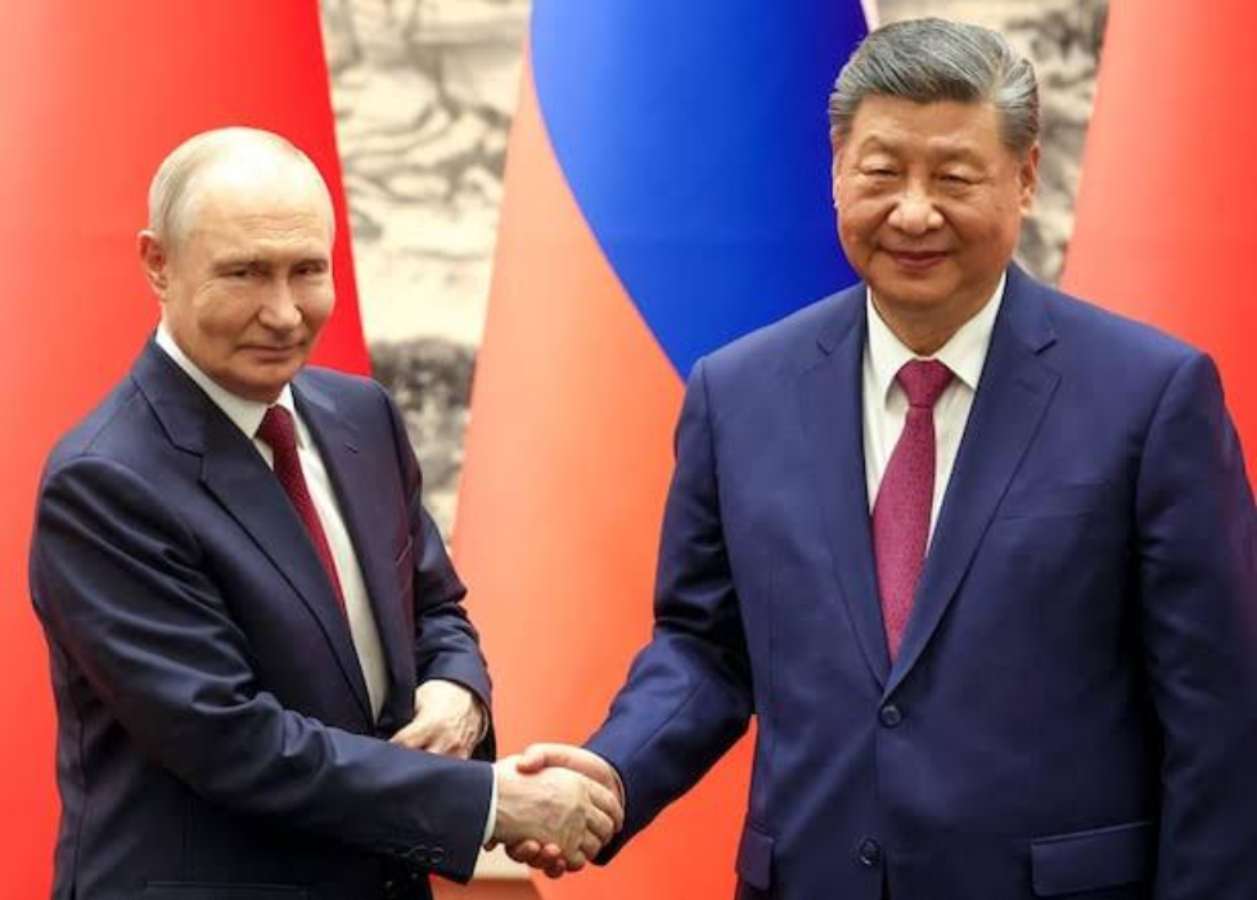
Instead, Putin is preparing for a diplomatic marathon in Bishkek, where he is expected to meet Chinese President Xi Jinping and hold talks with leaders including Indian Prime Minister Narendra Modi and Iranian President Masoud Pezeshkian.
The juxtaposition is revealing.
Washington is trying to convince Moscow that time is not on Russia’s side.
Putin is trying to demonstrate precisely the opposite.
Why the CIA Went to Moscow
Ratcliffe’s visit was anything but routine.
It was the first known trip by a CIA director to Moscow since November 2021, when then-director William Burns travelled to Russia months before the full-scale invasion of Ukraine in an attempt to warn the Kremlin against military action.
Ratcliffe did not meet Putin personally. He held talks with senior figures in Russia’s intelligence establishment, including FSB chief Alexander Bortnikov and Foreign Intelligence Service director Sergei Naryshkin.
The Kremlin nevertheless confirmed that Putin was briefed on the substance of the discussions.
More important than the meetings themselves was the intelligence assessment that preceded them.
According to the Washington Post, US intelligence has concluded that Putin increasingly sees America as militarily and politically weakened by the prolonged conflict with Iran.
That perception could encourage Moscow to believe that Washington has less capacity — or appetite — to counter a new Russian escalation in Ukraine or potentially elsewhere in Europe.
This was therefore not simply another diplomatic message about ending the Ukraine war.


It was an attempt to prevent a strategic miscalculation.
Patriot, Tomahawk and the Two-Front Problem
There is a reason Washington is concerned that Moscow may be drawing such conclusions.
The Iran war has placed significant pressure on stocks of sophisticated American munitions and air-defence interceptors.
Systems such as Patriot have become extraordinarily valuable across several theatres simultaneously.
Ukraine needs them.
US forces and allies in the Middle East need them.
And Washington must preserve sufficient inventories for contingencies involving China in the Indo-Pacific.
The strategic question is therefore no longer simply whether the United States possesses superior military capabilities.
It plainly does.
The question is whether Washington can sustain high-intensity demands across Europe, the Middle East and the Indo-Pacific simultaneously without creating dangerous shortages in specific categories of weapons.
That distinction matters enormously to Moscow.
Putin does not need to believe America is militarily powerless.
He only needs to believe that America is increasingly forced to choose where to concentrate scarce capabilities.
Ratcliffe’s Warning: Do Not Push Trump Toward Zelensky
According to reporting on the visit, Ratcliffe warned his Russian interlocutors that further escalation in Ukraine could ultimately work against Moscow.
A major Russian escalation, the argument went, could push Donald Trump closer to Ukrainian President Volodymyr Zelensky.
The message was essentially:
Do not interpret Trump’s desire to end the war as a guarantee of American retreat.
For the Kremlin, this matters because much of Russia’s diplomatic strategy has depended on the belief that Washington is more impatient to end the conflict than Moscow.
If Putin pushes too far, the CIA appears to have warned, he could change the political equation inside the White House itself.
Washington’s Second Message: Russia Is Not Winning as Much as It Thinks
The other part of the American argument was even more provocative.
US officials reportedly presented Moscow with a deeply negative assessment of Russia’s military and economic trajectory.
The core argument was that Russian forces have absorbed enormous casualties and costs without securing territorial gains commensurate with those losses — and that Moscow would therefore be better served by entering serious negotiations before its position deteriorates further.
American intelligence officials have also questioned whether Putin receives an entirely candid assessment of battlefield realities from those around him.
This creates one of the most dangerous features of the current confrontation.
Washington believes Moscow is overestimating Russian strength.
Moscow appears to believe Washington is underestimating American weakness.
The two powers are therefore arguing about something more fundamental than peace terms.
They disagree about which side is actually running out of time.


Putin’s Answer Is Bishkek
Only days after Ratcliffe’s mission, Putin is moving onto a very different diplomatic stage.
At the Shanghai Cooperation Organisation summit in Bishkek, the Russian president is expected to hold a series of bilateral meetings with leaders from across Eurasia.
Xi Jinping.
Narendra Modi.
Masoud Pezeshkian.
And other leaders from Central Asia and the wider region.
The meetings serve an obvious Russian purpose.
Moscow wants to demonstrate that it is not isolated.
That does not automatically mean Putin is rejecting negotiations with Washington.
Russia can maintain its intelligence channel with the United States while simultaneously deepening economic and political relationships outside the Western system.
That is precisely the strategy.
Xi Is the Meeting That Matters Most
The most consequential conversation will be with Xi Jinping.
For Russia, China has become the indispensable economic counterweight to Western sanctions and the loss of much of its traditional European market.
Trade, energy, technology and financial flows between the two countries have become central to Moscow’s ability to sustain a long confrontation with the West.
Projects such as the proposed Power of Siberia 2 pipeline illustrate the scale of the strategic shift.
The project could eventually carry as much as 50 billion cubic metres of Russian natural gas annually toward China via Mongolia.
For Moscow, the logic is obvious:
replace lost Western demand with deeper integration into Asian markets.
For Beijing, the calculation is different but complementary: secure large volumes of energy through overland routes while increasing Chinese leverage over a Russia increasingly dependent on the Asian market.
This is not an alliance of equals.
But from Putin’s perspective, it does not need to be.
It needs to give Russia strategic endurance.
Then Comes Iran
The meeting with Masoud Pezeshkian carries a different geopolitical message.
Iran is simultaneously at war with the United States, facing an intensifying American sanctions campaign and negotiating indirectly over the future of the Strait of Hormuz.
Russia’s relationship with Tehran has therefore become even more sensitive for Washington.
The two countries already have a strategic partnership, and any expansion of Russian economic, technological or military assistance to Iran would complicate American calculations in the Middle East.
Putin appearing alongside Pezeshkian shortly after receiving a direct American warning carries obvious symbolism.
But the substance matters more.
The question is whether Moscow is prepared to help Tehran withstand US pressure — and, if so, how far it is willing to go without provoking a direct confrontation with Washington.
Modi Shows Why the ‘Russia Isolated’ Narrative Has Limits
India plays a very different role.
New Delhi is not part of an anti-Western bloc.
It maintains increasingly important strategic relations with the United States and Europe while simultaneously preserving longstanding ties with Moscow.
That is exactly why Putin values the relationship.
Russia does not need every country outside the West to become an ally.
It needs enough major powers to refuse Western demands for comprehensive isolation.
India demonstrates the limits of the binary geopolitical model Moscow wants to dismantle.
For Putin, multipolarity does not necessarily mean constructing a single anti-American coalition.
It means building a world in which major states can trade and cooperate with Russia without first obtaining Washington’s approval.
This Is Not a New Anti-Western NATO
The image of Putin meeting Xi, Modi and Pezeshkian can easily be interpreted as evidence of a consolidated anti-Western axis.
Reality is more complicated.
India and China remain strategic competitors.
India has extensive Western partnerships.
China wants Russian resources but has little interest in inheriting all of Moscow’s geopolitical liabilities.
Iran has its own regional priorities.
Turkey, another important interlocutor for Moscow, remains a NATO member even as it maintains deep economic and diplomatic channels with Russia.
Putin’s objective therefore does not require creating a Eurasian equivalent of NATO.
He needs something more flexible:
a network dense enough to ensure that Western isolation of Russia can never become truly global.
The Bigger Russian Bet: America Cannot Sustain Everything at Once
That brings the argument back to Ratcliffe’s mission.
Putin’s apparent calculation is not that the United States has suddenly ceased to be the world’s most powerful military actor.
It is that American power is being stretched.
Iran consumes weapons, political attention and military resources.
Ukraine requires continued support.
China remains the long-term strategic challenge.
Europe wants stronger American security guarantees.
The Middle East requires permanent military attention.
Putin may therefore believe that every additional crisis reduces Washington’s freedom of action somewhere else.
That is the assumption the CIA appears determined to challenge.
Washington and Moscow Are Betting on Who Breaks First
The Ratcliffe mission and Putin’s diplomatic turn toward Bishkek are ultimately two sides of the same strategic contest.
Washington’s message to Putin is:
Russia is paying enormous military and economic costs for limited gains. Negotiate while you still have leverage.
Putin’s apparent answer is:
America is fighting Iran, burning through scarce munitions, watching China and defending Europe simultaneously. I can wait.
That is more dangerous than a disagreement over kilometres of Ukrainian territory.
It is a clash of perceptions about the balance of power itself.
And wars become particularly dangerous when each side believes the other has misunderstood its ability to continue fighting.
The most important revelation from Ratcliffe’s visit may therefore not be Washington’s assessment of Russia.
It is that Washington appears concerned about Putin’s assessment of America.
Bishkek now becomes part of that contest.
If Putin converts meetings with Xi, Pezeshkian and Modi into deeper energy, financial or strategic relationships, he will strengthen the theory on which his strategy appears to rest:
that Russia can outlast Western pressure because the international system is becoming too multipolar for Washington to isolate Moscow completely.
The central question in Ukraine is therefore no longer simply who can gain another town or another stretch of territory.
It is whether Putin is right that America will become exhausted first — or whether that belief is precisely the strategic miscalculation the CIA went to Moscow to prevent.
Source: pagenews.gr