Libya Gets €25 Million from the EU, Threatens Greece Over Maritime Zones – Crete Caught in the Middle
 ΧΡΟΝΟΣ ΑΝΑΓΝΩΣΗΣ 13 '
Πηγή Φωτογραφίας: AP Photo//Libya Gets €25 Million from the EU, Threatens Greece Over Maritime Zones – Crete Caught in the Middle



Libya is emerging as one of Greece’s most complex geopolitical challenges, with two crises converging around Crete: growing migration pressures and renewed disputes over maritime jurisdiction and offshore energy resources.
As the European Commission prepares an additional €25 million in funding for eastern Libya to strengthen border management and maritime operations, the government in Tripoli is reportedly warning Athens that negotiations on the delimitation of maritime zones could be suspended.
The timing creates a particularly difficult diplomatic environment.
On one hand, Greece and the European Union need cooperation with Libyan authorities to reduce dangerous Mediterranean crossings and ease pressure on Crete.
On the other, Athens is seeking to advance offshore hydrocarbon exploration in areas where Libya has asserted competing maritime claims.
The central question is whether migration cooperation can remain separate from the maritime dispute—or whether Libya’s strategic importance will increase its negotiating leverage over Greece and the European Union.
There is, however, no established evidence that Tripoli has formally linked migration cooperation to concessions over maritime boundaries.
Brussels Offers €25 Million as Migration Pressure Mounts on Crete
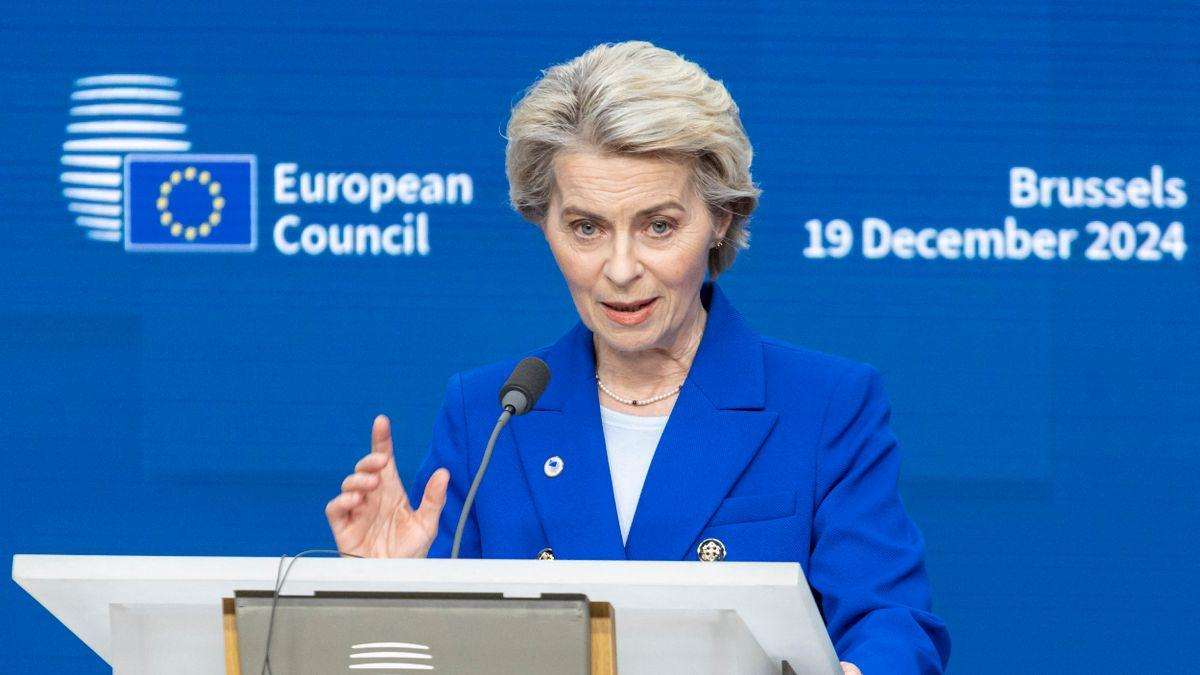
According to reporting by the Greek newspaper Kathimerini, the European Commission is preparing an additional €25 million funding package for eastern Libya.
The money is intended to support border management, search-and-rescue capabilities and efforts to combat migrant-smuggling networks.
The initiative forms part of a broader European strategy aimed at addressing irregular migration before departures develop into dangerous sea crossings and emergency reception operations inside the EU.
For Greece, the issue has immediate operational significance.
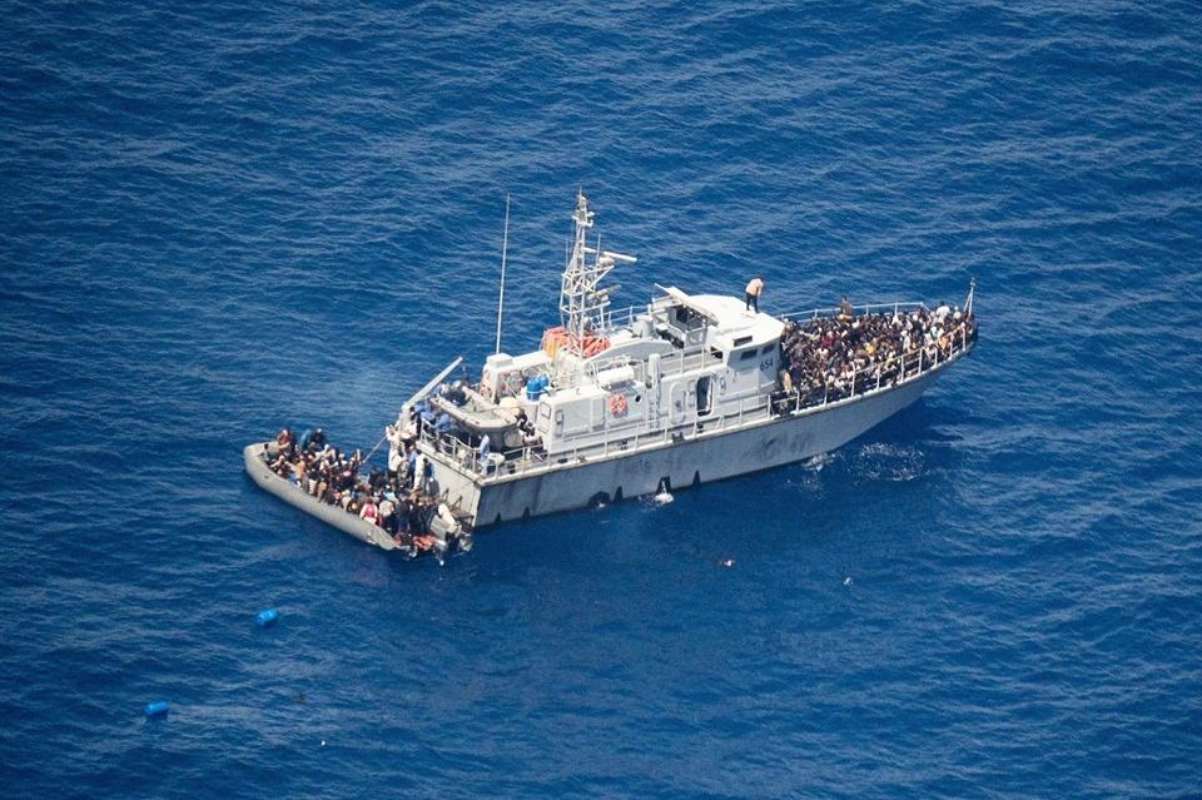
The route from Libya to Crete has become an important migration corridor, placing additional demands on maritime rescue services, registration procedures, temporary accommodation and transfers to reception facilities elsewhere in the country.
European funding is intended to strengthen the capacity of Libyan authorities to manage these pressures closer to departure points.
Yet allocating €25 million does not automatically guarantee a reduction in arrivals on Crete.
The effectiveness of the initiative will depend on how the funds are used, the operational capabilities of the authorities involved and the extent to which smuggling networks can be disrupted.
Humanitarian safeguards will also be essential, particularly given longstanding concerns about the treatment of migrants and asylum seekers in Libya.
The Geopolitical Contradiction: Brussels Funds Benghazi While Tripoli Challenges Athens
One of the most important distinctions in the emerging crisis concerns Libya’s fragmented political structure.
The proposed European funding is directed toward activities in eastern Libya, where the political and military network associated with Khalifa Haftar exercises substantial influence.
The maritime dispute, by contrast, involves the internationally recognized government based in Tripoli.
These are not identical centers of authority.
It would therefore be misleading to suggest that one unified Libyan government is simultaneously receiving European funding and threatening Greece over maritime delimitation.
Nevertheless, the practical challenge for Athens remains significant.
Greece must maintain working relationships with competing Libyan power centers while defending its maritime positions and seeking cooperation on migration management.
The result is a diplomatic balancing act in which border security, energy exploration and regional influence increasingly intersect.
Tripoli Threatens to Suspend Maritime Talks
The second major source of tension concerns offshore hydrocarbon exploration south of Crete.
According to an October 13 report by Liberal, the Libyan government sent a diplomatic note to Athens on August 24, 2026, objecting to Greek initiatives involving offshore energy resources.
Tripoli reportedly argues that the planned activities concern maritime areas where Greece and Libya have not reached a bilateral delimitation agreement.
The Libyan government has also reportedly warned that negotiations over an exclusive economic zone could be suspended.
The dispute reflects fundamentally different interpretations of maritime entitlements in the eastern Mediterranean.
Athens bases its position on international maritime law, the maritime entitlements of Greek islands and the median-line approach in the absence of a negotiated boundary.
Libya has advanced competing claims, including positions reflected in a maritime map submitted to the United Nations in May 2025.
The disagreement is therefore not simply a technical dispute over exploration blocks.
It concerns the legal and geopolitical foundations of maritime jurisdiction between the two countries.
Chevron Adds an American Dimension to the Dispute
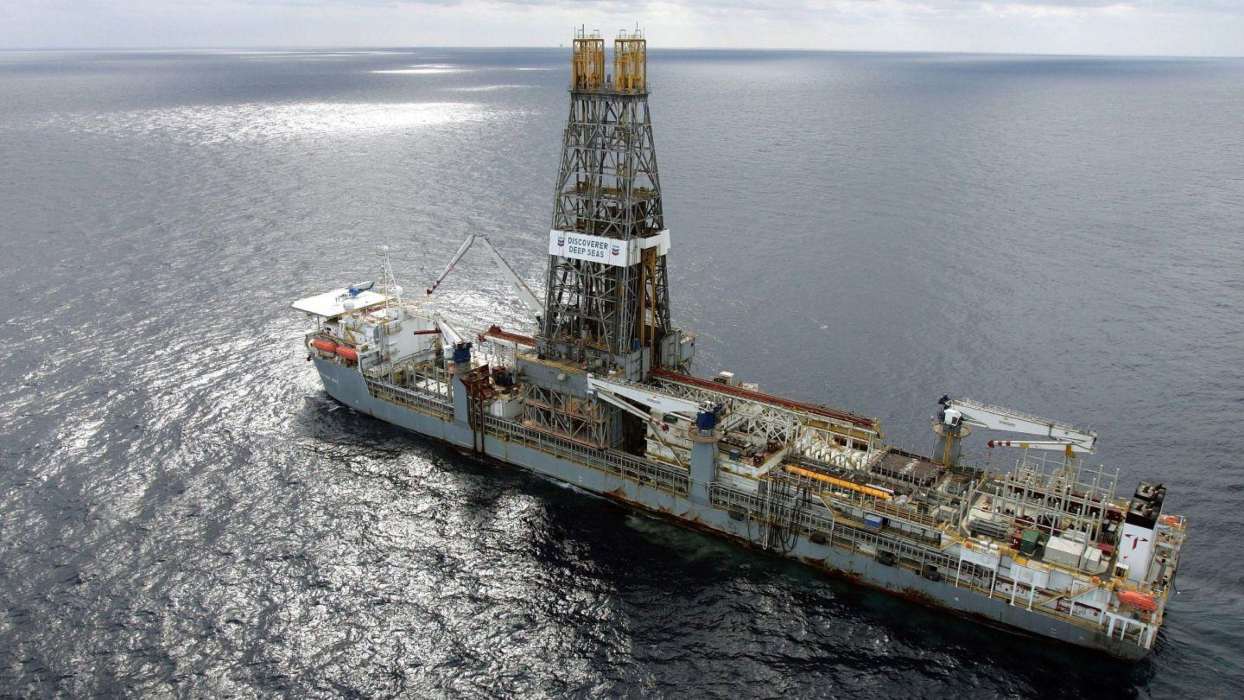
The confrontation comes as US energy major Chevron prepares for potential offshore exploration activities in waters south of Crete.
According to the reported details, Greece published an invitation concerning seismic exploration in the Official Journal of the European Union on August 17, 2026.
The initiative reportedly covers eight maritime areas, including three south and southwest of Crete.
Chevron’s involvement adds significant international commercial interest to Greece’s offshore energy ambitions.
For Athens, exploration is part of a broader effort to assess domestic hydrocarbon potential, strengthen energy security and attract international investment.
For Tripoli, the same developments have become a focal point for objections over maritime jurisdiction.
The presence of a major American company may increase diplomatic attention to the dispute.
However, commercial participation does not itself settle maritime boundaries or establish international recognition of a particular delimitation.
Chevron’s role makes the dispute more strategically consequential, but its resolution remains a matter of international law and diplomacy.
The Turkey–Libya Maritime Agreement Returns to the Forefront
Behind the latest tensions lies the controversial 2019 Turkey–Libya maritime agreement.
Greece rejects the agreement’s implications for its maritime rights, arguing that it disregards the entitlements of Greek islands and cannot create legal consequences for third states without their consent.
Turkey and the Tripoli-based authorities maintain a different interpretation of maritime jurisdiction in the region.
The disagreement has become a defining element of eastern Mediterranean geopolitics.
For Ankara, its relationship with Tripoli provides a platform for advancing Turkish maritime claims and strengthening its strategic presence in North Africa.
For Athens, defending the maritime entitlements of Crete and other Greek islands is a fundamental national priority.
The latest Libyan objections therefore have implications beyond bilateral Greek–Libyan relations.
They also raise questions about Turkey’s regional influence and the extent to which Libya’s internal political divisions may shape future decisions concerning the maritime agreement.
Political Changes in Eastern Libya Could Shift the Balance
Developments within eastern Libya add another layer of uncertainty.
According to the Liberal report, the announced departure of Aguila Saleh from the presidency of Libya’s House of Representatives and the prospect of his replacement by a figure associated with Saddam Haftar’s political circle could affect internal institutional balances.
Saleh had previously opposed the Turkey–Libya maritime agreement.
Any change in parliamentary leadership could therefore influence discussions about the agreement’s status and potential ratification.
Such an outcome is not automatic, however.
A leadership change does not necessarily imply a corresponding change in policy, and the future position of Libya’s parliamentary institutions remains uncertain.
For Greece, developments in eastern Libya matter because they could affect both cooperation over migration and the broader diplomatic environment surrounding Turkish–Libyan maritime arrangements.
Greece Seeks Emergency EU Powers as Brussels Develops a New Framework
On migration, the European Commission is considering a new emergency response framework designed to address sudden or exceptionally large arrivals.
The proposed European Emergency Response Framework would provide greater operational flexibility when existing mechanisms prove insufficient.
The broader approach includes stronger Frontex support, improved early-warning systems and faster mobilization of European resources.
Athens is reportedly seeking the ability to temporarily suspend certain asylum procedures under exceptional circumstances.
However, there is no confirmation that the European Commission has accepted the Greek request.
References to Article 72 of the Treaty on the Functioning of the European Union and national emergency powers do not automatically authorize a general suspension of access to international protection.
Any exceptional measures would remain subject to applicable EU and international legal obligations, including the principle of non-refoulement.
For Greece, the challenge is therefore to secure meaningful emergency support while operating within the relevant legal framework.
A Maritime Rescue Coordination Center in Benghazi
European planning also reportedly includes the establishment of a maritime rescue coordination center in Benghazi.
Potential support could involve the EU naval operation IRINI and financing through the European Peace Facility.
A greater role for the EU Border Assistance Mission in Libya, known as EUBAM Libya, is also being examined, alongside bilateral assistance from member states.
The objective would be to strengthen maritime monitoring, rescue coordination and action against migrant-smuggling networks.
However, the success of such initiatives cannot be measured solely by the number of intercepted departures.
Effective search-and-rescue coordination, protection of human life and independent oversight will be important indicators of whether the new arrangements deliver sustainable results.
Europe Reports Falling Migration Numbers, but Crete Faces a Different Reality
According to figures cited in the Kathimerini report, the European Commission has pointed to a 55% reduction in irregular arrivals across Europe over the previous two years and an approximately 35% decline during 2026.
These figures suggest an improving overall European trend.
They do not, however, fully describe conditions along the Libya–Crete route.
Migration pressure can remain intense in individual regions even when arrivals decline across the continent.
For Crete, the relevant indicators include the frequency of arrivals, the availability of rescue vessels, reception capacity, staffing requirements and the time needed to transfer people to appropriate facilities.
Every arrival requires practical coordination involving maritime authorities, medical services, registration teams and accommodation arrangements.
Crete needs immediate operational relief, while many of Brussels’ proposed solutions will take time to become effective.
That difference between long-term European planning and immediate local pressure remains one of the central weaknesses of the current response.
Return Hubs in 2027: An Ambitious but Uncertain European Plan
Another major element of the EU’s migration strategy involves establishing return hubs outside the European Union.
According to the reported plans, Greece is participating alongside Germany, Austria, Denmark and the Netherlands in exploratory discussions involving third countries, including Rwanda and Uganda.
The aim is to develop a first operational return hub during 2027.
The concept is intended to address persistent difficulties in returning individuals who have no legal right to remain in the European Union.
The reported return rate stands at approximately 32%, illustrating the practical limitations of existing arrangements.
However, exploratory negotiations should not be confused with an operational agreement.
Important questions remain unresolved, including financing, host-country responsibilities, legal safeguards, judicial oversight and compliance with international protection obligations.
Return hubs may eventually become part of Europe’s migration-management architecture.
They are not an immediate answer to the pressures currently facing Crete.
Athens Faces a Dual Strategic Test
Greece is now navigating two separate but geographically connected negotiations.
On migration, it wants stronger European assistance, effective cooperation with Libyan authorities and fewer dangerous crossings toward Crete.
On energy and maritime jurisdiction, it wants to advance offshore exploration and defend its legal positions against competing claims.
These objectives are not inherently incompatible.
But pursuing them simultaneously requires careful diplomacy.
Libya is both a country of departure for migration routes into Europe and a neighboring state with which Greece has an unresolved maritime delimitation dispute.
Its fragmented political structure further complicates negotiations.
Athens must therefore maintain communication with relevant Libyan authorities while avoiding any implication that cooperation on migration requires concessions concerning maritime rights.

The European Summit and the Next Phase of the Crisis
The forthcoming European discussions will provide an important test of whether the Commission’s proposals can be translated into concrete operational measures.
Three questions will be especially important for Greece.
First, will the additional €25 million for eastern Libya produce measurable improvements in managing migration flows toward Crete?
Second, will the proposed emergency framework provide practical assistance to regions experiencing sudden increases in arrivals?
Third, will the maritime dispute with Tripoli affect the broader diplomatic environment for Greek–Libyan cooperation?
The answers will not emerge solely from negotiations in Brussels.
They will also depend on developments at sea south of Crete, the implementation of migration-management arrangements, the progress of offshore energy exploration and the diplomatic positions adopted by Libya’s competing political authorities.
Europe is preparing to spend millions to reduce migration pressure originating from Libya. At the same time, Greece is confronting renewed Libyan objections to its offshore energy ambitions.
The challenge for Athens is to ensure that cooperation on migration remains effective without allowing that dependence to weaken its position on maritime jurisdiction and energy exploration.
For Crete, meanwhile, the stakes are immediate: the island stands at the intersection of two of the Mediterranean’s most consequential policy challenges—migration and energy security.
Source: pagenews.gr
Διαβάστε όλες τις τελευταίες Ειδήσεις από την Ελλάδα και τον Κόσμο