Trump Asks Guilfoyle to Resign as U.S. Ambassador to Greece–White House Confirms Major Diplomatic Shake-Up
 ΧΡΟΝΟΣ ΑΝΑΓΝΩΣΗΣ 15 '

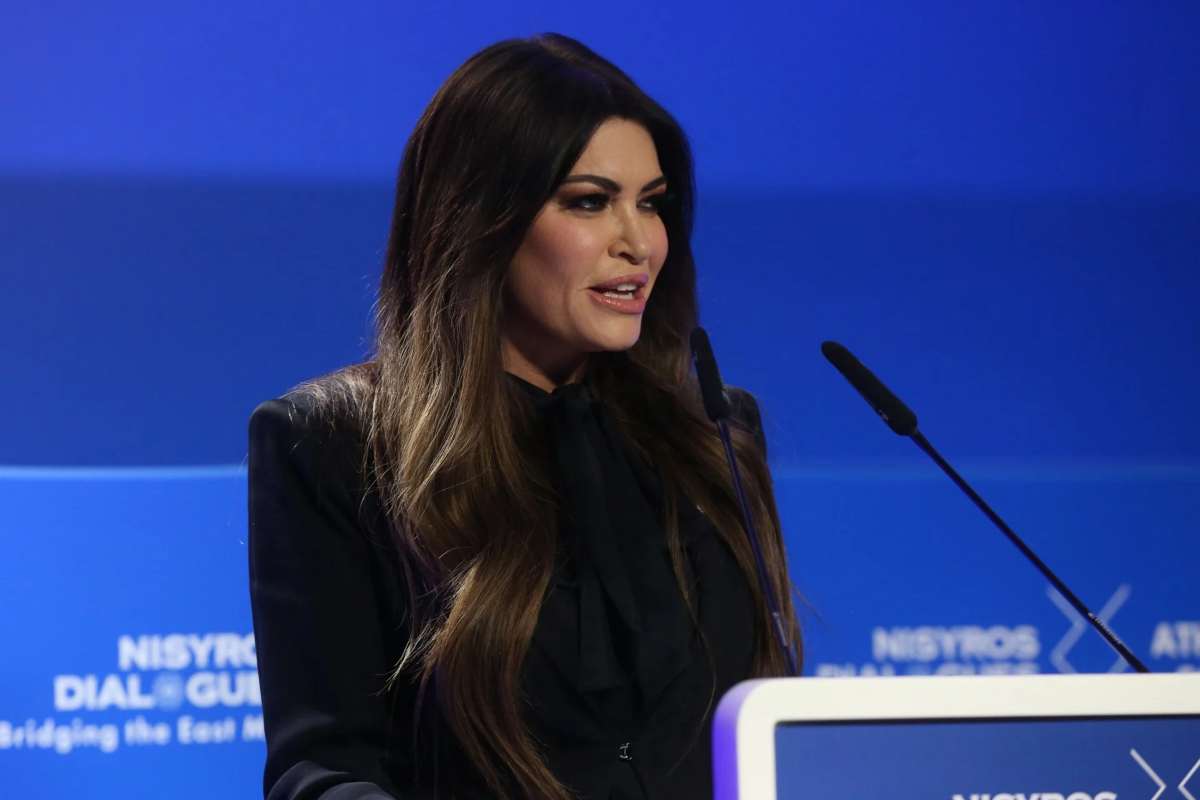
Πηγή Φωτογραφίας: AP Photo//Trump Asks Kimberly Guilfoyle to Resign as U.S. Ambassador to Greece – White House Confirms Major Diplomatic Shake-Up



A major diplomatic development is unfolding in Athens after the White House confirmed on Tuesday, October 13, 2026, that U.S. Ambassador to Greece Kimberly Guilfoyle has been asked to resign.
The announcement marks a decisive shift in the Trump administration’s handling of allegations surrounding one of the president’s most prominent political appointees.
The confirmation came from newly appointed White House Press Secretary Katie Zacharia, who addressed the matter during her first briefing with reporters.
“We have asked Ambassador Guilfoyle to resign. She has been a wonderful asset to the team, and we wish her well,” Zacharia said.
The announcement followed President Donald Trump’s public acknowledgment that his administration was reviewing Guilfoyle’s position following reports alleging improper conduct and questionable financial arrangements.
The developments have attracted particular attention in Greece, where Guilfoyle has represented the United States during a period of intensified bilateral cooperation in defense, energy and regional security.
Although the White House has confirmed its request, the announcement does not itself establish that Guilfoyle has formally submitted her resignation, that her departure has been completed or that a successor has been selected.
Nevertheless, the decision introduces significant uncertainty into the leadership of the American diplomatic mission in Athens.
From Trump’s Public Displeasure to a Formal Resignation Request
The sequence of events unfolded rapidly.
On Monday, October 12, Trump was asked whether he was considering dismissing Guilfoyle following allegations reported in the American press.
The president did not dismiss the possibility.
“Well, we’re looking at it. We’re not happy,” he told reporters.
His comments represented a notable public expression of dissatisfaction with an ambassador he had personally selected.
Less than a day later, the administration moved from considering her removal to formally requesting her resignation.
The shift was confirmed by Zacharia during her first White House press briefing.
Her statement combined an explicit request for Guilfoyle’s departure with a brief acknowledgment of her contribution to the administration.
That distinction matters.
The White House has publicly established its position on her continued service, but the administrative steps required to complete a diplomatic transition remain separate from the announcement itself.
The timing also underscores how quickly political appointments can become subject to presidential reconsideration when controversy reaches the highest levels of government.
Wall Street Journal Reports Put Guilfoyle Under Scrutiny
The resignation request follows a series of reports concerning Guilfoyle’s financial dealings and conduct.
Among the allegations receiving widespread attention is a claim that Guilfoyle sought approximately $100,000 from a political donor to cover a personal American Express credit card bill.
The reported request allegedly occurred before her appointment as ambassador was confirmed by the U.S. Senate.
Other reports have raised questions about gifts, travel arrangements and activities during her diplomatic tenure in Athens.
The allegations have not been established as proven misconduct.
Guilfoyle has denied wrongdoing, while her legal representatives have challenged the accuracy and authenticity of elements of the reported evidence.
The distinction between allegations and verified findings remains essential, particularly because the controversy involves both conduct predating her ambassadorship and activities allegedly occurring while she held an official diplomatic position.
Those periods may involve different legal and ethical requirements.
The White House’s request for resignation does not, by itself, determine whether any specific allegation is true.
The $100,000 American Express Allegation
One of the most prominent allegations involves businessman and Trump supporter Eric Deters.
According to media reports, Deters alleged that Guilfoyle sought financial assistance connected to a personal credit card balance.
Communications presented in support of the allegation have become a focus of the controversy.
Guilfoyle’s legal representatives dispute the account.
Her side has maintained that the financial dealings described by Deters concerned legitimate professional services, including speaking engagements and consulting work.
Her representatives have also challenged the authenticity of disputed communications.
The competing accounts have not been conclusively resolved in the public record.
The significance of the allegation extends beyond the amount involved.
Questions about financial requests, political access and personal relationships become particularly sensitive when the individual concerned is a presidential appointee or subsequently assumes a diplomatic position.
However, determining whether any conduct violated applicable rules requires evidence and an assessment of the circumstances in which it occurred.
State Department Inspector General Investigation
The controversy has also reached the institutional level within the U.S. government.
According to reporting by the Washington Post, the State Department’s Office of Inspector General has opened an investigation into Guilfoyle’s conduct.
The involvement of the inspector general adds an important dimension to the case.
Such investigations can examine whether government personnel complied with relevant laws, regulations and departmental requirements.
In the context of an ambassadorial appointment, potentially relevant issues may include financial disclosures, acceptance of gifts, travel arrangements and compliance with ethics procedures.
The existence of an investigation does not constitute a finding of misconduct.
Nor does the White House’s resignation request establish the outcome of the inspector general’s review.
These are distinct processes: one concerns the president’s decision about who should represent the United States abroad, while the other concerns institutional examination of the allegations.
Guilfoyle Denies Wrongdoing
Guilfoyle has rejected the allegations that have emerged in recent reporting.
Her legal representatives have disputed claims concerning improper financial requests and defended the legitimacy of certain professional arrangements.
They have also maintained that she sought guidance regarding relevant State Department ethics requirements.
Those assertions remain part of her defense and should be distinguished from independently verified findings.
The controversy therefore involves competing claims that require careful evaluation.
The White House’s decision to request her resignation establishes the administration’s position regarding her continued diplomatic service.
It does not replace the need for evidence-based conclusions about the underlying allegations.
A Personal Trump Appointment Under Pressure
Guilfoyle’s appointment to Athens was politically significant from the outset.
A former prosecutor and television personality, she became a prominent figure in conservative political circles and the broader movement surrounding Donald Trump.
She was also previously engaged to Donald Trump Jr., giving her a longstanding personal connection to the president’s family.
Unlike career Foreign Service officers, Guilfoyle entered the ambassadorship as a political appointee.
Her selection reflected the American system’s longstanding practice of appointing both professional diplomats and individuals drawn from political, business and other backgrounds.
Such appointments require Senate confirmation, but the president retains substantial authority over the continued service of ambassadors.
This institutional framework helps explain why Trump’s public statements carried immediate political weight.
The same president who selected Guilfoyle has now asked her to leave the position.
The decision highlights the importance of presidential confidence in politically appointed diplomatic representatives.
Marco Rubio and the Diplomatic Fallout
The controversy also places renewed attention on Secretary of State Marco Rubio, whose recent visit to Athens involved high-level discussions with Greek officials.
Rubio’s visit took place during an important period for bilateral cooperation, including discussions concerning defense, energy and regional security.
The secretary of state had previously spoken positively about the work of the American diplomatic mission.
As new allegations emerged, he faced questions about Guilfoyle’s conduct and the administration’s response.
Reports preceding the White House announcement indicated that senior administration officials, including Trump and Rubio, were deeply dissatisfied with the allegations.
The resignation request confirms that the matter had progressed beyond media scrutiny into an explicit White House decision.
It does not, however, establish that Rubio’s recent diplomatic engagements or the agreements discussed during his visit were connected to any alleged wrongdoing.
That distinction is particularly important given the scale of U.S.-Greek cooperation.
Why the Decision Matters for Athens
Guilfoyle’s requested departure comes at a sensitive moment in relations between Greece and the United States.
The two countries cooperate across several strategic areas, including defense, military facilities, energy security and developments in the eastern Mediterranean.
Greece also occupies an important geographic position at the intersection of southeastern Europe, the Balkans and the wider Mediterranean region.
For Washington, Athens is a partner in NATO and a participant in regional security arrangements.
For Greece, the relationship with the United States has implications for defense planning, investment, energy infrastructure and diplomatic coordination.
An ambassador with direct political access to the White House can play a significant role in facilitating communication between the two governments.
Guilfoyle’s personal connection to Trump’s political circle had been viewed as one of the distinctive features of her appointment.
A change in diplomatic leadership may therefore affect the channels through which political messages are communicated.
That does not mean that the strategic relationship itself is necessarily changing.
Bilateral commitments, defense agreements and institutional cooperation continue independently of any individual ambassador.
Energy Cooperation and the Strategic Importance of Greece
Energy is one of the most important dimensions of the current U.S.-Greek relationship.
Greece has increasingly positioned itself as a regional gateway for natural gas supplies and energy infrastructure serving southeastern Europe.
American liquefied natural gas exports form part of the broader effort to diversify European energy supplies.
At the same time, energy security has become closely linked to regional geopolitics, sanctions policy and Europe’s response to instability in neighboring regions.
The American Embassy in Athens plays a diplomatic role in supporting communication on these issues.
Consequently, a change in its leadership attracts attention beyond the immediate personnel decision.
The important distinction is between the continuity of established bilateral interests and the possible effect of a leadership transition on day-to-day diplomacy.
There is no basis to conclude from the resignation request alone that existing energy cooperation has been suspended or that specific agreements will be reversed.
Defense Cooperation and the Eastern Mediterranean
The same distinction applies to defense and security.
Greece and the United States maintain extensive military cooperation within NATO and through bilateral arrangements.
Their shared agenda includes military readiness, regional stability and security developments across the eastern Mediterranean.
The region remains strategically important because of tensions involving Turkey, instability in the Middle East and broader changes in European security.
A diplomatic transition in Athens could require adjustments in the management of political relationships and communications.
However, the institutions responsible for defense cooperation remain in place.
Military agreements and strategic commitments are not automatically invalidated by the departure of an ambassador.
For Athens, the immediate issue is therefore the continuity of diplomatic representation rather than evidence of a change in Washington’s underlying security policy.
What Happens if Guilfoyle Leaves the Embassy?
The American diplomatic system provides mechanisms for continuity when an ambassador departs.
If Guilfoyle formally leaves her post, the U.S. Embassy in Athens can continue operating under a chargé d’affaires until a new ambassador assumes office.
The chargé d’affaires acts as the head of the diplomatic mission during the absence of an ambassador.
This arrangement allows routine diplomatic functions and official communication to continue.
The selection of a permanent successor is a separate process.
Under the American constitutional system, ambassadorial appointments generally involve presidential nomination and Senate confirmation.
Until an official announcement is made, the identity of Guilfoyle’s potential successor remains unknown.
The timing of any transition also depends on the completion of the relevant administrative steps.
The Difference Between Being Asked to Resign and Having Resigned
The language used by the White House is especially important.
Zacharia confirmed that Guilfoyle had been asked to resign.
That is not identical to an announcement that the ambassador has submitted her resignation, that it has taken effect or that she has already departed Athens.
These distinctions are significant in diplomatic reporting.
A resignation request establishes the administration’s intention.
A formal resignation and its effective date establish the actual transition.
A successor’s nomination and confirmation constitute additional stages.
At the time of the announcement, the White House had not publicly identified a replacement or provided a complete timetable for the transfer of responsibilities.
Until those details are confirmed, reports should distinguish the administration’s decision from the practical completion of the process.
The Political Dimension in Greece
The controversy has also become a subject of political debate in Greece.
Questions about the allegations surrounding Guilfoyle have prompted scrutiny of the Greek government’s response and the wider context of U.S.-Greek diplomatic relations.
Among the issues raised are whether the Greek Ministry of Foreign Affairs sought explanations concerning the allegations and whether additional transparency is required regarding recent bilateral discussions.
The sixth Greece–U.S. Strategic Dialogue has attracted particular attention because it involved cooperation in sensitive areas, including energy and defense.
However, the existence of political questions or calls for greater transparency does not establish that the agreements were improper.
The underlying diplomatic and commercial arrangements must be assessed on their own terms.
The political controversy nevertheless illustrates how allegations involving a foreign ambassador can extend into domestic debates about accountability and the conduct of foreign policy.
Washington’s Decision and the Next Diplomatic Chapter
The White House announcement marks a significant development in the tenure of an ambassador whose appointment was closely associated with Donald Trump’s political network.
The president’s public dissatisfaction was followed within a short period by a formal request for Guilfoyle’s resignation.
The allegations that preceded the decision remain subject to dispute, while the reported State Department inspector general investigation introduces a separate institutional process.
For Greece, the immediate questions concern the timing of any formal departure, the interim leadership of the American Embassy and the eventual selection of a new ambassador.
For Washington, the decision concerns the representation of the United States in an important European partner country.
For Guilfoyle, the allegations and her denials remain distinct from the administration’s decision about her diplomatic appointment.
The confirmed development is clear: the Trump White House has asked Kimberly Guilfoyle to resign as U.S. ambassador to Greece.
Whether her resignation has been formally submitted, when any departure will take effect and who will succeed her are matters requiring further official confirmation.
As Athens and Washington navigate the transition, the broader U.S.-Greek relationship continues to rest on institutional cooperation in defense, energy and regional security.
The resignation request marks a major change in diplomatic leadership, but its longer-term implications will depend on the decisions and official announcements that follow.
Source: pagenews.gr
Διαβάστε όλες τις τελευταίες Ειδήσεις από την Ελλάδα και τον Κόσμο