One of the biggest challenges facing the Greek economy — turning scientific excellence into investment, production and high-value jobs — was at the heart of the inauguration of the Foundation for Research and Technology-Hellas (FORTH) Innovation and Advanced Training Hub in Heraklion, Crete.
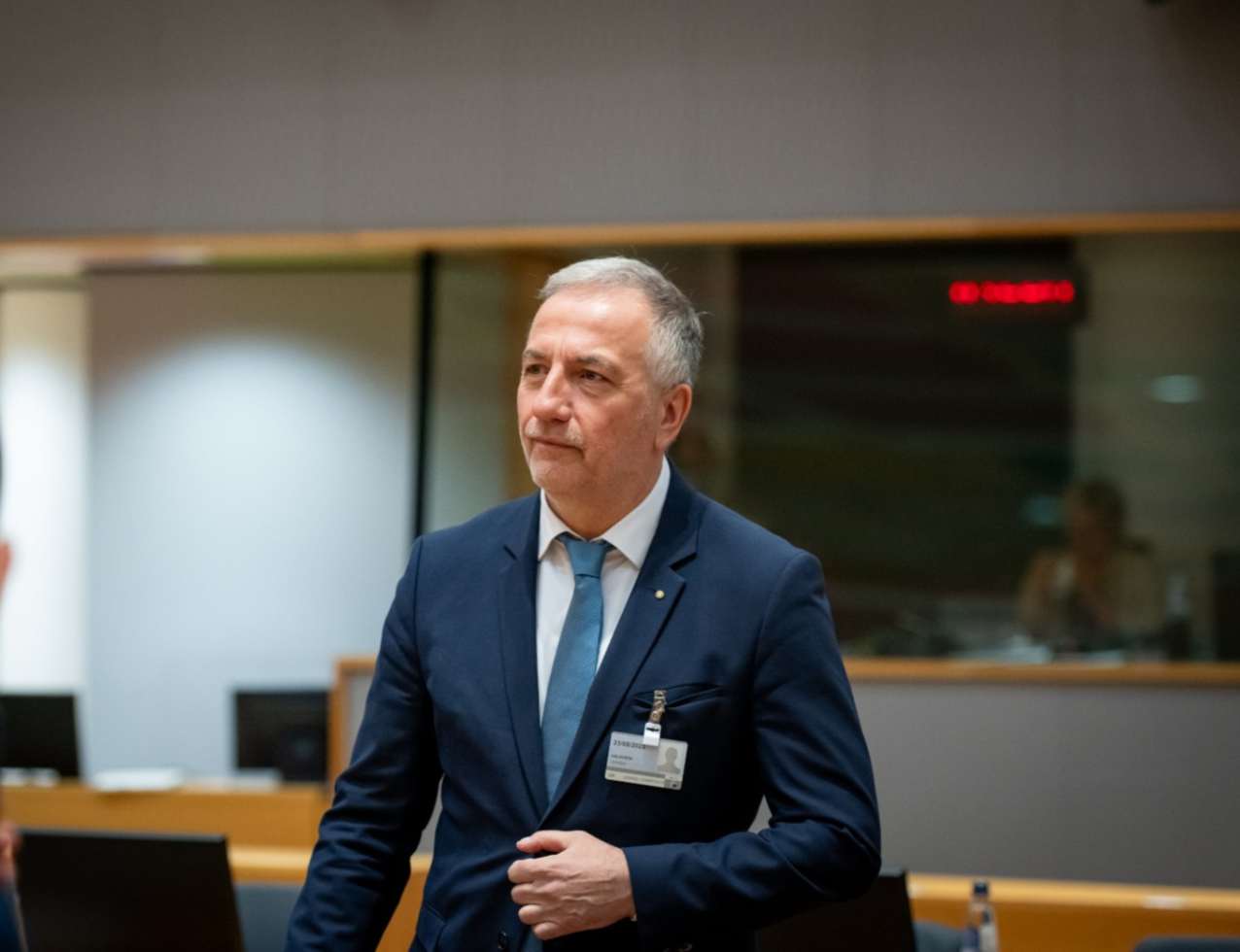
Deputy Development Minister Stavros Kalafatis, responsible for Research and Innovation, set an even broader objective: turning Crete into an international innovation hub in the Eastern Mediterranean while creating the conditions for Greece to transform Brain Drain into Brain Gain.
Development Minister Takis Theodorikakos also attended the inauguration, representing Prime Minister Kyriakos Mitsotakis. The new infrastructure is designed to strengthen research and innovation while bringing them closer to industry, business and the real economy.
Kalafatis: 20,000 sq.m. of New Research Infrastructure
Kalafatis highlighted both the scale of the investment and the importance of delivering modern research facilities directly to Greece’s scientific community.
“With the largest funding in FORTH’s history, amounting to €56 million from the ‘Greece 2.0’ Recovery Fund and the EIB, we are today delivering 20,000 square metres of new state-of-the-art infrastructure in five Greek cities,” he said.
The new facilities cover FORTH activities in Heraklion, Chania, Rethymno, Skinakas, Patras and Ioannina and are part of a wider strategy to strengthen Greece’s research ecosystem and Smart Specialisation agenda.
“Turning Brain Drain into Brain Gain”
This was the central message of Kalafatis’ intervention.
Investment in buildings and research equipment, he argued, is not an end in itself. The broader objective is to create an ecosystem capable of retaining Greek scientists, attracting talent and connecting scientific knowledge directly with businesses and investment.
“We are creating the conditions to transform Brain Drain into Brain Gain and establish Crete as an international innovation hub in the Eastern Mediterranean, directly connecting research excellence with the market and the real economy,” Kalafatis stressed.
The objective addresses one of the long-standing structural challenges of the Greek economy: how to translate a strong pool of highly skilled scientists and researchers into innovation, entrepreneurship and domestic production.
From the Laboratory to the Market
Theodorikakos focused on the productive dimension of the strategy.
“Research and innovation acquire real value and meaning when they move into production, businesses and the everyday lives of citizens,” the Development Minister said.
The aim, according to Theodorikakos, is to prevent knowledge from remaining confined within laboratories and instead turn more research ideas into products, technologies, start-ups and investments.
He described the new facilities as infrastructure capable of supporting “the Greece of knowledge, the Greece of technology and modern production.”
More Than €300 Million for Research Centres
FORTH is part of a much broader investment programme.
According to figures presented by the Development Minister, more than €300 million is being allocated to upgrading infrastructure and equipment at research centres across Greece.
The strategy seeks to create a stronger link between research institutions and the productive economy, while giving Greek researchers access to modern facilities capable of competing internationally.
Theodorikakos: 928 Investment Projects Worth €1.5 Billion
The Development Minister also presented the latest figures from Greece’s Development Law.
According to Theodorikakos, 928 investment projects with a combined value of €1.5 billion are currently under way.
He said that over the past two years the government has redirected development financing toward manufacturing, innovation and the regions, with particular emphasis on border areas and lower-income prefectures.
“We committed ourselves to evaluating all Development Law schemes within 90 days. We made that a reality,” Theodorikakos said.


Crete: 95 Investments Worth €270 Million
Crete itself represents a significant part of that investment activity.
A total of 95 productive investment projects worth €270 million are being implemented on the island, with more than €140 million in government support through grants and tax incentives.
According to the Development Ministry, the projects are associated with the creation of more than 1,200 new jobs.
The figures also underline an effort to broaden Crete’s economic model beyond tourism, strengthening manufacturing, technology, research and innovation.


Biomedical Research and Greece’s Pharmaceutical Industry
Theodorikakos also singled out biomedical research and its potential connection with Greece’s pharmaceutical industry, which he described as a “national treasure” for modern Greek manufacturing.
The policy objective is to create a stronger bridge between research results and commercial applications — and from there to industrial production, investment and employment.
In that sense, biomedical research offers a clear example of how scientific excellence can become part of a wider industrial strategy.
Around 150 Additional Researchers for FORTH
Infrastructure is only one part of the equation.
Theodorikakos also pledged to work toward completing FORTH’s new organisational structure in cooperation with Greece’s General Accounting Office.
According to the figures he presented, the new structure provides for approximately 150 additional researchers compared with current staffing levels.
This is where Kalafatis’ Brain Gain strategy acquires a practical dimension: modern laboratories and research centres cannot deliver their full potential without scientists, researchers and attractive professional opportunities.


Kalafatis’ Bet: Putting Crete on the Eastern Mediterranean Innovation Map
Kalafatis’ message ultimately places Crete within a much larger economic and geopolitical framework.
The ambition is for the island to develop not only as one of Europe’s leading tourism destinations, but also as a regional centre for research, technology and innovation with an international reach across the Eastern Mediterranean.
The decisive test will be whether the new infrastructure translates into research breakthroughs, business partnerships, start-ups, private investment and skilled employment.
The infrastructure is now being delivered. The next challenge is turning scientific excellence into measurable economic value — and making Brain Gain a sustainable part of Greece’s growth model.
Source: pagenews.gr