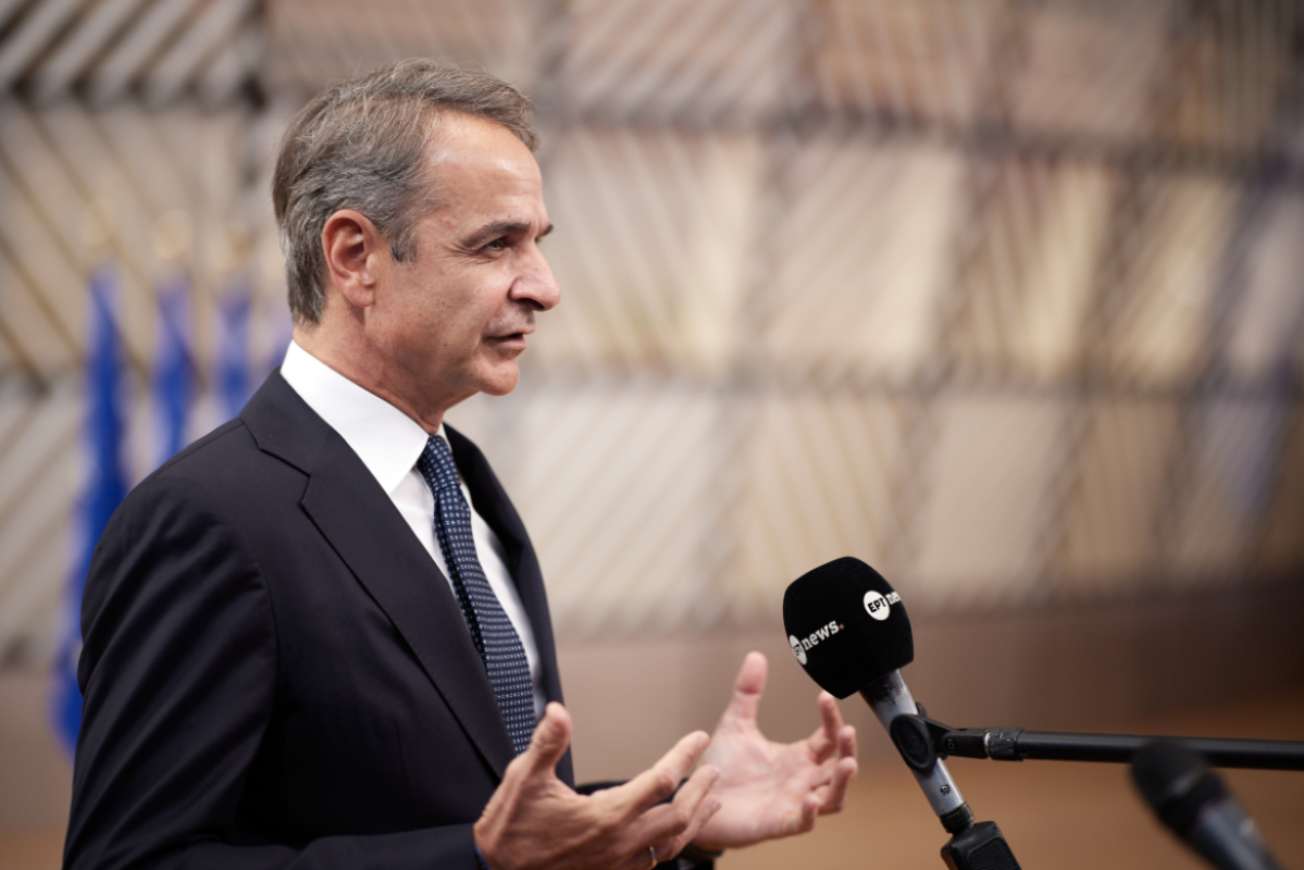
Greek Prime Minister Kyriakos Mitsotakis arrived at the European Council summit in Brussels on Thursday, October 15, 2026, with three major priorities: securing a coordinated European response to rising energy costs, protecting agricultural and regional development funding in the next EU budget, and advancing a Greek proposal for an emergency migration crisis mechanism.
Against a backdrop of mounting pressure on European households and businesses, Mitsotakis urged the European Commission to introduce additional measures that would give member states greater flexibility to address the economic consequences of the energy crisis.
At the same time, he delivered a firm warning to countries advocating tighter EU spending limits: Greece will not accept further cuts to the Common Agricultural Policy or cohesion funding.
Energy Crisis: Mitsotakis Demands a European Response
Energy costs dominated the Greek prime minister’s intervention, reflecting growing concerns about inflation, industrial competitiveness and the financial burden facing households.
Mitsotakis argued that rising energy prices are contributing to renewed inflationary pressure across Europe, making a coordinated response increasingly necessary.
“It is important that, beyond national initiatives, there should also be a European response to this major, difficult problem affecting all European countries,” he said.
The prime minister made clear that Greece would seek an explicit commitment in the summit conclusions calling on the European Commission to examine additional policy measures.
“We will ask, and I will personally ask, for a provision to be included in the conclusions requesting that the European Commission examine additional measures and additional flexibility,” Mitsotakis stated.
The objective is to provide governments with more room to support vulnerable households and businesses struggling with higher energy costs.
His intervention reflects a broader debate within the European Union over how to balance fiscal discipline with the need to protect economic activity during periods of exceptional market volatility.
For Greece, additional European flexibility could strengthen the government’s ability to introduce targeted support without placing excessive pressure on public finances.
However, no specific new EU funding mechanism or exemption from fiscal rules has yet been agreed.


Heating Oil and the Difficult Winter Ahead
Mitsotakis also highlighted measures recently announced by the Greek government to reduce the burden of heating costs.
He argued that Greece currently has one of the lowest heating oil prices in the European Union and pointed to the heating allowance as an additional instrument supporting households in areas with greater heating needs.
According to the prime minister, responsible fiscal management has allowed the government to retain the capacity to intervene when citizens and businesses face exceptional economic pressure.
“The Greek government, precisely because it implements a prudent fiscal policy, has the ability to support businesses and households,” he said.
He linked the government’s latest heating oil measures to its broader strategy of protecting purchasing power ahead of what he described as a difficult winter.
Nevertheless, the actual financial burden on households will depend on several factors, including local fuel prices, consumption requirements, climatic conditions and eligibility for government assistance.
For businesses, electricity and fuel costs remain important factors affecting production expenses and competitiveness.
Mitsotakis acknowledged that the European negotiations would not produce an immediate solution.
“I do not expect this negotiation to be concluded today or tomorrow,” he said, stressing that the Commission should return with additional proposals.

Greece Rejects EU Budget Cuts: Agriculture and Cohesion Funding at Stake
The second major issue raised by Mitsotakis concerned negotiations over the European Union’s next Multiannual Financial Framework.
The Greek prime minister expressed dissatisfaction with the proposal presented by the Irish presidency, arguing that the resources under discussion do not adequately match the ambitions established by the European Commission.
For Athens, the central concern is the future financing of two major European policies: the Common Agricultural Policy and cohesion policy.
The Common Agricultural Policy provides financial support to European farmers and rural communities, while cohesion funding helps reduce economic and regional disparities through investment in infrastructure, development and employment.
Both are particularly important to Greece, where agricultural production and regional investment remain closely connected to economic development.
Mitsotakis said Greece belongs to a group of 16 countries identifying themselves as Friends of Cohesion.
“We are countries that have committed themselves not to accept cuts to cohesion policies and the Common Agricultural Policy,” he declared.
He described these funding areas as fundamental pillars of European integration.
The Greek government argues that new EU priorities, including defence, technological competitiveness and strategic autonomy, should not come at the expense of established agricultural and regional development programmes.
Warning to Europe’s Frugal Countries
Mitsotakis directed a pointed message toward member states advocating stricter limits on European spending.
“Our frugal friends must also be convinced that we will not accept further cuts to crucial pillars of European policy,” he said.
The statement highlights a longstanding division within the European Union.
Some governments favour stronger common financing for agriculture, regional development and investment, while others prioritise spending restraint and the redistribution of existing resources toward emerging strategic challenges.
The disagreement has become more significant as Europe faces competing demands for defence investment, energy security and economic competitiveness.
Greece’s position is that the Union cannot pursue new strategic ambitions while substantially weakening funding mechanisms that support its regions and agricultural communities.
Mitsotakis expressed hope that negotiations could be concluded at the December European Council, although the timetable remains dependent on agreement among member states.
Migration: Athens Welcomes Support for Its Emergency Crisis Proposal
Migration formed the third pillar of the prime minister’s intervention.
Mitsotakis welcomed what he described as European Commission acceptance of a Greek proposal to establish a special mechanism for responding to exceptional migration crises.
He referred to the events at the Greek-Turkish border in Evros in 2020 and similar pressures experienced in Ceuta, the Spanish enclave bordering Morocco.
According to the prime minister, the proposed mechanism would give frontline member states additional options during extraordinary situations involving intense pressure at their external borders.
Mitsotakis said the initiative had received support from the European Commission and member states, expressing confidence that legislation could follow.
He described the objective as allowing frontline countries, under highly exceptional circumstances, to introduce special asylum-related measures and carry out returns.
The precise scope and legal safeguards of any such mechanism will depend on the final legislative text.
Any implementation would also need to comply with applicable EU and international legal obligations, including protections against refoulement.
Political support for the proposal does not mean that a new legal mechanism has already entered into force.
Three Strategic Priorities, One Difficult European Negotiation
Mitsotakis’s intervention in Brussels brings together three issues with direct implications for Greece’s economy and its position within the European Union.
On energy, Athens is seeking greater European flexibility to protect households and businesses from higher costs.
On the EU budget, the government is defending funding for agriculture and regional development against proposals for spending reductions.
On migration, Greece is seeking additional European tools for responding to exceptional pressure at the Union’s external borders.
These priorities reflect the challenges facing EU governments as they attempt to reconcile economic stability, strategic investment and border management.
For Athens, the immediate objective is to turn political demands into concrete European decisions.
The outcome will depend on negotiations among member states and the willingness of European institutions to develop measures that respond to the financial pressures facing citizens and businesses.
With energy prices weighing on economic activity and the next EU budget still under negotiation, the Brussels summit represents an important stage in Greece’s effort to secure greater European support.
Source: pagenews.gr