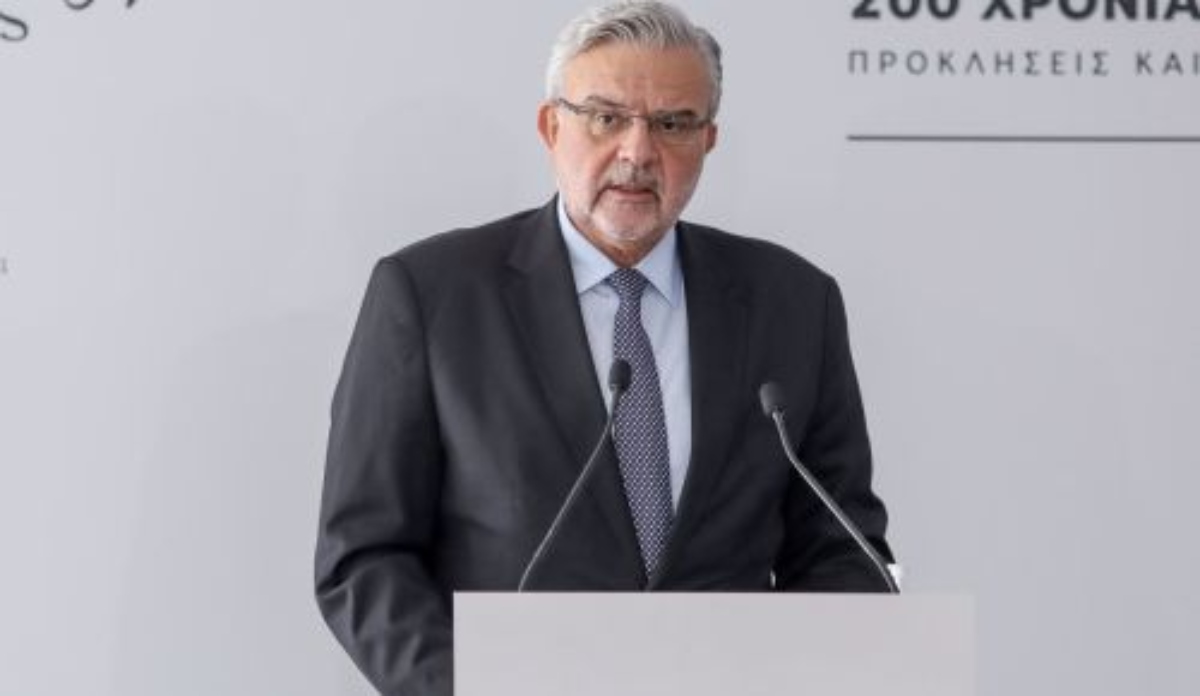
“We are building a diversified, high-return Group that combines best-in-class growth with high operating efficiency and a low-risk balance sheet.”
With this statement, Christos Megalou, Chief Executive Officer of Piraeus Bank, outlined the strategy behind the Greek banking group’s nine-month financial results for 2026.
Piraeus reported net profit of €893 million, representing a 9% year-on-year increase, while core operating profitability rose 14% to €930 million.
The bank also delivered €2.2 billion in net credit expansion, placing it on track to achieve its full-year lending growth target of more than €3 billion.
Meanwhile, customer deposits increased to €69.2 billion, and revenues from services rose sharply as insurance, wealth management and digital banking became increasingly important contributors to the group’s earnings.
The results reflect a business model that is expanding beyond traditional banking, with the acquisition and integration of insurance activities playing a significant role.
For Megalou, the next priority is to build on this momentum and deliver higher profitability and stronger returns in 2027.
Megalou: “The Results Confirm Piraeus’ Strategic Direction”
Commenting on the financial performance, Megalou emphasized the breadth of the group’s growth.
“The nine-month 2026 results confirm Piraeus’ strategic direction,” he said.
“We are building a diversified, high-return Group that combines best-in-class growth with high operating efficiency and a low-risk balance sheet.”
The CEO highlighted the increasing contribution of activities beyond conventional lending.
“The Group’s growth has both breadth and depth, supported by continued credit expansion and an increasing contribution from services, insurance and customer asset management.”
The figures illustrate this development.
Core operating profitability reached €930 million, up 14% compared with the corresponding period of 2025.
In the third quarter alone, core operating profit increased by 10% year on year to €301 million.
The performance demonstrates the contribution of lending growth and diversified revenue streams to the group’s recurring profitability.
Net Profit Reaches €893 Million as Earnings per Share Rise 10%
Piraeus Bank recorded €893 million in net profit during the first nine months of 2026, representing a 9% increase from the previous year.
Strong core operating performance was partly offset by the impact of market volatility on non-core income.
Earnings per share increased 10% to €0.68, keeping the bank on track to achieve its full-year target of approximately €0.90 per share.
Normalized return on tangible equity reached 15.4%, broadly in line with the bank’s target of approximately 15% for 2026.
These figures are important indicators of the group’s ability to generate earnings while maintaining capital efficiency.
The results also provide the basis for management’s decision to pursue more ambitious financial objectives in the coming year.


Lending Expansion Reaches €2.2 Billion – Full-Year Target Above €3 Billion
Credit growth remained one of the strongest drivers of Piraeus Bank’s performance.
The loan portfolio reached €39.6 billion, while net credit expansion totaled €2.2 billion during the first nine months.
Management reiterated its objective of exceeding €3 billion in net credit expansion for the full year.
The increase reflects continued financing activity and the bank’s ability to support demand for credit across the Greek economy.
The recovery in mortgage lending was particularly notable.
Net mortgage loan growth reached €135 million during the nine-month period.
New mortgage disbursements amounted to €600 million, representing a 37% year-on-year increase.
The figures indicate improving activity in housing finance, an area that remains important for the domestic banking market.
For Piraeus, continued lending expansion is also essential to sustaining interest income and supporting future earnings growth.
Customer Deposits Climb to €69.2 Billion
The bank’s funding position strengthened alongside its lending activities.
Customer deposits increased 9% year on year to €69.2 billion.
The overall cost of deposits remained at 0.39%, supporting the group’s funding structure.
The loan-to-deposit ratio stood at 65%, while the liquidity coverage ratio reached 212%.
These indicators suggest that Piraeus maintains substantial liquidity resources to support its business expansion.
The combination of deposit growth and available liquidity provides flexibility as the bank continues to pursue its lending targets.
It also supports the group’s ability to manage funding requirements amid uncertainty in international financial markets.
Service Revenue Jumps 39% as Insurance and Wealth Management Gain Ground
One of the most significant developments in Piraeus Bank’s results was the growth in service-related income.
Net revenue from services reached €679 million, increasing 39% year on year.
The contribution of Ethniki Insurance was particularly important, alongside continued expansion in wealth management activities.
Megalou highlighted the strategic significance of this shift.
“At the same time, we are further diversifying our revenue streams: service revenues increased by 39% year on year in the nine-month period and now account for 31% of total revenues,” he said.
The growing share of service income reduces the group’s relative dependence on traditional net interest income.
It also demonstrates how Piraeus is developing a broader financial services model, combining banking, insurance, investment management and digital products.
This diversification is a central component of management’s strategy for generating sustainable earnings.
Ethniki Insurance Generates €666 Million in Premiums
Ethniki Insurance is becoming an increasingly important contributor to Piraeus Bank’s financial performance.
Gross written premiums reached €666 million during the first nine months of 2026, an increase of 4% year on year.
Megalou specifically highlighted the insurer’s contribution to the group’s growing service revenues.
“Ethniki Insurance generated €666 million in premiums during the nine-month period,” he noted.
The insurance business broadens the group’s range of financial products and creates opportunities for cooperation between its banking and insurance operations.
It also strengthens the diversification of earnings, which management has identified as a strategic priority.
The integration of insurance activities is therefore an important element in Piraeus’ transformation into a broader financial services group.
Assets Under Management Reach €16.9 Billion
Piraeus also recorded strong growth in wealth and asset management.
Customer assets under management increased 19% year on year to €16.9 billion.
Net inflows reached €1.3 billion during the nine-month period, already exceeding the bank’s full-year target.
The performance reflects growing activity in investment products and wealth management services.
For the group, this business provides an additional source of fee-based income while strengthening relationships with existing customers.
It also supports management’s ambition to increase the contribution of services to total revenue.
The expansion of managed assets is particularly relevant as the bank seeks to develop recurring earnings streams beyond lending.
Snappi Reaches 260,000 Users and €130 Million in Deposits
Digital banking represents another important pillar of Piraeus’ strategy.
Its digital bank, Snappi, reached 260,000 users and attracted €130 million in deposits during its first year of operation.
According to management, the platform has been attracting approximately €1 million in deposits per day and has introduced seven new products since July.
Megalou emphasized the importance of innovation to the group’s future.
“Innovation is a central pillar of our strategy,” he said.
He then pointed to Snappi’s performance:
“Snappi, our digital bank, reached 260,000 users and €130 million in deposits in its first year of operation, attracting approximately €1 million in deposits per day, with the launch of seven new products since July.”
The CEO indicated that the platform’s early growth is encouraging management to reassess its ambitions.
“This momentum allows us to upgrade our medium-term ambitions for Snappi.”
The digital bank provides Piraeus with a platform for reaching new customer segments and developing technology-driven financial products.
Its expansion is also part of the group’s wider investment in digital transformation.
Net Interest Income Rises to €542 Million in the Third Quarter
Piraeus’ core banking operations also delivered stronger interest income.
Net interest income reached €542 million in the third quarter, increasing 7% compared with the previous quarter.
According to the bank, the improvement was mainly driven by interest rate developments and disciplined management of lending and deposit margins.
The net interest margin stood at 2.2% for the nine-month period, in line with the bank’s full-year guidance.
Management indicated that there is potential to exceed its 2026 targets for both net interest income and service revenues.
The performance is particularly significant because it demonstrates the contribution of the expanding loan portfolio to recurring earnings.
Together with fee and insurance income, it supports the group’s broader profitability objectives.
Cost-to-Income Ratio at 33% Highlights Operating Efficiency
Operating discipline remains a key part of Piraeus Bank’s strategy.
The cost-to-income ratio stood at 33% during the first nine months, improving to 32% in the third quarter.
The indicator measures operating expenses relative to operating revenues and provides an important assessment of efficiency.
Megalou emphasized the role of disciplined management in maintaining profitability.
“Discipline remains at the core of our operating model,” he said.
The bank’s ability to maintain a relatively low cost-to-income ratio is particularly relevant as it expands into insurance, wealth management and digital banking.
These investments create new opportunities but also require effective management of operating expenses.
For Piraeus, efficiency remains an important factor in achieving its return targets.
Non-Performing Exposure Ratio Falls to 2%
Piraeus Bank reported further improvement in asset quality.
The non-performing exposure (NPE) ratio declined to 2.0%, compared with 2.2% in the previous quarter.
The reduction was supported by loan portfolio sales.
Organic cost of risk stood at 57 basis points, broadly in line with the revised 2026 target of 60 basis points.
The bank’s Common Equity Tier 1 (CET1) ratio reached 12.9%, with management targeting a level above 13% by the end of 2026.
The total capital ratio stood at 18.6%.
According to the bank, its capital buffer exceeded the overall 2026 supervisory requirement, including Pillar 2 Guidance, by approximately 260 basis points.
These figures indicate the capital and asset quality position underpinning the group’s growth plans.
Megalou also highlighted the bank’s investment-grade ratings from major credit rating agencies as recognition of its progress.
€124 Million Interim Dividend Planned for December
Strong earnings are also supporting Piraeus Bank’s shareholder distribution plans.
The group expects to distribute an interim dividend of approximately €124 million from its 2026 earnings.
The payment is scheduled for December 2026, subject to the necessary regulatory approvals.
Piraeus has also made provision for a total cash distribution of €650 million from its 2026 profits.
The planned distributions reflect management’s strategy of generating shareholder returns while maintaining sufficient capital to support lending and business expansion.
The interim dividend remains conditional on regulatory approval, while the overall distribution plan is based on the group’s financial performance and applicable corporate procedures.
Megalou Signals Higher Financial Targets for 2027
One of the most significant messages accompanying the results concerns the bank’s outlook for 2027.
Megalou expressed confidence in the group’s ability to achieve its current-year objectives.
“Our strong performance reinforces our confidence in achieving our 2026 targets, with potential upside in net interest income and service revenues,” he said.
He added:
“At the same time, it lays the foundations for upgrading our targets for 2027.”
Management is now targeting a net interest margin above 2.4% in 2027.
It also aims for service revenues equivalent to approximately 0.9% of total assets and a return on tangible equity exceeding 15%.
The bank is targeting annual earnings-per-share growth of approximately 10%, alongside a CET1 ratio above 13.5%.
These objectives represent management’s forward-looking ambitions rather than achieved results.
Their delivery will depend on business performance, economic conditions and the broader interest rate environment.
Nevertheless, the upgraded targets illustrate the confidence management is placing in its diversified business model.
Greek Economic Resilience Amid Global Uncertainty
Megalou also addressed the broader economic environment, highlighting the risks arising from geopolitical tensions and financial market developments.
He pointed to the continuing conflict in the Middle East and rising European bond yields as factors increasing uncertainty for the global and European economic outlook.
However, he expressed confidence in Greece’s economic fundamentals.
“Nevertheless, the macroeconomic environment in Greece remains resilient, with fiscal stability, a continued decline in public debt and a high primary surplus,” he said.
He added:
“The Greek economy is expected to remain on a positive trajectory, supported by a credible fiscal framework, ongoing reforms and sustained investment.”
These comments reflect management’s expectations for the economic environment in which Piraeus will pursue its lending and profitability targets.
Continued investment activity and demand for financing remain important considerations for the bank’s medium-term strategy.
Investing in People, Technology and Long-Term Growth
Alongside financial performance, Megalou emphasized the importance of employees and technology to the group’s development.
Piraeus reported receiving Top Employer Greece 2026 certification from the Top Employers Institute, stating that it was the only Greek bank to receive the recognition.
The CEO linked this achievement to the group’s broader commitment to its workforce.
“We will continue to support our customers and the Greek economy, invest in our people and technology, and create sustainable value for all our stakeholders,” he said.
The emphasis on technology and human capital reflects Piraeus’ ongoing transformation.
With €893 million in net profit, €930 million in core operating profitability, €2.2 billion in net credit expansion and 39% growth in service revenues, the group has delivered strong financial results for the first nine months of 2026.
For Christos Megalou and his management team, the next challenge is to meet the bank’s full-year objectives while preparing for a more ambitious 2027.
The combination of lending growth, insurance, wealth management and digital banking will be central to that effort as Piraeus seeks to translate its current performance into sustained profitability and shareholder returns.
Source: pagenews.gr