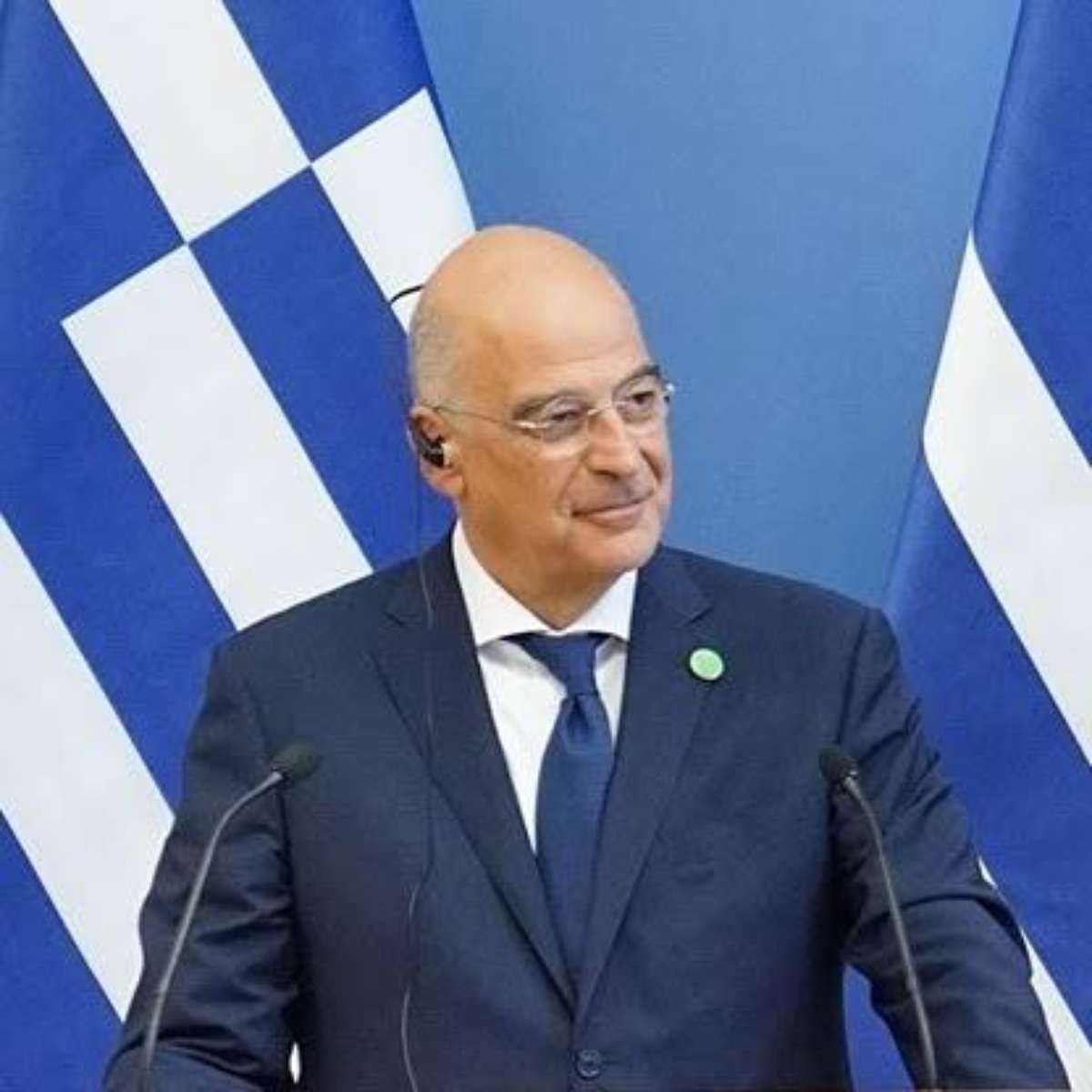
What Is Dendias Preparing for Turkey? Greece’s 34-Month Shield Plan and Sovereignty Red Line
 ΧΡΟΝΟΣ ΑΝΑΓΝΩΣΗΣ 8 '
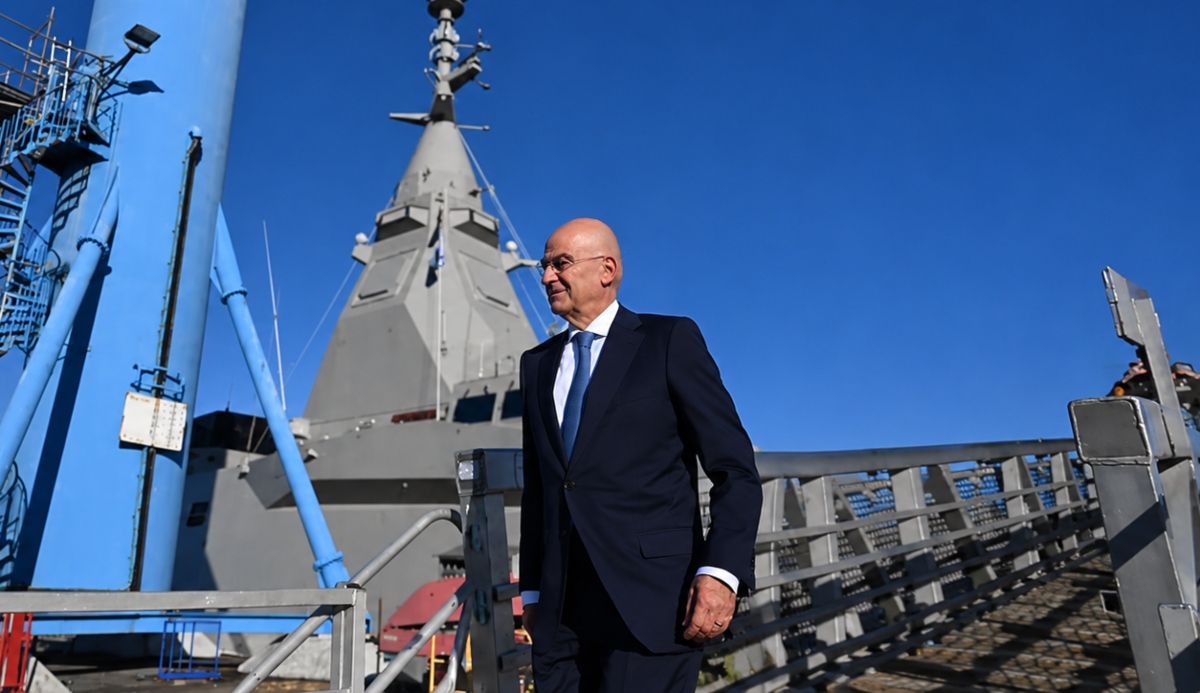
Πηγή Φωτογραφίας: EUROKINISSI/What Is Dendias Preparing for Turkey? Greece’s 34-Month Shield Plan and Sovereignty Red Line



“It is impossible for Greece to accept the amputation of national sovereignty and the relinquishment of sovereign rights.”
With that declaration, Greek Defence Minister Nikos Dendias sets out Athens’ position on Turkish claims, linking the defence of Greece’s rights to a broader transformation of its armed forces.
In an interview with Greek newspaper Ta Nea and journalist Marinos Gkasiamis, Dendias presents specific priorities and deadlines: full operational readiness for the “Shield of Achilles” within 34 months, the inauguration of a Space Command in December, and a minimum 25% domestic industrial participation requirement that he intends to enshrine in law.
He also acknowledges concerns over Turkey’s expanding influence in eastern Libya, avoids announcing a military role in protecting the Greece–Cyprus electricity interconnector, and dismisses discussion of post-election coalitions as premature.
Ratification Does Not Legitimize the Turkey–Libya Memorandum
Dendias argues that ratification of the Turkey–Libya maritime memorandum by the eastern Libyan parliament does not change Greece’s assessment of its legality.
“It is obvious that ratification does not confer legitimacy on the so-called ‘Turkey–Libya memorandum,’ as it does not alter its illegal, null and void character,” he says.
Yet he does not dismiss the political significance of the development. He describes it as further evidence of Turkey’s strategy and draws attention to its wider implications.
“We should consider what Ankara’s penetration into the Benghazi region means for security in the Eastern Mediterranean, as well as its potential implications for other issues, such as migration flows.”
His position distinguishes between rejecting the memorandum’s legal validity and addressing the consequences of Turkish influence on the ground.
Dendias contrasts the memorandum with the Greece–Egypt exclusive economic zone delimitation agreement, which he signed as foreign minister. He describes that agreement as a practical application of the law of the sea and a valuable achievement for Greece and the Eastern Mediterranean.
“Blue Homeland”: Domestic Legislation Cannot Rewrite International Law
Addressing Turkey’s proposed legislation concerning its “Blue Homeland” doctrine, Dendias stresses that a country’s domestic laws cannot establish a situation contrary to the international law of the sea.
In his assessment, Ankara is seeking to portray Greek islands and maritime zones as areas subject to Turkish claims, hoping eventually to secure acceptance of those claims.
He directly connects Greece’s response to the Agenda 2030 defence reform programme.
“One reason we proceeded with the ‘Agenda 2030’ reform is precisely to enable Greece to confront every challenge.”
He adds:
“Strong armed forces mean credible deterrence, which allows the country to have confidence and respond to challenges with determination.”
A Cautious Answer on the Greece–Cyprus Cable
Dendias adopts more restrained language when asked whether planned survey work for the Greece–Cyprus electricity cable could trigger a crisis with Ankara, and whether research vessels could receive military protection.
He notes that the project falls outside his ministry’s remit.
“I hope it will not subsequently become a matter for our ministry, beyond the procedure for issuing NAVTEX notices through the Hellenic Navy’s Hydrographic Service.”
He explains that this procedure follows a recommendation from the committee responsible for authorizing marine research.
His answer neither announces a military escort nor predicts a confrontation. It identifies the ministry’s institutional role while leaving subsequent operational decisions unannounced.
The Shield of Achilles and the 34-Month Deadline
The interview’s most specific operational timetable concerns Greece’s planned multilayered air-defence architecture.
“Full operational readiness will be achieved within 34 months from today, with the gradual delivery of individual systems,” Dendias says.
He describes overlapping defensive layers integrated through a common command-and-control system. The architecture he outlines includes David’s Sling in the outer layer, Barak MX in the middle layer, and Spyder covering short- and medium-range requirements.
He emphasizes how the new systems will connect with existing capabilities.
“The ‘Shield of Achilles’ is not another weapon we are buying off the shelf, but a network-centric framework that connects new systems with those we already possess.”
Radars, Patriot batteries, fighter aircraft, naval units and sensors across all three services are intended to feed into the national command-and-control system.
Dendias describes a platform capable of gathering and processing information, prioritizing threats and supporting decisions on the appropriate response.
These are the capabilities and delivery timetable outlined by the minister, rather than a description of an already fully operational network.
Greek Counter-Drone Systems and Domestic Production
On counter-drone capabilities, Dendias highlights the Centaur system, which he says is already operating aboard Hellenic Navy frigates. He also states that Greek-made portable counter-drone systems are entering mass production.
Domestic industrial participation features prominently in his procurement policy.
“Participation by the domestic ecosystem at a minimum level of 25% constitutes a rule and will be legislated.”
This remains an announced legislative intention. The broader objective, he explains, is to establish a Greek production base with technological expertise and export opportunities.
He places the partnership between the Hellenic Centre for Defence Innovation and MIT Sea Grant within that effort, noting that it builds on an educational initiative already underway in marine robotics and autonomous systems.
Regarding Saronic’s Corsair unmanned vessels, Dendias reports successful trials and says Greece has submitted a procurement request through a government-to-government agreement.
He also says the Government Council for Foreign Affairs and Defence has approved the acquisition of underwater vehicles for special operations, eight of which will be built at Skaramangas.
“We must not confine ourselves to the systems we acquire, but develop the ability to design and manufacture,” he says.
His stated ambition is for Greece to become a European leader in developing autonomous platforms by 2030.

Space Capabilities, Fleet Renewal and Personnel Funding
The modernization programme extends into space, with Dendias announcing that Greece’s Space Command will be inaugurated in December.
His plans include a military-grade geostationary satellite, participation in a European satellite programme, cooperation with Poland on radar satellites, and a constellation of imaging microsatellites.
He also reiterates priorities involving F-35 aircraft, the upgrade of 83 F-16s to Viper configuration, FDI frigates, Bergamini-class FREMM frigates and the modernization of MEKO frigates. These encompass different stages of delivery, planned acquisition and future procurement.
On financing, he says the reorganization involving the elimination of 56 units and 126 military structures will generate €530 million in savings over five years, with a further €600 million saved through measures involving equipment of reduced operational value.
“Our intention is for the savings to be reallocated where they are needed, primarily to the remuneration of armed forces personnel,” he says.
A Single-Party Majority, Without a Numerical Target
Turning to domestic politics, Dendias declines to set a specific electoral percentage for New Democracy while maintaining that a single-party parliamentary majority remains its objective.
“I have never referred to a ‘threshold,’ nor have I spoken about a specific percentage,” he says.
He argues that the party should seek a renewed public mandate for a defined programme, with a clear ideological framework and timetable.
“I am pleased that Prime Minister Kyriakos Mitsotakis recently stressed that ‘a single-party majority is the only way forward.’”
Dendias rejects discussion of potential governing partners at this stage.
“Discussion of post-election coalitions, besides being premature, undermines […] our clear proposal to Greek society for the renewal of the popular mandate.”
Asked specifically about former prime minister Antonis Samaras, he concludes:
“As regards Mr Samaras, as I have said before, as a former prime minister he is entitled to hold his views.”
Source: Pagenews.gr
Διαβάστε όλες τις τελευταίες Ειδήσεις από την Ελλάδα και τον Κόσμο