Can Carney Wait Out Trump? Canada’s Trade Warning and Its Turn Toward Europe
 ΧΡΟΝΟΣ ΑΝΑΓΝΩΣΗΣ 7 '
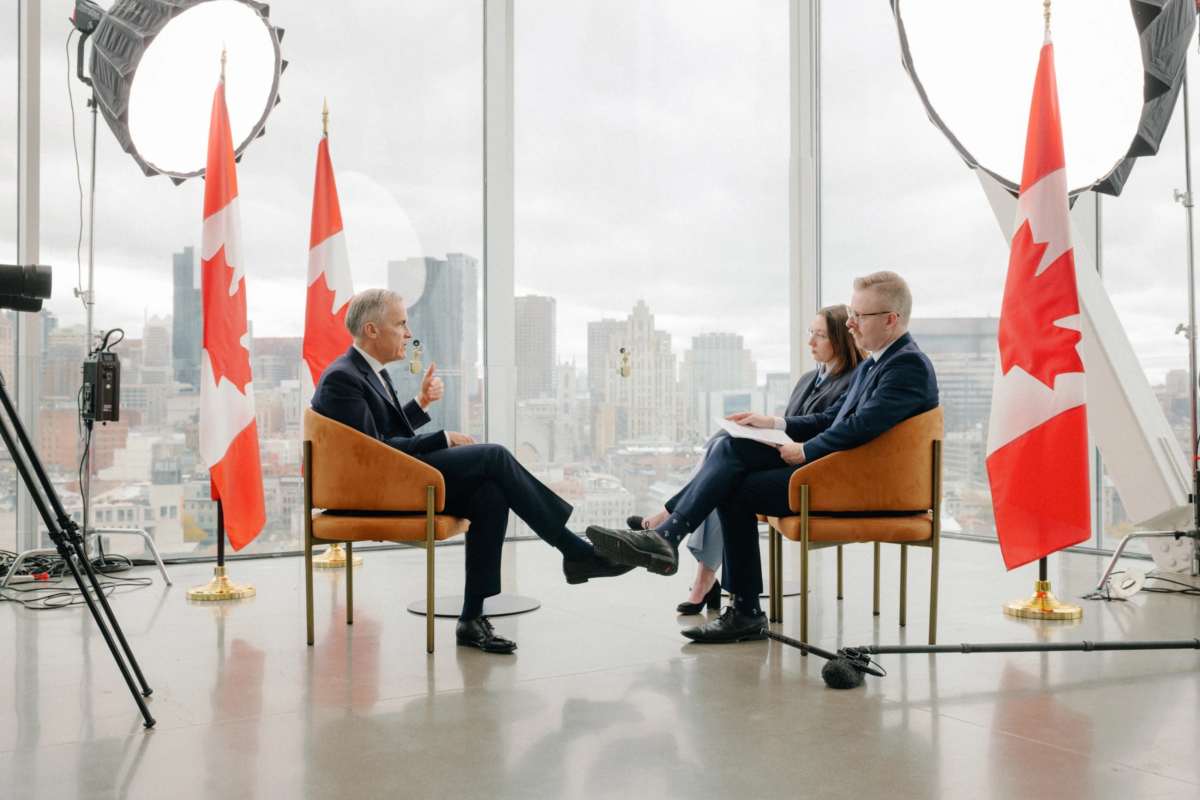
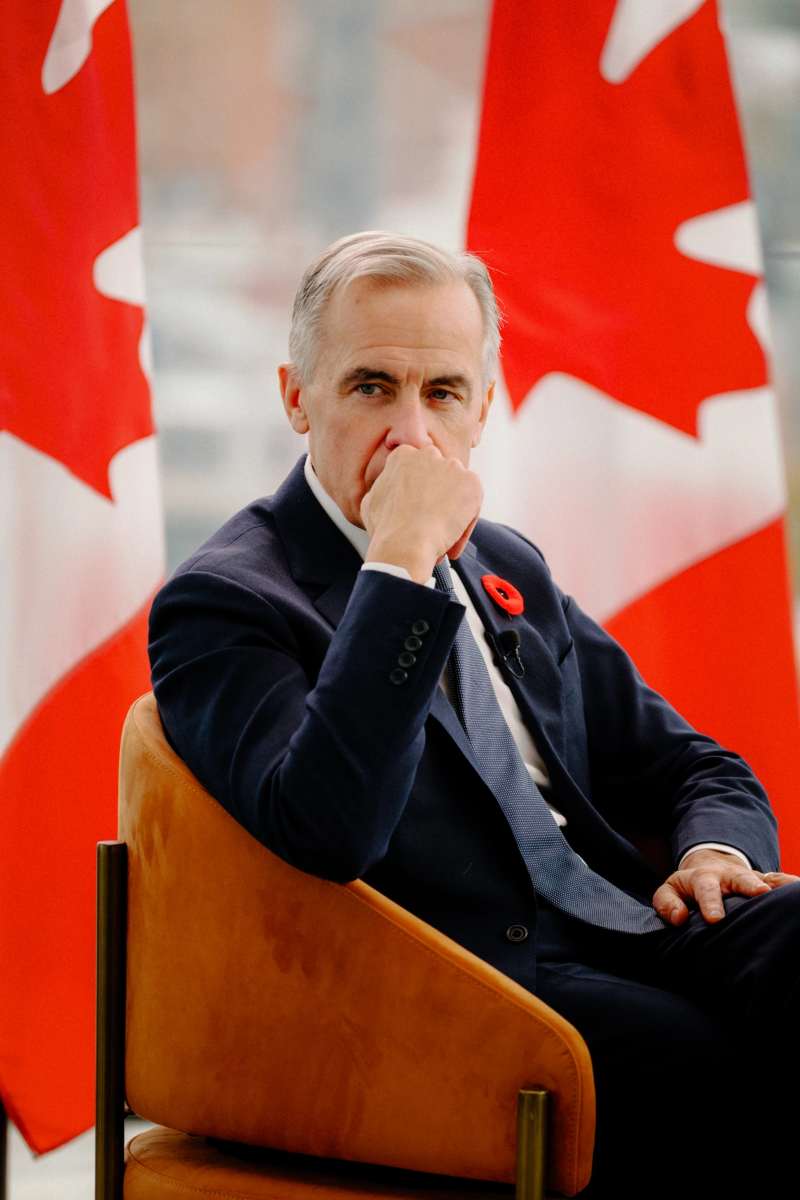
Πηγή Φωτογραφίας: Canadian Prime Minister Mark Carney sits during an interview with POLITICO at the Port of Montreal Tower in Montreal, Canada, on Oct. 30, 2026. | Adil Boukind for POLITICO



“We’ll have to, if that’s what it takes.”
With that answer, Mark Carney signaled that Canada could wait for a future American president if it cannot negotiate an acceptable trade agreement with Donald Trump’s administration.
Speaking to POLITICO in Montreal, the Canadian prime minister delivered one of his clearest messages yet to Washington: Ottawa will not accept a deal simply to bring negotiations to an end.
The interview followed the 21st EU–Canada summit, just days before the U.S. midterm elections. Carney also criticized inconsistent American policy toward Russia and outlined a broader argument for cooperation among countries seeking greater economic and technological autonomy.
“American Families, American Businesses Will Also Lose Out”
Trade negotiations between Canada and the United States have progressed unevenly since Ottawa walked away from talks in August, with both sides imposing additional tariffs during the autumn.
Carney reiterated that he would not conclude an agreement “just for the sake of it.”
Asked whether that meant waiting for another president if necessary, he answered affirmatively. He also stressed that a prolonged confrontation would impose costs on Americans.
“American families, American businesses, will also lose out because of that. They’re not winners in this circumstance.”
His remarks put the domestic consequences of the dispute into focus ahead of elections in which living costs are a central concern. Important contests are taking place in states such as Michigan and Maine, where relations with Canada carry particular economic significance.
The White House did not immediately respond to POLITICO’s request for comment on Carney’s willingness to wait for a new president.
“Canadians Are Tired of It”
The trade dispute has been accompanied by diplomatic friction.
The U.S. embassy in Ottawa recently circulated a document alleging potential Canadian interference in American elections. Ambassador Pete Hoekstra subsequently acknowledged that American authorities had made no “definitive”determination that Canadian political figures were engaged in improper election meddling.
Carney declined to say whether he had raised those comments directly with Trump. He said his conversations with the president focused on trade and geopolitical concerns, including the wars in Ukraine and Iran.
But he left little doubt about the mood in Canada.
“I think Canadians are tired of it,” he said. “I think that’s very clear.”
Europe as a Strategic Partner
The Montreal summit highlighted Ottawa’s efforts to broaden its economic and technological options.
Carney said Canada sought the closest possible relationship with the EU, grounded in cooperation across technology, trade, culture, research and education.
Discussion of an “associate member” arrangement has encountered reservations within the bloc, particularly over its terminology and substance. Such a proposal does not amount to Canadian accession to the EU or confer an already established set of institutional rights.
Canada’s official post-summit announcement described work toward the deepest possible partnership short of accession, with its substance, scale and scope to be determined over the coming months.
In practical terms, the two sides launched an “Alliance for the Future” and announced steps on digital trade and high-performance computing. They are also examining secure digital connections and opportunities to expand energy cooperation.
For Carney, the strategic value lies in giving Canada more choices while building closer links with partners facing similar pressures.
The Warning About Satellites and Billionaires
Technological dependence was a central theme of the interview.
Without naming Elon Musk, Carney warned against relying on satellite services whose availability could depend on a single private owner.
“If you’re connected to a satellite system that a billionaire, almost trillionaire, decides to turn off at one moment or not, that’s not a good idea,” he said.
The remarks alluded to the recent controversy over Starlink service in Ukraine. His broader argument was that sovereignty requires dependable access to technologies supporting essential national functions.
Carney acknowledged that Canadian and European reliance on American technology could not be displaced quickly. Nevertheless, he argued that “pooling our space assets” with Europe could help Canada develop greater independence more rapidly.
The proposal reflects a practical challenge for both partners: building alternatives requires investment, coordination and time.
AI Investment Needs Guardrails
Carney linked technological autonomy to investment in artificial intelligence.
Canadian and European companies face competitors in the United States and China with substantially larger resources. Cooperation between firms and public investment could help strengthen their position.
He also advocated privacy and safety protections, alongside international coordination on advanced technology.
Carney praised Anthropic CEO Dario Amodei and Google DeepMind co-founder Demis Hassabis for taking safety seriously. But he rejected the assumption that industry could be left to police itself.
Drawing on his experience in central banking during the financial crisis, he argued that powerful industries require guardrails.
“It’s exceptionally difficult for industries to regulate themselves — to truly regulate themselves,” he said.
His position combines support for technological development with a public role in managing its risks.
A Sharp Criticism of U.S. Policy Toward Russia
Carney’s most direct geopolitical criticism concerned fluctuations in Washington’s approach to Russia.
He referred to “variance in terms of U.S. actions” involving sanctions on Moscow and the provision of defensive capabilities to Ukraine.
“That’s been unhelpful,” he said.
The remarks expressed an ally’s concern about the predictability of American policy. Governments planning sustained support for Kyiv need to assess whether sanctions and military commitments will remain consistent.
Carney did not identify a single measure in his answer. His criticism addressed the broader pattern of changing American decisions.
“To Be Sovereign Is Not to Be Alone”
Carney acknowledged that political changes in Europe could also affect the scope of cooperation with Canada.
Elections and the rise of nationalist parties introduce uncertainty about future European decisions. He nevertheless argued that leaders entering office may discover the value of partnerships more quickly than they anticipated.
“You quickly learn, if you haven’t figured it out yet, if you’re in one of these roles, that to be sovereign is not to be alone. That you need like-minded partners,” he said.
“Nobody is self-sufficient. The United States is not self-sufficient.”
Asked whether he had handled the EU summit differently out of sensitivity to Trump, Carney rejected the suggestion.
“Absolutely not,” he said. “That way lies madness.”
He ended with a personal detail about the four Brooks Brothers shirts Trump recently gave him. Carney said he had yet to wear them but might do so if the countries reached an agreement.
“I haven’t had occasion to put on the shirts, because we don’t have a mutually advantageous trade deal,” he said.
For now, he added: “They’re sitting in my closet.”
Πηγή: pagenews.gr
Διαβάστε όλες τις τελευταίες Ειδήσεις από την Ελλάδα και τον Κόσμο