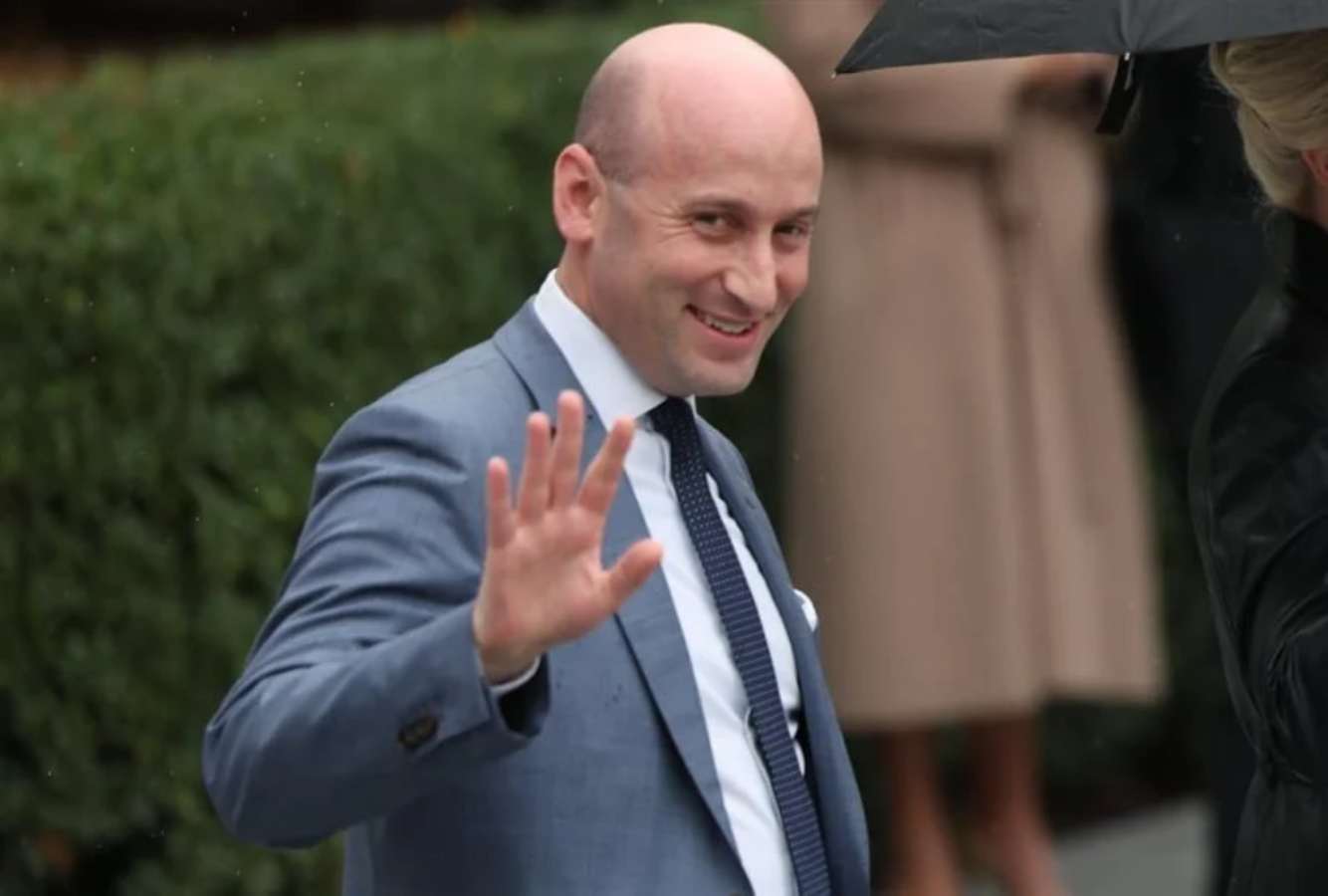
Electoral defeat could have prompted a search for compromise. Donald Trump’s appointment of Stephen Miller points towards a different response: greater influence for one of the most uncompromising advocates of his agenda.
Days after Republicans lost control of Congress, the president announced that Miller would replace Susie Wiles as White House chief of staff.
Friday’s announcement on Truth Social triggered fierce Democratic criticism and objections from within Republican ranks.
Its political significance lies in the timing. Rather than removing an official associated with some of his administration’s most controversial policies, Trump has promoted him.
From policy architect to the centre of power
Miller was already serving as deputy chief of staff and played a central role in shaping the administration’s immigration policies.
His promotion broadens his influence over White House coordination. Its implications therefore extend beyond immigration: an adviser closely identified with Trump is assuming wider organisational responsibility during a period of political pressure.
The appointment suggests that the president is prioritising loyalty and determined implementation of his agenda.
It does not establish which decisions will follow. It does, however, weaken expectations that his immediate response to defeat would be a visible move towards moderation.
Democrats see contempt for the election result
Senator Dick Durbin called Miller a “hatemonger” and directly connected his promotion to Trump’s refusal to change course:
“For Trump to promote this hatemonger shows he has learned nothing.”
Chuck Schumer, who is expected to become Senate majority leader, said the president had learned nothing from his defeat and could not have made a worse choice.
House Democratic leader Hakeem Jeffries called Miller a dangerous xenophobe and reckless extremist, demanding his removal.
Those descriptions are political accusations by Miller’s opponents. They nevertheless demonstrate that the incoming congressional majority already views him as a central figure in its confrontation with the presidency.
Senator Chris Van Hollen described the appointment as:
“Another kick in the teeth to the American people” and “a sign of Trump’s contempt for the voters”.


Republican criticism carries a different weight
Opposition is not confined to Democrats.
Indiana Republican Congressman Marlin Stutzman had already called for Miller’s dismissal amid anger over the administration’s deportation policies.
Asked about Trump’s decision to promote him instead, Stutzman told Semafor it was a:
“Horrible decision.”
His intervention matters because it comes from a serving Republican who retained his seat. It exposes disagreement within the party over whether electoral rejection should be answered by strengthening the officials associated with its existing direction.
Miles Taylor, a former Department of Homeland Security chief of staff during Trump’s first term who subsequently became a critic, went further:
“I spent two years working with Stephen Miller. His appointment as White House chief of staff is among the most dangerous personnel decisions in the history of our republic. I say that without reservation.”
Senior officials rally behind the appointment
Leading administration figures moved quickly to support Miller.
Vice President JD Vance, Secretary of State Marco Rubio, Defense Secretary Pete Hegseth and Health Secretary Robert F Kennedy Jr praised his record.
Vance’s support is particularly notable as he seeks to develop his own political identity after the defeat. His position demonstrates that differentiation on certain issues can coexist with backing major presidential appointments.
White House communications director Steven Cheung summarised the supporters’ argument:
“There is no bigger advocate for the Trump agenda than Stephen.”
The next confrontation will concern implementation
The emerging balance creates two centres of political pressure: a White House elevating one of the president’s most committed allies and a Congress moving under Democratic control.
The response to Miller’s appointment foreshadows clashes over immigration, public safety and government accountability.
The White House defended the decision, crediting Miller with a substantial role in advancing presidential priorities.
Accepting the position, Miller delivered a message of unqualified political commitment:
“The mission now is more clear than ever: Fight with all of our soul to support our President and defend this magnificent Republic.”
Source: pagenews.gr