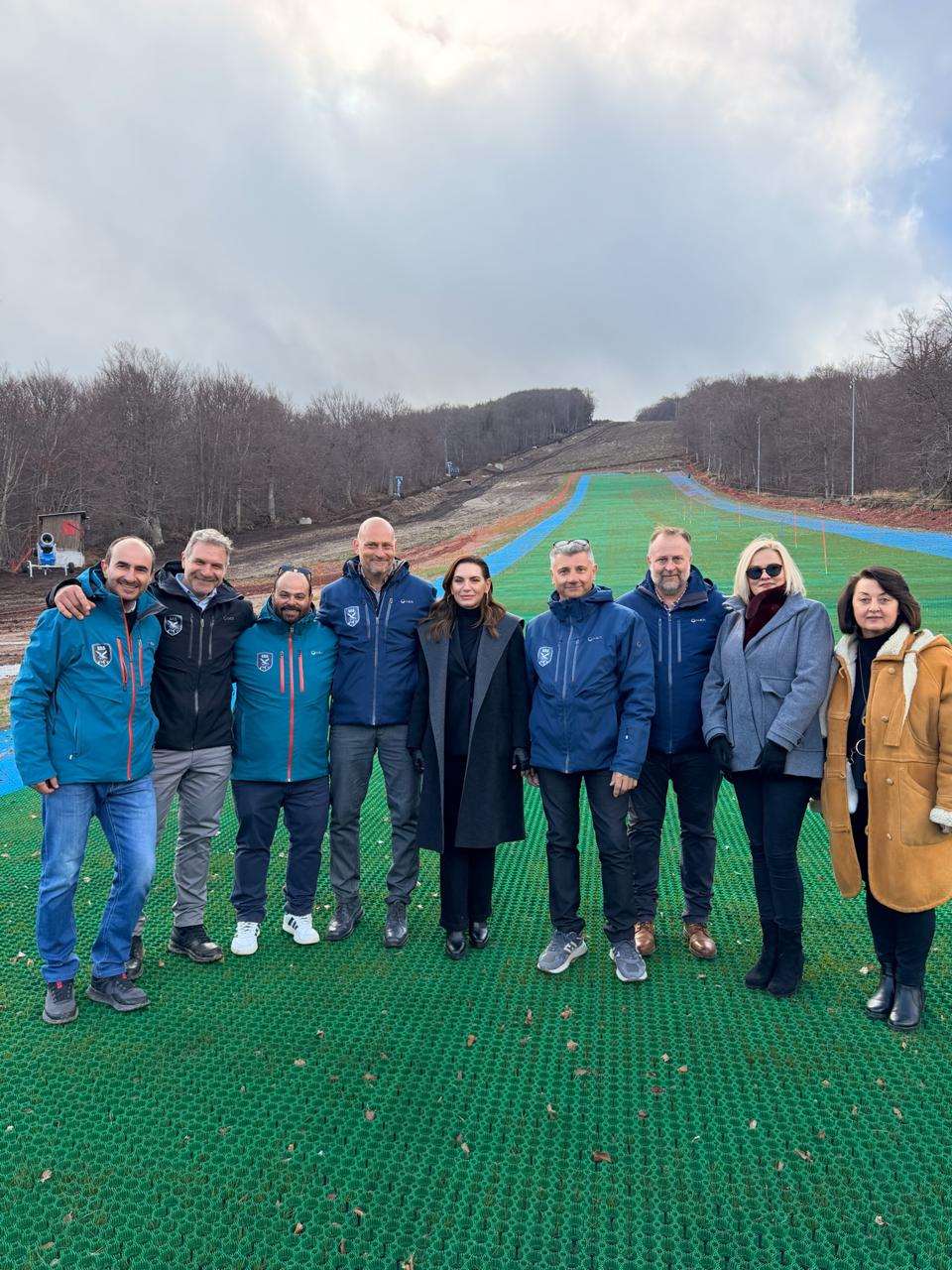
Greece is stepping up its efforts to transform its mountain destinations into year-round tourism attractions, with an investment approaching €10 million in the Lailias Ski Centre, located in the northern Greek region of Serres.
Prime Minister Kyriakos Mitsotakis attended the blessing ceremony marking the upgrade of the ski resort, alongside Tourism Minister Olga Kefalogianni, who outlined the government’s strategy for developing sustainable mountain tourism and strengthening regional economies.
The project, implemented through cooperation between the Hellenic Mountaineering Association of Serres and the Ministry of Tourism, is designed to modernise existing facilities, improve accessibility and create new opportunities for visitors beyond the traditional winter season.
The initiative also reflects Greece’s broader ambition to diversify its tourism industry, reducing its reliance on summer destinations and encouraging travel throughout the year.
A €9.98 Million Investment to Modernise Lailias
The approved net investment budget amounts to €9,983,000, excluding VAT, covering a comprehensive programme of infrastructure improvements.
The project includes the modernisation of buildings, the acquisition of new equipment, energy-efficiency upgrades and accessibility improvements.
The objective is to create a more functional, environmentally responsible ski centre offering improved services and a wider range of visitor experiences.
The investment is also intended to enhance the attractiveness of the wider Serres region and support tourism activity beyond the peak winter months.
By upgrading existing infrastructure, the government aims to establish a stronger foundation for sustainable tourism development in northern Greece.


Kefalogianni: “We Want Mountain Greece to Play a Leading Role”
Tourism Minister Olga Kefalogianni described mountain tourism as a central pillar of the government’s strategy for sustainable and high-quality tourism development.
“We want mountainous Greece to play a leading role and become a complete, independent travel choice throughout the year,” she said.
The minister highlighted Greece’s mountains, forests, traditional villages and cultural heritage as significant competitive advantages that remain underutilised compared with the country’s internationally recognised coastal destinations.
According to Kefalogianni, the expansion of tourism into more regions and across more months of the year can generate lasting economic benefits for local communities.
She emphasised that mountain tourism should no longer be regarded as an activity limited to skiing and winter holidays.
Instead, destinations should offer a wider variety of experiences, encouraging visitors to discover Greece’s natural and cultural landscapes in every season.
A New Model: Ski Resorts Operating 12 Months a Year
One of the most important elements of Greece’s mountain tourism strategy is the regulatory framework allowing ski resorts to operate throughout the year.
Under the relevant legislation, ski lifts can be used for twelve months, while resorts may develop recreational activities beyond skiing.
The change is particularly significant as climate change creates increasing uncertainty over the length and reliability of the winter sports season.
Reduced snowfall, changing weather patterns and rising temperatures can affect the operation and commercial viability of ski destinations.
Kefalogianni stressed that mountain resorts must therefore develop activities capable of attracting visitors in spring, summer and autumn, rather than depending exclusively on winter conditions.
The government’s objective is to encourage year-round tourism models that make better use of existing infrastructure while supporting local businesses over a longer period.


Sustainable Mountain Tourism Destinations: Hotels, Mountain Refuges and Glamping
The government has also introduced the institutional framework for a Sustainable Mountain Tourism Destination, with ski resorts serving as central hubs.
Under the framework, and subject to applicable planning and environmental requirements, complementary tourism facilities may be developed within designated mountain destinations.
These can include mountain refuges, low-impact hotels and organised glamping facilities.
The aim is to establish integrated mountain tourism destinations where accommodation, outdoor recreation and nature-based experiences complement one another.
The approach is intended to encourage tourism investment while respecting the environmental and cultural characteristics of mountainous areas.
By creating a broader range of accommodation and recreational options, mountain destinations could attract visitors with different interests and travel preferences.
Four Ski Resorts Included in the National Upgrade Programme
The Lailias project forms part of a wider initiative supported by resources from Greece’s Recovery and Resilience Facility.
The Ministry of Tourism is working with private-sector partners and the Hellenic Public Properties Company (ETAD) to upgrade infrastructure at four ski resorts.
The destinations included in the programme are:
- Lailias, Serres: Modernisation works with an approved net budget of approximately €10 million.
- Anilio, Metsovo: Infrastructure improvements aimed at strengthening the resort’s tourism offering.
- Parnassos: Upgrades at one of Greece’s best-known winter tourism destinations.
- 3–5 Pigadia: Development initiatives designed to enhance the resort’s infrastructure and visitor experience.
Kefalogianni also referred to the implementation of Greece’s first dedicated promotional programme for mountain tourism.
The campaign aims to increase the visibility of the country’s mountain destinations and strengthen their position in domestic and international tourism markets.
The broader objective is to promote Greece as a destination offering diverse travel experiences beyond its established summer tourism model.

New Jobs and Economic Opportunities for Regional Communities
Kefalogianni emphasised that the development of mountain tourism can generate economic benefits extending well beyond ski resort operators.
Year-round visitor activity can support guesthouses, restaurants, mountain guides, local producers and small businesses.
A longer tourism season can also create more consistent employment opportunities and reduce the seasonal fluctuations affecting local economies.
The minister argued that these benefits are particularly important for mountainous communities seeking to retain residents and provide opportunities for younger generations.
She thanked Prime Minister Mitsotakis for his continued support for regional Greece, highlighting the establishment of the Special Secretariat for Mountainous Areas.
According to Kefalogianni, the new institutional structure responds to requests from mayors of mountainous municipalities for a permanent point of contact within the central government.
She also stressed the importance of supporting people who choose to remain in their communities, work locally and raise their families in their home regions.
Accessibility: “Everyone Should Be Able to Enjoy the Mountains”
Accessibility was another central theme of the minister’s remarks.
Kefalogianni stressed that tourism infrastructure investments must ensure that mountain destinations can be enjoyed by as many visitors as possible, including people with reduced mobility.
“A person with limited mobility should be able to enjoy the mountains together with their family,” she said.
The minister linked accessibility to the broader objective of improving tourism quality and creating more inclusive travel experiences.
The Lailias upgrade includes accessibility interventions designed to make the facilities more welcoming and functional.
The government’s approach places accessibility alongside sustainability, infrastructure quality and regional economic development as important components of tourism investment.

“Success Will Be Measured by the Benefits for Local Communities”
Concluding her remarks, Kefalogianni stressed that the success of the Lailias investment should not be measured solely by the completion of construction works or improvements to the resort’s facilities.
Instead, she argued, the real test will be whether the investment generates lasting benefits for the local economy and the people of Serres.
“For us, the success of this investment will be evident here, in Serres: in the visitors who discover Lailias and want to return, in the professionals who will have work for more months of the year, and in the young people who will be able to plan their future in the place they call home.”
Source: pagenews.gr