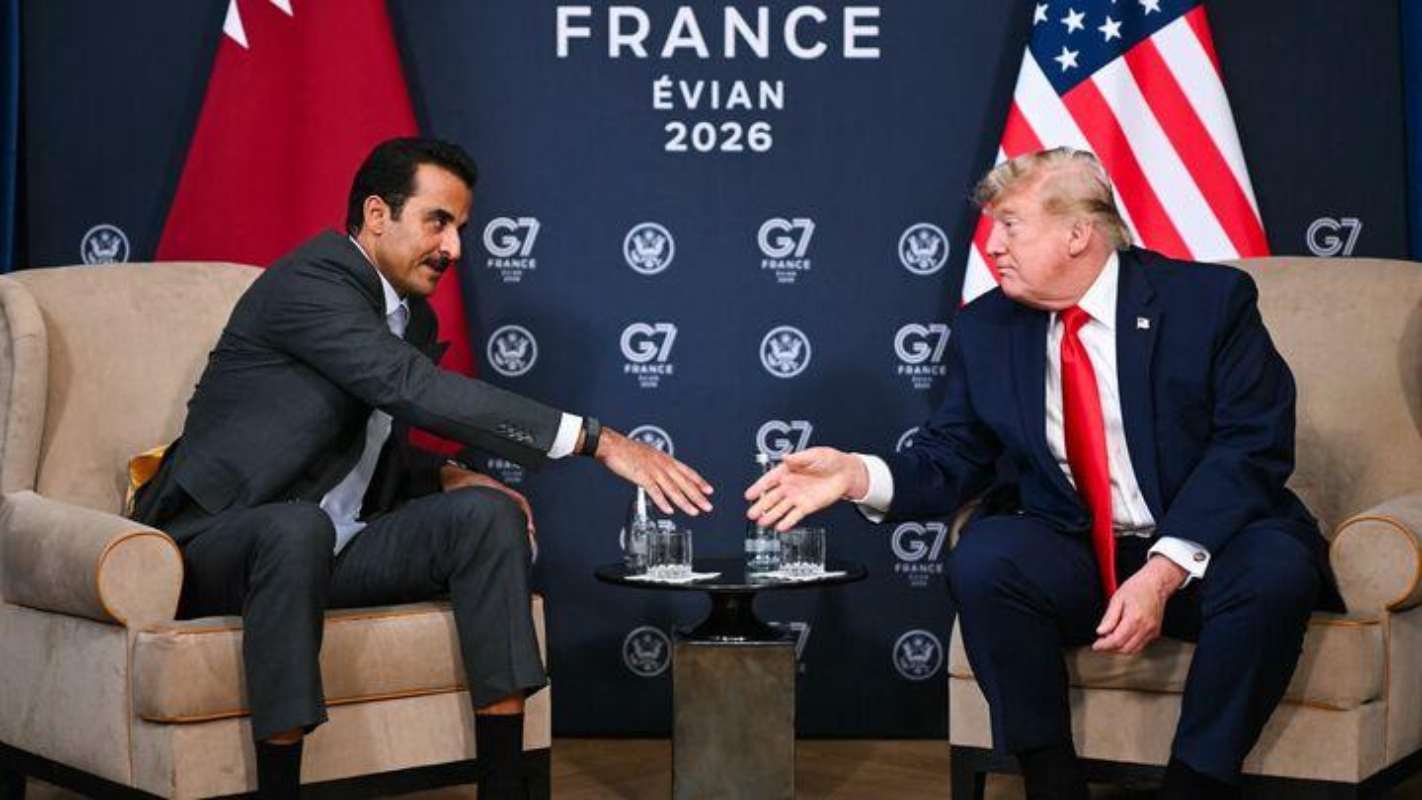
A renewed effort to prevent a return to all-out war between the United States and Iran is gathering pace, with Qatar seeking to bridge differences over Tehran’s nuclear program, sanctions and navigation through the Strait of Hormuz.
Donald Trump described his meeting on Monday, November 9, with Qatari Prime Minister and Foreign Minister Sheikh Mohammed bin Abdulrahman Al Thani as “excellent.”
He maintained the military threat, saying the United States remained ready to resume major operations. But he added that such a development appeared unlikely for now.
“We are seeing positive momentum toward an end to this conflict,” Trump said.
Diplomatic activity has not yet produced an agreement. Behind the public statements lies an unresolved question: which side will make the first substantive concessions?
The Two-Day Proposal
At the center of the mediation effort is a proposed sequence of rapid measures that Iran describes as a two-day plan.
Foreign Minister Abbas Araghchi said Tehran was awaiting Washington’s response. He linked implementation to meeting Iranian demands, including an end to the war on all fronts.
The compressed timetable seeks to overcome a fundamental obstacle: neither side wants to take a substantial step without assurance that the other will reciprocate.
The two-day framework therefore concerns the proposed sequence of measures. It is not an agreed deadline for resolving every dispute between Washington and Tehran.
Sanctions Relief Versus Nuclear Concessions
According to Al-Monitor, Washington is seeking upfront commitments concerning Iran’s stockpile of highly enriched uranium and access for international inspectors to its principal nuclear facilities.
Tehran links renewed negotiations to seven conditions. These include the release of frozen assets held in foreign banks and relief from US sanctions.
The competing priorities directly affect the order in which an agreement could be implemented. Washington wants verifiable nuclear commitments, while Iran seeks tangible economic and military de-escalation measures first.
Qatar’s mediation aims to turn those demands into workable, sequential steps.


Rubio Holds Down Expectations
Secretary of State Marco Rubio sounded more cautious than the president.
Speaking Sunday before departing for the G7 foreign ministers’ meeting in Paris, he said:
“I wouldn’t say we’re on the verge of a breakthrough.”
He described some Iranian demands as “outrageous and ridiculous,” arguing that they were unrealistic.
The different tones do not, by themselves, establish an internal administration dispute. They nevertheless underline the distance between giving diplomacy more time and judging that a deal is close.
The Earlier Understanding and the Hormuz Dispute
A memorandum of understanding reached in mid-June provided for further negotiations toward a final agreement without requiring initial nuclear concessions from Tehran.
The process unraveled shortly after signing amid disagreements over shipping through the Strait of Hormuz.
That experience highlights the challenge of implementation. A political framework needs clear obligations covering vessel movements, the removal of restrictions and verification.
Without those provisions, competing interpretations can quickly undermine an initial understanding.
Vance–Rezaei Meeting Reports Face an Iranian Denial
Reports of a possible meeting in Doha next week between Vice President JD Vance and Mohsen Rezaei, secretary of Iran’s Supreme National Security Council, have added another layer of uncertainty.
The reports were attributed to remarks by Turkish intelligence chief Ibrahim Kalin.
However, a senior Iranian security official denied that such a meeting was planned, according to Press TV. The Iranian statement tied negotiations to prior practical steps by Washington addressing Tehran’s seven conditions.
The meeting therefore cannot be treated as a confirmed diplomatic engagement.
Vance’s Political Stakes
The vice president has previously participated in talks with Iranian officials in Islamabad. According to Al-Monitor, he wrote to Rezaei last month proposing another round of negotiations.
His involvement carries additional political significance after he linked Republican losses in the midterm elections to public dissatisfaction with the war.
Tehran, meanwhile, continues to combine its diplomatic proposal with the threat of a military response. Araghchi said:
“Meet the requirement, including end to war on all fronts, and you will see results.”
Source: pagenews.gr