Europe’s Shadow Diplomacy in Abu Dhabi: The Seven Officials Seeking Influence Over Ukraine Peace Talks
 ΧΡΟΝΟΣ ΑΝΑΓΝΩΣΗΣ 11 '
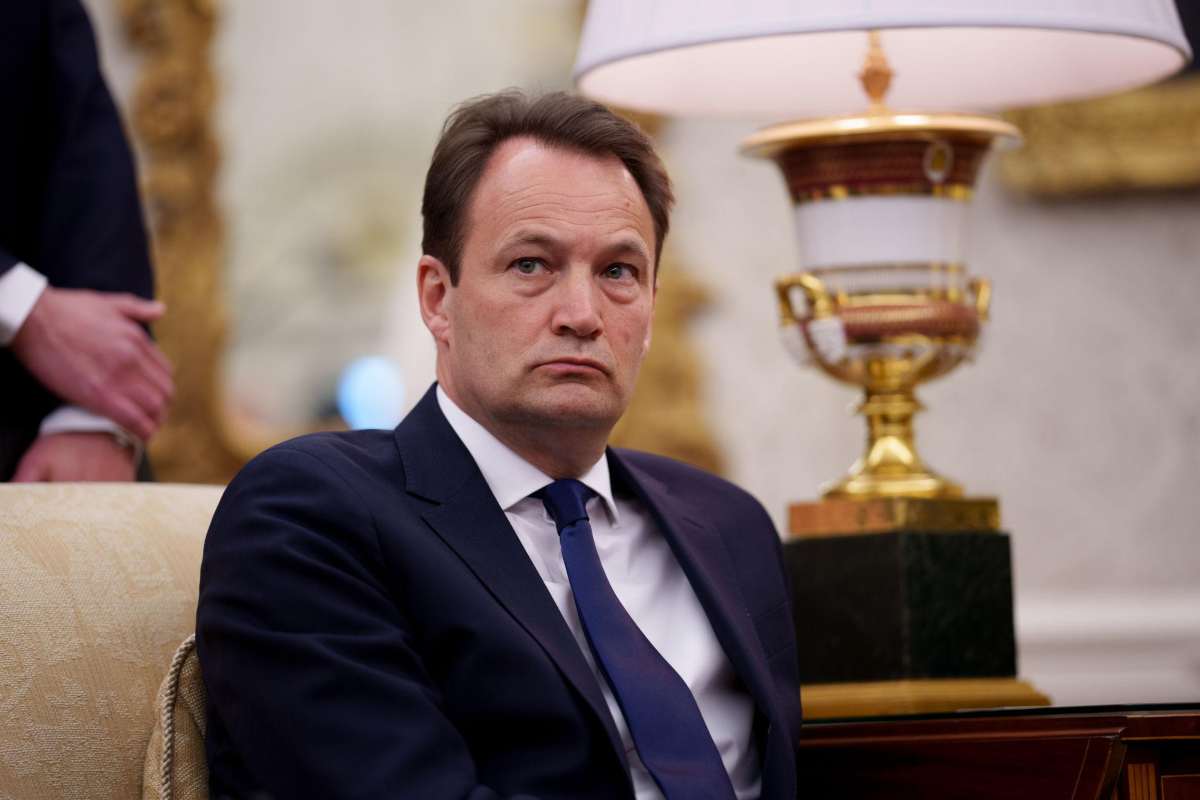
Πηγή Φωτογραφίας: Geoffrey van Leeuwen — Andrew Harnik/Getty Images.



Europe is entering a critical diplomatic moment in Abu Dhabi, where negotiations between the United States, Russia and Ukraine are resuming under American mediation. But while European governments are sending some of their most experienced foreign policy officials to the United Arab Emirates, their participation comes with a significant limitation: they are not expected to sit at the main negotiating table.
According to POLITICO, seven senior representatives from Germany, France, Britain, Italy, NATO and the European Union are gathering in Abu Dhabi to influence discussions through separate meetings with American and Ukrainian officials.
The two-day negotiations, scheduled for November 10 and 11, bring together US presidential envoys Jared Kushner and Steve Witkoff, a Ukrainian delegation led by Rustem Umerov and Russian representatives headed by Vladimir Medinsky.
The European presence reflects concerns that the negotiations could move beyond a ceasefire in Ukraine and toward a wider agreement on the continent’s security architecture.
That possibility has gained particular importance following statements from Donald Trump and Kushner suggesting that a future settlement could involve broader security arrangements between Russia and Europe.
Germany’s Günter Sautter: No New Security Order Without a Ceasefire
Germany is represented by Günter Sautter, Chancellor Friedrich Merz’s foreign and security policy adviser.
A career diplomat with extensive experience in European security affairs, Sautter has become one of Berlin’s central figures in coordinating diplomatic initiatives concerning Ukraine.
He represents Germany in the E3 framework alongside France and Britain and plays a leading role in the German-led Berlin Format, which brings together Ukraine, European governments, NATO and other international partners.
Sautter’s central position is that discussions about a new European security architecture should not begin before Russia agrees to a ceasefire.
This reflects Berlin’s concern that Moscow could seek strategic concessions involving NATO’s military presence in Eastern Europe before committing to an end to hostilities.
Germany’s involvement is also intended to maintain European coordination at a time when Washington is seeking to accelerate the diplomatic process.
Italy’s Fabrizio Saggio: Meloni Demands Clarity Over Europe’s Representation
Italy is sending Fabrizio Saggio, diplomatic adviser to Prime Minister Giorgia Meloni and one of her closest international policy confidants.
A former Italian ambassador to Tunisia, Saggio has developed a reputation within Italian diplomatic circles for handling sensitive assignments and complex international negotiations.
His presence follows an intervention by Meloni, who questioned the growing number of diplomatic formats being used to discuss Ukraine.
In a letter to European Council President António Costa, the Italian prime minister called for European leaders to determine who should represent the European Union in negotiations and under what authority.
Meloni also requested that the issue be addressed during the informal gathering of EU leaders in Dublin.
Her position highlights an unresolved institutional question: whether Europe should be represented primarily by national governments, EU institutions or a jointly authorized delegation.
Italy’s participation ensures that Rome will have direct access to the diplomatic consultations taking place alongside the principal negotiations.
NATO’s Geoffrey van Leeuwen: Monitoring the Security Implications
Geoffrey van Leeuwen, chief of staff to NATO Secretary-General Mark Rutte, is representing the Atlantic alliance.
A former Dutch national security adviser and experienced diplomat, van Leeuwen has worked closely with Rutte for years.
His presence is significant because NATO is not formally a negotiating party in the Ukraine peace process.
Nevertheless, any agreement involving Ukraine’s future defense capabilities, security guarantees or restrictions on military deployments could directly affect the alliance.
According to an official familiar with his responsibilities, van Leeuwen’s role is primarily to observe developments, report back to NATO leadership and ensure that the alliance remains informed about the proposals under discussion.
His participation comes amid renewed concern over Russia’s longstanding demands concerning NATO’s military posture in Central and Eastern Europe.
Britain’s Jonathan Powell: The Diplomatic Connection to Washington
Britain is represented by Jonathan Powell, the United Kingdom’s national security adviser.
Powell is widely known for his involvement in the Northern Ireland peace process during Tony Blair’s premiership.
His experience in negotiating complex political settlements has made him an important figure in Britain’s diplomatic engagement with Washington.
He has also established a working relationship with Steve Witkoff, one of Trump’s principal envoys.
That connection could help London communicate its priorities directly to the American negotiating team.
Britain’s concerns center on securing credible guarantees for Ukraine and ensuring that a potential settlement does not undermine Europe’s broader security arrangements.
Powell’s presence provides London with an experienced negotiator at a moment when direct access to Washington’s diplomatic team is particularly important.
Björn Seibert: Von der Leyen’s Representative at the Talks
The European Commission is sending Björn Seibert, chief of staff to Commission President Ursula von der Leyen.
Seibert is among the most influential officials in Brussels and plays a central role in coordinating the Commission’s political and diplomatic work.
He has participated in previous Ukraine-related discussions with American representatives, including meetings in Miami and Oslo.
Those consultations addressed issues ranging from security guarantees and territorial disputes to Ukraine’s postwar reconstruction.
His participation in Abu Dhabi ensures that the Commission remains involved as Washington, Moscow and Kyiv explore possible arrangements.
The European Commission has a direct interest in the outcome because the European Union is a major provider of financial support to Ukraine and would be closely involved in any long-term reconstruction framework.
Anna-Maria Boura: The European Council Re-enters the Negotiations
Anna-Maria Boura, chief foreign policy adviser to European Council President António Costa, represents the institution through which EU heads of state and government coordinate their political priorities.
Her participation is institutionally important.
The European Council was absent from some earlier negotiating rounds, while the European Commission maintained representation through Seibert.
With Boura joining the delegation, both institutions will have senior officials present in Abu Dhabi.
Her role is to maintain communication with Costa’s office and ensure that the views of EU member states are reflected in the diplomatic consultations.
Her participation also comes as European governments debate the legitimacy and scope of any future EU negotiating mandate.
France’s Emmanuel Bonne: Macron’s Diplomatic Strategist
France is represented by Emmanuel Bonne, President Emmanuel Macron’s chief diplomatic adviser.
Bonne has served in the Élysée since 2019 and has become a central figure in France’s international diplomatic initiatives.
His background includes diplomatic assignments in the Middle East and extensive experience in sensitive security discussions.
France has consistently supported a substantial European role in negotiations concerning Ukraine and the future security architecture of the continent.
Bonne’s participation reflects Paris’s determination to remain involved in discussions that could affect NATO, European defense cooperation and relations with Russia.
His presence also strengthens coordination among France, Germany and Britain, which have been working closely on Ukraine-related diplomatic initiatives.
Europe’s Central Dilemma: Seven Representatives, No Common Mandate
The presence of seven senior officials illustrates Europe’s determination to remain involved in the peace process. It also exposes a fundamental problem: the European Union has yet to establish a unified negotiating structure.
Germany, France, Britain and Italy maintain their own diplomatic channels, while the European Commission and European Council represent different institutional responsibilities.
Poland has also expressed concerns about European representation, particularly over the possibility that major Western European governments could shape negotiations without sufficient input from countries closer to Russia.
Meanwhile, Moscow has opposed direct European participation in the trilateral discussions.
According to officials cited by POLITICO, European representatives are expected to remain outside the principal negotiating room, although the format could evolve as discussions progress.
For the moment, their influence will depend largely on consultations with American and Ukrainian officials.
Why Moscow’s Wider Security Demands Matter
The negotiations have become more complicated because Washington is exploring a settlement that could extend beyond Ukraine itself.
Trump has suggested that a future agreement could address broader European security questions.
Kushner has similarly argued that a durable settlement would require direct engagement between Russia and European governments over security arrangements affecting the continent.
For European capitals, this raises sensitive questions.
Before Russia’s full-scale invasion of Ukraine in 2022, Moscow demanded restrictions on NATO deployments in Central and Eastern Europe and opposed further enlargement of the alliance.
The possibility that such demands could return to the negotiating agenda has generated concern among European governments.
Ukraine, meanwhile, continues to insist that any peace agreement must preserve its sovereignty and include credible guarantees against another Russian attack.
The presence of senior Russian officials with experience in arms control and European security negotiations has added to speculation that Moscow intends to broaden the discussions beyond the immediate battlefield.
Abu Dhabi: A Test of Europe’s Diplomatic Influence
The talks in Abu Dhabi are not expected to produce an immediate comprehensive peace agreement.
Major differences remain between Russia and Ukraine over territory, military arrangements and the conditions for ending the fighting.
Moscow continues to demand Ukrainian concessions, while Kyiv insists on a ceasefire and security guarantees before any wider settlement can be finalized.
For the United States, the immediate objective is to maintain diplomatic momentum and identify areas where negotiations might advance.
For Europe, the challenge is different.
Its representatives must ensure that European security interests are taken into account even though they do not control the negotiating format.
The presence of Germany, France, Britain, Italy, NATO and both principal EU institutions demonstrates the breadth of European engagement.
But their ability to influence the process will depend on whether Washington succeeds in securing Moscow’s acceptance of a wider negotiating framework.
As the delegations gather in Abu Dhabi, the central question remains unresolved: will Europe become a direct participant in negotiations over its own security, or continue trying to influence decisions from outside the room?
Source: pagenews.gr
Διαβάστε όλες τις τελευταίες Ειδήσεις από την Ελλάδα και τον Κόσμο