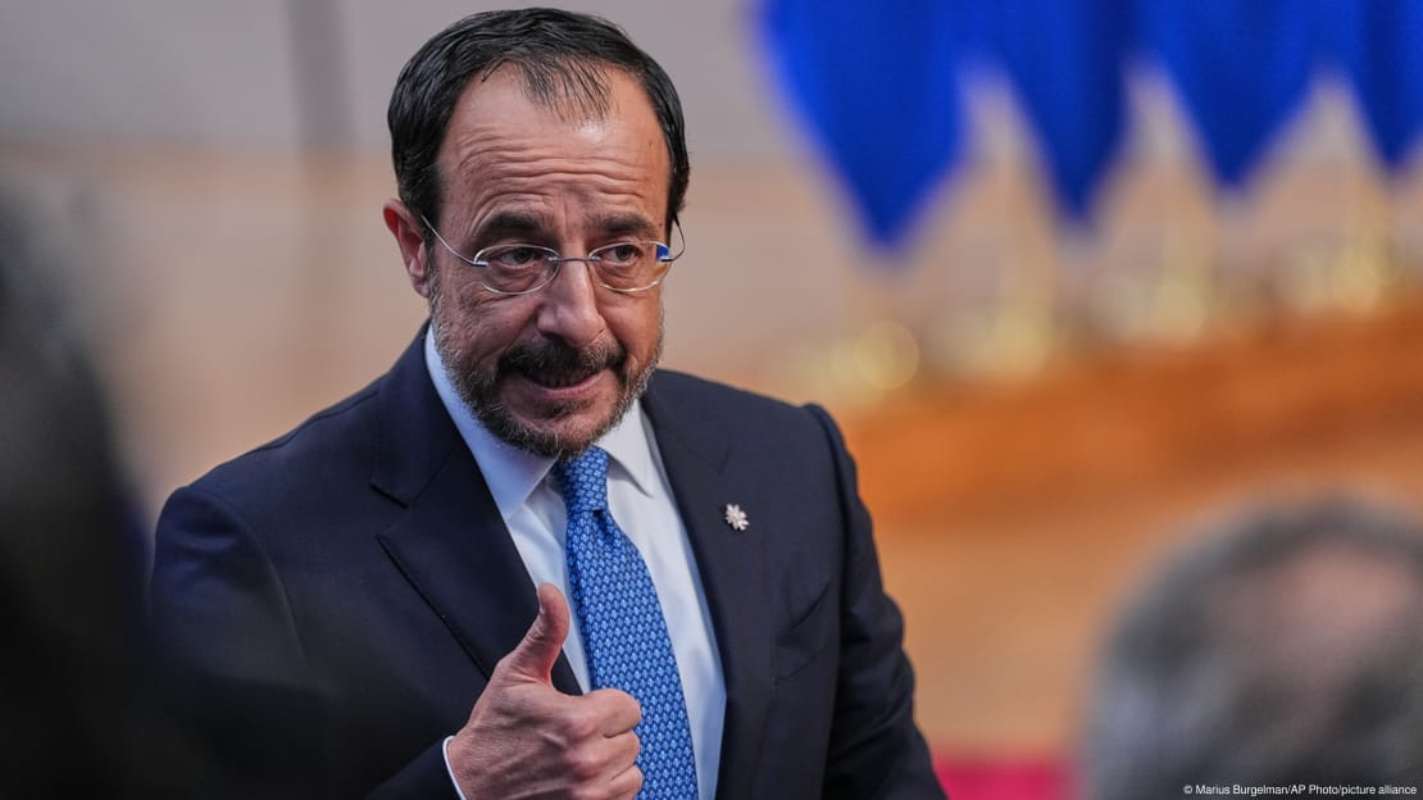
A brief departure from a diplomatic receiving line has reignited one of the Eastern Mediterranean’s most enduring geopolitical disputes.
Turkish President Recep Tayyip Erdoğan left the official reception area at the COP31 climate summit in Antalya shortly before the arrival of Nikos Christodoulides, President of the Republic of Cyprus, avoiding a formal handshake with the leader of a country Ankara refuses to recognize.
United Nations Secretary-General António Guterres remained at the reception area and welcomed Christodoulides.
The episode, which took place on November 11, 2026, highlighted a fundamental contradiction in Turkish diplomacy: Ankara was hosting a major international conference under UN auspices while maintaining its longstanding refusal to recognize a fellow UN member state.
Despite Erdoğan’s departure, Cyprus participated fully in the summit. Its national flag was displayed at the venue, its president attended the official proceedings, and the Republic of Cyprus retained its internationally recognized status.
The incident comes at a sensitive moment for efforts to revive negotiations over the island’s division, with the United Nations exploring new diplomatic initiatives and the European Union seeking to manage its increasingly complex relationship with Turkey.
The Diplomatic Incident: Erdoğan Leaves the Reception Line
The confrontation unfolded during the arrival of international leaders at the COP31 summit in Antalya.
According to footage and reports from the event, Erdoğan had been standing alongside Guterres to welcome visiting heads of state and government.
Shortly before Christodoulides arrived, the Turkish president left the reception area.
Guterres remained in place, shook hands with the Cypriot president and posed for the official photograph.
Erdoğan subsequently returned to welcome other leaders.
Cypriot media reported that Turkish television coverage shifted to general images of the conference venue during Christodoulides’ arrival.
The sequence of events prompted speculation that Erdoğan had deliberately avoided a diplomatic encounter with the Cypriot leader.
Although the circumstances are consistent with Ankara’s longstanding policy of non-recognition, Erdoğan has not publicly provided a specific explanation for his departure.
The distinction matters: the incident itself was visible, while the Turkish president’s precise motivation has not been formally confirmed.


Nicosia Condemns the Incident
The Cypriot government responded by criticizing the Turkish president’s conduct.
Government spokesperson Konstantinos Letymbiotis described the episode as:
“A display of contempt for the United Nations.”
The statement reflected Nicosia’s position that the incident extended beyond a bilateral diplomatic disagreement.
COP31 is a United Nations conference, and the Republic of Cyprus participates in the organization as a sovereign member state.
Turkey’s refusal to recognize the Republic of Cyprus does not alter its international legal status.
From Nicosia’s perspective, the episode exposed the difference between Ankara’s unilateral diplomatic position and the institutional reality of international organizations.
Christodoulides Delivers a Message of Sovereignty
Rather than directly confronting Erdoğan during his address to COP31, Christodoulides emphasized Cyprus’ sovereign status and the importance of international cooperation.
Opening his speech, he declared:
“The Republic of Cyprus, a sovereign, equal and independent member state of the United Nations, comes to Antalya with a clear message.”
The wording carried particular diplomatic significance because it was delivered on Turkish territory before an international audience.
The Cypriot president went on to underline the urgency of collective action against climate change.
“Climate change transcends politics and recognizes no borders,” he said.
He concluded with another appeal for cooperation:
“The climate crisis knows no borders. Our response must know no divisions.”
The remarks reinforced Cyprus’ international identity while keeping the formal focus of the summit on climate policy.
They also provided a contrast to the political tensions surrounding the reception ceremony.
The Invitation Dispute: Why Cyprus Could Not Be Excluded
Christodoulides’ participation in the Antalya summit had diplomatic significance even before his arrival.
According to Cypriot media reports, the Turkish side had initially resisted extending an invitation to the president of the Republic of Cyprus.
The same reports suggested that interventions by the United Nations and the European Union helped secure Cyprus’ participation.
These accounts have not been independently confirmed through a detailed public record of the invitation negotiations.
Nevertheless, the institutional issue is clear.
Turkey can maintain its policy of non-recognition, but it cannot unilaterally erase Cyprus’ membership in the United Nations or the European Union.
The Republic of Cyprus joined the UN in 1960 and became a member of the EU in 2004.
Its participation in international organizations is not dependent on recognition by Ankara.
The Antalya summit therefore became a visible illustration of the limits of Turkey’s diplomatic position.
The Turkish Cypriot Leader’s Presence Adds Another Dimension
A second politically significant development involved the presence of Tufan Erhürman, the Turkish Cypriot leader.
Erdoğan personally welcomed Erhürman in Antalya and posed for photographs with him before the official reception of foreign leaders.
According to reports, Erhürman attended following a personal invitation from the Turkish president.
His presence did not confer international recognition on the self-declared Turkish Republic of Northern Cyprus.
The entity is recognized only by Turkey, while UN Security Council Resolutions 541 and 550 remain central to the international position regarding its declaration of independence.
Ankara advocates a settlement based on sovereign equality and the existence of two states.
Nicosia, by contrast, supports negotiations within the established UN framework for a bizonal, bicommunal federation with political equality.
The contrasting treatment of Christodoulides and Erhürman highlighted this fundamental disagreement over the island’s political future.
A Brief Handshake Between the Two Cypriot Leaders
Despite the diplomatic tension surrounding Erdoğan’s reception, Christodoulides and Erhürman reportedly exchanged a brief greeting in Antalya.
According to the Cypriot newspaper Politis, the two leaders shook hands but did not hold substantive bilateral discussions at the summit.
The encounter followed previous contacts in Nicosia as part of efforts to revive negotiations.
Although a brief handshake cannot be interpreted as a diplomatic breakthrough, it indicated that personal communication between the two sides remained possible.
The main obstacle continues to be the absence of agreement on the framework for renewed negotiations.
Von der Leyen Briefed on the Incident
Christodoulides also met European Commission President Ursula von der Leyen on the sidelines of COP31.
According to Cypriot government sources, he informed her about the circumstances surrounding Erdoğan’s departure from the reception area.
Their discussions also covered developments in the Cyprus issue, EU–Turkey relations and Cyprus’ efforts to join the Schengen Area.
The European dimension is especially important.
Cyprus is a full EU member state and participates in shaping the bloc’s policies toward Turkey.
These include questions of customs cooperation, political dialogue and the broader framework of relations between Brussels and Ankara.
Turkey’s refusal to recognize Cyprus remains a significant obstacle to the full normalization of those relations.
The Christodoulides–von der Leyen meeting underscored that the Cyprus dispute is not simply a bilateral disagreement. It is also a European and international diplomatic issue.
A Dispute Over Cyprus’ Official Name
Reports from Antalya also pointed to disagreements over how the Cypriot delegation was identified.
According to Politis, Turkish organizers initially used the designation “South Cyprus” in references connected with the delegation.
That terminology reflects Ankara’s political position but is not the official name of the internationally recognized Republic of Cyprus.
The newspaper reported that European intervention followed.
The issue was more than a disagreement over diplomatic wording.
It concerned Turkey’s effort to maintain its interpretation of the island’s status within an international setting.
For the European Union, the Republic of Cyprus is a sovereign member state with full institutional rights.
Guterres Seeks a New Trilateral Meeting
Beyond the controversy over Erdoğan’s conduct, COP31 provided an opportunity for renewed diplomatic contacts on the Cyprus issue.
According to the Cypriot newspaper Phileleftheros, Guterres conveyed his intention to convene another trilateral meeting as soon as possible.
The proposed meeting would bring together the UN secretary-general and the leaders of the two Cypriot communities.
A date had not been formally announced.
The initiative forms part of broader UN efforts to maintain diplomatic momentum and establish conditions for substantive negotiations.
However, major differences remain.
Turkey and the Turkish Cypriot leadership emphasize sovereign equality as a prerequisite for a new negotiating process.
The Republic of Cyprus insists that talks should remain anchored in the established UN framework for a bizonal, bicommunal federation.
Without agreement on the basis of negotiations, progress toward a comprehensive settlement remains difficult.
Climate Diplomacy and the Strategic Importance of the Eastern Mediterranean
The Antalya summit also highlighted the growing relationship between climate change and regional security.
The Eastern Mediterranean is particularly exposed to rising temperatures, water scarcity, desertification and extreme weather events.
In his address, Christodoulides warned:
“For Cyprus, an island in the Eastern Mediterranean, the consequences of climate change are already a reality we experience.”
He referred to Cyprus’ regional climate initiative involving ten countries and more than 200 scientists.
The president also highlighted the development of a regional aerial firefighting capability, supported through cooperation with Jordan and the European Commission.
Such initiatives demonstrate the potential for practical cooperation across a region frequently divided by geopolitical disputes.
Climate security, energy infrastructure and water management are increasingly connected to broader questions of political stability.
The Contradiction at the Heart of Turkish Diplomacy
Erdoğan’s conduct in Antalya illustrated a longstanding tension in Turkey’s foreign policy.
Ankara seeks a prominent role as a regional power and host of major international diplomatic gatherings.
At the same time, it refuses to recognize a country that participates fully in the UN and the European Union.
Avoiding a handshake with Christodoulides did not change Cyprus’ international status.
Nor did it prevent the Cypriot president from participating in the summit, appearing in official photographs or addressing the conference.
It did, however, expose the depth of the political disagreement separating Ankara and Nicosia.
For Turkey, non-recognition remains a central diplomatic position.
For Cyprus, participation in Antalya reinforced its established place within international institutions.
What Comes After Antalya?
The incident at COP31 is not, in itself, a decisive development in the Cyprus peace process.
Its significance lies in the competing political visions it brought into focus.
Nicosia continues to seek renewed negotiations under UN parameters.
Ankara maintains its preference for a two-state framework based on sovereign equality.
The European Union remains directly involved because of Cyprus’ membership, while Guterres is attempting to preserve opportunities for dialogue.
The next meaningful test will not be another ceremonial handshake or photograph.
It will be whether the parties can agree on a negotiating framework capable of producing substantive progress.
In Antalya, Erdoğan avoided welcoming Christodoulides.
The Republic of Cyprus nevertheless took its place at the international conference.
That contrast captures one of the central contradictions of Turkey’s Cyprus policy: Ankara can refuse diplomatic recognition, but it cannot erase Cyprus from the international system.
Source: pagenews.gr