Bomb Threats Disrupt European Skies: Wizz Air Calls for Urgent EU-Wide Security Response
 ΧΡΟΝΟΣ ΑΝΑΓΝΩΣΗΣ 10 '
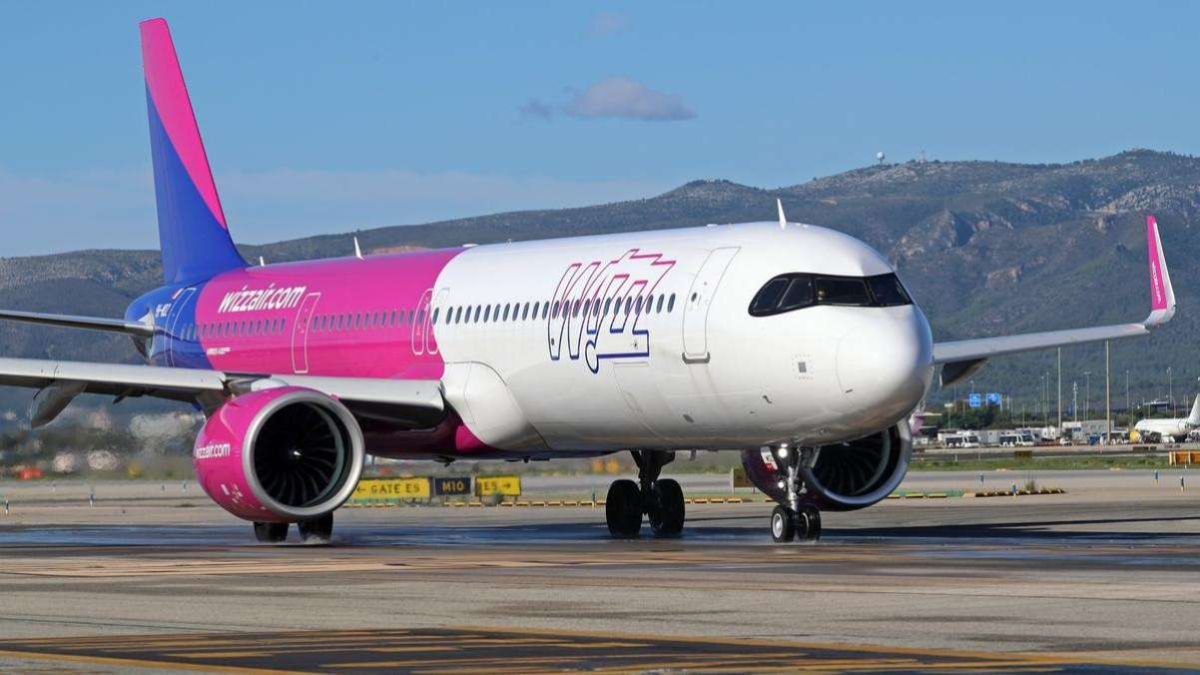
Πηγή Φωτογραφίας: Wizz Air – Αεροσκάφος A321/Credit: Olga Ernst / Wikimedia Commons, CC BY-SA



A wave of bomb threats targeting passenger aircraft has raised fresh concerns about aviation security across Europe, exposing the difficulties airlines and national authorities face when multiple security alerts emerge across international borders.
More than 50 flights have reportedly been targeted within a single week, including at least 14 operated by Wizz Air, according to the Financial Times.
Aircraft have been diverted, passengers subjected to emergency security checks and military fighter jets scrambled to escort civilian flights.
Although searches have not uncovered explosive devices in the aircraft inspected, the scale and frequency of the incidents have alarmed airlines and European security officials.
Wizz Air chief executive József Váradi has called for a coordinated Europe-wide response, arguing that the fragmented nature of national security procedures makes it harder to manage threats affecting several countries simultaneously.
The incidents come at a particularly difficult time for the aviation industry, which is already confronting higher fuel costs, geopolitical instability and pressure on profitability.
Wizz Air Warns Europe Needs a Coordinated Response
Speaking to the Financial Times, Váradi called on European governments and aviation authorities to strengthen cooperation in responding to bomb threats.
The challenge extends beyond assessing the credibility of individual warnings.
When threats emerge simultaneously in different countries, airlines must coordinate with police forces, intelligence agencies, air traffic controllers, airport operators and military authorities operating under separate national procedures.
The Wizz Air chief expressed concern about the absence of a single European mechanism capable of coordinating the response to such incidents.
Differences in national procedures can complicate the rapid exchange of information and produce inconsistent responses to similar threats.
For airlines, the objective is not to weaken security requirements but to ensure that credible threats can be identified and addressed quickly without allowing malicious actors to cause unnecessary disruption.
Emergency Landings and Fighter Jet Escorts
The series of incidents began in early November and quickly spread across several European aviation networks.
On November 2, a Wizz Air flight travelling from London Luton to Sofia was diverted to Budapest following a bomb threat while the aircraft was airborne.
A Hungarian Gripen fighter jet was scrambled to escort the passenger aircraft to a safe landing.
Security personnel subsequently searched the aircraft and screened passengers, but no explosives were discovered.
Further incidents reportedly affected flights operated by Ryanair, Finnair, LOT Polish Airlines, Aer Lingus and Wizz Air.
A Wizz Air flight from Milan to Warsaw was diverted to Vienna, while an Aer Lingus aircraft travelling from Dublin to Rome reportedly made an unscheduled landing at a French military airfield.
Italian Eurofighter aircraft were also deployed in response to aviation security alerts.
The use of military escorts demonstrates the seriousness with which authorities must treat such warnings, even when they ultimately prove to be false.
Every threat creates an operational dilemma: ignoring a potentially credible warning is unacceptable, but responding to repeated hoaxes can cause widespread disruption.
Could the Threats Be Part of a Hybrid Warfare Campaign?
European authorities are examining whether the incidents could form part of a coordinated effort to disrupt aviation operations.
According to Reuters, threatening emails were also sent to media organisations in Ireland and Bulgaria, suggesting that the campaign may extend beyond direct communications with airports and airlines.
Some messages reportedly used the sender name “Mikhail Andropov”.
However, investigators have not publicly established the sender’s identity or confirmed that all the incidents were coordinated.
The pattern has prompted speculation about possible hybrid warfare tactics, in which relatively inexpensive actions are used to create economic damage, public anxiety and pressure on national security services.
Spanish Foreign Minister José Manuel Albares has raised concerns about the possibility of hybrid aggression and psychological warfare targeting Europe.
Security specialists have also cautioned against premature conclusions.
The threats could involve coordinated malicious activity, copycat incidents, individual perpetrators or attempts to mislead investigators.
Russia has denied allegations of involvement in hybrid operations attributed to it by Western governments.
No publicly established evidence has conclusively linked this particular wave of aviation bomb threats to Moscow.
The distinction is important because identifying a pattern of disruption does not, by itself, establish who is responsible.
European Airports Call for Stronger Intelligence Sharing
Airports Council International Europe, which represents airport operators across the continent, has also emphasised the need for greater coordination.
Airport authorities can organise evacuations, facilitate emergency landings and implement security procedures.
However, they cannot independently investigate complex cross-border threats or determine whether seemingly unrelated incidents originate from the same source.
Such investigations require cooperation between national police forces, intelligence agencies, civil aviation authorities and international organisations.
A more effective European response would involve faster intelligence sharing, clearer operational responsibilities and better coordination between the authorities responsible for aviation security.
The central challenge is to preserve the highest security standards while reducing the ability of anonymous individuals or groups to disrupt international transport networks.
The Financial Cost of a False Alarm
Even when a bomb threat proves unfounded, its financial consequences can be substantial.
An emergency diversion may involve additional fuel consumption, airport handling charges, aircraft inspections and unexpected accommodation arrangements for passengers.
Crew schedules may need to be reorganised, while an aircraft delayed for several hours can disrupt subsequent services.
For low-cost carriers such as Wizz Air, aircraft utilisation is particularly important.
Their business models depend on operating multiple flights with relatively short turnaround times.
An unexpected diversion can therefore affect not only the flight directly targeted but also several later services.
Airlines may also face customer service costs and additional operational expenses, depending on the circumstances and applicable passenger rights rules.
The total financial impact of the recent incidents has not yet been publicly established.
Nevertheless, the disruption illustrates how false security alerts can impose real costs on airlines, airports and passengers.
Wizz Air Faces a 66% Fall in Pre-Tax Profits
The security concerns emerged as Wizz Air reported a sharp decline in profitability.
The airline’s pre-tax profits fell by approximately 66% during the six months ending in September.
Net profits reportedly declined to €108.1 million from €323.5 million in the comparable period a year earlier.
Fuel expenses increased significantly as geopolitical tensions and the conflict involving Iran affected energy markets.
The airline also faced higher non-fuel operating costs, including expenses associated with aircraft financing and fleet expansion.
Despite these pressures, management pointed to an improvement in trading during the July-to-September quarter.
Wizz Air also indicated that ticket prices could rise moderately during the winter season.
The deterioration in the airline’s half-year financial results should not be attributed to the recent bomb threats, which occurred after the reporting period.
However, the security incidents add another operational challenge at a time when European airlines are managing rising costs and geopolitical uncertainty.
Why the Threats Matter for Greece and Southern Europe
The geographical spread of the incidents demonstrates that aviation security threats can affect routes far beyond the airports where they originate.
According to reporting by The Guardian, Milan Malpensa Airport received an anonymous message referring to flights involving Thessaloniki and Porto.
The reference to Thessaloniki illustrates how Greek aviation connections can become involved in wider European security alerts.
For Greece, the issue is particularly significant because of the country’s dependence on international air travel.
Tourism, regional connectivity and access to island destinations rely heavily on reliable airline operations.
A prolonged series of bomb threats could increase delays, complicate airport operations and affect passenger confidence across European travel networks.
The challenge is especially relevant to airports that handle substantial seasonal passenger traffic and depend on close cooperation with international airlines.
The European Union Faces a New Aviation Security Test
The incidents have raised a broader question about Europe’s ability to respond collectively to threats that cross national borders.
Civil aviation operates through an interconnected network, but many security decisions remain the responsibility of individual countries.
A threat involving an aircraft travelling between two European destinations can require the involvement of several governments, depending on its location, diversion route and emergency landing arrangements.
Airlines cannot simply disregard warnings that may involve passenger safety.
At the same time, authorities must develop ways to prevent malicious actors from repeatedly exploiting security procedures to cause widespread disruption.
Wizz Air’s appeal for stronger European coordination reflects this growing tension.
The objective is not to replace national security responsibilities but to improve the speed, consistency and effectiveness of cooperation.
European institutions and national governments will need to consider whether existing aviation security arrangements provide sufficient mechanisms for responding to simultaneous threats.
A Wider Challenge for European Security
The latest incidents highlight the vulnerability of interconnected transport systems to disruption that does not require physical damage.
An anonymous message can trigger emergency procedures involving aircraft crews, airport personnel, police officers, air traffic controllers and military forces.
If repeated across several countries, such incidents can place considerable pressure on security resources.
Whether investigators ultimately identify a coordinated campaign or unrelated perpetrators, the operational challenge remains.
Europe must find ways to respond rapidly to credible aviation threats while preventing repeated false alarms from undermining the efficiency of its transport networks.
For Wizz Air and other European carriers, the priority is clear: stronger cross-border cooperation, reliable intelligence and consistent security procedures.
For passengers, the overriding concern remains the same — ensuring that every flight operates safely, even when the threat turns out to be a hoax.
Source: pagenews.gr
Διαβάστε όλες τις τελευταίες Ειδήσεις από την Ελλάδα και τον Κόσμο