Europe is pushing to secure a meaningful role in negotiations over Ukraine’s future. Yet, even before agreeing on a common diplomatic strategy, the European Union faces a politically sensitive question: Who should speak on behalf of its 27 member states in discussions involving Washington, Moscow and Kyiv?
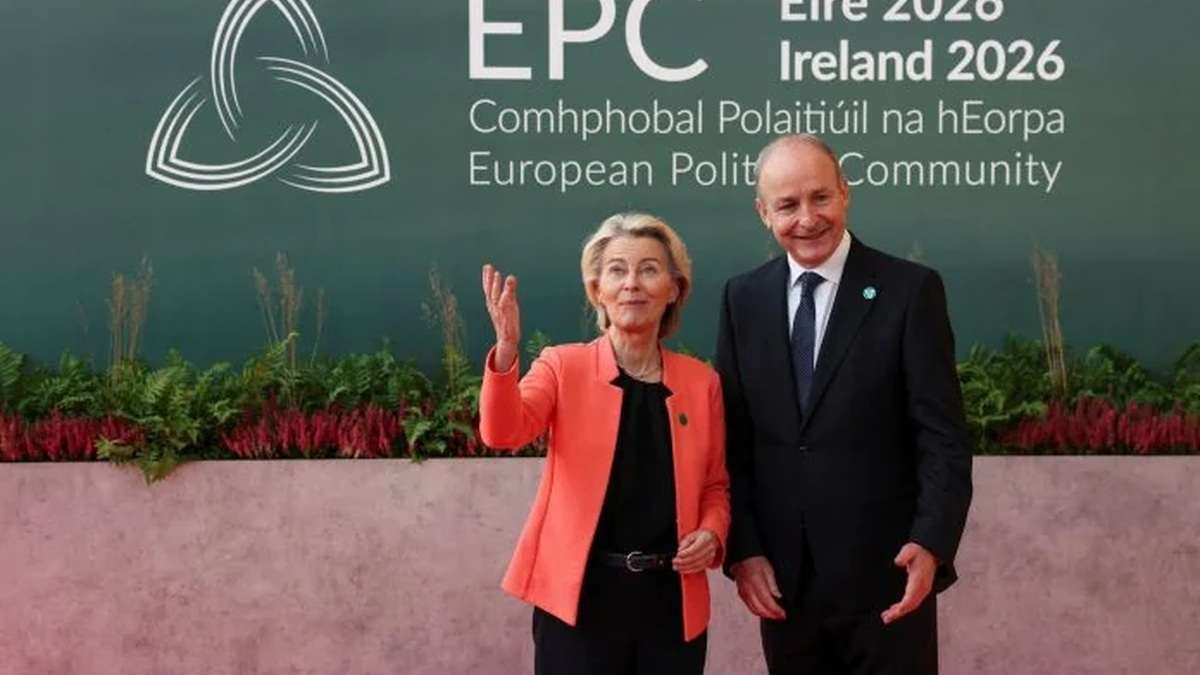
The two-day gathering in Dublin, featuring the European Political Community summit on Thursday, November 12, and an informal EU leaders’ summit on Friday, November 13, has become a focal point for European diplomacy.
The reported diplomatic contacts involving US envoys Steve Witkoff and Jared Kushner, alongside negotiations in Abu Dhabi, have renewed pressure on European governments to define their role in any potential settlement.
Although European leaders broadly agree that the EU must participate in discussions affecting the continent’s security, differences remain over who should represent the bloc, what mandate that representative should receive and how negotiations with Russia should proceed.
Merz: Europe Cannot Be Excluded From Decisions About Its Own Security
German Chancellor Friedrich Merz sought to shift attention away from the competition between potential European representatives and toward the substance of the negotiations.
Merz acknowledged some encouraging developments in the Abu Dhabi talks but cautioned against premature optimism.
“There is still a long way to go,” he said, urging Russian President Vladimir Putin to engage in joint discussions.
The German leader also welcomed what he described as signs of a possible change in Moscow’s attitude toward European participation.
“I note with some satisfaction that there is apparently a growing willingness on the Russian side to recognize that one cannot talk about Europe without involving Europe itself. And that, in principle, is good news. It remains to be seen whether this will continue,” Merz said.
For Berlin, the central issue is not simply which European official attends negotiations. It is whether the EU can exercise genuine influence over decisions that could reshape the continent’s security architecture for decades.


Ukraine’s 2027 Funding Gap Adds Pressure on European Leaders
Merz also linked the diplomatic process to the financial burden of sustaining Ukraine.
He described continued support for Kyiv as a “collective European responsibility” and stressed the urgency of closing Ukraine’s funding gap for 2027.
“Ukraine faces a very, very difficult winter, and it is essential that we Europeans stand united,” he said.
His remarks come against the backdrop of disagreements over the EU’s long-term budget and the distribution of financial responsibilities among member states.
The challenge facing European governments is therefore twofold: maintaining sufficient financial assistance to Ukraine while securing a decisive voice in negotiations that could determine the country’s future security arrangements.
Von der Leyen Welcomes European Participation but Prepares New Russia Sanctions
European Commission President Ursula von der Leyen expressed satisfaction with Europe’s involvement in diplomatic discussions concerning Ukraine.
She warmly welcomed the Abu Dhabi peace talks and said she was pleased that European representatives had participated to safeguard the bloc’s interests.
According to von der Leyen, Ukrainian President Volodymyr Zelenskyy had personally requested European involvement.
However, the Commission president made clear that diplomatic engagement would not mean abandoning economic pressure on Moscow.
“We are preparing the 22nd package of sanctions and, as a Commission, we are preparing a proposal on how to cover Ukraine’s financial needs in 2027,” she said.
She added that both proposals would be presented ahead of the next European Council meeting.
The Commission is therefore pursuing a dual approach: supporting diplomatic efforts while maintaining pressure on Russia through sanctions and financial measures.

Kallas Takes a Harder Line: Ceasefire Must Come Before Peace Negotiations
EU foreign policy chief Kaja Kallas adopted a more uncompromising position, insisting that Russia must first demonstrate a willingness to halt its military operations.
“We see no goodwill from the Russian side,” she said.
Kallas argued that meaningful negotiations cannot proceed independently of developments on the battlefield.
“Everything should happen in the right order: first, we need a ceasefire so that the bombing of civilians actually stops, and then we can sit down and discuss a peace agreement,” she stated.
She emphasized that only after those conditions are met should broader discussions begin.
“Then, and only then, can we talk about peace or Europe’s security architecture.”
Kallas also raised concerns about Russia’s record of honoring international agreements, citing previous commitments, including the Budapest Memorandum.
“The emphasis should be on how we ensure that Russia actually fulfills its obligations,” she said.
Her position highlights a fundamental question within European diplomacy: whether negotiations should begin while hostilities continue or whether a ceasefire must be established first.
Kallas or Costa? The Institutional Battle Over Europe’s Representative
Beyond disagreements over strategy, a debate is emerging over the institutional authority to represent the European Union.
Kallas suggested that her position as the EU’s High Representative for Foreign Affairs should be considered when deciding who participates in negotiations.
She referred to the institutional arrangements agreed by European leaders in 2024, arguing that reopening those discussions could prove politically difficult.
“The leaders, of course, can choose differently and reopen those discussions, which is always difficult, or we could simply stick to what we agreed in 2024,” she said.
Meanwhile, Luxembourg Prime Minister Luc Frieden expressed support for European Council President António Costa as a potential representative.
Frieden, who said he was representing the three Benelux countries at the Dublin gathering, emphasized the importance of unity.
“It is important to speak with one voice, one message,” he said, adding that “the message is more important than the individual.”
He also reaffirmed the Benelux countries’ support for Ukraine and the principles of the United Nations Charter.
The debate illustrates a broader institutional challenge: Europe needs a representative with sufficient political authority, but that individual must also operate under a clear mandate supported by member states.


The Real Stakes: Who Will Shape Europe’s Future Security Order?
The question of who represents the EU extends far beyond institutional competition in Brussels.
At stake is whether Europe will participate directly in shaping a potential peace agreement or find itself implementing decisions negotiated primarily between Washington, Moscow and Kyiv.
Several issues carry immediate consequences for European security: future guarantees for Ukraine, Kyiv’s relationship with NATO, reconstruction financing, sanctions against Russia and the broader balance of power across the continent.
Germany is emphasizing collective European responsibility. Kallas is demanding a ceasefire before substantive peace negotiations. The European Commission is preparing further sanctions and financial assistance, while Luxembourg has publicly identified Costa as a suitable representative.
These positions are not necessarily incompatible, but they reflect different priorities and institutional interests.
The Dublin meetings will provide an opportunity to determine whether European leaders can translate their shared demand for participation into a coherent negotiating position.
Ultimately, the most important question is not simply who will sit at the table on Europe’s behalf.
It is whether the European Union will have sufficient political unity and diplomatic influence to shape the terms of any settlement.
For a continent whose security could be fundamentally altered by the outcome of the war, participation alone may not be enough.
Source: pagenews.gr