Lebanon is entering another dangerous phase of its long-running security crisis, with Washington increasing diplomatic pressure as the future of the United Nations peacekeeping presence in the country’s south becomes increasingly uncertain.
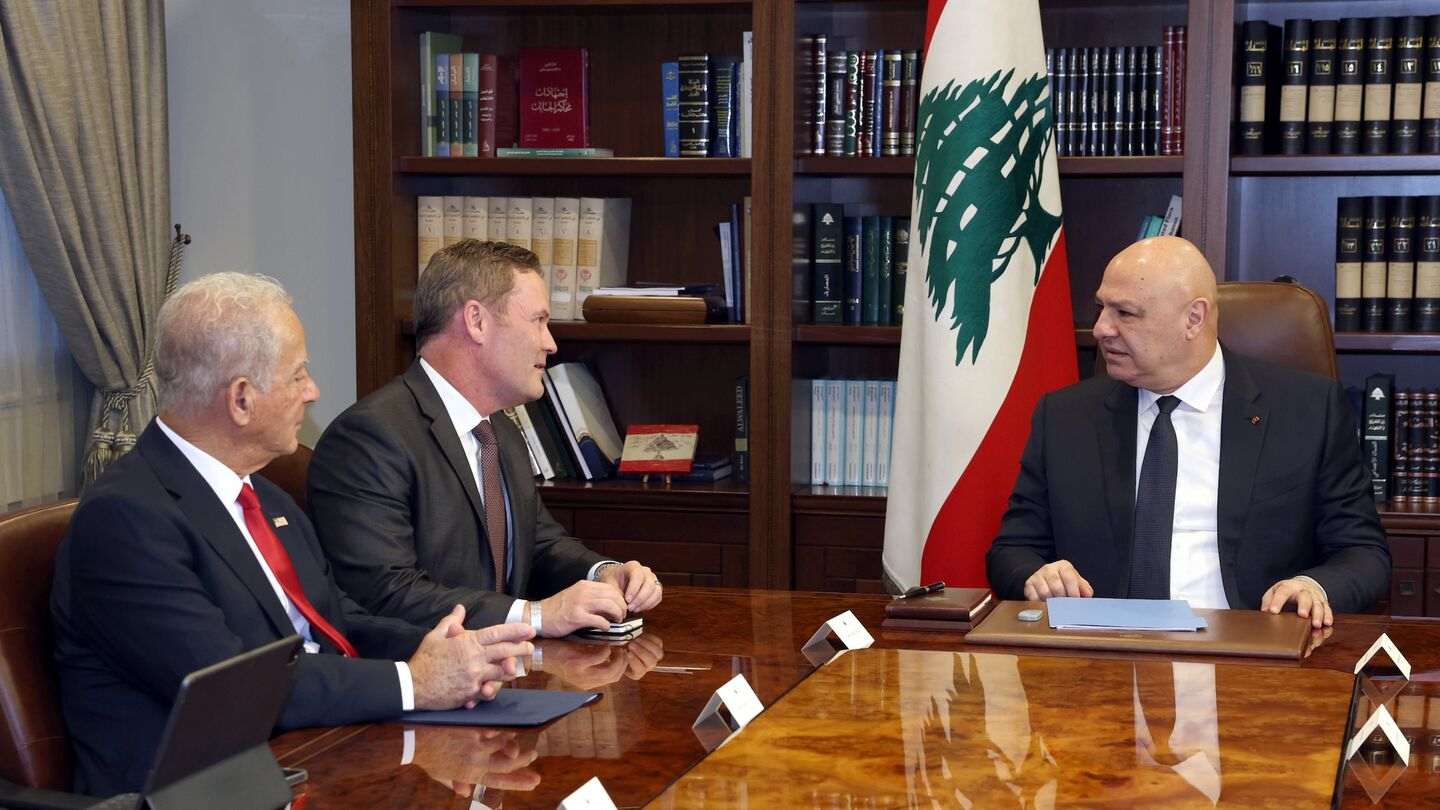
US Ambassador to the United Nations Mike Waltz met Lebanese President Joseph Aoun in Beirut on Monday, November 16, against a backdrop of escalating Israeli military operations and mounting concern over what will replace the United Nations Interim Force in Lebanon (UNIFIL).
The visit comes at a particularly sensitive moment for Lebanon’s political leadership, which faces simultaneous pressure to consolidate state authority, address Hezbollah’s military capabilities and prevent a renewed confrontation with Israel.
For Washington, the central issue is whether the Lebanese state can assume effective responsibility for security in the south.
For Beirut, the challenge is more complicated: restoring state control while Israeli military operations continue and the future international security architecture remains unresolved.
The stakes extend far beyond Lebanon. The outcome could influence the security of Israel’s northern frontier, Iran’s regional position and the wider balance of power in the eastern Mediterranean.
Waltz Meets Aoun: Washington’s Diplomatic Pressure Intensifies
President Joseph Aoun received Waltz at the presidential palace in Baabda, accompanied by US Ambassador to Lebanon Michel Issa.
The meeting was also attended by Simon Karam, who heads Lebanon’s delegation in the trilateral negotiations involving Lebanon, Israel and the United States.
According to the Lebanese presidency, discussions focused on the country’s security situation, developments in the region and preparations for the period following the end of UNIFIL’s mission.
Particular attention was given to Israeli military activity in southern Lebanon and the implementation of the June 26 framework agreement involving Washington, Beirut and Israel.
The Lebanese presidency maintained that Israeli operations have continued despite the agreement, raising questions about the effectiveness of the existing security arrangements.
The timing of Waltz’s visit underscores Washington’s determination to remain directly involved in discussions about Lebanon’s security future.
It also reflects the growing urgency surrounding the transition from international peacekeeping to a different security model.
Hezbollah’s Weapons: The Central Question for Lebanon
The issue of Hezbollah’s disarmament remains one of the most politically sensitive questions facing Lebanon.
For years, Hezbollah has maintained a military structure operating outside the exclusive command of the Lebanese armed forces.
Its arsenal and regional relationships have made it a powerful actor in Lebanon’s domestic politics and a central component of the confrontation with Israel.
Washington has consistently supported the principle that the Lebanese state should exercise exclusive authority over weapons and military operations within its territory.
But translating that principle into reality remains extraordinarily difficult.
Hezbollah’s military capabilities are tied not only to Lebanon’s internal political balance but also to the broader strategic relationship between Iran and Israel.
Any attempt to alter that arrangement carries the risk of domestic confrontation, political instability or renewed military escalation.
For President Aoun, the challenge is to strengthen the Lebanese state without triggering another internal crisis.
The Lebanese Armed Forces would need sufficient resources, political backing and operational capacity to assume greater responsibility for areas previously affected by Hezbollah’s military presence.
Disarmament is therefore not simply a security measure.
It is a test of whether Lebanon can establish a unified national defence structure after decades of fragmented authority.
Israeli Airstrikes Raise the Risk of Another Escalation
Waltz’s visit coincides with heightened tensions following Israeli strikes in Lebanon.
According to the reporting accompanying the visit, an Israeli airstrike targeted a weapons shipment in the eastern Bekaa Valley near the Syrian border.
The incident highlights the continuing vulnerability of Lebanon’s security environment, particularly in areas associated with cross-border supply routes and armed-group activity.
Israel regards Hezbollah’s military infrastructure and weapons transfers as significant threats to its national security.
Lebanon, meanwhile, has raised objections to continuing Israeli attacks, arguing that they undermine the diplomatic framework intended to stabilise the situation.
This creates a dangerous cycle.
Israeli military action can weaken confidence in diplomatic agreements, while the persistence of armed capabilities outside state control reinforces Israeli security concerns.
Without a credible mechanism for addressing both issues, the risk of further escalation remains substantial.
The Bekaa Valley is especially sensitive because of its proximity to Syria and its historical importance in regional military and logistical networks.
Any increase in military operations there could complicate efforts to stabilise southern Lebanon and expand the responsibilities of Lebanese state institutions.
UNIFIL’s Departure: Who Will Secure Southern Lebanon?
One of the most consequential issues discussed during Waltz’s visit was the future of southern Lebanon after UNIFIL.
For decades, the UN peacekeeping mission has played an important role in monitoring the security situation along the Lebanese-Israeli frontier.
Its presence has provided an international mechanism for observation, coordination and communication in an area repeatedly affected by military confrontation.
The approaching end of the mission raises difficult questions about the arrangements that will follow.
Will the Lebanese Armed Forces be able to assume greater responsibility?
Could a new multinational security presence emerge?
And what guarantees would be required to prevent another cycle of cross-border hostilities?
Several possible approaches have been discussed, including stronger international support for the Lebanese military and alternative multinational arrangements.
But replacing UNIFIL would involve much more than changing the personnel deployed in southern Lebanon.
Any successor framework would need a clearly defined mandate, political legitimacy and practical mechanisms for managing incidents between Lebanon and Israel.
It would also require sustained international support.
Without these elements, the withdrawal of peacekeepers could create a security vacuum at one of the Middle East’s most sensitive borders.
Iran, Israel and the Wider Regional Calculation
Hezbollah’s future cannot be separated from the broader confrontation between Iran and Israel.
For Tehran, Hezbollah has historically represented an important component of its regional network of allied armed groups.
For Israel, weakening Hezbollah’s military capabilities is closely linked to securing its northern border.
For Washington, strengthening Lebanese state institutions offers a potential route towards reducing the influence of armed organisations operating independently of national authorities.
These interests intersect in Lebanon, making the country vulnerable to regional tensions over which its government has limited control.
A successful security transition could strengthen Beirut’s sovereignty and reduce the risk of future conflict.
An unsuccessful transition, however, could leave Lebanon exposed to renewed military confrontation and domestic instability.
The key challenge is ensuring that international diplomacy does not impose security expectations that Lebanese institutions lack the capacity to fulfil.
The Test Facing President Joseph Aoun
President Aoun faces a difficult political and security balancing act.
His administration must respond to international demands for stronger state authority while maintaining domestic stability.
It must also address continuing Israeli military activity and seek credible guarantees that diplomatic agreements will be respected.
The role of the Lebanese Armed Forces will be decisive.
Greater state control over security requires not only political decisions but also equipment, financing, training and sustained institutional support.
International partners, particularly the United States and European governments, could play an important role in strengthening those capabilities.
But external assistance alone cannot resolve Lebanon’s political divisions.
Any durable arrangement will require a domestic political consensus over the state’s monopoly on armed force.
That remains one of the most difficult questions in Lebanese politics.
Three Scenarios for Lebanon’s Security Future
First scenario: A managed transition.
Lebanon, the United States and international partners agree on a phased security arrangement as UNIFIL’s mission approaches its conclusion.
The Lebanese Armed Forces expand their responsibilities, international assistance increases and diplomatic channels help contain incidents along the border.
Such an outcome would reduce the risk of a sudden security vacuum.
Second scenario: Escalation and diplomatic breakdown.
Israeli strikes intensify, Hezbollah’s military status remains unresolved and negotiations fail to produce an effective replacement for existing security arrangements.
Under these circumstances, Lebanon could face a renewed cycle of military confrontation and political instability.
Third scenario: A broader regional agreement.
Diplomatic efforts involving Washington and regional governments produce a more comprehensive security framework.
Such an arrangement could combine strengthened Lebanese institutions, measures addressing armed groups and commitments intended to reduce cross-border hostilities.
This would be the most ambitious outcome, but also the most difficult to negotiate and implement.
These scenarios illustrate the possible directions of the crisis rather than established forecasts.
Washington’s Real Challenge: Disarmament Without Destabilisation
Mike Waltz’s visit highlights a central contradiction in international efforts to stabilise Lebanon.
Washington wants a stronger Lebanese state capable of exercising authority over its territory.
Israel wants credible guarantees that Hezbollah cannot rebuild or expand military capabilities threatening its northern communities.
Lebanon wants an end to attacks on its territory and a security arrangement that protects its sovereignty.
These objectives are not necessarily incompatible.
But achieving them simultaneously will require diplomacy, institutional capacity and a credible security framework.
The approaching end of UNIFIL’s mission makes the challenge more urgent.
The fundamental question is whether Lebanon can move towards unified state control without entering another period of confrontation.
For Washington, the task is not merely to demand Hezbollah’s disarmament.
It is to help create the political and security conditions under which Lebanon can assume responsibility for its own stability.
And for the wider Middle East, the consequences of success or failure could be profound.
Source: pagenews.gr