“Let Syria Take Care of Hezbollah”: Trump’s New Middle East Strategy Surprises Israel
 ΧΡΟΝΟΣ ΑΝΑΓΝΩΣΗΣ 8 '
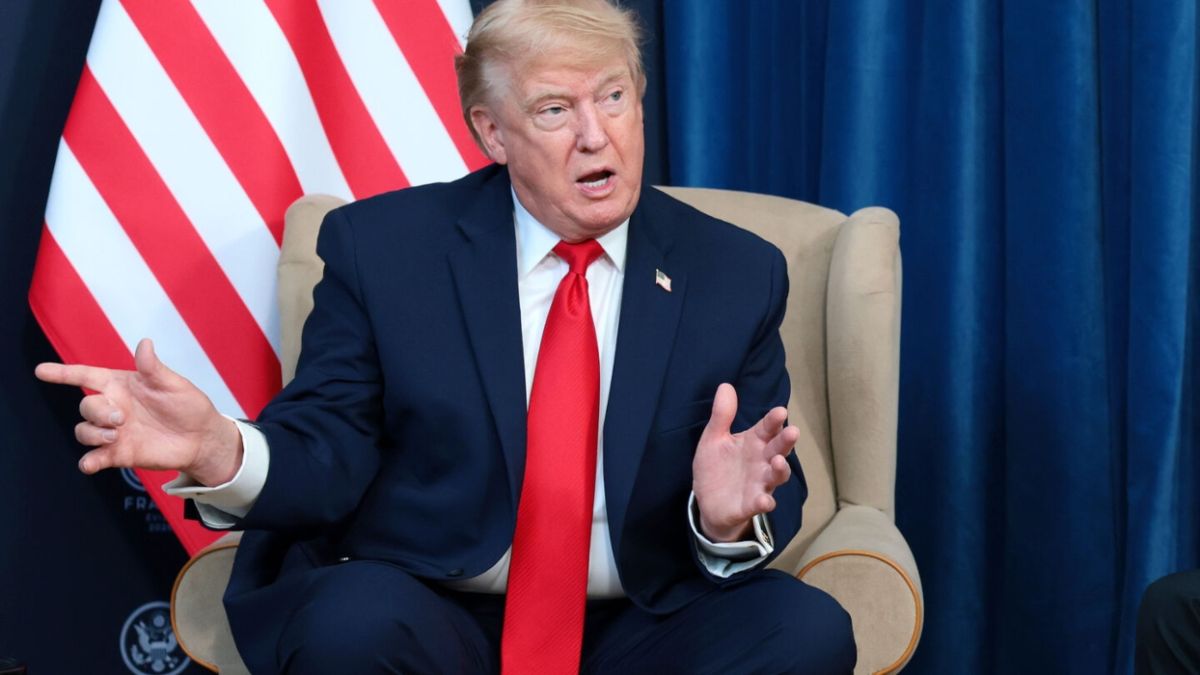
Πηγή Φωτογραφίας: US President Donald Trump speaks during a bilateral meeting with the Emir of Qatar, Sheikh Tamim bin Hamad Al Thani on the sidelines of the G7 summit, on June 16, 2026, in Evian-les-Bains, France. — Anna Moneymaker/Getty Images



A single remark by Donald Trump on the sidelines of the G7 summit in France may prove far more consequential than it initially appeared.
The U.S. president not only publicly criticized Israel’s military campaign in Lebanon, but also proposed an alternative that until recently would have been considered politically unthinkable: allowing Syria to take the lead in confronting Hezbollah.
“I suggested to Israel to let Syria take care of Hezbollah. Because, to be honest with you, I think they’d do a better job of doing it,” Trump said.
He then went even further:
“If Israel can’t do the job without killing everyone else, Syria will do the job.”
The comments represent a notable shift in American rhetoric and suggest that Washington is beginning to view post-war Syria as a potential security actor in a broader regional settlement emerging after the U.S.–Iran agreement.
‼️‼️President Trump: if Israel can’t do the job without killing everyone else, he’ll do the job. Syria will do the job.
‼️NowBibi has to be more responsible with respect to Lebanon. Lebanon used to be a great country. It was a country where you had professors, doctors, lawyers.… pic.twitter.com/Nd0cpc31YL
— ToniMrad (@murat_toni) June 16, 2026
Trump’s Rare Public Criticism of Israel
Speaking to reporters during the G7 summit, Trump made clear that he is increasingly dissatisfied with Israel’s conduct in Lebanon.
“I’m not happy,” he said, arguing that the war should have ended much sooner.
“Israel is fighting Hezbollah for too long, and too many people are being killed.”
Although Trump insisted that he maintains a “great relationship” with Israeli Prime Minister Benjamin Netanyahu, his remarks exposed growing differences between Washington and Jerusalem over the management of post-conflict security in the region.
The U.S. president appeared particularly frustrated by an Israeli strike on Beirut on Sunday, just hours before the announcement of the U.S.–Iran agreement.
According to Trump, the continuing conflict in Lebanon “throws a negative light” on the diplomatic breakthrough reached with Tehran.
The Man Trump Trusts
Perhaps the most striking aspect of Trump’s remarks was his unusually warm praise for Syrian President Ahmed al-Sharaa.
Trump described him as “very capable” and credited him with protecting American interests.
“He’s very capable. And he’s been very good for me. He’s protected everything that I’ve asked for,” Trump said.
The statement is significant because it signals a remarkable evolution in Washington’s perception of Damascus.
For years, Syria was viewed primarily through the lens of instability, civil war, and Iranian influence. Today, at least according to Trump’s rhetoric, the country is increasingly being discussed as a potential contributor to regional stability.
Such a shift would have been difficult to imagine only a few years ago.
Damascus Pushes Back
Yet Syria itself appears reluctant to embrace the role Trump envisions.
Just days before Trump’s remarks, President al-Sharaa publicly rejected reports suggesting that Syria could intervene against Hezbollah inside Lebanon.
“What is being circulated about Syria entering Lebanon is nothing more than rumors,” Sharaa said, according to Agence France-Presse.
His response reflects the delicate balancing act facing the new Syrian leadership as it attempts to navigate relations with Washington, regional powers, and domestic political realities.
The Weight of History
The issue is particularly sensitive because of Syria’s long and controversial history in Lebanon.
Syrian forces maintained a military presence across large parts of Lebanon from 1976 until 2005.
The intervention began during Lebanon’s civil war and ended under intense international pressure following the assassination of former Lebanese Prime Minister Rafic Hariri.
For decades, Syria also served as the primary land corridor through which Iran supplied weapons and logistical support to Hezbollah.
The collapse of the previous Syrian regime significantly weakened Tehran’s regional influence and altered the strategic landscape of the Levant.
Now, Washington appears to be exploring the possibility that a new Syrian government could become part of the solution to a problem that previous Syrian authorities helped sustain.
Lebanon Becomes Part of the U.S.–Iran Deal
Trump’s comments are closely linked to the framework agreement reached Sunday between Washington and Tehran.
The two sides agreed to end hostilities and launch a 60-day negotiation process focused on Iran’s nuclear program and broader regional security arrangements.
According to officials familiar with the negotiations, Lebanon is explicitly included within the broader framework of the agreement.
The formal signing is expected on Friday, after which talks will begin on sanctions relief, nuclear restrictions, and regional security issues.
For Washington, stabilizing Lebanon is considered essential if the agreement is to evolve into a lasting geopolitical settlement.
A War That Continues
The challenge is that events on the ground continue to move in the opposite direction.
Hezbollah resumed rocket attacks against Israel on March 2 following the outbreak of the Iran conflict.
Israel responded by expanding its air campaign and deepening military operations in southern Lebanon.
According to Lebanon’s Health Ministry, 3,798 people have been killed since March.
The Israeli military says approximately 30 Israeli soldiers have died during the fighting, while local media report that at least one Israeli civilian was killed in Hezbollah rocket attacks.
These casualty figures help explain why Washington is pushing for rapid de-escalation and why Trump repeatedly argues that the conflict should have ended much sooner.
Netanyahu’s Dilemma
Trump’s remarks come at a particularly sensitive moment in his relationship with Prime Minister Netanyahu.
According to Israeli political analysts, Netanyahu ultimately accepted the U.S.–Iran framework despite reservations that it does not sufficiently restrict Iran’s long-term regional influence.
The Israeli leader made clear on Monday that Israel intends to maintain security zones “for as long as required” to defend the country.
His comments specifically referenced Lebanon, Syria, and Gaza.
That position contrasts with Trump’s emerging approach, which appears increasingly focused on transferring greater security responsibilities to regional actors rather than relying indefinitely on direct Israeli or American military operations.
A New Regional Equation
Behind the public disagreement lies a much larger geopolitical transformation.
The United States is no longer focused solely on containing Iran.
Washington appears to be attempting to construct a new regional balance of power in which Syria, Lebanon, Gulf Arab states, and Israel assume greater responsibility for maintaining security, reducing the need for sustained American military involvement.
The question now is whether Damascus is willing—or able—to play such a role.
Equally important is whether Israel would ever accept a redistribution of regional influence that grants Syria a larger security role along its northern frontier.
Either way, Trump’s comments reveal that the debate over the future of the Middle East is no longer simply about Iran or Hezbollah.
It is increasingly about who will shape the post-conflict regional order once a generation of wars, proxy conflicts, and geopolitical rivalries begins to give way to a new strategic landscape.
Source: pagenews.gr
Διαβάστε όλες τις τελευταίες Ειδήσεις από την Ελλάδα και τον Κόσμο