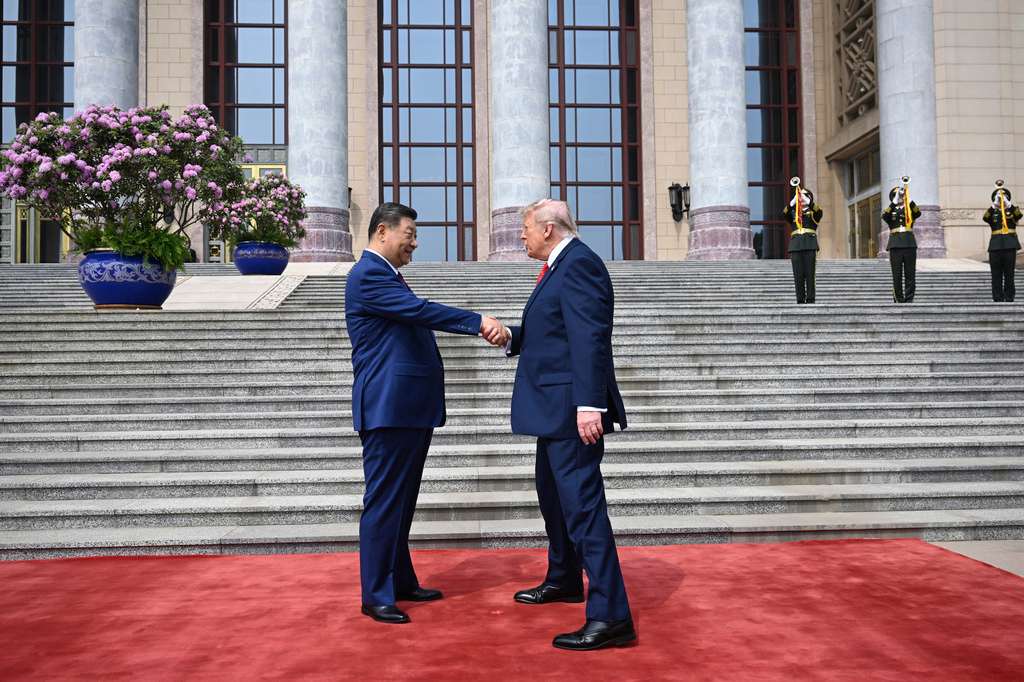
The world’s attention is turning to China, where the Asia-Pacific Economic Cooperation (APEC) summit in Shenzhen is taking on significance far beyond its traditional economic agenda.
The expected presence of US President Donald Trump, Russian President Vladimir Putin and Chinese President Xi Jinping has placed the gathering at the center of international diplomatic attention, raising questions about whether the world’s most influential powers can manage their increasingly complex relationships.
Leaders representing 21 member economies, which collectively account for approximately 62% of global GDP and nearly half of international trade, are gathering against a backdrop of geopolitical confrontation, economic uncertainty and intensifying competition over technology and strategic resources.
The summit comes at a moment when trade routes, energy supplies, global investment and international security are increasingly interconnected.
The central question is no longer simply whether Asia-Pacific economies can expand cooperation. It is whether Washington, Beijing and Moscow can maintain meaningful dialogue as their strategic interests continue to diverge.


Trump, Putin and Xi: The Diplomatic Encounter Everyone Is Watching
The most closely watched development is the planned meeting between Trump, Putin and Xi on Thursday, November 19, on the sidelines of the summit.
Beijing has not publicly disclosed a detailed agenda for the anticipated trilateral discussions, leaving considerable uncertainty about their objectives and possible outcomes.
China has characterized the proposed encounter as having “groundbreaking significance” for global peace and strategic stability.
However, the three leaders approach the meeting with substantially different priorities.
For Washington, the immediate challenges include managing strategic competition with China, addressing the consequences of the war in Ukraine and confronting instability in the Middle East.
Moscow is seeking diplomatic opportunities while the conflict in Ukraine continues to shape its relations with Western governments.
Beijing, meanwhile, is attempting to present itself as a force for international stability while maintaining its strategic objectives in Asia and expanding its influence in global economic institutions.
Nuclear arms control could also emerge as a sensitive issue.
China has traditionally resisted joining comprehensive nuclear disarmament negotiations alongside the United States and Russia, arguing that its arsenal remains considerably smaller than those of the other two powers.
The absence of a publicly confirmed agenda makes it difficult to determine whether the meeting could produce concrete agreements.
Nevertheless, direct engagement among the three leaders could provide an opportunity to address disagreements that have implications far beyond the Asia-Pacific region.
Even without a major diplomatic breakthrough, the meeting could influence how the three powers approach future negotiations on security, trade and strategic stability.
Why Shenzhen? China’s Technology Powerhouse Takes Center Stage
China’s decision to host the summit in Shenzhen carries considerable economic and geopolitical symbolism.
Located in southern China near Hong Kong, Shenzhen has developed into one of the world’s most important centers for technology, advanced manufacturing and industrial innovation.
The city is home to major Chinese corporations, including Huawei, Tencent and BYD, whose activities reflect Beijing’s ambitions in telecommunications, digital technology, electric vehicles and advanced manufacturing.
Shenzhen is also a central component of China’s Greater Bay Area strategy, which aims to integrate the economic strengths of Guangdong, Hong Kong and Macau into a globally competitive center for finance, technology and innovation.
For Xi Jinping, the summit offers an opportunity to demonstrate China’s technological capabilities and economic development model to international political and business leaders.
The choice of venue is especially significant amid continuing tensions over semiconductor exports, artificial intelligence and industrial supply chains.
While Washington seeks to protect sensitive technologies and reduce strategic dependencies, Beijing is accelerating efforts to strengthen domestic innovation and technological self-reliance.
Hosting APEC in Shenzhen allows China to showcase the industries it considers essential to its future economic influence.
This is the third time China has hosted the APEC leaders’ gathering, following Shanghai in 2001 and Beijing in 2014.
US-China Trade Rivalry: Tariffs, Rare Earths and Artificial Intelligence
The economic agenda of the summit is unfolding under the shadow of competition between the world’s two largest economies.
The United States and China continue to face difficulties implementing commitments associated with their extended trade truce.
Disagreements over tariffs, export restrictions, rare earth supplies and artificial intelligence remain central to their relationship.
For Washington, access to critical minerals, advanced semiconductors and strategically important technologies has become closely linked to national security.
For Beijing, technological independence is increasingly viewed as essential to sustaining long-term economic growth and reducing vulnerability to external restrictions.
These competing priorities are reshaping global supply chains.
Businesses must navigate trade barriers, regulatory uncertainty and growing pressure to diversify production across different markets.
The consequences extend beyond the United States and China.
Economies throughout the Asia-Pacific depend on stable commercial relationships with both countries, making any escalation in trade tensions a potential threat to regional growth.
The challenge for APEC is to preserve economic cooperation while its two largest members compete for technological and industrial leadership.
Shenzhen provides a particularly revealing setting for that debate.
The city represents China’s ambitions in precisely the sectors where strategic competition with the United States has become most intense.
The Iran War and the Risk of Another Global Energy Shock
Instability in the Middle East is another major concern for Asia-Pacific economies.
The conflict involving Iran has increased uncertainty over energy security, shipping routes and the resilience of global supply chains.
Many economies in the region depend heavily on imported oil and natural gas, making them particularly sensitive to disruptions in international energy markets.
Any sustained interruption to energy supplies or major shipping corridors could increase transportation costs, affect industrial production and intensify inflationary pressures.
For countries whose economic growth depends on manufacturing and international trade, the consequences could be substantial.
Energy security is therefore not simply a foreign policy issue.
It is a central economic concern affecting household purchasing power, business competitiveness and investment decisions.
The summit offers an opportunity for leaders to discuss how to protect trade flows and reduce vulnerabilities arising from geopolitical instability.
However, APEC’s voluntary, consensus-based structure means that any commitments will depend on the willingness of individual members to act.
Taiwan: The Strategic Flashpoint Behind US-China Relations
Taiwan remains one of the most sensitive issues in relations between Washington and Beijing.
US arms sales to Taiwan continue to draw opposition from China, which considers the island part of its territory.
The issue has implications for regional military security, international trade and the global semiconductor industry.
Taiwan’s participation in APEC reflects the organization’s distinctive institutional structure.
Rather than referring to its participants as sovereign states, APEC uses the term “member economies.”
This arrangement allows Taiwan and Hong Kong to participate alongside mainland China without requiring members to resolve competing sovereignty claims.
Taiwan has appointed Acer founder Stan Shih as its representative at this year’s gathering.
Although the summit is primarily economic, the presence of Taiwan underscores the relationship between regional security and economic stability.
A major escalation in the Taiwan Strait could disrupt international shipping and semiconductor production, with consequences for industries across the world.
The Taiwan question illustrates why economic cooperation in the Asia-Pacific can no longer be separated from geopolitical security.


Japan and the Philippines: Two Regional Disputes Facing Beijing
China’s relations with Japan and the Philippines are also expected to attract attention.
Japanese Prime Minister Sanae Takaichi is among the leaders expected to attend the summit.
Relations between Beijing and Tokyo have remained strained following her comments in November 2025 suggesting that Japan could consider military action if a Chinese operation against Taiwan also threatened Japanese territory.
China strongly opposes foreign involvement in what it regards as an internal matter.
The dispute reflects broader concerns over the possibility that a confrontation involving Taiwan could draw other regional powers into a wider conflict.
Meanwhile, tensions between China and the Philippines continue over competing maritime claims in the South China Sea.
Philippine President Ferdinand Marcos Jr. is also expected to participate in the summit.
The disputes involve maritime access, territorial claims, freedom of navigation and the activities of military and coast guard vessels in contested waters.
These issues have direct economic consequences.
The South China Sea is a major international shipping corridor, making regional stability essential to global commerce.
For APEC members, the challenge is to maintain practical economic cooperation despite unresolved security disputes.
What Is APEC and Why Does It Matter?
The Asia-Pacific Economic Cooperation forum was established in 1989 in Canberra, Australia, initially bringing together 12 economies for informal discussions on regional economic cooperation.
Today, APEC comprises 21 member economies:
Australia, Brunei, Canada, Chile, China, Hong Kong, Indonesia, Japan, South Korea, Malaysia, Mexico, New Zealand, Papua New Guinea, Peru, the Philippines, Russia, Singapore, Taiwan, Thailand, the United States and Vietnam.
Together, they represent approximately 62% of global GDP and around half of international trade.
India, despite its population and growing economic importance, is not a member.
Unlike organizations that impose legally binding obligations, APEC operates through consensus and voluntary commitments.
Its members cooperate on trade, investment, economic development and regulatory issues without being required to surrender national decision-making authority.
This flexibility allows economies with very different political systems and strategic interests to participate in a common framework.
The APEC Economic Leaders’ Meeting is scheduled for November 18–19, preceded by the APEC CEO Summit on November 17–18.
The business gathering provides an additional platform for discussions involving corporate executives, policymakers and international investors.


Beyond Trade: A Test of the Emerging Global Order
For Xi Jinping, hosting the summit offers an opportunity to demonstrate China’s economic influence and position Shenzhen as a global innovation center.
For Donald Trump, the gathering provides a setting for direct engagement with Beijing and other major Asia-Pacific partners.
For Vladimir Putin, participation offers another opportunity for high-level diplomacy at a time of continued confrontation between Russia and Western governments.
But the significance of the summit extends beyond the individual leaders.
Governments throughout the Asia-Pacific must manage growing strategic competition while preserving the trade relationships on which their economies depend.
The region faces overlapping challenges involving artificial intelligence, industrial supply chains, energy security, military tensions and uncertainty over the future of globalization.
APEC cannot resolve all these disagreements.
Its decisions are non-binding, and its members often pursue conflicting national priorities.
Nevertheless, the forum provides an important diplomatic space in which competing powers can continue communicating and identify areas of practical cooperation.
That function becomes increasingly valuable when tensions between major powers threaten to disrupt economic relationships.
What Happens Next? Can Trump, Putin and Xi Find Common Ground?
The summit’s most closely watched moment will be the anticipated meeting between Trump, Putin and Xi.
Yet its importance should not be measured solely by whether the three leaders announce a major agreement.
The broader question is whether the United States, China and Russia can establish more predictable channels of communication while managing their differences over security, trade and regional influence.
For the Asia-Pacific, the stakes are substantial.
Economic interdependence remains essential to growth, but geopolitical rivalry is increasingly shaping decisions about investment, technology, energy and national security.
The Shenzhen summit will offer an indication of whether regional governments can preserve cooperation under these pressures.
APEC is no longer merely a forum for economic dialogue. It has become a meeting point for some of the most consequential tensions shaping the international order.
And as Trump, Putin and Xi prepare to gather in China’s technology capital, one question stands above the rest:
Can the world’s major powers keep economic cooperation alive while their geopolitical rivalry continues to intensify?
The answer will matter far beyond Shenzhen.
Source: Pagenews.gr