Xi Jinping Opens China’s Doors to Canada as Trump Faces a New Trade Challenge
 ΧΡΟΝΟΣ ΑΝΑΓΝΩΣΗΣ 12 '
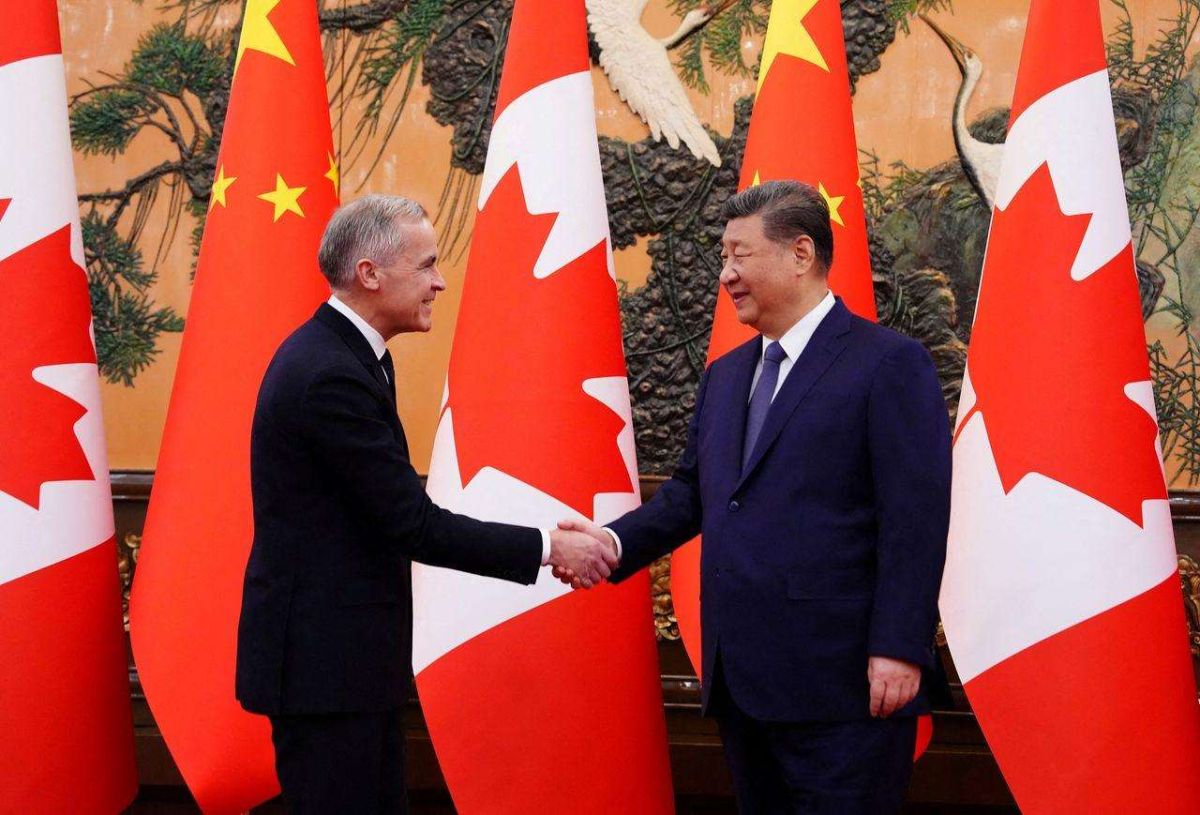
Πηγή Φωτογραφίας: AP Photo//Xi Jinping Opens China's Doors to Canada as Trump Faces a New Trade Challenge



China and Canada are moving to reset their economic relationship, with President Xi Jinping and Prime Minister Mark Carney announcing further tariff reductions and expanded commercial cooperation in a development that carries implications far beyond bilateral trade.
Meeting in Shenzhen on November 17, 2026, the two leaders agreed to ease trade restrictions affecting hundreds of millions of Canadian dollars in exports, while opening new opportunities for cooperation in manufacturing, energy and emerging technologies.
According to the Financial Times, the agreement represents another step in Beijing’s efforts to strengthen ties with middle powers seeking greater economic independence amid the trade tensions generated by US President Donald Trump’s policies.
For Canada, the rapprochement offers an opportunity to diversify export markets and reduce its exposure to American tariffs.
For China, it provides an opening to deepen relations with a longstanding US ally at a time when Washington’s trade policies are reshaping international economic partnerships.
The immediate economic benefits are significant. But the broader implications concern the evolving balance of power between Washington and Beijing.
A C$400 Million Trade Deal: Pork, Seafood and Chinese Metals
The latest agreement builds on an earlier diplomatic and commercial reset between the two countries.
According to the Canadian government, Beijing has agreed to provide additional tariff relief covering approximately C$400 million in Canadian exports.
The measures include around C$116 million in frozen pork products and C$285 million in fish and seafood exports.
Among the products expected to benefit are selected categories of shrimp, halibut, shellfish and other seafood.
In return, Ottawa has agreed to extend existing tariff exemptions on certain Chinese steel and aluminium products for another two years.
The exemptions, previously scheduled to expire at the end of 2026, will remain available for eligible products, with additional categories of industrial goods also receiving preferential treatment.
The agreement is particularly important for Canadian agricultural and seafood exporters seeking improved access to China’s enormous consumer market.
For Chinese manufacturers, it preserves access to parts of Canada’s industrial supply chain.
The measures do not eliminate all tariffs between the two countries. Rather, they represent a targeted reduction of trade barriers in strategically important sectors.
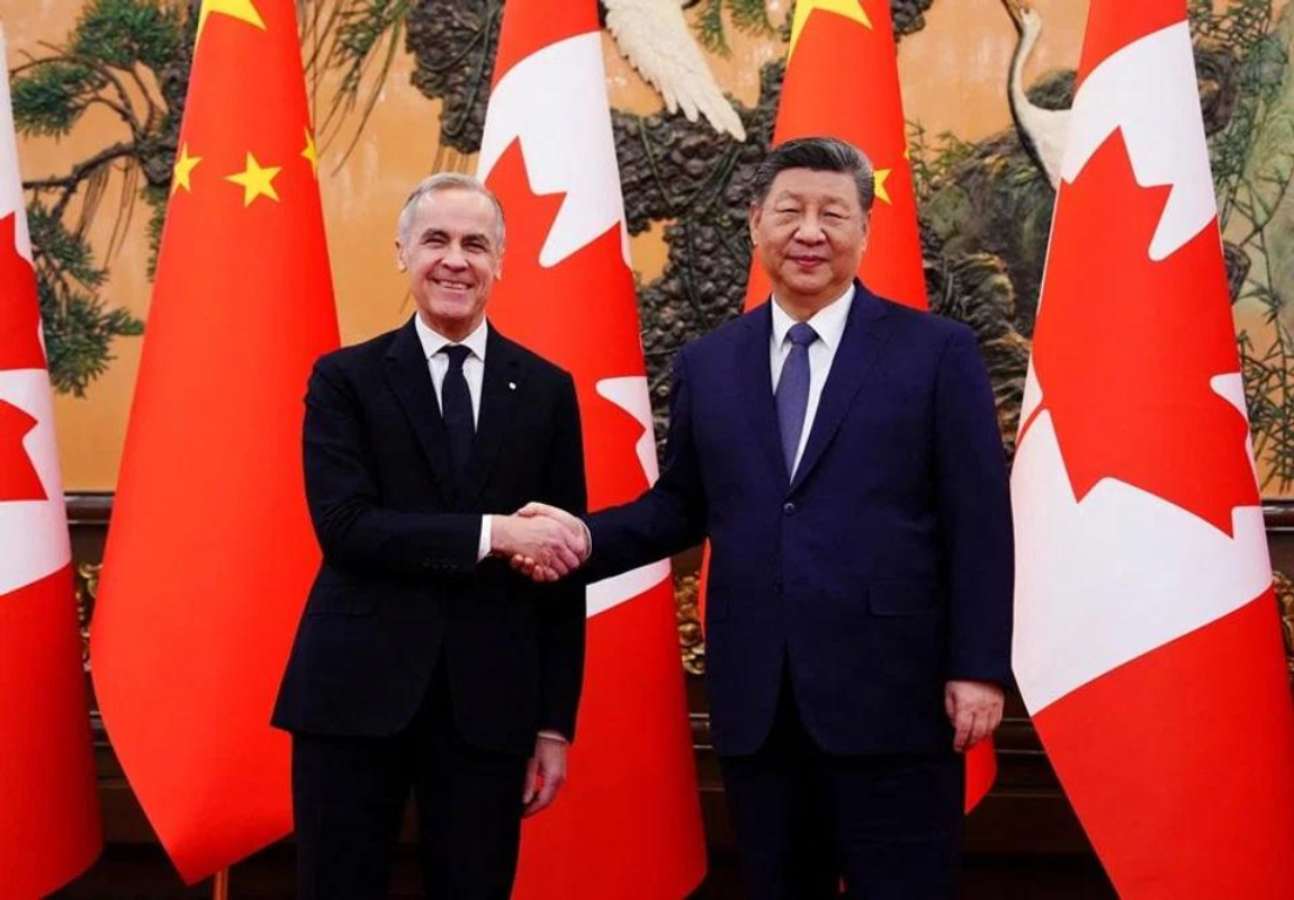
Carney Targets a 50% Increase in Exports to China by 2030
Prime Minister Mark Carney has positioned the rapprochement with Beijing as part of a broader strategy to diversify Canada’s international trade.
Ottawa aims to increase Canadian exports to China by 50% by the end of the decade.
Carney indicated that progress towards this target was already ahead of schedule.
He also welcomed the greater predictability and stability emerging in bilateral economic relations.
The strategy reflects Canada’s longstanding dependence on the United States, which remains by far its largest trading partner.
Approximately two-thirds of Canadian exports of goods and services are destined for the American market.
This concentration creates substantial exposure to changes in US trade policy.
The Trump administration’s tariff measures have intensified concerns among Canadian businesses about the reliability of existing commercial arrangements.
By expanding trade with China, Ottawa hopes to create additional export opportunities and strengthen its negotiating flexibility.
However, the Canadian government is not seeking to replace the United States with China as its principal economic partner.
Instead, it is pursuing a more diversified network of commercial relationships.
The Trump Factor: American Tariffs Reshape Canada’s Trade Strategy
The changing relationship between Ottawa and Beijing cannot be separated from developments in Washington.
President Donald Trump’s tariff policies have created uncertainty for major American trading partners, including Canada.
US tariffs affecting Canadian products, particularly in manufacturing and the automotive sector, have placed pressure on companies operating across the deeply integrated North American economy.
Canada’s automotive industry is especially vulnerable because production relies on complex supply chains crossing the US-Canada border.
Vehicles and components can move between the two countries several times before final assembly.
Tariffs therefore affect not only individual exporters but also the wider industrial system.
For Carney, strengthening economic relations with China offers one possible way to reduce these vulnerabilities.
Beijing, meanwhile, has sought to present itself as a predictable trading partner willing to negotiate market access and investment agreements.
The contrast between the two approaches is becoming an important feature of China’s diplomatic outreach.
Nevertheless, closer economic ties with Beijing also carry political and security risks that Ottawa must manage carefully.
Chinese Electric Vehicles Gain Access to the Canadian Market
One of the most significant areas of cooperation concerns electric vehicles.
Earlier in 2026, Canada agreed to reduce tariffs on qualifying Chinese electric vehicles from 100% to 6.1%, subject to an initial annual quota of 49,000 vehicles.
The quota is expected to increase gradually to 70,000 vehicles over five years.
The arrangement creates new opportunities for Chinese manufacturers such as BYD, Geely and Chery.
Chinese automakers have expanded rapidly in international markets, benefiting from competitive manufacturing costs, advanced battery technology and large-scale production.
Access to Canada offers another opportunity for international expansion.
However, the decision has also raised concerns about competition, employment and the future of domestic automotive production.
Canadian manufacturers and industry representatives have questioned whether Chinese imports could undermine local investment and jobs.
Carney has emphasized that Ottawa wants Chinese investment to generate meaningful economic activity in Canada.
That includes manufacturing capacity, employment and domestic value creation rather than facilities devoted primarily to assembling imported components.
The issue is particularly sensitive because Canada’s automotive sector remains closely connected to the United States.
The challenge for Ottawa is to attract investment without destabilizing its existing North American industrial relationships.
Oil, Natural Gas and Nuclear Energy: A New Strategic Partnership
Energy is another major component of the expanding relationship.
China and Canada have agreed to explore deeper cooperation in oil, natural gas, renewable energy and low-emission technologies.
Nuclear energy is also among the sectors under discussion.
Canada possesses substantial natural resources and has been seeking to strengthen its position as an energy supplier to Asian markets.
China, meanwhile, remains one of the world’s largest energy consumers and has an interest in diversifying its sources of supply.
According to Reuters calculations based on LSEG data, shipments of Canadian crude oil to China increased by approximately 37% during 2026.
The expansion illustrates the growing importance of energy trade in the bilateral relationship.
For Ottawa, access to Chinese demand could support investment in export infrastructure and resource development.
For Beijing, Canadian energy supplies offer another option within a diversified global procurement strategy.
The two governments have also discussed cooperation in financial services, customs procedures and direct aviation connections.
Artificial intelligence has emerged as an additional area of dialogue, particularly regarding international governance, safety standards and responsible technological development.
Xi Jinping Courts the World’s Middle Powers
The agreement is part of a broader Chinese diplomatic strategy.
Beijing has increasingly sought to strengthen relationships with countries that possess substantial economic and diplomatic influence but are not global superpowers.
These countries, often described as middle powers, frequently seek to maintain productive relations with multiple major powers rather than become exclusively dependent on one.
Canada is a prominent example.
It remains a NATO member, a G7 economy and a longstanding American ally.
At the same time, it is pursuing greater economic diversification and diplomatic flexibility.
China sees opportunities in this approach.
By offering access to its enormous domestic market, investment opportunities and industrial partnerships, Beijing is seeking to expand its influence among countries reassessing their economic relationships.
The strategy also reflects China’s ambition to play a larger role in shaping global trade rules and international economic governance.
However, closer commercial relationships do not necessarily translate into political alignment.
Canada and China continue to disagree on several important security and human rights issues.
The Unresolved Tensions Between Beijing and Ottawa
Despite the improvement in trade relations, significant political differences remain.
Relations between China and Canada deteriorated sharply in 2018 following the arrest in Canada of Huawei executive Meng Wanzhou at the request of American authorities.
China subsequently detained two Canadian citizens, triggering a prolonged diplomatic crisis.
The episode severely damaged trust between the two governments.
More recently, Canadian intelligence agencies have raised concerns about alleged Chinese interference in federal elections.
Beijing has denied interfering in Canada’s domestic political affairs.
Human rights organizations have also continued to criticize Chinese government policies concerning political dissent and civil liberties.
These disagreements have not disappeared as a result of the latest trade agreement.
Critics of closer engagement warn that increased economic dependence on China could create new vulnerabilities in strategically sensitive industries.
Supporters of renewed economic dialogue argue that commercial cooperation can proceed alongside firm positions on national security and human rights.
The Canadian government is attempting to balance these competing priorities.
APEC and the Wider Diplomatic Competition
The Xi-Carney meeting takes place against the backdrop of preparations for the Asia-Pacific Economic Cooperation summit.
The gathering brings together leaders from some of the world’s most important economies at a time of heightened trade and geopolitical tensions.
China is seeking to strengthen its position as a major diplomatic and economic partner across the Asia-Pacific region.
Trade restrictions, technology controls, supply-chain security and Taiwan remain central issues in the wider US-China relationship.
Against this background, Beijing’s ability to negotiate new commercial arrangements with countries traditionally aligned with Washington carries additional significance.
The agreement with Canada illustrates how international trade relationships are being reconsidered as governments respond to tariff disputes and geopolitical uncertainty.
It also highlights the growing importance of economic diplomacy in the competition between the United States and China.
Canada Is Not Abandoning Washington — But It Wants More Options
The latest agreement does not fundamentally alter Canada’s strategic alignment.
The United States remains its most important trading partner, while the two countries share extensive defence, intelligence and economic ties.
Their manufacturing sectors are deeply interconnected, and the North American market continues to be central to Canadian prosperity.
Nevertheless, Carney’s government is seeking to reduce the risks associated with excessive dependence on a single export destination.
China offers substantial commercial opportunities, particularly in agriculture, energy and manufacturing.
But those opportunities come with their own economic and geopolitical complications.
Ottawa must therefore balance its commitment to the United States with its ambition to build a broader network of international trading relationships.
For Beijing, the agreement demonstrates the potential benefits of engaging with countries seeking greater room for manoeuvre in an increasingly divided global economy.
A Changing Global Trade Order
The Xi-Carney agreement illustrates a wider transformation in international economic relations.
Tariffs are no longer simply instruments of trade policy.
They are influencing diplomatic relationships, investment decisions and the strategic calculations of governments.
Countries that once relied heavily on established commercial arrangements are increasingly exploring alternative markets and partnerships.
China is attempting to capitalize on this trend by strengthening economic relations with middle powers.
Canada is responding to the same environment by seeking greater diversification without abandoning its traditional alliances.
The outcome will depend on whether both governments can translate tariff reductions into lasting economic cooperation while managing their political disagreements.
The significance of the Xi-Carney meeting extends beyond the immediate trade concessions. It demonstrates how the US-China rivalry is reshaping the choices available to middle powers — and how countries such as Canada are seeking greater economic autonomy in an increasingly competitive international system.
Source: pagenews.gr
Διαβάστε όλες τις τελευταίες Ειδήσεις από την Ελλάδα και τον Κόσμο