The End of the Honeymoon, the Start of the Marathon!!!
 ΧΡΟΝΟΣ ΑΝΑΓΝΩΣΗΣ 12 '
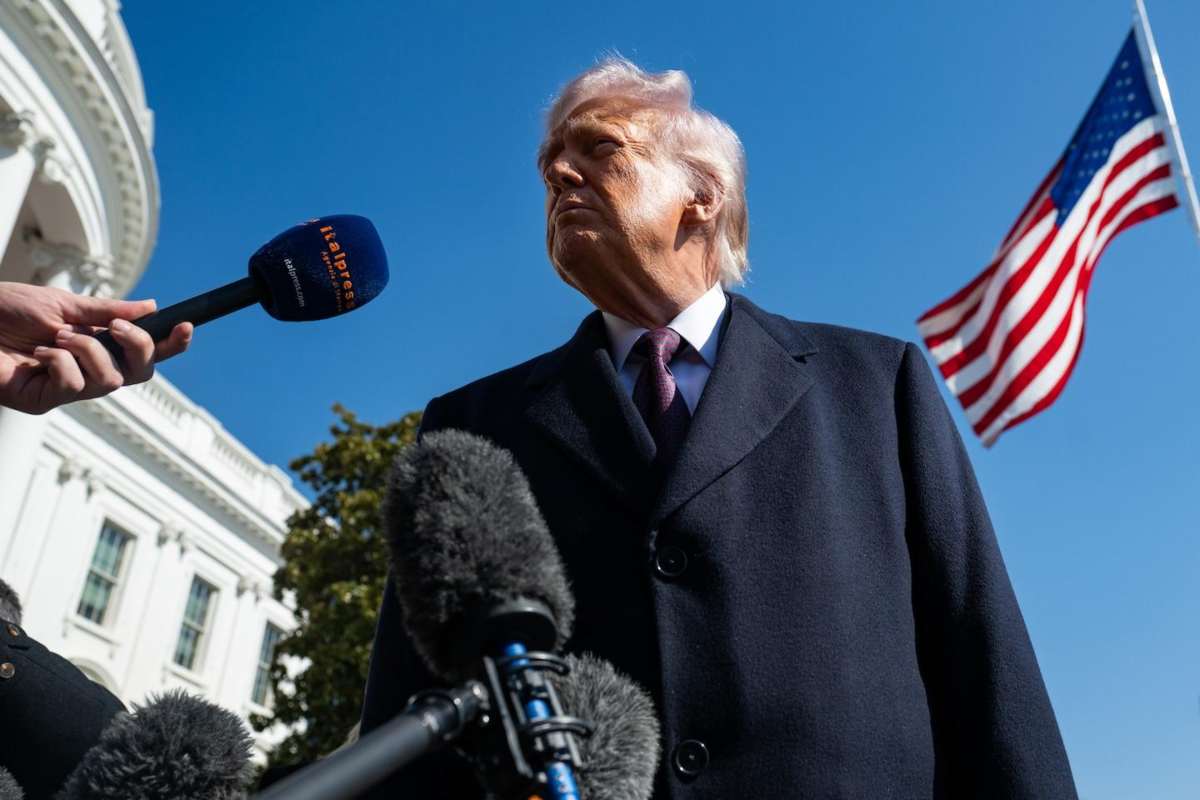
Πηγή Φωτογραφίας: Donald Trump – White House



The honeymoon is over before it has even properly begun. Democrats have captured both chambers of Congress in the November 2026 midterm elections, delivering a major political setback to Donald Trump. But their victory carries a warning: defeating Republicans at the ballot box is not the same as convincing Americans that Democrats deserve their trust.
The party now faces a marathon of congressional investigations, constitutional battles, economic disputes, and difficult decisions over immigration and the war with Iran. Its challenge is not simply to obstruct a president whose authority has been weakened. It is to demonstrate that Congress can once again function as an effective check on executive power.
And that will be considerably harder than winning an election.
Kansas: The political earthquake that exposed Trump’s vulnerabilities
Jose Del Real had not voted in a decade.
An Iraq war veteran living in southwestern Kansas, he had long considered Republican dominance in his state an almost permanent political reality. Elections seemed unlikely to change anything.
Then federal immigration enforcement operations reached his community.
Del Real began speaking with neighbors who were angry, frightened, and increasingly frustrated with Washington. He encouraged them to translate their dissatisfaction into political participation.
What followed was extraordinary.
Democrat Adam Hamilton defeated incumbent Republican Senator Roger Marshall, giving Kansas its first Democratic senator in 94 years.
The result was more than an electoral upset. It demonstrated how government actions can mobilize citizens who had effectively withdrawn from political life.
But there is a critical distinction between mobilizing anger and rebuilding trust.
Voters may have rejected the Republican administration without embracing the Democratic Party as a convincing long-term alternative.
That distinction now defines the challenge facing the new congressional majority.
The Democrats have Congress. But do they have America’s confidence?
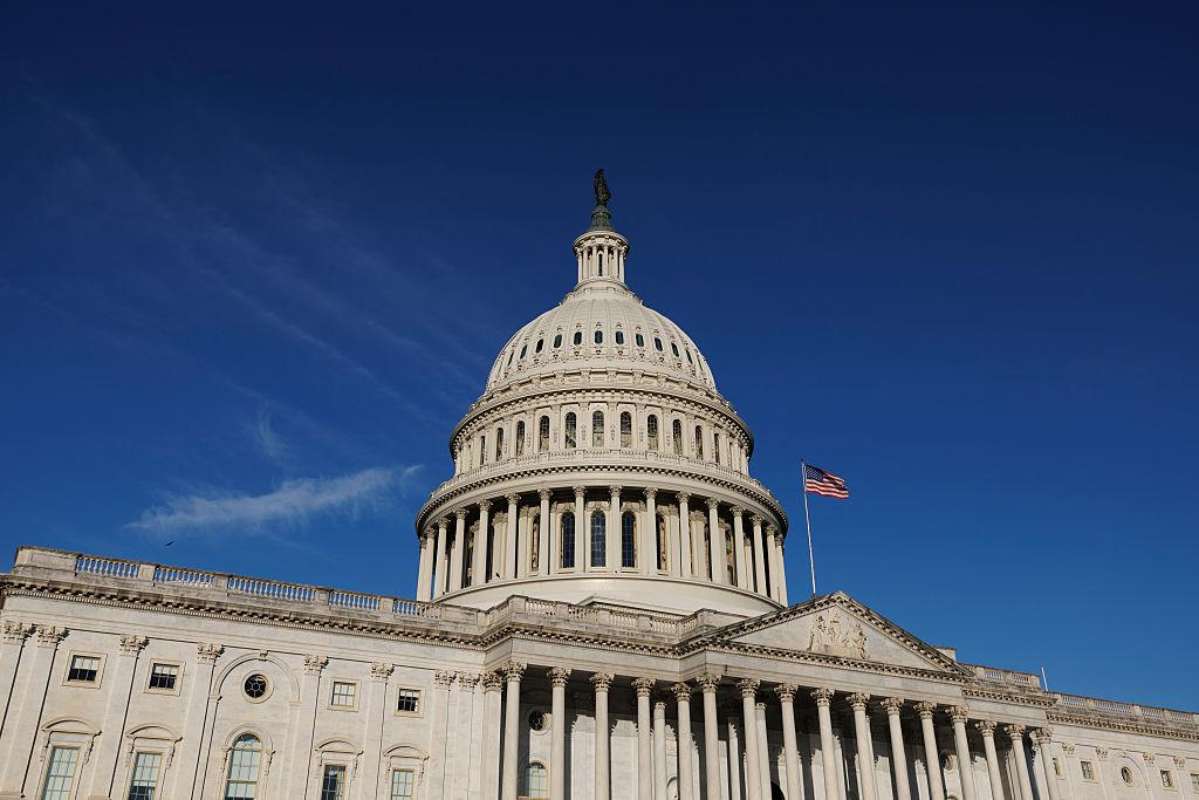
The November elections handed Democrats control of the House of Representatives and the Senate, giving them substantial authority to investigate the administration, scrutinize federal spending, and challenge presidential decisions.
Yet the electoral victory does not amount to unconditional public support.
An October AP-NORC survey found that only approximately four in ten American adults viewed the Democratic Party favorably. At the same time, nearly eight in ten voters wanted significant changes or a complete overhaul of how the United States is governed.
These findings reveal a fundamental political contradiction.
Americans want change, but many remain unconvinced that either major party can deliver it.
For Democrats, this means the coming congressional term cannot become an endless sequence of anti-Trump confrontations.
Investigations may expose misconduct. Hearings may embarrass administration officials. Congressional committees may generate dramatic headlines.
But none of these achievements will necessarily persuade families struggling with housing costs, health insurance premiums, or economic insecurity that their lives are improving.
The Democratic majority must therefore answer a more demanding question: What can Congress accomplish for ordinary Americans when the White House remains in Republican hands?
De-Trumpification: A constitutional mission, not a campaign slogan
The term de-Trumpification will inevitably feature in discussions about the future of American politics.
But if Democrats define it simply as the political destruction of Donald Trump, they risk repeating the cycle of polarization that has shaped Washington for years.
A more consequential objective would be to restore the institutional limits that prevent any president, Republican or Democrat, from governing through intimidation, secrecy, or disregard for legal constraints.
That requires congressional oversight with clear objectives.
When lawmakers investigate immigration enforcement, federal contracts, military operations, or the use of executive authority, they must establish who made the decisions, under what legal authority, and at what public cost.
They must also distinguish documented wrongdoing from political disagreement.
Congressional investigations should produce evidence, transparent findings, and corrective measures where justified — not merely televised confrontations designed to generate viral moments.
The strongest response to presidential overreach is not necessarily the loudest.
It is the one that makes future abuses more difficult, regardless of who occupies the Oval Office.
The economy: Trump’s greatest vulnerability could become the Democrats’ biggest trap
Economic pressure remains one of the most immediate tests of the new Congress.
According to the Bureau of Labor Statistics, consumer prices increased by 0.4% in October, following a 0.6% rise in September.
A slowdown in monthly inflation does not mean that prices are falling.
For households already struggling with rent, groceries, energy bills, and medical expenses, even slower price increases can deepen the pressure on disposable income.
Democrats now have an opportunity to scrutinize the economic consequences of the administration’s decisions.
Tariffs, energy policy, federal spending, and health care costs all provide substantial grounds for congressional examination.
But there is also a political danger.
If Democrats promise immediate relief that Congress cannot deliver, they risk creating expectations that will eventually turn against them.
The president retains substantial executive authority, and legislation will still face political and constitutional obstacles.
A credible congressional strategy must therefore distinguish between measures Democrats can enact, proposals they can advance, and policies the White House can block.
The real political advantage comes from making responsibility visible.
If Democrats introduce a credible housing affordability proposal and the president rejects it, voters should understand what was proposed, how it would have worked, and why it failed.
That is more valuable than announcing an economic transformation that congressional arithmetic cannot guarantee.
Iran: The war that could define the new Congress
Few issues demonstrate the stakes of congressional oversight more clearly than the war with Iran.
A Reuters/Ipsos survey conducted after the midterm elections found that 71% of respondents wanted Congress to pass legislation aimed at ending the conflict.
That level of public concern places enormous pressure on Democratic lawmakers.
But public opposition to the war does not automatically give Congress the ability to end it.
Lawmakers must instead use the constitutional powers available to them to demand clarity about the administration’s military objectives, legal justification, financial commitments, and exit strategy.
Congress can summon officials, hold hearings, investigate military spending, and challenge the allocation of federal resources.
It can also examine whether the administration has exceeded the legal boundaries governing the use of military force.
The central questions are unavoidable.
What is Washington trying to achieve in Iran? How long could the conflict continue? What would constitute a successful outcome? And what costs are American taxpayers and military personnel being asked to bear?
For Democrats, the Iran war represents both a constitutional responsibility and a major political test.
Turning the conflict into another partisan spectacle would weaken the credibility of congressional scrutiny.
Establishing the facts and demanding an accountable strategy would strengthen it.
Immigration: The issue that brought disillusioned Americans back to the ballot box
The political earthquake in Kansas carries a lesson that Democrats cannot afford to ignore.
Immigration is no longer simply a debate about border security, deportation numbers, or competing party platforms.
For communities directly affected by federal enforcement operations, it is also a question of how government power is exercised and whether citizens and residents can challenge decisions that affect their lives.
The new Congress must examine whether immigration agencies have complied with legal requirements, whether enforcement actions have respected due process, and whether individuals have effective mechanisms to contest errors.
At the same time, Democrats must avoid presenting immigration enforcement itself as inherently illegitimate.
The more difficult task is to distinguish lawful enforcement from potential abuses of authority.
This is where congressional oversight can demonstrate its practical value.
A family facing an immigration operation, a business disrupted by enforcement actions, or a community uncertain about federal intervention does not experience constitutional protections as an academic debate.
For these Americans, the rule of law is measured by what government agents can do, what limits apply to their actions, and whether those limits are enforced.
The Kansas result suggests that these questions can have consequences far beyond traditional Democratic strongholds.
Young voters delivered a warning — not a lifetime endorsement
Another striking feature of the November elections was the Democratic advantage among younger Americans.
An Associated Press voter survey indicated that voters aged 18 to 29 supported Democratic House candidates by approximately 73% to 25%.
Research from Tufts University similarly identified strong Democratic support among younger voters, while noting that Americans under 30 represented only about 11% of the electorate.
The numbers reveal both an opportunity and a vulnerability.
Young Americans helped deliver an important electoral victory, but their participation does not guarantee lasting loyalty.
For a generation facing expensive housing, uncertain career prospects, student debt, and anxiety about the country’s political future, electoral enthusiasm can quickly turn into disillusionment.
Democrats cannot assume that opposition to Trump will remain sufficient to mobilize younger voters indefinitely.
They must demonstrate that their congressional majority can address the structural problems shaping this generation’s economic and political expectations.
Otherwise, the same voters who helped deliver victory in November may withdraw from politics again.
The constitutional battle: Can Congress reclaim its authority?
Beyond economic and foreign policy disputes lies a deeper institutional challenge.
Congress must defend its constitutional responsibilities even when doing so produces few immediate electoral rewards.
The authority to oversee public spending, investigate executive conduct, and protect the integrity of elections is not merely a partisan instrument.
It is part of the constitutional structure designed to prevent the concentration of power.
The new Democratic majority must therefore resist two temptations.
The first is to treat every congressional proceeding as an opportunity to weaken Trump politically.
The second is to abandon difficult institutional battles because they do not promise immediate economic benefits.
Both approaches would underestimate the importance of restoring confidence in democratic government.
Effective oversight may be slow, technical, and politically frustrating.
But the alternative is a system in which executive decisions become increasingly difficult to question and public accountability depends on the political preferences of whoever controls the White House.
The Democrats’ opportunity is to demonstrate that institutional restraint is not weakness — it is a necessary condition for democratic government.
The day after victory is where political responsibility begins
Jose Del Real’s decision to vote again after ten years illustrates the possibility of democratic renewal.
His participation was driven not by abstract enthusiasm for a political party, but by the belief that an election could finally make a difference in his community.
That is the fragile opportunity Democrats have inherited.
Their victory has constrained Trump’s political power, but it has not eliminated the frustrations, inequalities, and institutional failures that helped shape his political movement.
Nor has it resolved the public’s doubts about Washington.
The Democratic majority will now be judged by whether it can translate congressional authority into meaningful accountability.
Can it expose abuses without prejudging investigations? Can it challenge the Iran war without promising powers it does not possess? Can it confront economic hardship with realistic proposals? Can it defend constitutional principles while remaining attentive to everyday concerns?
These are not questions that can be answered in a victory speech.
They require sustained political work, institutional discipline, and a willingness to accept that progress may be slower than voters demand.
Winning Congress was the beginning, not the destination.
The honeymoon is ending. The marathon is beginning.
And the real measure of Democratic success will not be how effectively the party confronts Donald Trump, but whether Americans emerge from this period with stronger institutions, greater transparency, and renewed confidence that their government can be held accountable.
The Democrats won the election. Now they must prove they can govern responsibly — even without controlling the presidency.
Source: pagenews.gr
Διαβάστε όλες τις τελευταίες Ειδήσεις από την Ελλάδα και τον Κόσμο