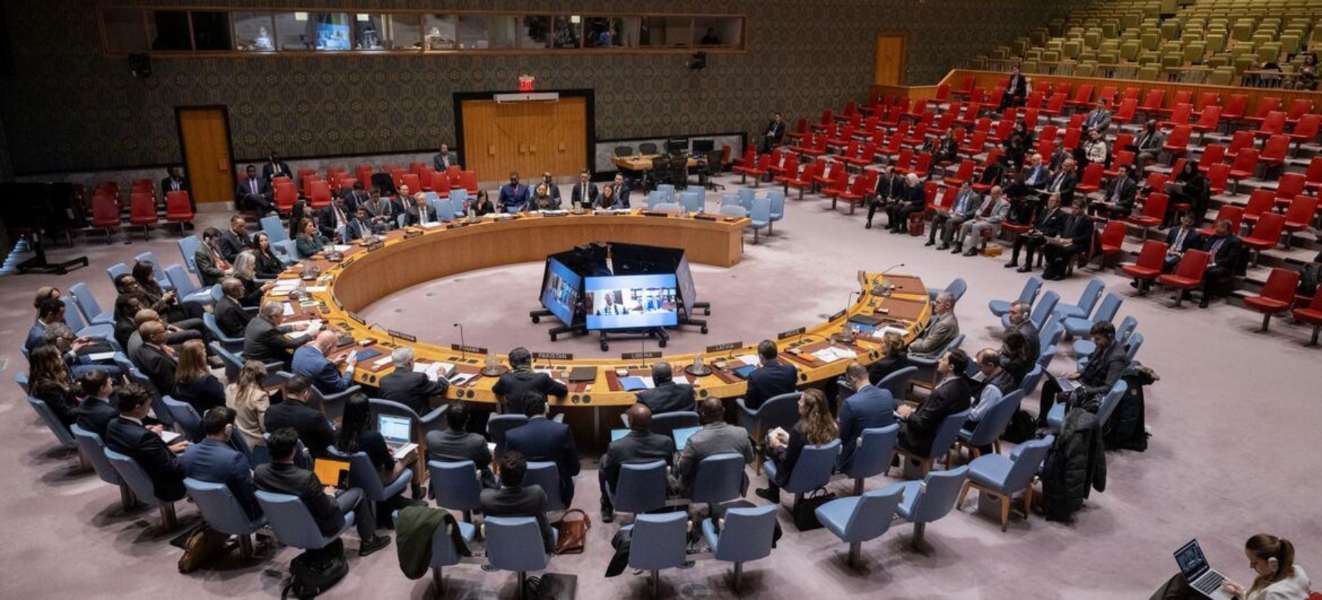
“Sometimes the UN is arrogant and does not listen.”
The criticism does not come from an opponent of the United Nations. It comes from the woman seeking to lead it.
Rebeca Grynspan, the former vice-president of Costa Rica and current secretary-general of the United Nations Conference on Trade and Development (UNCTAD), has delivered an unusually sharp assessment of the organisation she hopes to take over.
In an interview with the Financial Times, the 70-year-old economist described an institution that tries to do everything, maintains an excessively top-heavy bureaucracy and has increasingly lost its place in the world’s most consequential diplomatic negotiations.
Yet despite emerging as the leading candidate in successive Security Council straw polls, Grynspan faces a formidable obstacle.
She has secured 12 positive votes, but the United States and Russia are reportedly among the countries opposing her candidacy.
At the United Nations, overwhelming support is not enough when a single permanent member of the Security Council can block an appointment.
“The UN Tries to Do Everything — And Ends Up Missing Where It Matters”
Grynspan is not limiting her campaign to familiar promises of modernisation and institutional reform.
She is directly challenging the way the organisation operates.
“The culture of the UN is that we have to do everything. We don’t prioritise,” she told the Financial Times.
She argued that this approach has stretched the institution’s resources too thin at a time when its financial position is becoming increasingly difficult.
Her criticism extends to the organisation’s senior management structure, which she believes has become unnecessarily large and cumbersome.
The comments come as the United Nations faces mounting financial pressure, including significant reductions in US funding and growing demands on its humanitarian agencies.
For Grynspan, however, the problem goes beyond money.
It is fundamentally about political relevance.
An organisation created to help prevent wars and resolve international disputes increasingly finds itself watching major conflicts unfold while decisive negotiations take place elsewhere.


Ukraine, the Middle East and Iran: Where Has the UN Gone?
Perhaps Grynspan’s most striking criticism concerns the organisation’s declining visibility in international diplomacy.
“The invisibility of the UN is a bad sign for everybody,” she warned.
She acknowledged that the institution has lost ground in some of the world’s most important crises.
“It is true that people feel the UN is not in the war zones or in the important negotiations that are taking place,” she said.
The observation carries particular significance in relation to the war in Ukraine, conflicts across the Middle East and diplomatic efforts surrounding Iran.
In several of these crises, negotiations have increasingly been conducted directly between governments or through specialised diplomatic channels, with the United Nations playing a limited role.
Grynspan argues that the organisation must return to its central mission.
“Peace has to come back to the centre of the efforts of the UN,” she said.
She also offered a revealing assessment of the institution’s future role:
“The UN doesn’t have to lead, but it has to be there as an actor.”
Her remarks raise questions about the effectiveness of the UN under outgoing secretary-general António Guterres.
However, the organisation’s limitations cannot be attributed solely to its leadership.
They also reflect the reluctance of powerful member states to give the institution greater freedom to act independently.
Grynspan Has Won the Straw Polls — But Not the White House
The race to choose the next UN secretary-general has become an unusually prolonged diplomatic contest.
Grynspan has led seven of the eight informal Security Council straw polls held so far.
In the latest round, she received 12 positive votes and three negative votes.
Under the selection process, a candidate needs at least nine votes in the 15-member Security Council and must avoid a veto from any of its five permanent members: the United States, Russia, China, France and the United Kingdom.
According to diplomatic assessments reported by the Financial Times, Washington and Moscow are believed to be among those opposing her appointment.
Grynspan has described the situation with characteristic directness.
“I won the campaign. Now I have to win the election.”
The remark captures the peculiar nature of the UN leadership contest.
A candidate can enjoy broad support across the Security Council and still fail to secure the position because of opposition from a single permanent member.
Trump Wants Reform — But Questions the UN Establishment
The position of the Trump administration has become one of the most important factors in the leadership race.
President Donald Trump has repeatedly criticised the United Nations, while his administration has reduced funding and withdrawn from several international mechanisms.
Washington has called for a smaller, more efficient and less bureaucratic organisation.
Yet according to the Financial Times, some American officials privately question whether someone who has spent years working within the UN system can deliver genuinely transformative change.
Grynspan has sought to counter that argument by pointing to her record at UNCTAD.
She says she reduced staffing positions by 20 per cent while establishing clearer organisational priorities.
“They are right that the UN needs transformational change, not timid reform,” she said of those demanding a major overhaul.
Her proposals include reducing the number of senior management positions and bringing in expertise from the private sector, particularly in artificial intelligence and data management.
Her central argument is that the United Nations needs a leaner administrative structure and a stronger focus on conflict prevention and diplomatic mediation.
Whether that approach will satisfy Washington remains uncertain.
Russia Has Not Forgotten the Black Sea Grain Deal
Moscow’s reservations appear to be linked, at least partly, to Grynspan’s previous diplomatic activities.
She played a role in negotiations surrounding the Black Sea grain initiative following Russia’s invasion of Ukraine.
According to diplomatic sources cited by the Financial Times, Russian officials retain concerns about her involvement in that process.
Grynspan insists that the next secretary-general must be able to engage with all sides without becoming aligned with any major power.
She has emphasised her background in Costa Rica, a country without the geopolitical weight of the world’s major powers, as a potential advantage.
Her argument is that the UN needs a leader capable of maintaining diplomatic independence while communicating with governments that may have fundamentally opposing interests.
For Moscow, however, the leadership appointment is also connected to broader questions about international influence and how the organisation addresses major conflicts.
The UAE Candidate and the Shadow of Sudan
Grynspan is not the only candidate seeking to lead the United Nations.
Lana Nusseibeh, a diplomat from the United Arab Emirates and former permanent representative to the UN, is also competing for the position.
The 48-year-old has presented herself as an advocate of institutional renewal and a more effective international organisation.
Her supporters point to her diplomatic experience and international relationships as qualifications for navigating increasingly complex global negotiations.
However, her candidacy has attracted controversy because of allegations concerning the UAE’s role in Sudan’s civil war.
The Emirates deny providing military support to the Rapid Support Forces, which have been accused of serious human rights abuses.
In Britain, 67 members of parliament have called on the government to use its Security Council veto against Nusseibeh’s appointment.
Another contender is Rafael Grossi, the Argentine diplomat who heads the International Atomic Energy Agency.
The competing candidacies reflect different approaches to UN reform, as well as the geopolitical calculations surrounding the leadership selection.
China Enters the Equation as Latin America Demands Its Turn
China also has an important role in the negotiations.
Beijing has expanded its financial and diplomatic influence within the United Nations and is now the organisation’s second-largest financial contributor.
Meanwhile, Latin American countries argue that the next secretary-general should come from their region, reflecting the informal tradition of geographical rotation.
Grynspan’s candidacy is therefore connected to a wider regional demand for representation.
The Trump administration, however, has placed less emphasis on geographical rotation, arguing that the appointment should be determined primarily by the organisation’s reform needs.
China’s position remains particularly significant because Beijing holds veto power but has not fully disclosed its preferences.
The result is a leadership contest shaped not only by the candidates’ qualifications and proposals, but also by negotiations among the world’s most influential governments.
The Trump–Xi–Putin Summit and the Diplomatic Battle Over the UN
The selection process has also intersected with high-level diplomacy involving the United States, China and Russia.
A scheduled Security Council vote was postponed by one day, allowing further consultations among diplomats from the permanent member states.
At their summit in Shenzhen, Trump, Xi Jinping and Vladimir Putin expressed support for reforming the United Nations and improving its ability to respond to international challenges.
But agreement on the need for reform does not necessarily translate into agreement over who should lead it.
The appointment remains subject to negotiations among the five permanent members of the Security Council.
The contradiction is difficult to ignore: the major powers are demanding a more effective United Nations while their disagreements are preventing the organisation from selecting its next leader.
An Unprecedented Scenario: The UN Could Enter 2027 Without a Secretary-General
António Guterres’s term expires on December 31, 2026.
With no agreement yet reached on his successor, the organisation faces an increasingly difficult deadline.
According to Reuters, officials have begun examining contingency arrangements should the selection process fail to conclude in time.
Such a situation would be highly unusual.
The United Nations has never previously reached the end of a secretary-general’s term without having selected a successor.
The UN Charter does not establish a clear automatic succession mechanism for such circumstances.
Among the possibilities reportedly under consideration are a temporary extension of Guterres’s term or the appointment of another senior official to perform the duties on an interim basis.
No arrangement has been finalised.
A prolonged leadership vacancy could complicate administrative decisions, senior appointments and the coordination of international diplomatic initiatives.
The uncertainty comes at a particularly difficult moment for an organisation already facing financial pressure and political divisions.
Grynspan Promises to Transform the UN — But First She Must Overcome the Vetoes
Rebeca Grynspan is seeking to become the first female secretary-general in the history of the United Nations.
Her candidacy combines extensive experience within the international system with a promise of substantial institutional restructuring.
She argues that her knowledge of the organisation’s weaknesses makes her better equipped to address them.
“I know this organisation. I know what doesn’t work, and I know the paths to reform it,” she said.
The central question is whether the five permanent members can agree on a candidate capable of maintaining diplomatic independence while keeping communication channels open across geopolitical divides.
The decision is about considerably more than the administration of an international institution.
It concerns the future role of the United Nations in a world where major conflicts and decisive diplomatic negotiations increasingly unfold outside its own structures.
Grynspan wants a United Nations that is less arrogant, less bureaucratic and more visible in the world’s most consequential crises.
For now, however, the organisation’s greatest challenge lies within its own Security Council.
The world’s most powerful countries must agree on who should lead an institution they themselves acknowledge needs fundamental reform.
And as the negotiations continue, the possibility grows that the UN could enter 2027 without a new secretary-general.
The ultimate irony is that an organisation created to facilitate international cooperation is struggling to secure the agreement needed to appoint its own leader.
Source: pagenews.gr