A new frontier in the confrontation between Russia and the West is emerging following intelligence assessments suggesting that Moscow could be preparing to deploy a nuclear weapon in space.
According to the Financial Times, the German government is taking seriously intelligence reports concerning a Russian satellite known as Sputnik-S, allegedly associated with a military programme involving nuclear capabilities.
An intelligence assessment circulated in early November reportedly indicated that a launch could take place within 60 days.
Moscow has rejected the allegations, while there is no independent public confirmation that Russia has made a final decision to deploy such a weapon.
Sputnik-S: The Russian Satellite Raising Concerns Across NATO
A joint investigation by German public broadcasters WDR and NDR and the newspaper Süddeutsche Zeitung reported that Western intelligence agencies have been monitoring the Russian programme for several years.
Germany’s foreign intelligence service, the BND, and the country’s armed forces are reportedly involved in assessing the potential threat.
German Defence Minister Boris Pistorius has also reportedly been briefed on the intelligence findings.
Berlin has refrained from disclosing classified information, while maintaining that developments in space are being closely monitored.


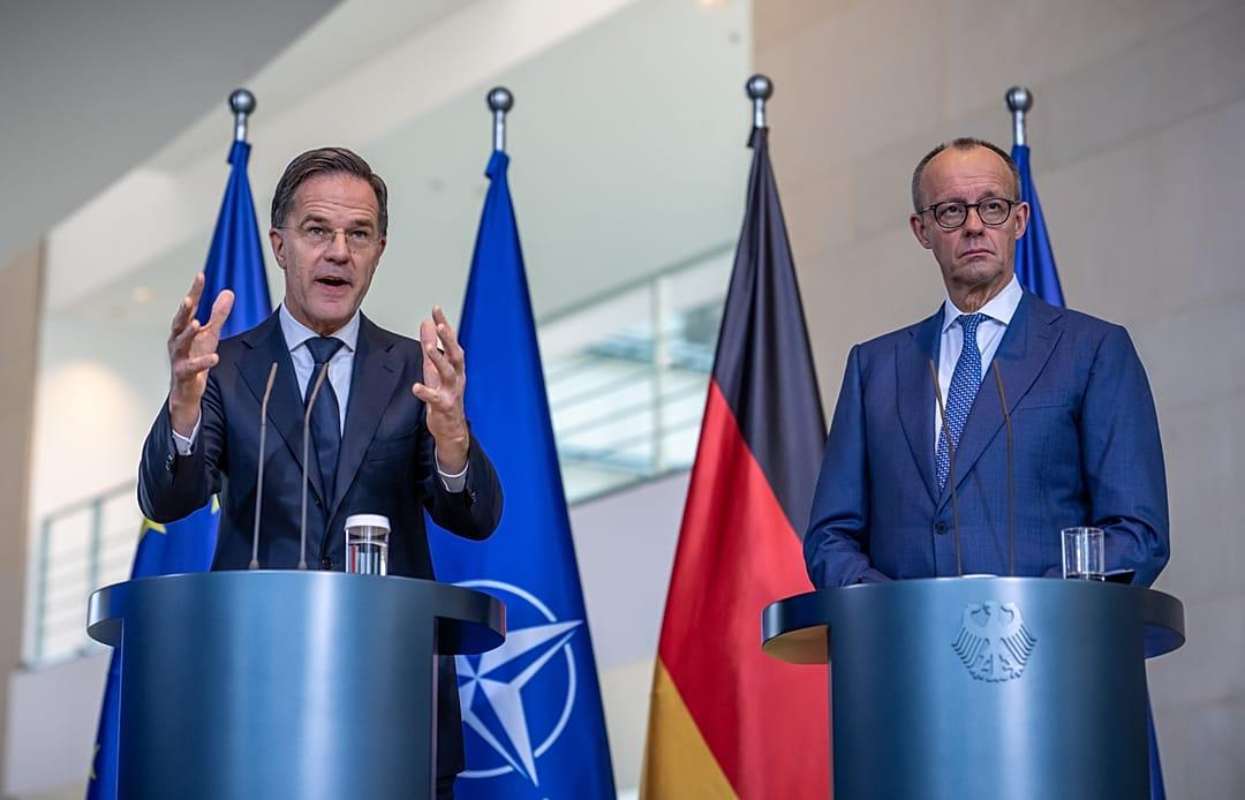
Merz and Rutte: Space Security Is an Alliance-Wide Concern
German Chancellor Friedrich Merz has treated the reports as another indication of the security risks associated with escalating tensions between Russia and the West.
NATO Secretary-General Mark Rutte has also underlined the importance of protecting the alliance against threats extending beyond conventional military domains.
NATO already recognises space as an operational domain, reflecting the growing importance of satellite infrastructure to defence, communications and the functioning of modern economies.
The latest intelligence assessments reinforce concerns that strategic competition between major powers is increasingly extending beyond Earth’s atmosphere.
GPS, Telecommunications and Financial Markets at Risk
The US Defense Intelligence Agency has previously warned of the potentially extensive consequences of a nuclear incident in space.
The disruption or destruction of satellite infrastructure could affect essential services across the world, including:
- Satellite navigation and positioning systems.
- International telecommunications and internet connectivity.
- Financial transactions and banking network synchronisation.
- Weather forecasting and climate monitoring.
- Aviation and maritime navigation.
- Military communications and emergency response services.
The consequences would not necessarily be confined to countries directly involved in a military confrontation.
Modern economies increasingly depend on satellite-based infrastructure, making space security a matter of global economic resilience.
Starlink and Ukraine: The Strategic Importance of Commercial Satellites
Russia’s war in Ukraine has demonstrated the growing importance of commercial satellite networks in maintaining communications during armed conflicts.
SpaceX’s Starlink network has played a significant role in supporting Ukrainian connectivity.
The increasing military use of commercial satellite services has blurred the traditional distinction between civilian and military infrastructure, creating additional challenges for governments and private technology companies.
The protection of commercial space assets is consequently becoming an increasingly important component of Western security planning.
The Kremlin Rejects the Allegations
Kremlin spokesperson Dmitry Peskov has questioned the credibility of the reports, pointing to their speculative nature and reliance on unnamed intelligence sources.
Russia’s embassy in Berlin reportedly characterised the accusations as part of a “propaganda campaign”, maintaining that Russian space activities comply with international obligations and pursue peaceful objectives.
Similar concerns were raised by US officials in 2024, when Russian President Vladimir Putin denied that Moscow intended to deploy nuclear weapons in space.
The latest reports have renewed international scrutiny of Russia’s space programme, although the underlying intelligence remains classified.
The 1967 Outer Space Treaty and the Risk of a New Arms Race
The deployment of a nuclear weapon in Earth’s orbit would violate the 1967 Outer Space Treaty, to which Russia is a party.
The international agreement prohibits the placement of nuclear weapons and other weapons of mass destruction in orbit or elsewhere in outer space.
The allegations have therefore revived concerns over the future of international arms control at a time when major powers are expanding their military capabilities in space.
Unlike conventional military competition, the disruption of space infrastructure could produce consequences extending far beyond national borders, affecting governments, businesses and civilians alike.
The Next 60 Days: A Critical Intelligence Assessment
Germany’s warning does not constitute confirmation of an imminent launch, nor does it indicate that a nuclear attack is expected.
It nevertheless illustrates the seriousness with which Western intelligence agencies are assessing Russia’s reported space-based military capabilities.
As diplomatic efforts surrounding Ukraine continue, the strategic confrontation between Moscow and the West is increasingly encompassing infrastructure essential to the global economy.
The emerging challenge is no longer confined to territorial security, energy supplies or conventional military deterrence.
It also concerns the protection of the satellite networks upon which the interconnected world depends.