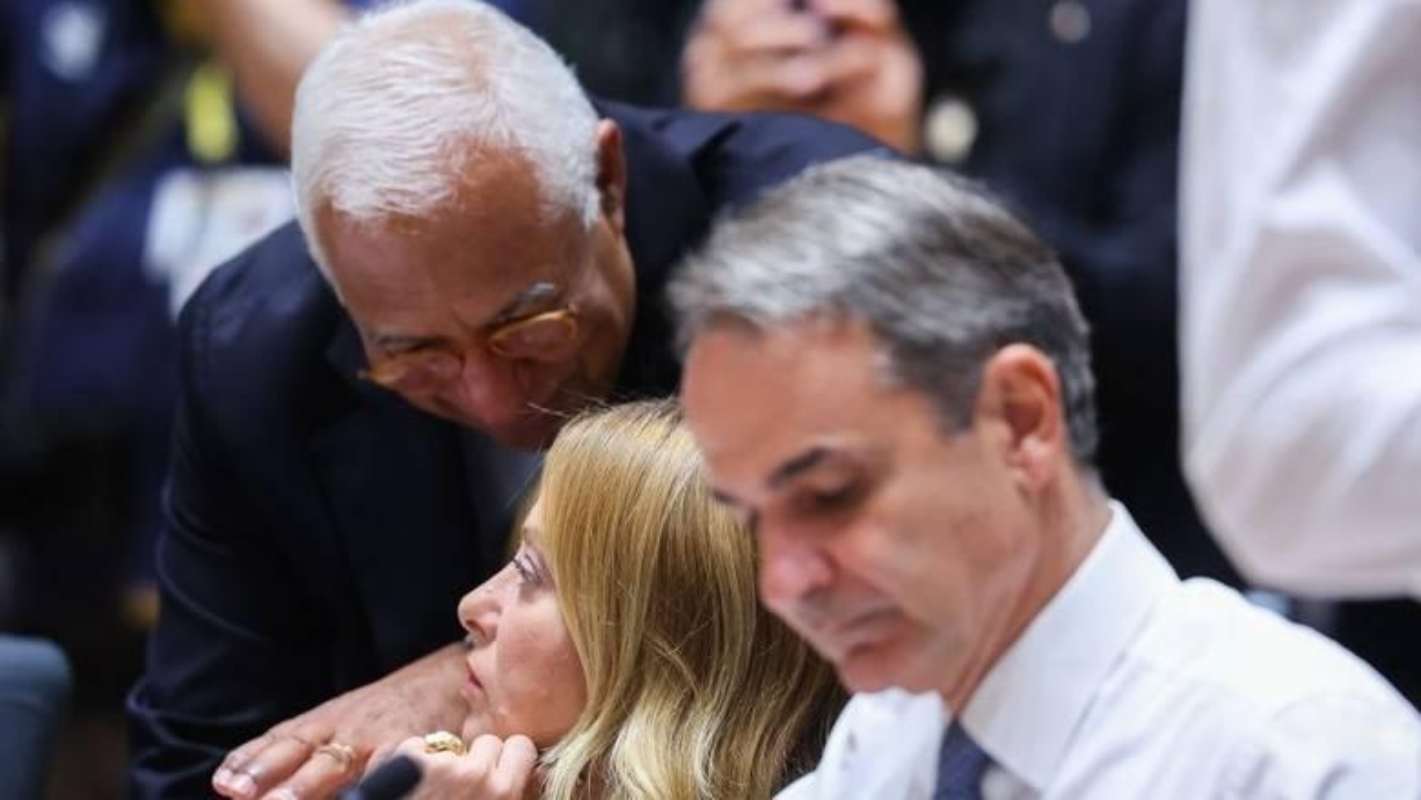
“There can be no strong Europe with a weak European budget,” Greek government sources said ahead of the Brussels summit. German Chancellor Friedrich Merz gave a different assessment of António Costa’s compromise proposal. “The overall volume is still too high.” Between those positions lie €204 billion in cuts to the European Commission’s original spending plan and a proposed loan of up to €45 billion for Ukraine in 2027.
At the special European Council on 26–27 November, leaders are negotiating how much the EU should spend from 2028 to 2034 and how to divide the bill. Merz has made German backing for the seven-year budget conditional on all 27 member states contributing to Ukraine’s financing. That gives governments reluctant to share the cost of the loan more leverage in the budget talks.
Costa’s €204 billion cut still falls short for Berlin
“The time has come to reach an agreement,” Costa wrote in his invitation to EU leaders. His proposal puts the next budget at roughly €1.79 trillion in current prices, about 10% below the Commission’s original plan. Compared with the current seven-year budget, Costa projects increases of 120% for competitiveness and 232% for defence. Both would receive less than under the Commission’s initial proposal. The two benchmarks explain why Costa presents the plan as a shift toward security and competitiveness while the Commission and Parliament see cuts to those priorities.
Merz called Costa’s proposal “a first step” and pointed to the pressure on national finances. Dutch Prime Minister Rob Jetten said the budget “needs to be modernised and needs to be downsized.” Swedish Prime Minister Ulf Kristersson said the proposed cuts were “moving in the right direction,” while warning that negotiations would be difficult.
Romanian President Nicușor Dan called for “greater ambition for the 2028–2034 period.” Polish Prime Minister Donald Tusk said Warsaw would oppose any deal that raised energy prices, imposed serious social costs or weakened the defence of the EU’s eastern flank. For governments defending cohesion funding, the question is how to pay for stronger defence and a more competitive economy while protecting investment in poorer regions and agricultural support.


Greece wants to see its share before signing off
Greek Prime Minister Kyriakos Mitsotakis set out Athens’ position at the October summit. “We will not accept further cuts to key pillars of European policy,” he said, referring to cohesion policy and the Common Agricultural Policy. Ahead of the November meeting, Greek government sources said Athens had already accepted a shift in spending toward defence and competitiveness and saw no room for further cuts to those programmes.
Athens sees several of its proposals reflected in Costa’s plan, including more time to use EU funds, a longer repayment timetable for recovery-fund debt and changes to the proposed sources of EU revenue. It is still waiting for the country-by-country allocations. Bringing several funding streams together in national and regional plans makes it harder to determine how much will go to cohesion. For Athens, the national breakdown will show what the deal means for Greek regions and farmers.
Paris wants a December deal. Parliament wants a bigger budget
“The negotiations cannot go beyond December,” the Élysée told Euronews. With France’s presidential election due in spring 2027, Paris wants a deal before the country’s EU contribution becomes a campaign issue. It backs an EU levy on digital services revenue, which would help fund common spending without an equivalent increase in national contributions. Ireland opposes the levy, while Poland objects to diverting revenue from the emissions trading system to the EU budget. Rebates for some net contributors remain on the table.
The Franco-German coordination that gave EU leaders a starting point in 2020 has yet to produce a shared position on this budget. Even if Costa secures unanimity among governments, the European Parliament must give its consent. Siegfried Mureșan, one of Parliament’s lead budget negotiators, called the proposal “a weaker position for a weaker EU.”His co-rapporteur, Carla Tavares, called for stronger protection for social investment and fairer sources of EU revenue. Budget Commissioner Piotr Serafin put it more bluntly. “In this case, less really is less.”
Ukraine’s €45 billion loan gives reluctant capitals leverage
Merz says the budget must secure “robust, sustainable and multiannual support for Ukraine, with all 27 Member States contributing.” Slovak Prime Minister Robert Fico described the link between the two negotiations as a “textbook case of blackmail.” Czech Prime Minister Andrej Babiš called for the loan to be negotiated separately and said Prague would defend its cohesion funding. Slovakia, Czechia and Hungary opted out of the previous €90 billion loan. Bulgaria has also expressed reservations about the new proposal.
The Commission proposes borrowing on capital markets with an EU budget guarantee to help cover Ukraine’s estimated €70 billion financing gap for 2027. Of the proposed €45 billion, up to €25 billion would go to military assistance and €20 billion to general budget support. Ukrainian President Volodymyr Zelenskyy said on 24 November that the country needed at least €115 billion in total for 2027. “We need to find another €25 billion,” he said, assuming the additional EU package goes ahead.
There is also a dispute over interest costs. The Kyiv Independent, citing a Commission analysis, reported that interest on existing loans could reach €55.4 billion over the next budget cycle. The draft provides for borrowing costs above the spending ceilings, but governments still have to settle how to finance them. The outcome will determine how much of the proposed €100 billion Ukraine reserve remains available for new needs.
The ECB succession is also on the agenda
The expanded Euro Summit is scheduled for 10 a.m. Brussels time, with European Central Bank President Christine Lagarde and Eurogroup President Kyriakos Pierrakakis attending. Spain’s Pablo Hernández de Cos is seen as the frontrunner to succeed Lagarde, with former Dutch central bank chief Klaas Knot still in contention.
Costa plans to hold smaller meetings with leaders before reconvening the 27. France is pressing for a December deal, the Netherlands says it can wait, and Greece wants assurances on farm and regional funding. If Berlin keeps the two negotiations tied together, a standoff over Ukraine’s financing for a single year could hold up the EU’s budget for the next seven.
Source: pagenews.gr