


Uncleared Plots:The State Tightens the Noose–Heavier Fines,Strict Deadlines and New Traps for Owners in 2026
 ΧΡΟΝΟΣ ΑΝΑΓΝΩΣΗΣ 3 '
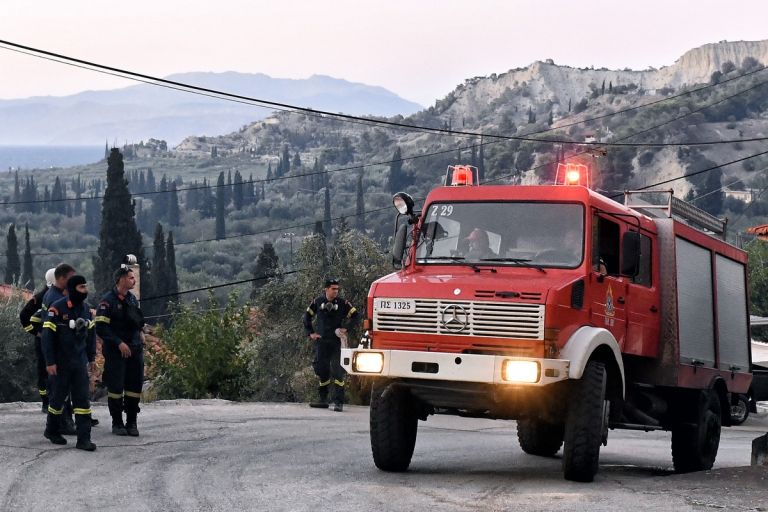
Πηγή Φωτογραφίας: eurokinissi//Uncleared Plots: The State Tightens the Noose – Heavier Fines, Strict Deadlines and New Traps for Owners in 2026



From 2026 onward, the issue of uncleared land plots in Greece is no longer treated as a loose seasonal obligation. It becomes a strictly regulated, time-bound and heavily sanctioned process, with clear financial and criminal consequences for those who fail to comply.
Through the bill titled “Active Battle”, promoted by the Ministry of Climate Crisis and Civil Protection, the government aims to address the growing wildfire threat. In practice, however, the reform shifts a significant share of responsibility—and cost—onto private property owners, redefining the relationship between the state, local authorities and citizens.
Clearing by the clock: Strict new deadlines
Until now, plot clearing operated in a grey zone of extensions, vague timelines and uneven enforcement. That era ends in 2026.
Under the new framework:
- Mandatory clearing period: April 1 – May 31
- Extensions allowed only by ministerial decision
- Mandatory declaration of clearing by June 15 each year
The declaration is no longer procedural. Failure to declare constitutes an independent violation, even if the plot has actually been cleared.
- Compliance is no longer judged only in the field, but also on paper.

Fines that burn: Doubling penalties and stricter differentiation
Financial penalties are significantly reinforced:
- Failure to clear land: €1 per square meter (up from €0.50) Minimum fine: €200
- Failure to submit clearing declaration:
- €500 if the plot remains uncleared
- €100 if cleared but not declared
While the structure is more proportional, the logic is uncompromising: administrative accuracy is now as important as physical compliance.
False declarations remain the most serious offense:
- €5,000 fine
- Minimum six-month prison sentence
The unresolved traps: What property owners warn about
Despite acknowledging clearer rules, the Hellenic Property Owners Federation (POMIDA) highlights major unresolved risks.

The core problem: removal of clearing debris
According to Fire Service Regulation 20/2024, clearing is not complete unless debris is removed. However:
- Municipal responsibility for debris collection is not clearly defined
- Local authorities often lack operational capacity
- Owners are exposed to penalties despite acting in good faith
Blurred enforcement responsibilities
Oversight remains split between:
- municipalities
- the Fire Service
- inspection mechanisms

This creates uneven enforcement, legal uncertainty and room for administrative arbitrariness.
From prevention to responsibility transfer
Behind the wildfire-prevention narrative lies a deeper policy shift:
- the gradual transfer of environmental risk management from the state to the individual.
At a time of:
- rising living costs
- heavy property taxation
- increased maintenance expenses
property owners are effectively asked to serve as front-line wildfire defenders, with mistakes carrying a steep price.
The year 2026 marks a decisive break with the past.
Plot clearing in Greece ceases to be a flexible annual duty and becomes a strict, fully monitored and sanction-driven obligation, backed by fines and criminal liability.
For landowners, the message is unmistakable: less tolerance, more bureaucracy—and far more expensive mistakes.
Διαβάστε όλες τις τελευταίες Ειδήσεις από την Ελλάδα και τον Κόσμο








Το σχόλιο σας