


From “Weak Link” to Geopolitical Player: Adonis Claims Greece’s Strategic Vindication
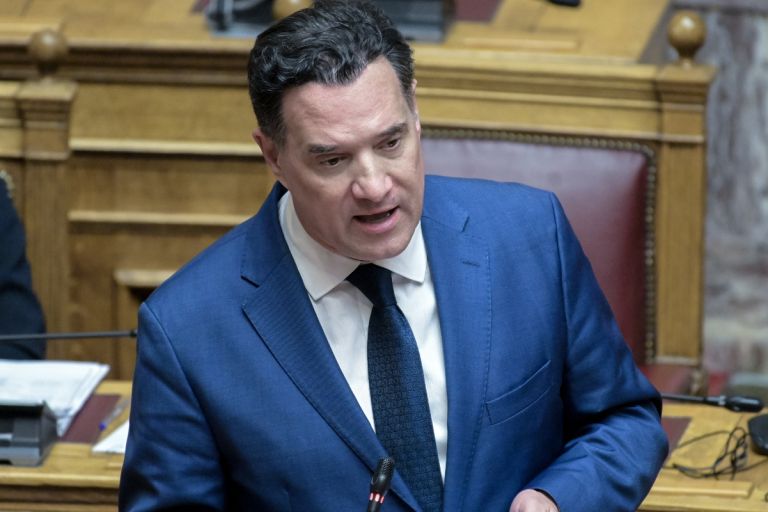
Πηγή Φωτογραφίας: eurokinissi//From “Weak Link” to Geopolitical Player: Adonis Claims Greece’s Strategic Vindication



The latest intervention by Adonis Georgiadis on X and Facebook was not merely a partisan defense of government policy. It was a strategic political assessment of Greece’s foreign policy trajectory over the past seven years — and a forceful argument that the doctrine of “calm waters” has been vindicated.
Georgiadis openly defended Prime Minister Kyriakos Mitsotakis and Foreign Minister Giorgos Gerapetritis, rejecting criticism that the government pursued an “appeasement” approach toward Turkey.
“The narrative of submissiveness was disproven by our international alliances and our armament program, built consistently and steadily over the past seven years,” he stressed.
Strategic Alliances as a Force Multiplier
According to Georgiadis, Greece’s deepened ties with the United States, Israel, Saudi Arabia, United Arab Emirates, and France were not opportunistic moves dictated by circumstance. They were the product of long-term strategic consistency.
In a pointed remark aimed at the domestic opposition, he added: “It is precisely the accusation that we are a ‘predictable ally’ that has made us absolutely credible to all of them.”
Περί της Ελληνικής Εξωτερικής Πολιτικήςhttps://t.co/WEkq1LAm5k
Εδώ και αρκετό καιρό έλεγα συνεχώς στις συνεντεύξεις μου, ότι το πλέον επιτυχημένο πεδίο ασκήσεως της Κυβερνητικής μας Πολιτικής, είναι η Εξωτερική μας Πολιτική. Υπό την έννοια αυτή η κριτική που έχει ασκηθεί στον…
— Άδωνις Γεωργιάδης (@AdonisGeorgiadi) March 4, 2026
Government insiders suggest that this credibility now allows Athens to participate in high-level geopolitical calculations amid escalating tensions in the Eastern Mediterranean and the Middle East.
Time, Rearmament, and Air Superiority
Georgiadis argues that in 2019 Greece was economically fragile and militarily constrained after a decade-long financial crisis. The priority, therefore, was time — time to rebuild.
“Time was essential for us to rearm, and we did so consistently and successfully,” he noted, pointing to the forthcoming acquisition of the F-35 Lightning II fighter jets, which he claims will secure full air superiority in Greece’s operational environment.
He also referenced past diplomatic flirtations with Tehran in 2017, remarking pointedly: “Can you imagine if we had become allies of Iran?”
The implication is clear: strategic alignment with Western and regional partners was not only prudent — it was existential.
Turkey’s Strategic Miscalculation?
Georgiadis was particularly sharp regarding Turkey’s regional posture. Without naming President Recep Tayyip Erdoğan directly, he suggested Ankara risks geopolitical isolation — especially if instability or regime change were to unfold in Iran, potentially reigniting Kurdish statehood dynamics.
“Turkey’s choice to confront Israel will one day be taught as a historic strategic mistake,” he asserted.
By contrast, Greece’s strategic partnership with Israel was presented as a model of geopolitical foresight.
“Calm Waters” as Strategic Patience
The so-called “calm waters” doctrine toward Turkey, often criticized by voices on the political right, was framed by Georgiadis as deliberate strategic patience rather than concession.
“Calm waters were never a retreat. They were what served Greece’s interests, because they gave us the time we desperately needed,” he emphasized.
From a broader geopolitical lens, the government’s argument is that Greece has managed to strengthen its armed forces, stabilize its economy, and deepen alliances — all without triggering open confrontation.
Georgiadis’ intervention amounts to more than partisan rhetoric. It outlines a coherent strategic narrative: Greece leveraged time, credibility, and alliances to reposition itself in a rapidly shifting global order.
In what he describes as the largest geopolitical realignment since 1990, Athens now sees itself not as a bystander — but as a participant with leverage.
And as he concluded emphatically:
“Greece is now the protagonist, and Turkey the spectator.
Source: pagenews.gr
Διαβάστε όλες τις τελευταίες Ειδήσεις από την Ελλάδα και τον Κόσμο





Το σχόλιο σας