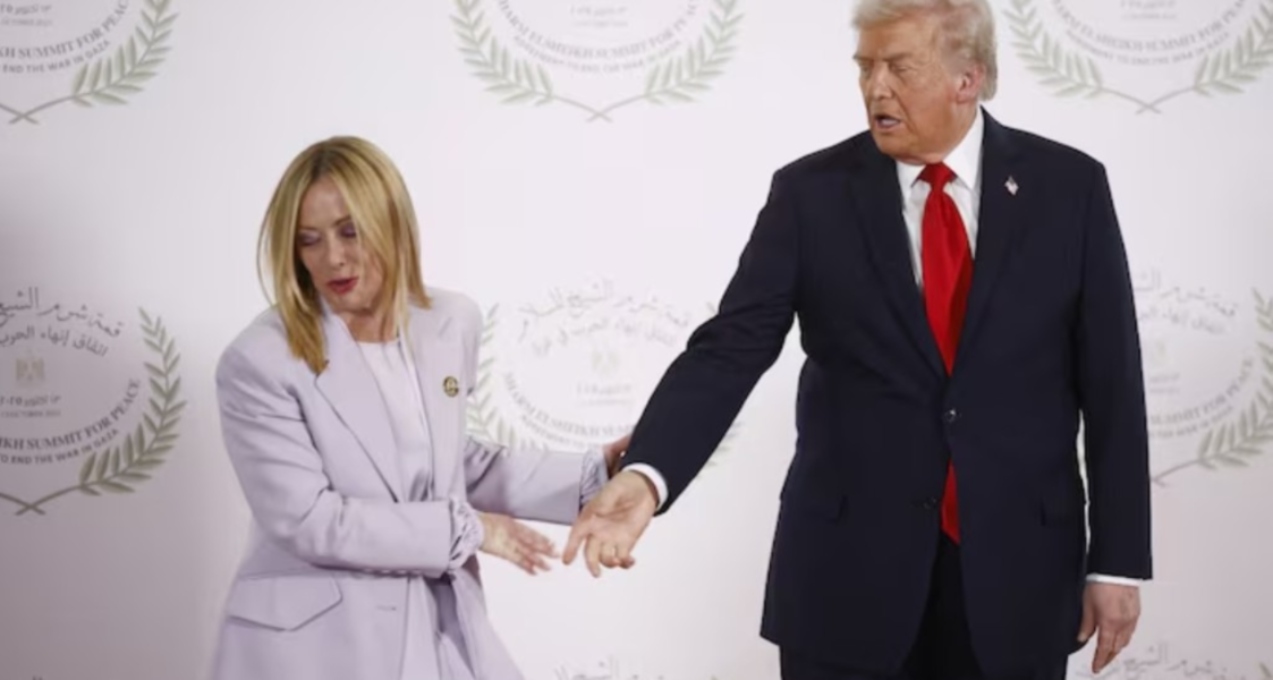
Trump’s remarks ignite political controversy
The international political scene has been shaken by a series of statements attributed to Donald Trump, in which he directly criticized both Italian Prime Minister Giorgia Meloni and Pope Leo. His comments focus on the ongoing geopolitical confrontation surrounding Iran and the broader question of who has legitimacy to speak on war, security, and morality.
According to widely reported remarks, Trump accused the Pope of “not understanding what is happening in war” and suggested that he “should not speak about military affairs,” a statement that immediately triggered debate over the role of religious leadership in global conflict discourse.
Direct confrontation with Giorgia Meloni
Trump also launched a strong personal and political attack on Giorgia Meloni, describing her as “unacceptable” and suggesting she fails to properly grasp the severity of the nuclear threat posed by Iran.
He further argued that a potential Iranian nuclear capability could place European countries under immediate risk, escalating the rhetorical framing of Iran as an urgent and existential security challenge for the West.
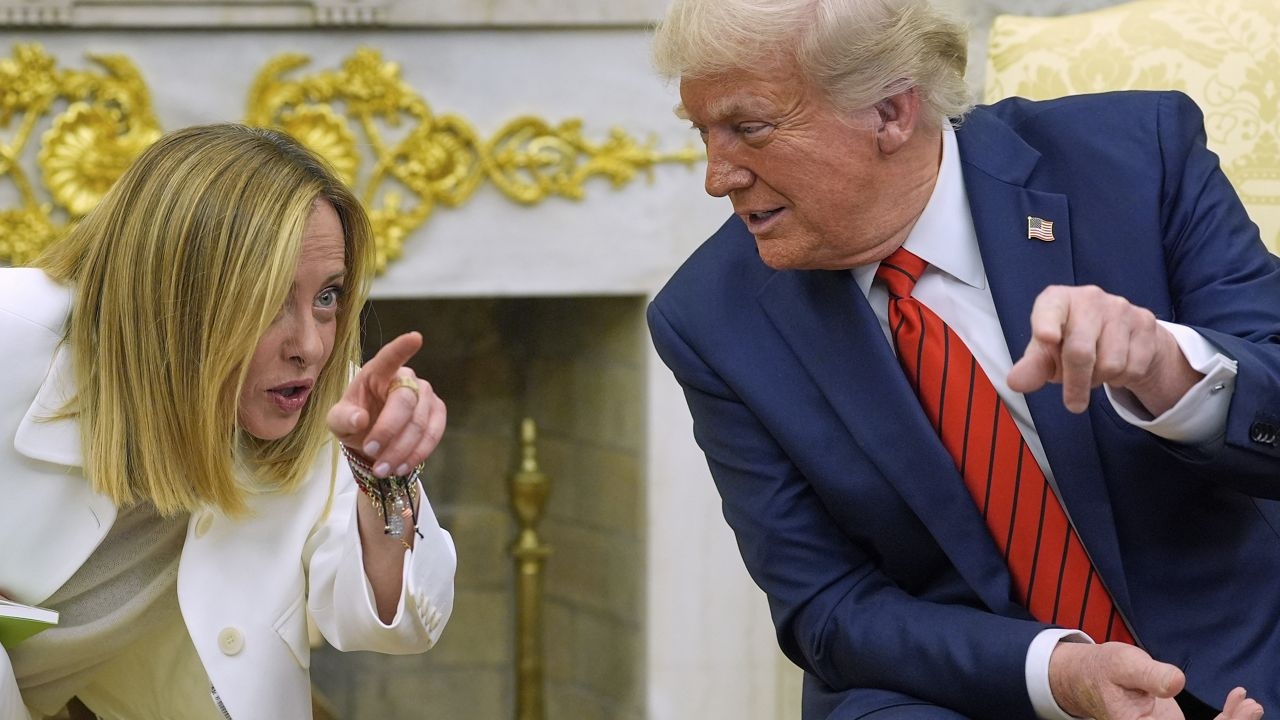

Italian response and European unease
The reaction from Rome was swift and firm. Government-aligned sources in Italy characterized the statements as “institutionally offensive and politically unjustified,” emphasizing that Italy remains committed to diplomatic de-escalation and coordinated European policy.
Italian officials also defended the Pope’s right to intervene in moral and humanitarian debates, framing his comments as part of the Vatican’s traditional role in advocating for peace.
The Vatican’s position and papal intervention
Pope Leo has repeatedly called for restraint and de-escalation regarding Iran, warning against the risks of unchecked military escalation. His interventions have been widely interpreted as part of the Vatican’s long-standing moral diplomacy, focusing on civilian protection and the prevention of broader regional conflict.
The Vatican continues to position itself as a moral voice urging dialogue over confrontation, particularly in moments of heightened global instability.
Iran crisis deepens Western strategic divide
At the core of the dispute lies the escalating geopolitical tension over Iran’s nuclear ambitions. The United States has increasingly emphasized deterrence and military readiness, while European and Vatican perspectives prioritize diplomacy, containment of escalation, and humanitarian considerations.
This divergence highlights a growing strategic gap within the Western alliance regarding how to interpret and respond to the Iranian threat.
Broader implications for transatlantic relations
Analysts suggest that this confrontation reflects more than a temporary diplomatic dispute. Instead, it may signal a deeper structural tension within the West between hard security doctrine and diplomatic-moral frameworks.
Iran, in this context, becomes not only a regional flashpoint but also a test case for the cohesion of Western strategic unity.
Source: pagenews.gr