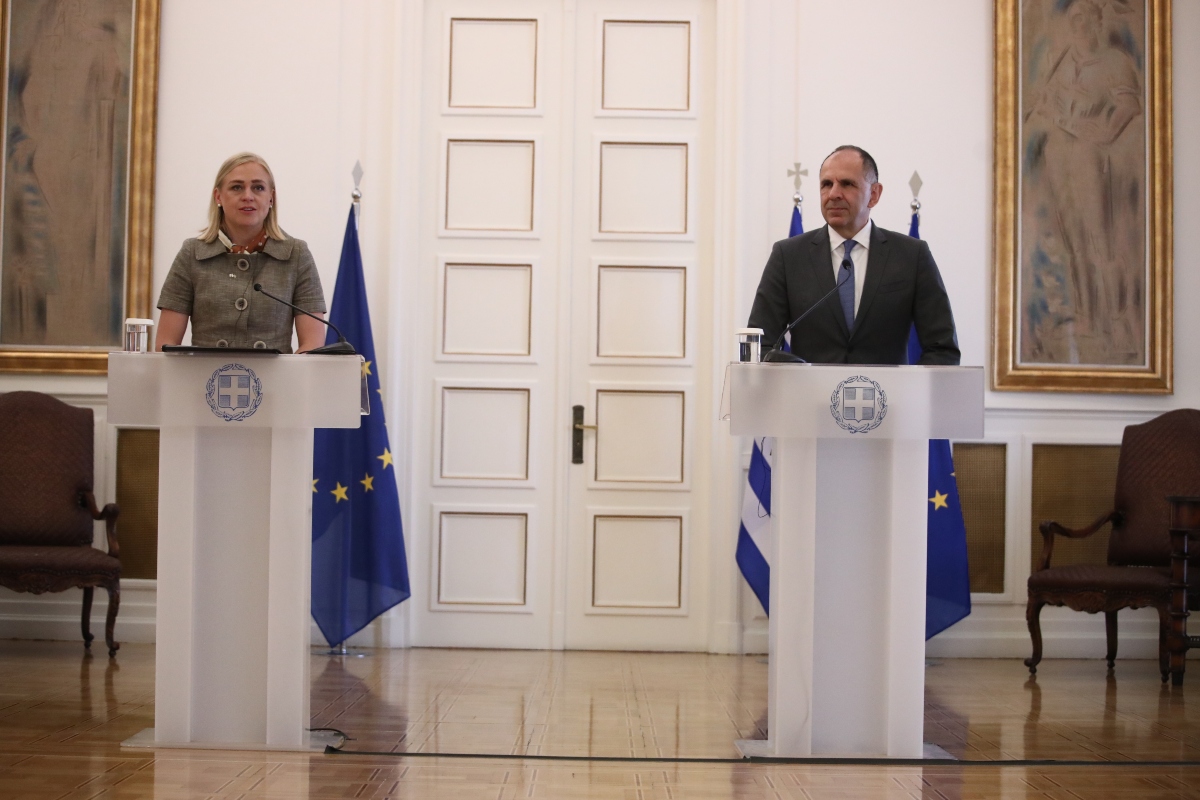
Europe is entering a new era of geopolitical instability in which threats no longer emerge only through conventional armies and military invasions, but increasingly through hybrid operations, energy coercion, maritime insecurity, cyber pressure, and strategic dependencies stretching from the Baltic Sea to the Eastern Mediterranean.
That was the central message delivered by Greek Foreign Minister Giorgos Gerapetritis following his meeting with Finnish Foreign Minister Elina Valtonen, at a moment when Europe’s security architecture is being reshaped under the pressure of multiple simultaneous crises:
- the war in Ukraine,
- the conflict in Gaza,
- and rising instability surrounding Iran and the Persian Gulf.
“Europe’s security is indivisible”
Gerapetritis framed the issue far beyond traditional military doctrines.
As he stated:
“The countries of the northern and southern neighborhoods of the EU and NATO face common challenges, asymmetric and hybrid threats that remind us that Europe’s security is indivisible.”
The symbolism was significant.
Greece and Finland occupy opposite geopolitical ends of Europe’s strategic perimeter:
- Finland faces direct pressure from Russia in the Baltic and Arctic regions,
- while Greece confronts instability stemming from the Eastern Mediterranean, the Middle East, migration corridors, and maritime security risks.

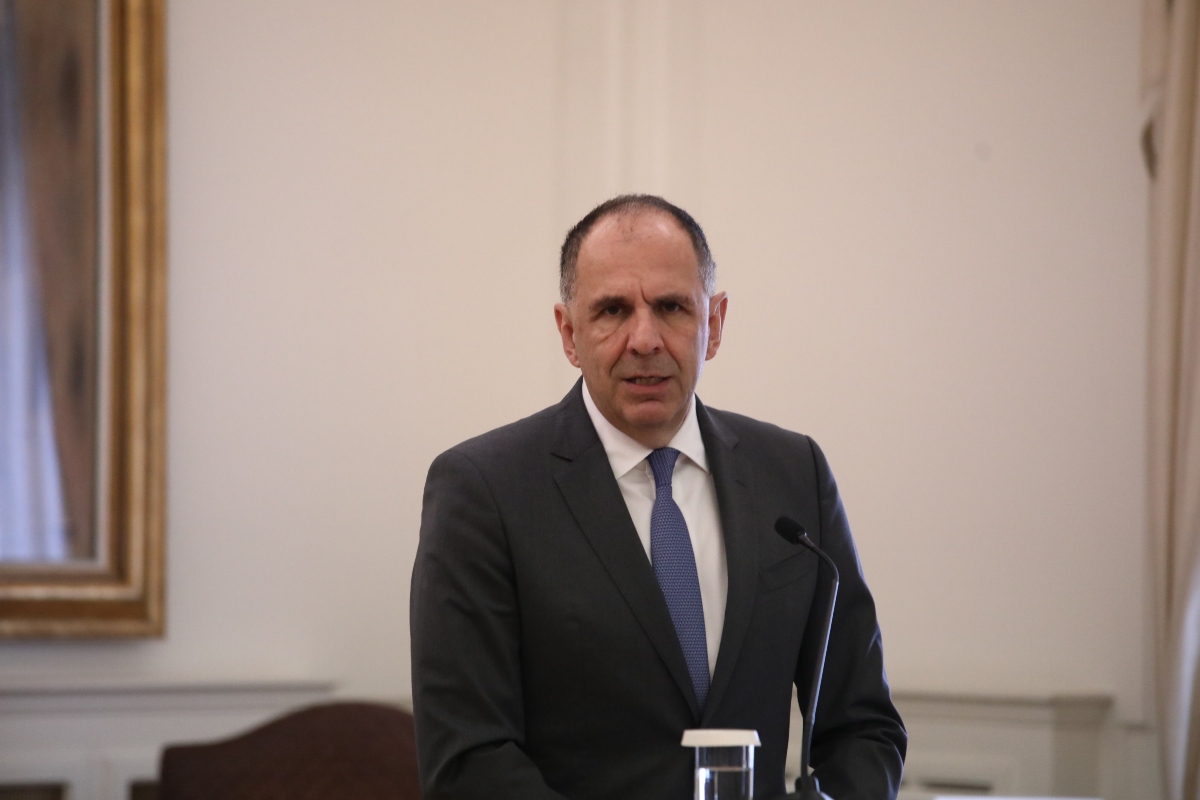
Despite the geographical distance, Athens and Helsinki are increasingly advancing a common strategic argument:that northern and southern crises are no longer separate security issues, but parts of the same European vulnerability.
The New Form of Warfare Looks Different
The Greek foreign minister also highlighted a crucial transformation in modern conflict:“Threats do not necessarily come through conventional means.”
That statement reflects a profound shift in global geopolitics.
Europe is now confronting:
- cyberattacks,
- energy blackmail,
- disinformation campaigns,
- migration pressure,
- maritime destabilization,
- and economic dependencies capable of weakening states without a single shot being fired.
The era in which security was defined purely by borders and armies is fading.
In its place emerges a far broader concept of resilience and strategic sovereignty.
This is precisely why the European Union is accelerating discussions around:
- strategic autonomy,
- defense integration,
- energy security,
- supply-chain resilience,
- and industrial independence.
Europe Fears Strategic Dependence
Gerapetritis placed particular emphasis on the geopolitical lessons emerging from the crises in:
- Ukraine,
- Gaza,
- and Iran.
According to the Greek minister, these conflicts revealed how dependence in critical sectors can quickly become a strategic liability.
The vulnerable sectors are now clear:
- defense production,
- energy,
- raw materials,
- technology,
- and global supply chains.
European leaders increasingly recognize that excessive reliance on external powers — whether Russian natural gas or Asian manufacturing networks — creates geopolitical exposure.
That is why Gerapetritis stressed:“The transition toward strategic autonomy, while maintaining a strong European pillar, is a necessary condition.”
In practice, this reflects the emerging doctrine taking shape across Europe:a more autonomous Europe that remains closely tied to the transatlantic alliance.
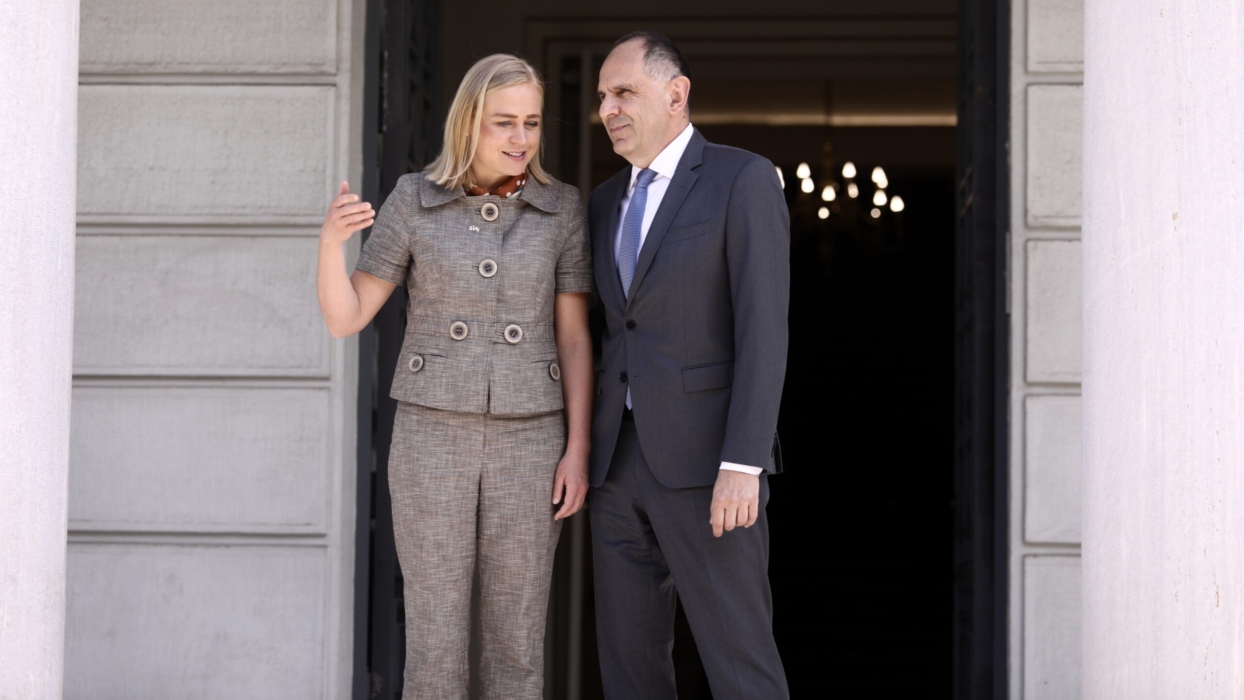

Greece Repositions Itself as a Maritime Security Power
Particular attention was also given to maritime security and freedom of navigation.
Greece is increasingly attempting to redefine its role not only as a frontline Mediterranean state, but also as a guarantor of critical maritime routes connecting Europe to global trade and energy markets.
Gerapetritis delivered a direct warning against the so-called:“shadow fleet”
— the network of tankers and commercial vessels operating outside international regulatory frameworks, often circumventing sanctions and lacking proper insurance or legal oversight.
According to Athens, the phenomenon:
- undermines international law,
- creates severe environmental risks,
- and transforms strategic sea lanes into zones of legal ambiguity and geopolitical instability.
The warning carries particular weight as:
- the Black Sea,
- the Eastern Mediterranean,
- and the Persian Gulf
become increasingly critical to global energy security and maritime commerce.
The Strait of Hormuz and the New Maritime Frontline
Greece also signaled its readiness to contribute to international efforts aimed at protecting freedom of navigation in the Strait of Hormuz.
The region remains one of the world’s most dangerous geopolitical chokepoints.
A massive share of global oil and LNG shipments passes through the strait, meaning that any escalation could trigger:
- energy shocks,
- surging fuel prices,
- inflationary pressure,
- and wider global economic instability.
Gerapetritis stated that Greece stands ready to support maritime security operations “when conditions permit.”
The message was clear:
Athens seeks a more active geopolitical role in safeguarding the maritime corridors linking:
- Europe,
- the Middle East,
- the Indo-Pacific,
- and global energy flows.
A New European Security Doctrine Is Emerging
The Greece–Finland meeting was far more than a routine diplomatic engagement.
It reflects the gradual formation of a new European strategic doctrine:that Europe is now surrounded by multiple, simultaneous, and interconnected crises.
Within this environment:
- energy becomes a geopolitical weapon,
- maritime routes evolve into strategic battlegrounds,
- migration flows can be weaponized,
- and economic dependence itself becomes a security threat.
Europe is entering a period in which security will no longer be determined solely by military power, but by the ability of states to withstand constant hybrid pressure across multiple fronts.
And Greece — because of its geography, maritime influence, and growing energy significance — is positioning itself at the center of this emerging European security architecture.
Πηγή: pagenews.gr